Journal of a Gem
Fabulous rubies, brilliant diamonds, huge emeralds, and other gems bring to mind images of beauty and great riches. Yet, as the story unfolds, we discover the way it all began.
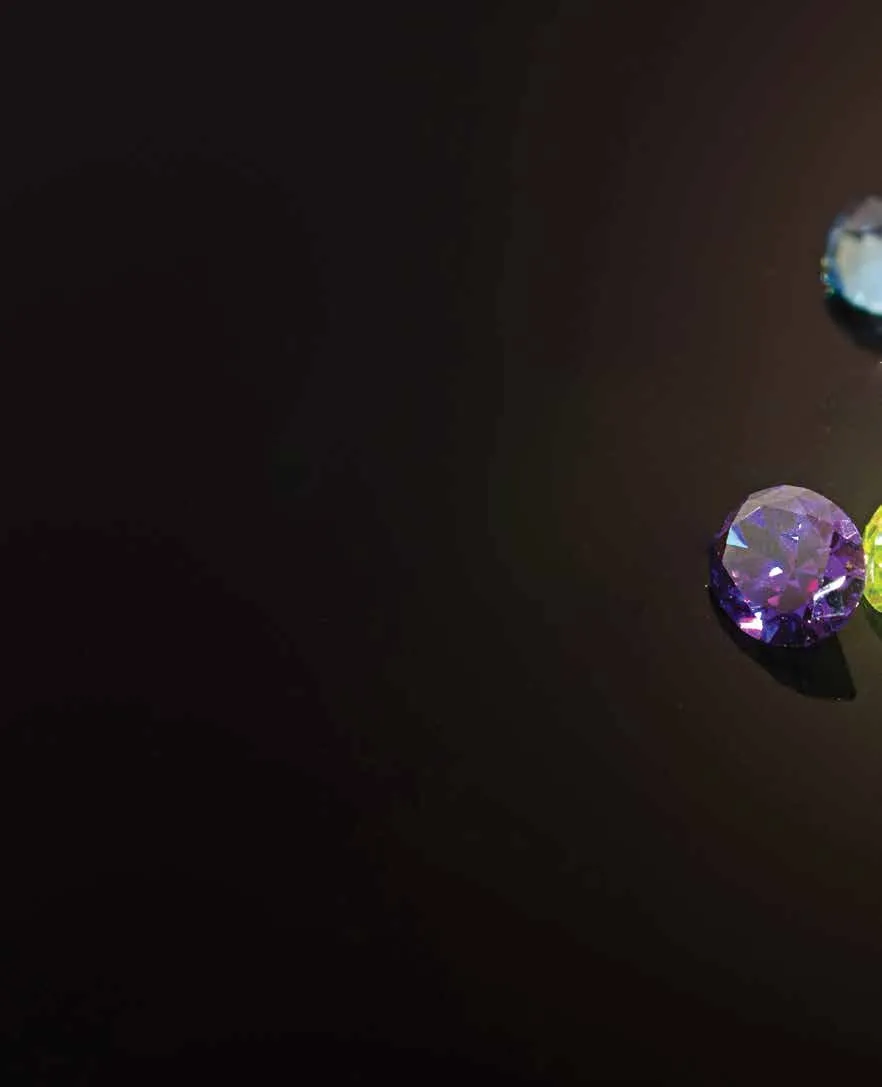




From shell beads in the Palaeolithic and stone beads in the Neolithic to beautiful artificial gems in modern times, the history of gems has roughly paralleled that of humans. In the beginning, myths and folklore about the healing properties of gemstones dominated the story. Today, the story is about scientific techniques making larger or more colourful gems and newly discovered mineral deposits revealing gemstone treasures. In the western world the written history of precious and semiprecious stones begins with the On Stones of the Greek philosopher and naturalist Theophrastus (ca. 315 BC) followed by the Natural History of the Roman historian Pliny (77 AD), which was the standard work on gems and minerals for more than a thousand years. The gemstones of the Old Testament and those of ancient East Asia tell their separate stories.
People have treasured gems for many reasons throughout history. Some of these reasons include the use of gems as beautiful decorative ornaments, religious symbols, and amulets and good-luck charms. Gems have also been used for barter and medicinal purposes. Gems have even been used as investments by some people. For others, gems have been used to display wealth, status, and power.
 L’Officiel India DigitalRead L’Officiel India in the digital libraryEvery issue and every cover story, on TCG Media.Read now
In centuries past, royalty often owned the finest gems. Some of these gems still exist, and their histories are a fascinating mix of fact and legend. Take, for example, the Black Prince’s Ruby and the Timur Ruby. Both are set in the Imperial Crown of the British crown jewels.In 1367, England’s Prince Edward, who was known as the Black Prince, helped a Spanish king win a battle. The grateful king gave him a dark red, irregular gemstone. Legend says King Henry V wore the gem in his helmet crown, and that it saved his life by deflecting a blow in the Battle of Agincourt in 1415.
The 361-carat Timur Ruby is another striking dark red gem. It was among the treasures brought from India to England in 1850. In the 1300’s, the gem belonged to Timur Lenk and took his name. He is better known in history as Tamerlane, the Islamic conqueror of much of central Asia and eastern Europe. Names and dates carved on the gem show that it later belonged to five Indian rulers. One of them was Shah Jehan, builder of the Taj Mahal.

“Being a 5th generation jewellery expert and gemologist, to me jewellery has a very different connotation, especially coloured gemstones. Jewellery is very personal and eventually goes to the client it is meant for. The world of gemstones on the other hand is very intriguing as each gemstone is different and unique in its own way. They have so many healing properties and affect the life of an individual in its own way. Being a gemologist has a lot advantages as in a way you have the technical knowledge and can guide my clients and educate them in a proper manner and give them the correct and precise information and answer of their questions. Also, I continue to educate myself in this field by reading various books and research on any new developments hence being a student of the subject of gemstones,” says MilindMathur, Creative Director& Partner, KohinoorJewellers Agra.
Likewise, Priti Kharkia, Co-founder, Diamond Constellation, shares “Gemstones attract people in a very distinct way as they capture the attention by different tones and hues that they reflect. Being thoughtful of their stones and making them sync with their personality, individuals today prefer aesthetic and vibrant jewellery. Going by the current choices and my observations -Moganites and Emeralds are enchanting people like none other, and I think well deservingly so. They are absolute treasures to play around with.”
India was the source of many gems that were highly desired by Romans. Jade carving developed in India with the advent of the Mughal emperors, who brought knowledge of the craft from east central Asia and Iran. Diamonds in India were exploited for millennia, at least from the seventh century BC. However, according to Geology Professor Bauer M (1968), most of the diamonds remained in India until the tenth century AD, when invaders plundered the area. India has also been the source of outstanding emeralds.
“Tanzanites, are second most popular blue gem after sapphire. It is one of a very small number of gems of any colour that have been discovered and brought to strong consumer popularity within the past century. Having said that, recently a gemstone that took my breath away was the Burmese Ruby, which is prized for its beauty, durability, and rarity. The pigeon blood red color is that of a red traffic light, a fluorescent red of high intensity,” shares Nitin Gilara, Parter, The House of Rambhajos.
Spotted a mistake, or your photo used without permission? Report a correction