The jewellery of Ramayana: how Tribe Amrapali gave three kingdoms their own sparkle
Tribe Amrapali made more than 4,500 pieces for Ramayana: Part 1, giving Ayodhya, Mithila and Lanka distinct jewellery languages after 18 months of research.
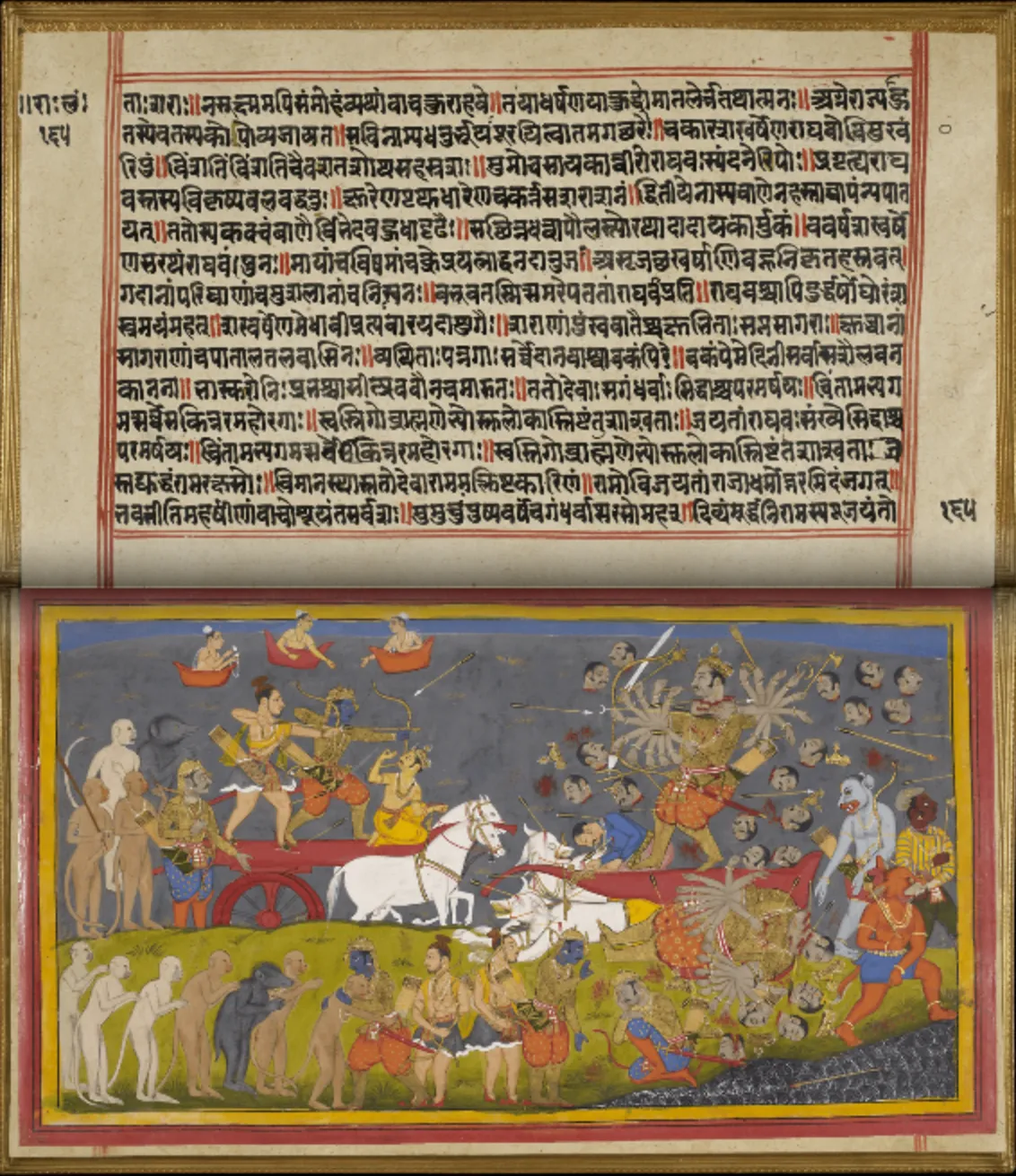




Now that Nitesh Tiwari's Ramayana has opened in cinemas, with Ranbir Kapoor as Ram, Sai Pallavi as Sita and Yash as Ravana, one of its quieter achievements deserves a closer look: the jewellery. Tribe Amrapali, the film's official jewellery partner, made more than 4,500 pieces for Part 1 alone, after some 18 months of research and design with the film's creative team.
Three kingdoms, three design languages
Rather than dress an entire epic in one style, the jewellers gave each kingdom its own visual grammar. Ayodhya is classical and symmetrical, built on Surya motifs for the solar dynasty, circular medallions inspired by the Dharma Chakra and lotus detailing. Mithila, Sita's home, is softer and closer to nature, with floral motifs and gentle curves. Lanka is the dramatic one: sculptural, asymmetrical forms with sharp contours and dark-hued stones for Ravana, while Mandodari and Vibhishana wear more balanced pieces in warmer, luminous tones.
 L’Officiel India DigitalRead L’Officiel India in the digital libraryEvery issue and every cover story, on TCG Media.Read now
The idea is that an audience should be able to read a character's world from the ornaments alone, long before a line of dialogue. It is the kind of detail that rewards a second viewing.
Old techniques, new pieces
The craft vocabulary is deliberately traditional: embossed relief work, fine engraving and chasing, filigree-inspired openwork and bead borders that recall granulation. The research drew on mythology, temple art and sculpture as well as traditional Indian jewellery. Tarang Arora, who led the project for the house, summed up the scale to The Hollywood Reporter India: "You're not doing one film, you're doing 10." The jewellery dresses not only the principal characters but royal families, warriors, courtiers and crowd scenes.
From screen to store
For readers who leave the cinema wanting a piece of Ayodhya for themselves, Tribe Amrapali has said it plans consumer jewellery inspired by the film, taking its visual language off screen and into its stores. Details such as prices and launch dates have not yet been announced, so it is worth watching the house's own channels rather than buying anything sold as "Ramayana jewellery" elsewhere.
Part 1 released worldwide on 5 November, opening in cinemas across India. Part 2 is now scheduled for Diwali 2028, which means the jewellery story is only half told. For anyone watching on a big screen, the advice is simple: look at the hands, necks and arms as closely as at the faces, because the ornaments are doing quiet work in every scene.
The L’Officiel view
Indian cinema has long treated jewellery as glitter to be piled on. What makes this project interesting is restraint with a purpose: three kingdoms, three distinct vocabularies, and ornament used as storytelling rather than spectacle. If the consumer line keeps that discipline, and resists the temptation to simply sell replicas of the hero's necklace, it could be one of the more thoughtful film-to-fashion crossovers India has produced. We will judge it when we can hold a piece in our hands.
Spotted a mistake, or your photo used without permission? Report a correction