Wendell Rodricks: Fresh Force of Fashion
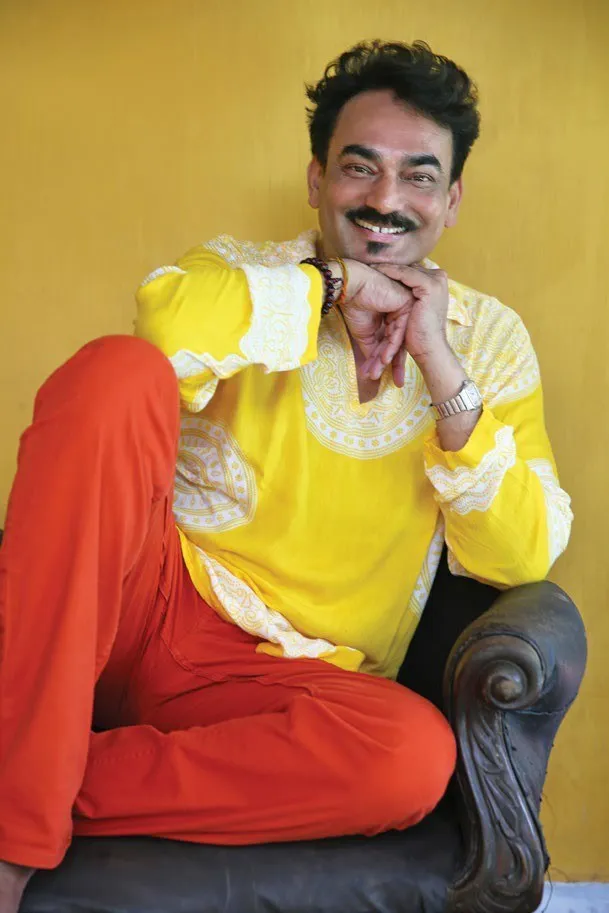




From dressing salads and buffet frills to fabricating fashion, Goa-born Wendell Rodricks has worked it all. The multi-faceted designer, author and environmentalist, shares his refreshing take on the fashion industry.
When and where, did your passion for fashion begin?
 L’Officiel India DigitalRead L’Officiel India in the digital libraryEvery issue and every cover story, on TCG Media.Read now
I had no idea about the word ‘fashion’. But from a young age, I was consulted and asked an opinion on all design-related matters, whether a wall or a hemline. I recall being merely seven or eight when design-related questions were asked of me. I guess family and friends knew I had a design sensibility, before I did. Later, I applied that talent to the hotel management trade for six years, before I moved to study fashion. People often ask me why hotel management before fashion. Truth is that there were no colleges to learn fashion and the few courses that taught sewing were at women’s home science colleges. So I opted for the infant luxury hotel industry. But my heart was always in fashion, and I eventually made the transition.
Being a catering graduate, do you associate culinary skills with fashion?
It was an easy transition; dressing women after dressing salads and buffet frills. In the end, food is very close to fashion. It is all about aesthetics of the senses. Food and fashion share a lot in common. There are also commonalities when it comes to colour, texture and proportions. Above all, there is the matter of panache served in an ambience of luxury and dreams.
You were the first Indian designer to receive an invitation from IGEDO. Enlighten us on your experience in Germany.
In IGEDO, Germany, I learnt discipline. They approached me in February, and wanted five garments to shoot, in July and the show was in October for the next year’s spring-summer. It was an unforgettable experience. To have the clothes on a supermodel, Helena Christensen, being photographed by Mario Testino, it still feels like a dream. What IGEDO also taught me is that one needs to show overseas to truly get the stamp of approval back home. Later, when I was invited to show as the first Indian designer at the prestigious Salon Prêt-à-Porter de Paris, the results were the same.
Your work as an environmental activist is remarkable. What change do you wish to see in the Indian fashion industry, when it comes to synthetic fabrics used, while designing a product?
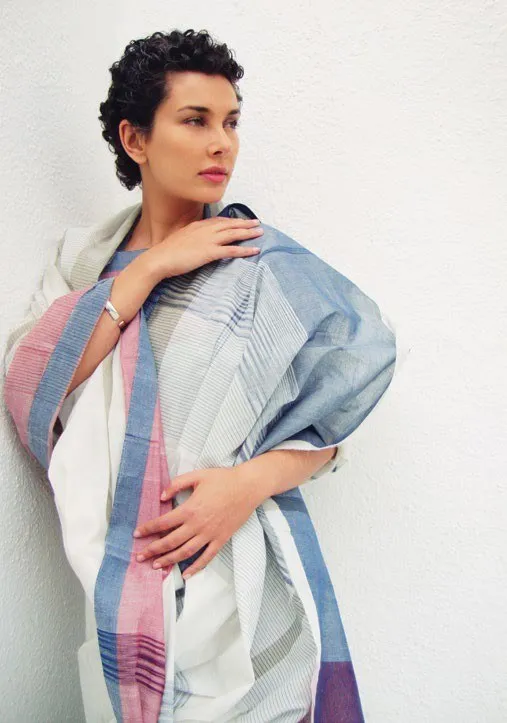
It isn’t difficult to understand the impact of fashion on our environment. Understand that all fibres, whether natural or synthetic, affect the planet. In fact, everyone in fashion needs to read To Die For: Is Fashion Wearing Out the World? by Lucy Siegle. One needs to think before making a purchase, as every single garment influences the environment of this earth and consumes our natural resources. Just one T-shirt needs over 20,000 litres of water, from cotton growth to final retail state. It is mind-boggling how much pasture land is used to make wool and how many mulberry trees are needed to harvest silk.
Your views on IRFW (India Resort Fashion Week)…
India Resort Fashion Week is still in its infancy. If it garners business for all parties, it will be a successful week. In the end, all fashion weeks that work for fashion must realise that this is not a fashion formula to make money on big names, film stars and sponsors. Behind the fashion weeks is the fact that we need to stand for a cause towards Indian fashion on a global level.
What keeps you hooked to the fashion industry?
My passion for fashion, clothing and style holds my energy alive for the industry. I love this industry; it is infused with youth, talent and energy. I use fashion as a dialogue to include a narrative of knowledge. I design clothes but I also teach fashion, write about it via books, like Moda Goa and The Green Room, as well as research fashion history, help social causes via fashion and contribute to society’s challenged people, by designing a collection like Visionnaire to help the visually impaired read Braille on clothes. All these areas of fashion make it a very exciting place to be.
From the National Museum of Costume in Lisbon to your argument of Indian clothes bearing a strong influence from other parts of the globe, you have been a fan of history. What is your core thought, while designing for a contemporary audience?
I keep it minimal, eco-friendly, resort, Goa flavoured, and cut clothes using Indian geometry. I treat my ramp as an altar of creativity and culture. We must take forward the legacy of Indian clothing in a modern manner, and for this we need to know our costume history and innovate to keep it alive. We are one of the very few countries in the world that has such a vast referral of clothing, weaving, dyeing, and embroidery. We need to enhance the work of our artisans and expand their skills through new designs and technology. We cannot keep Bandhini or Phulkari, Jamdani or Kanjeewaram in the same state that has been continuing for thousands of years. Designers need to apply their design sense to update these classics.
Your recent collection ‘Ahead of the Curve’ eliminates curvaceous boundaries. Was that the prime purpose of the collection?
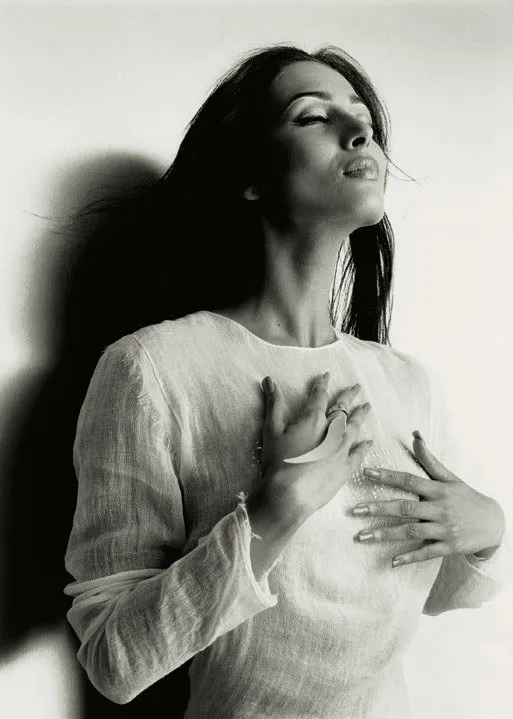
For me personally, the raison d’être behind ‘Ahead of the Curve’ was to master the curved seam. It is a difficult job to master a curved line; it runs into many bias problems while sewing. Fellow designers and tailors looked at the clothes and marvelled at how none of them puckered at the seams. It was a difficult collection that challenged the studio.
Tell us about your collaboration with Portico.
My bed and bath collection is an extension of our clothing lines. At the moment, we are working on a translation from Indica Emporia that we showed at LFW. We are infusing the Portico collection with the colours, textures and styles of the Indica Emporia collection. It is a joy and a challenge to do Portico. I focus on the fabric and thread count, so that the client gets a good night’s sleep, apart from the aesthetic visual quality. Frankly, an entire room décor can be based on the bed and bath linen.
What’s the next target for your brand–Wendell Rodricks?
I am passing the reins to my assistant, Schulen Fernandes. We are working on our next collection, and she is doing the major work. I am sure it will be infused with a new, youthful energy. Most designers think about a successor after they retire. I want to phase in Schulen, as I phase out to do my Moda Goa Museum, due for opening towards the end of 2018.
After Moda Goa and The Green Room, should we be looking forward to another inside story from your end, anytime soon?
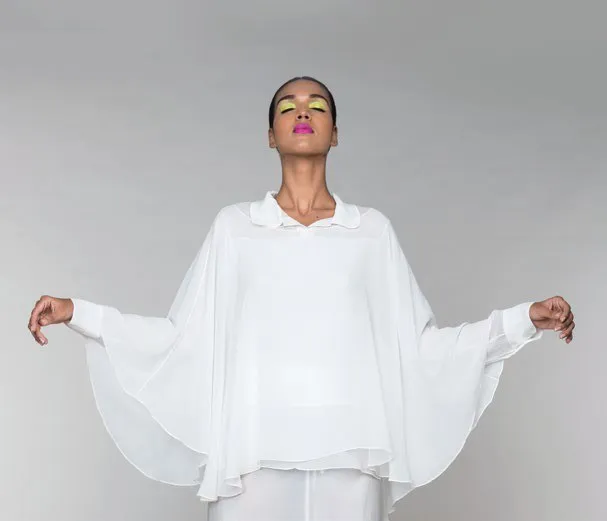
My novella, Poskem, will be out this year. I felt that the matter of adopted children among Goan families should be addressed, as my generation was the last one to witness the ‘Poskem’ tradition.
Do you draw inspiration out of your childhood in Colvale, Goa, when it comes to aesthetic and signature colours?
The essence of my village is always in the clothes now and will always be. It is a part of the Wendell Rodricks label’s DNA. Each day, this village inspires in many emotional, visual and aural ways. The influences eventually end up as a visual translation on the clothes, with a strong emotional connect.
As we appreciate your take on the Coconut Tree controversy, what other changes would you push the government to initiate in Goa?
This government has been the worst for Goa, environmentally. I hope we have a new political party on the horizon that cares for the heritage, culture and environment of the city.
Each collection of yours recites a fresh story for the viewers. What is your first step in the process of designing a collection?
I need to feel a strong, deep-rooted passion for the theme central to the collection. When that emotion is in place, the rest is easy.
Tell us about your recent collaborations.
At the moment, I am collaborating with a company that celebrates people who are a certain size, as they cannot find clothes in the retail space. Let us see how this works out. It will be a challenge to do, but I love a challenge. Throw one at me and I will grab it with opportunistic enthusiasm.
A path-breaking thought you would love to share...
I hope India continues to saturate our clothing with the 6000-year-old legacy of Indian clothing that we have been gifted with. If we celebrate Indian clothing, textiles and weaves, the world will come to us and India will once again become the vast emporium of textile that we once were in ancient times. The handmade quality of our clothing legacy will then become a true celebration of our arts.
From the July 2016 issue of L’Officiel India.
Spotted a mistake, or your photo used without permission? Report a correction