Shantanu & Nikhil: Vintage Vantage
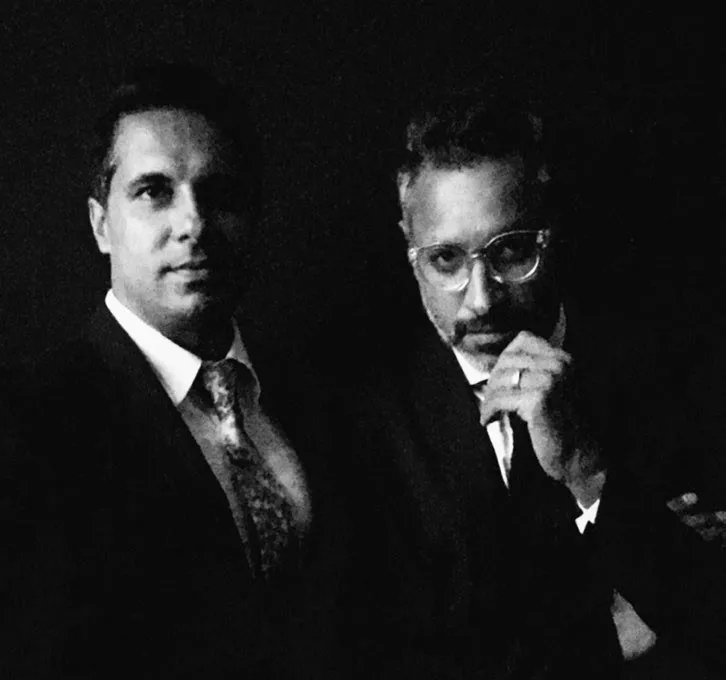




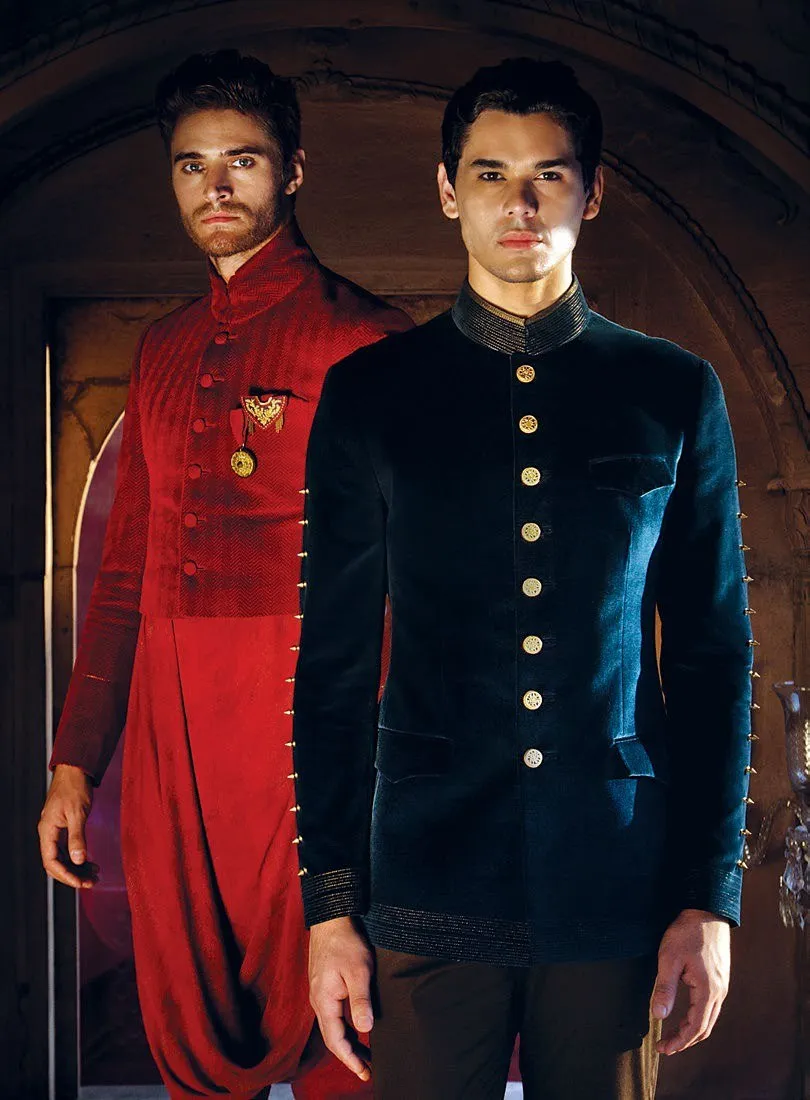
In 15 years Shantanu & Nikhil Mehra have made their label a heady mix of traditional ethos, modern thought and free-spiritedness to create a lasting charisma.
What has been the most challenging part of this 15-year-long journey?
 L’Officiel India DigitalRead L’Officiel India in the digital libraryEvery issue and every cover story, on TCG Media.Read now
S&N is celebrating its 15th year of being in the business of fashion. Even though our journey has been extremely enriching in terms of our brand extensions, collaborations and innovation, all of that wouldn’t have been possible, if we remotely shifted our focus from the brand’s main intent which is to contemporarise vintage India. This aesthetic of minimalistic Indian couture with an edge was challenging for a good part of our early years (2000-2009) since ceremonial dressing in India until recently, has always been synonymous with over-the-top embellishments.
What has been your brand’s ideology?
The seamless integration of Indian tradition and Western expression is now commonplace and without a doubt, we have played an important role in aggregating this transition into the brand. The age-old Indian culture has an undying character and spirit, but stagnation was harmful for its charisma, so we took a step forth, and thus was formed the brand’s philosophy, ‘progressive unification’. Culling the essence of Indian tradition and blending it carefully with fleeting modernity, evolving phenomenal design and free expression is not just our expertise, but our passion too.
How have accessories played a big role in your brand repertoire?
Right from the outset, when we started doing runway shows in 2001, accessories were always positioned mainly as fillers that were primarily doing the job of completing the collection from a storytelling perspective. We never thought of commercialising them, and marketing was geared more towards clothes. From 2013, our intentional shift towards more cocktail contemporary couture that further translated into a strong S&N handwriting of ball gowns and Indian wear for both men and women, prompted us to provide a complete solution to brides and grooms, who could now buy stylish footwear and clutches to match their outfits. Our accessories too, mainly footwear, fall into the bespoke culture of customisation, thereby making it more personal, just like our clothes. In the future, you will also see S&N fragrances being a strong part of our retail experience.

How have you been able to maintain a fine balance between commerce and art?
Theoretically speaking, our respective education backgrounds, me having done my MBA from Ohio State University and Nikhil’s Masters in fashion from the Fashion Institute of Design & Merchandise, Los Angeles, gave us the confidence to nurture a brand that had the versatility to withstand the pressure of the ultra-dynamic fashion scenario in India. My understanding of market dynamics and the ability to use marketing as an effective tool to support Nikhil’s design vision for the brand, is what has helped us position ourselves in the competition for contemporary fashion. Our motto that the product should always be at par, if not bigger than the brand, has urged us to keep pace with competition, if any, and stood us in good stead.
How tough is it as brothers to work together?
As brothers we have always been close to each other, yet very distinct, as two individuals. I guess it is this peculiarity in our role specification that brings the best out of each other. We constantly compete with ourselves in our own respective spheres, while giving each other space and yet have the energy to impart some learning to one another. So today, I can easily understand the dynamics of the creative process, while Nikhil has become a better entrepreneur without limiting himself to one particular domain. In other words, we empower ourselves to learn about each other’s area of expertise without actually falling into the trap of overlapping.
Both of you worked in the US. What made you leave and come back to your country?
This is an interesting story. I was certain that I wanted to work as an investment banker in USA during 1995-1999, until I witnessed Nikhil’s graduation show in LA. It was then that I decided to harness his talent by giving up my job in the US to give Nikhil an opportunity to hone his skills here in India, when everything was so traditionally perceived about Indian fashion in the West. I took it upon myself as a marketing challenge to ride the wave of contemporary fashion in India, and Nikhil soon followed suit once everything was set up in terms of infrastructure.
Where do you think Indian fashion is going with its slow, but steady global connect?
When you compare what Indian fashion was some 15 years ago, there is a marked improvement as we speak today, courtesy the advent of fashion weeks and the meteoric rise of organised retail here in India. Nonetheless, despite fashion garnering a strong support from the burgeoning media, we still haven’t got a lot of the younger talent imbibing the business ethos of running a brand effectively, or clothes which are not just desirable, but also accessible and marketable. Most of them get too caught up in the creative process and as a result lose out on a strong brand distribution network. Besides, the design fraternity also lacks camaraderie at most important trade levels and we don’t come across as a very cohesive coterie in the eyes of fashion investors.
How important is it for you as designers to dress Bollywood?
One cannot ignore the fact that Bollywood is perhaps the most glamorous and talked about industry not only in India, but across the world, so thinking that one can stay away from it without leveraging any brand goodwill would be a blatant lie. As designers, you always want some of the top celebrities to endorse you and that’s what you work for. We have reached a stage where the paparazzi culture is getting stronger and what you wear and how you wear it, instantly gets eyeballs. From our perspective, we have always looked at dressing up stars more from a red carpet point of view than getting into costume designing for movies.
How has social media impacted the fashion industry?
Social media has taken customer integration to an absolutely new level by emotionally including them, thereby making them more accessible to us. You cannot ignore the fact that the future belongs to technology, but both Nikhil and I are also a little old school in how we do things, so there will always be a balance of the traditional and modern in the way we market ourselves as a brand.
What are your views on e-commerce?
We too, are in the midst of challenging ourselves by developing a full-fledged men’s digital ecosystem, selling affordable yet stylish lifestyle products to the world. Hopefully, this brand should see the light sometime during mid-2016.

What do you think is your weakness and also what is your biggest strength?
It hasn’t been a deliberate attempt, but as individuals we have never looked at networking to be our weapon. Instead, our love for sports has brought in a competitive streak in our DNA, which translates into brand building hunger that may at times come across as arrogance to some people in the industry. But we were clear that this is not the place and industry to make friends. This way, we are less influenced and true to our work.
What aspect of fashion do you find most exciting?
As couturiers, everything creative has to start with a strong inspiration and emotion, which in turn, has the power to tell stories. Any collection of ours which goes on to be presented on fashion runways is the most exciting as this is where our entire story-telling ways come alive through the journey of our clothes. It is almost like a film being unveiled to the audience with a time duration of 10-15 minutes.
Will you ever think about prêt and offer clothes for middle-class India?
Somewhere in the brand’s DNA is the desire for S&N to be worn by every individual in the world. Perhaps, that was the reason why we collaborated with sports giant Adidas to create a true prêt-a-porter line of chic sports-meets-lifestyle collections for three years (2010-2012). While we started to broaden our horizons by focusing on minimalistic couture in the occasion-wear segment from there on–a part of fashion that was a big miss around that time in India–we think the time is now right to incubate a brand that has the potential to live its own legacy just like the mother brand S&N.
As fashion is moving away from bling, what’s your take on minimalism?
S&N as a brand has always advocated minimalism in its full glory, where patterns, silhouettes and refined surfaces become the wearer for us. It is not that we didn’t struggle in the early years of our brand rationalisation as we had to bring about a radical mindset shift through our work at a time when ceremonial dressing was at its blingy best. It was perhaps the toughest job for a couturier like us, more so in India, to advocate couture minimalism but that’s what makes this country so exotic in its demographics and belief. In fact, today minimalism is the new cool for us.
From the January 2016 issue of L’Officiel India.
Spotted a mistake, or your photo used without permission? Report a correction