Roll, Camera, Fashion!
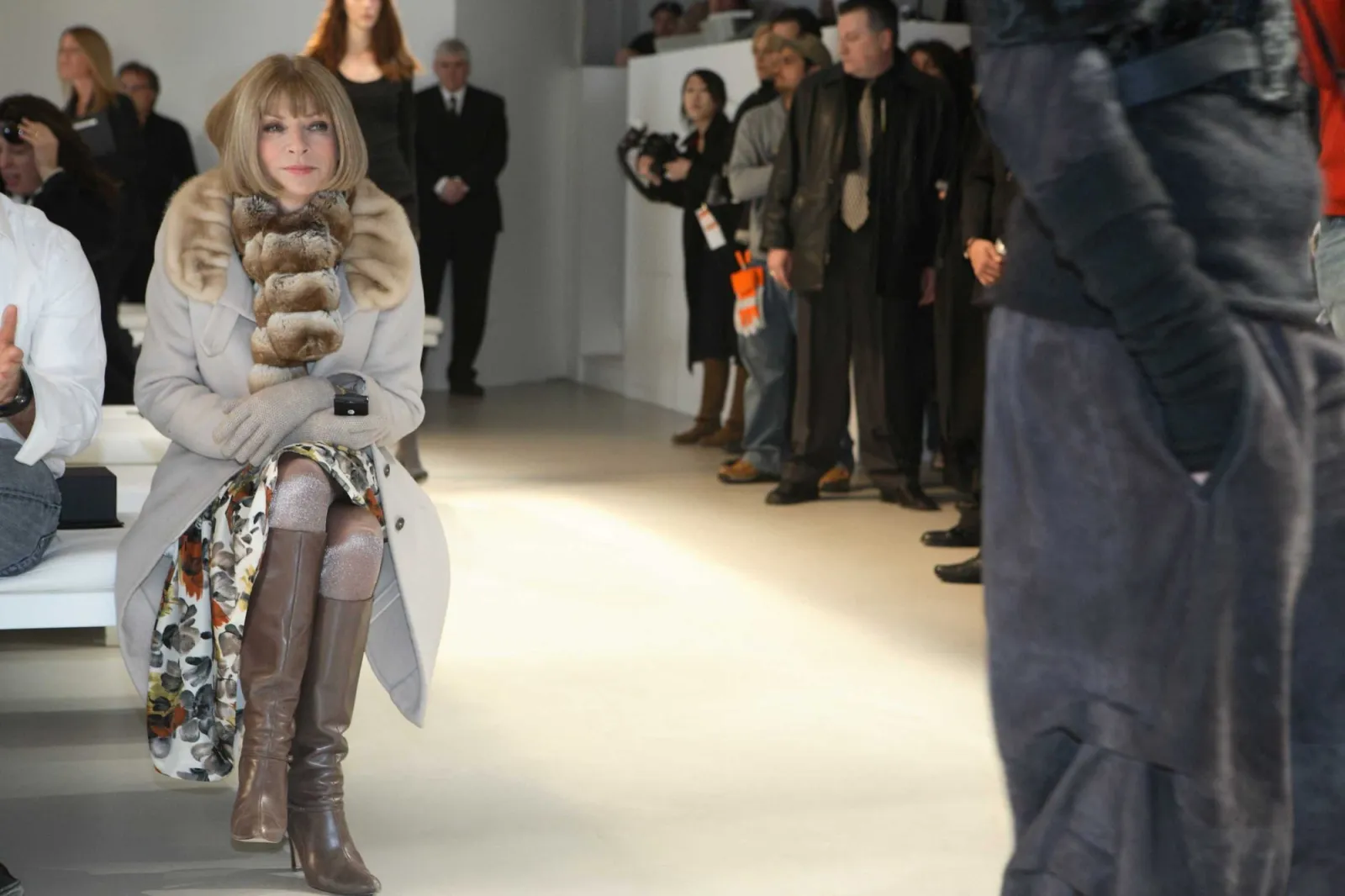




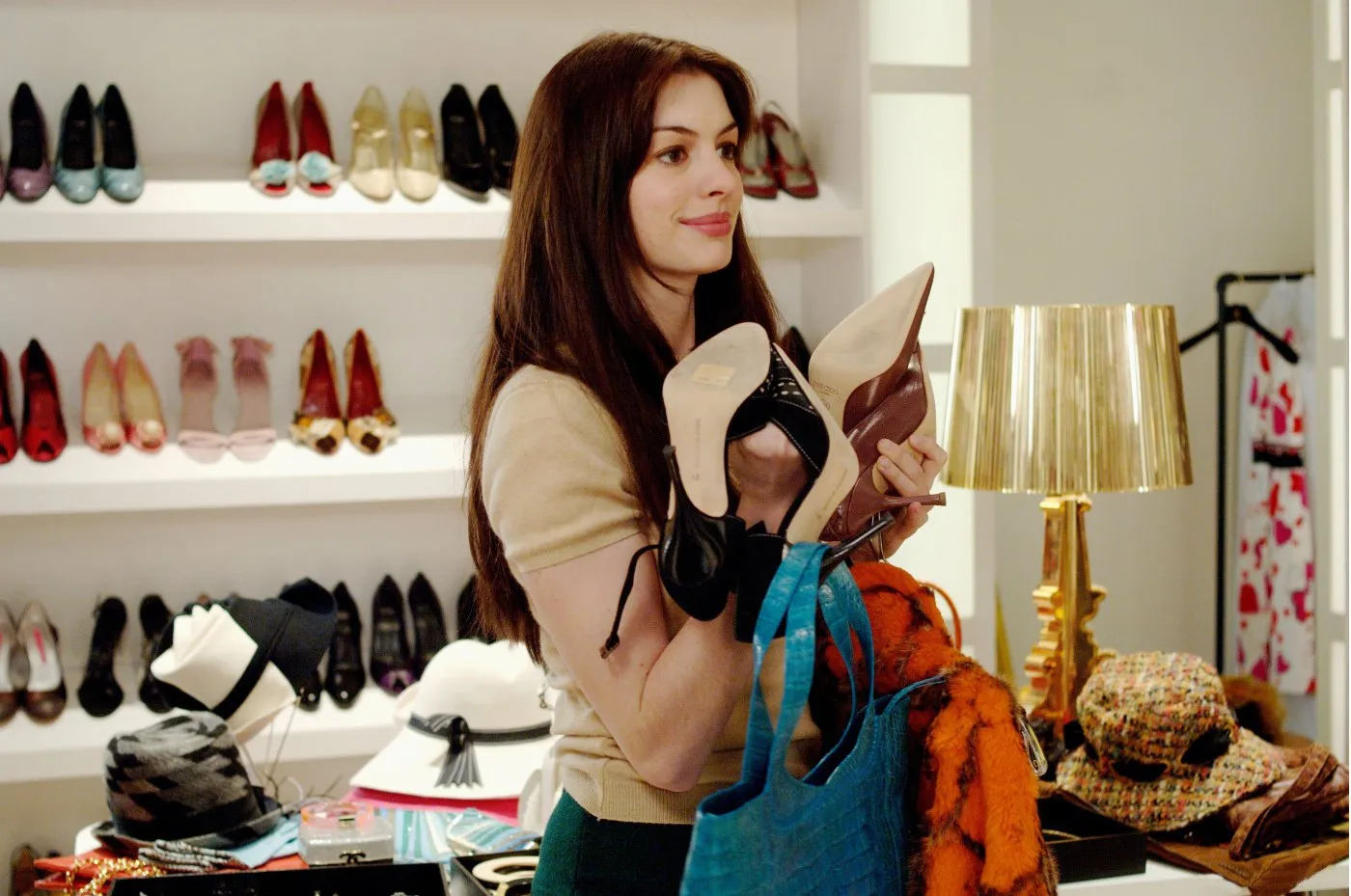
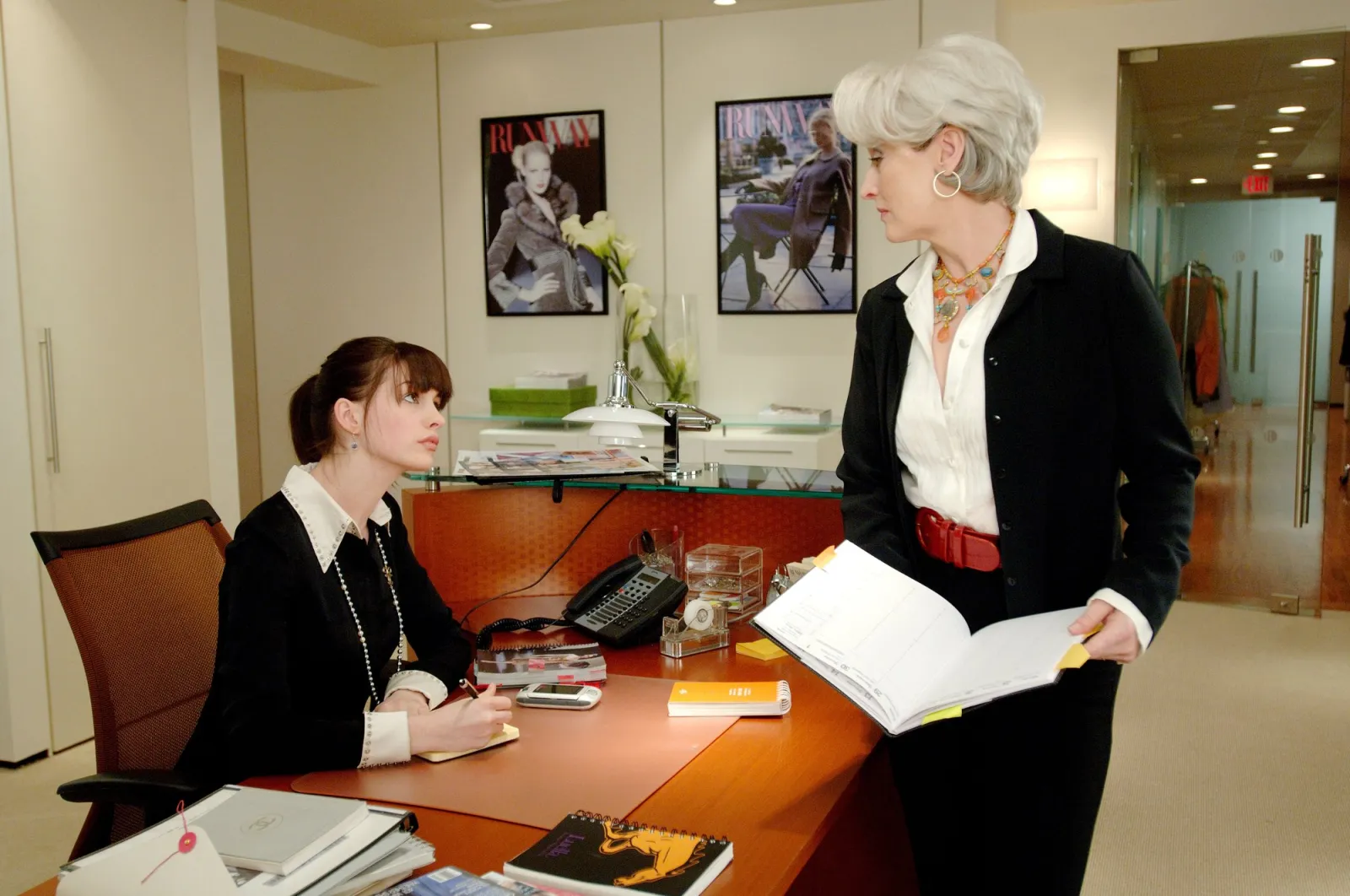
The Devil Wears Prada, an adaptation of Lauren Weisberger’s 2003 novel is story of Andrea "Andy" Sachs (Anne Hathaway), an aspiring journalist fresh out of college, and her passage from a rather demure girl with little sense of fashion to becoming the ‘Woman Friday’ for her terrifying and charismatic boss, the silver-coifed Miranda Priestly (Meryl Streep), the editor-in-chief of the fashion magazine called Runway. As an assistant to Miranda Priestly, a job for which “a million girls would kill for”, Andy puts up with Miranda’s eccentric and unpredictably outlandish behavior for a year, in hopes of getting to write as a journalist. She gradually learns the ropes of the trade despite, constantly, being at the wrong end of her icy & unsympathetic shark of an editor-in-chief. For her role, Streep garnered her record 14th Oscar nomination as Best Actress for her outstanding interpretation of Priestly, a character allegedly inspired by US Vogue editor Anna Wintour. Although the film has with fashion as a background, designers & fashionistas, barring Valentino, wary of annoying Anna Wintour, were conspicuous by their absence. Nevertheless many allowed their clothes and accessories to be used in the film, making it one of the most stunningly costumed films in history.
Coco avant Chanel aka Coco before Chanel (2009)
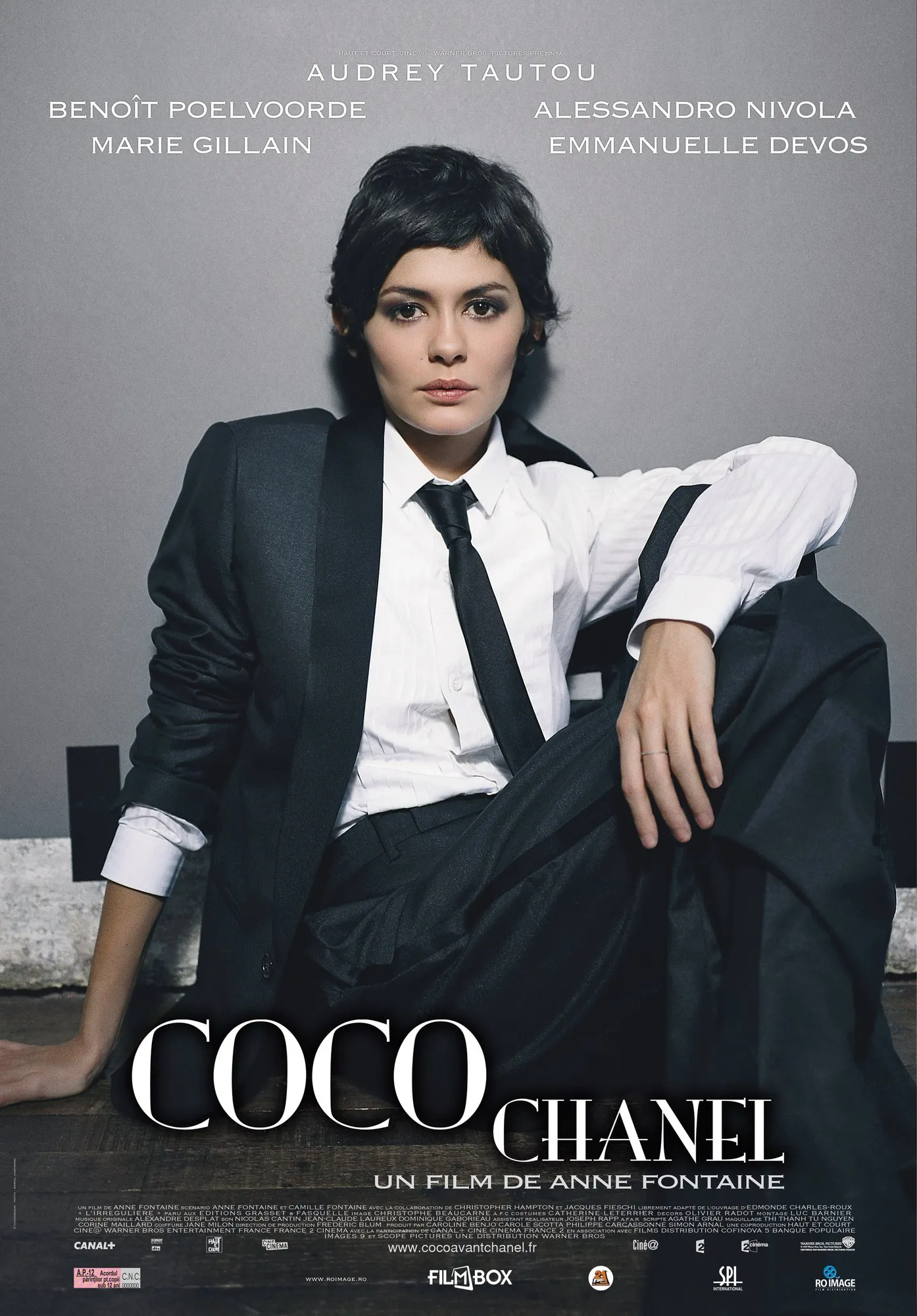
Directed by Anne Fontaine and adapted from the book “L’Irrégulière ou Mon Itinéraire Chanel” by Edmonde Charles-Roux, the film tells the story of iconic designer Coco Chanel, portrayed by the talented French actress Audrey Tautou. Nominated for four BAFTA Awards, three European Film Awards, six César Awards and the Academy Award for Best Costume Design, the film tells the story of young Gabrielle ‘Coco‘ Chanel before she became a brand and a public property. Starting as a smart, albeit poor bar performer & milliner, the film depicts the early life of the legendary designer before she was revealed to the world for her fashion, perfume, pearls and an emancipation of women through her clothes & attitude. Behind the clouds of cigarette smoke, the defiant Coco sports boyish short hair, wears a man suit and is unafraid to make a political statement of finding the women’s clothes of her time, as uncomfortable, impractical, sexist and outright absurd. Carrying the burden of deep mourning due to loss of her lover, the story tells us the prudence behind the iconic clean lines of Coco’s designs juxtaposed with the chic black & white style statement of her clothes.
 L’Officiel India DigitalRead L’Officiel India in the digital libraryEvery issue and every cover story, on TCG Media.Read now
Diana Vreeland: The Eye Has to Travel (2011)
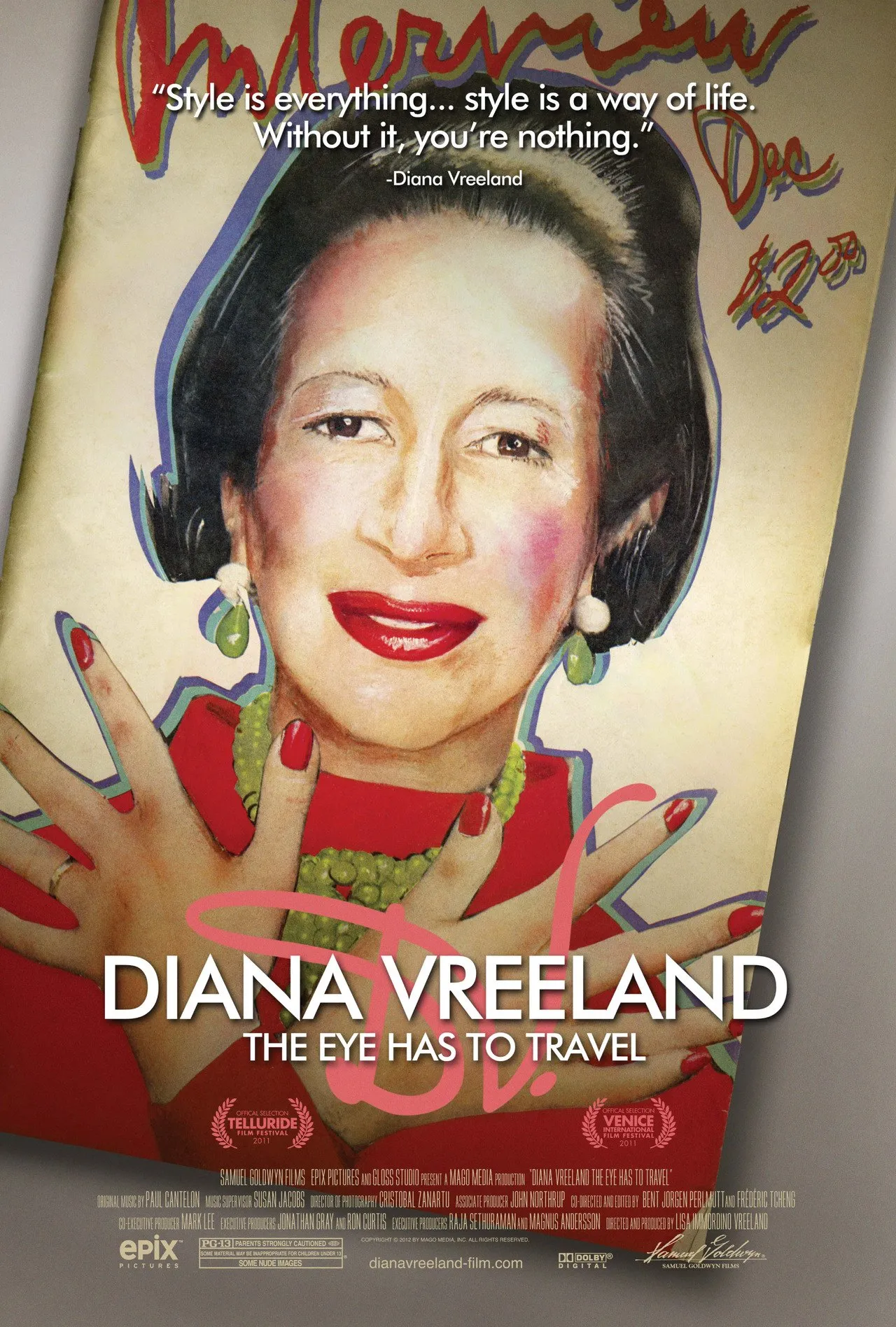
Yes, there were editors of Vogue before Anna Wintour occupied that hallowed pantheon. The most famous of the lot was Diana Vreeland or D.V, the original ‘Miranda Priestly’, one of the first fashion editors to become a celebrity. The Eye Has to Travel, a film by the wife of Diana Vreeland’s grandsons, showcases the legacy of ‘D.V’ and her work at Harper’s Bazaar and Vogue. Having premiered at the 2011 Venice International Film Festival, the film has recorded audio and filmed interviews of Vreeland. Beginning with her childhood, the film showcases Vreeland’s journey through fashion & jazz filled New York of 1920s and her imagination in making Harper’s Bazaar and Vogue one of the most sought after fashion publications. D.V could very well be the umbilical cord connecting fashion of bikini & blue jeans with popularity & acceptability of such post-war clothes. The documentary features recordings of various people including models, photographers, and fellow editors, who worked with Diana and shared her vision and foresight on fashion reporting. The film ends with Vreeland’s time as a consultant for the Costume Institute of the Metropolitan Museum of Art after she was asked to leave Vogue in 1971.
The September Issue (2009)
‘The September Issue‘ is a documentary showcasing the work of fashion editors and stylists as they put together the most important issue of year for Vogue. The film revolves around the publication team at US Vogue office where they meticulously put together a gigantic issue of glossy magazine running into 840 pages and weighing about 2 kilograms. The film takes the viewer right amidst the action- packed office of American Vogue to get a peek at behind-the-scenes drama with Editor-in-chief Anna Wintour and her immensely creative team in putting together issue of fashion bible. A documentary by R.J. Cutler, which required the film crew to spend eight months at Condé Nast offices to collect some 300 hours of footage to construct a feature length documentary brings you closer to the real Anna Wintour and the power she wields over the fashion world. Giving a ring side view of the inner workings in the most admired fashion publication of the world, the film is a dream come true and a must watch for anybody aspiring to work at a fashion publication.
Bill Cunningham New York (2010)
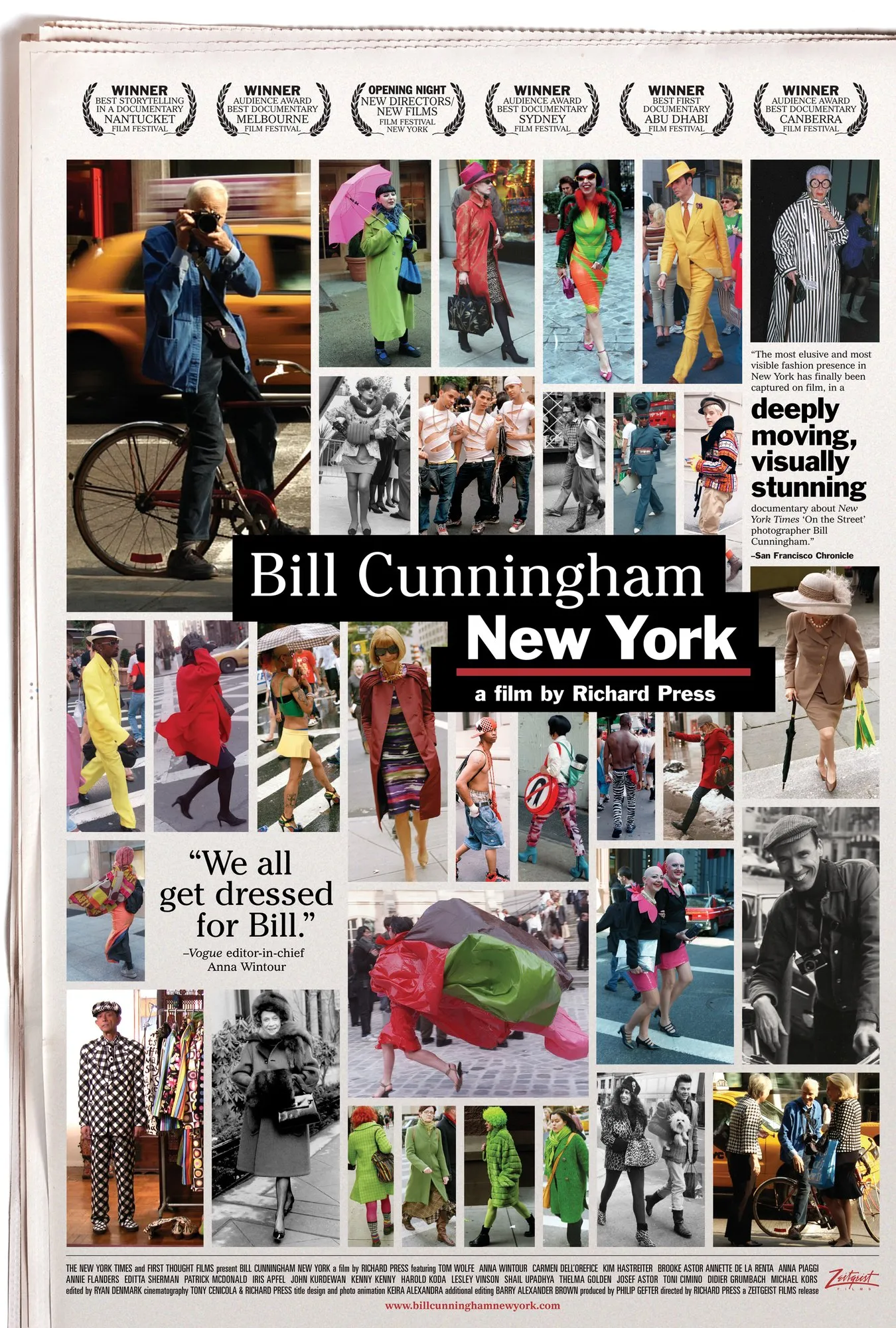
‘Bill Cunningham New York’, a documentary showcases ‘Bicycle Bill’, an 84 year photographer who goes around New York City on his bicycle, taking pictures of local people for the New York Times, the publication he has been working for decades. An epitome of journalism in fashion-on-street photography, Bill, in his trademark blue workman's coat, is now a permanent fashion fixture of the Big Apple, as he tirelessly works as a ‘fashion anthropologist’ to record imagery of fashion of the contemporary times with New York as a background. Richard Press’s unusual documentary records the exploits of our hero Bill who has been tirelessly documenting for posterity, since 1970s, his ‘vision of New York fashion’. Humorous, outspoken and incredibly warm, Bill is an unusual portrait of cinematic subject of study. Surprisingly, the people close to him (Wintour, Tom Wolfe, Brooke Astor, and David Rockefeller— who all appear in the film) neither have a complete idea of him as a person nor have they been able to figure out the reasons behind Bill’s unquenchable thirst to keep recording people-in-fashion of New York for decades. The film is a delight to watch for people who aspire to record or report the visual imagery of everyday street fashion consumed by real people in the most natural of the environs.
Valentino: The Last Emperor (2008)
‘Valentino: The Last Emperor’ is a documentary film produced and directed by Matt Tyrnauer, Special Correspondent for Vanity Fair magazine. It features a close and intimate exhibit of lives of Valentino Garavani, one of the richest and most admired ‘couturiers’ of the world and his business partner and companion of 50 years, Giancarlo Giammetti. One of world’s most famous designers, Valentino has crafted dresses for the most glamourous of women, including Jacqueline Kennedy Onassis. This master craftsman has created hundreds of gowns which have adorned the wardrobe of most well-known people of the world. Over 250 hours of footage has been edited into an unforgettable documentary which provides privileged access to this legendary craftsman’s most guarded intimate details of lifestyle and work space. Showcasing his most private space of his home, his yacht, and even his private jet, it’s a rare peek into the mind and time of the grand emperor of couture called Valentino. Illustrating the painfully slow and deliberate process of hand sewn clothes (Valentino’s atelier has no sewing machines), it shows the creative process of vintage custom-made dress-making of yesteryears. Shot over a span of two years, it is an unprecedented peek into the life of a millionaire designer before he relinquished control of the label over which he presided for 45 years.
Blowup (1966)
Blowup, or Blow-Up, is a 1966 film directed by Michelangelo Antonioni is a stylishly crafted mystery-thriller set in the swinging 60s of London. Inspired by Julio Cortázar's short story, "Las babas del diablo", it was talented film-maker Antonioni’s first English language production. Closely resembling the real London photographer David Bailey, the protagonist, Thomas (David Hemmings), a fashion photographer, finds something amiss in picture that he captured with his camera. Narrating the psychedelic and trendy world of the 1960s fashion photography, as well as depicting casual sex, drugs and rock'n'roll, Blowup is more of a feature-styled documentary than a regular flick that one would expect. Psychedelic colour scheme juxtaposed with pot parties and college kids playing tennis with imaginary balls, this film accurately traces the bygone era of experimental fashion & culture. The music, scored by famous jazz pianist Herbie Hancock is mostly diegetic, thus providing a glimpse of what the real sound of London would be in that era. Winner of the Grand Prix at Cannes, the film was the highest-grossing art film to date in America.
Notebook on Cities and Clothes (1989)
Commissioned by the Centre Georges Pompidou in Paris, Notebook on Cities and Clothes is a film made by German director Wim Wenders. Wender overcame his initial disdain and contempt for fashion and reflects on differences as well as similarities in cultural values of the east and the west. The film shows designer Yohji Yamamoto, known for working with monochromatic colour scheme and the philosophy of fusion of Asian culture with European culture in his clothes. Considered as one of the most under-rated work by Wenders, the film explores the relationship between film and fashion. The film delves on similarities of the craft of sculpting a film and crafting a piece of fashion. It investigates the role of design of communication and contrasts it with skill & philosophy that goes in workshop of a designer. The film-maker experiments with images in the electronic age and tries to find meaning of footage as the designer Yamamoto prepares to introduce his collection. Taken over a period of one year as a one-man team, the film is as much as the craft of ‘fashion film’ personified as it is of meditation to find a hidden meaning and common elements of the contrasting method of giving shape to a product.
Factory Girl (2006)
Factory girl is a feature film based on the life of Andy Warhol’s muse Edie Sedgwick. Factory was name of Warhol’s studio from which he created his most famous iconographies of the pop culture of the swinging sixties. The film by George Hickenlooper has Edie Sedgwick (Sienna Miller), an aspiring artist, who moves to New York City and is introduced to the pop icon Andy Warhol. Although a fictionalized biopic with lot of inaccuracies, the film nevertheless scores well in creating the atmosphere of the drug–infused, confused & experimental culture of ’15 minutes of fame’. Bewitched by a young rich socialite from one of the oldest families of America, Warhol offers Edie with a role in one of his movies. Known as the ‘Girl of the year’ in 1965 as well as the ‘It girl’, Sedgwick starred in many of Andy Warhol’s short films. Edie the would-be artist is initially lavished with lot of attention by Warhol but later in all too familiar Warhol manner of pop-consumption is dropped into oblivion. This leads to a Edie to a self-destructive path of drugs, victimhood and self-pity. Considering fashion as one of the dominant features of culture, the film showcases the contemporary fashion of the 1960s as well as the unusual fashion trademark look developed by Edie during that period - leotards, mini dresses, and large chandelier earrings and short hair coloured with silver spray. Critically acclaimed for her work, Miller as Edie Sedgwick is as much a ‘superstar muse’ of Warhol in her role as is a diva of the swinging sixties.
L’amour Fou (2010)
Pierre Thoretton’ film L’amour Fou is life story of Yves Saint Laurent, told by his lover Pierre Berge. The documentary filled with melancholy and nostalgia is a tribute to YSL’s empire of beauty and wealth. Known to be chronically depressed, YSL was known to be happy only for a speck of time - during unveiling of his collection. Yves Saint Laurent with his partner Pierre Bergé as an emotional anchor, changed the way world looked at fashion in the post-war era. Along this journey together, the couple also acquired an enviable art collection consisting of Picassos, Matisses and Brancusis. Shot after YSL’s death and around the time when Berge auctions the art pieces collected painstakingly over many years, the documentary is a study of the inner workings of private life of YSL and his partner. Curtains on expensive art pieces acquired over the years depict, symbolically, the dismantling of the pieces of life build by these two people over many decades.
Spotted a mistake, or your photo used without permission? Report a correction