Owais Husain: Of Canvas, Context & Colour





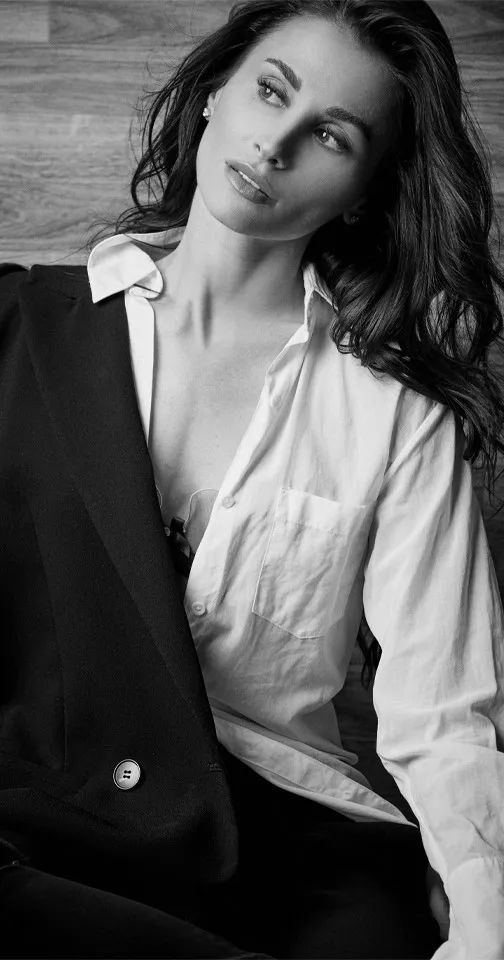
At times, it is imperative to break the imaginary walls that we confine second generation artists in, especially if the lineage is preceded by a name like M.F. Husain. Breaking the norm of looking at Owais Husain as the maestro’s son, this time instead, we viewed him in isolation, and discovered a multi-faceted artist, who has surpassed the boundaries of lineal imprints, and has carved an identity of his own. His skills are augmented through the many genres and mediums that he juggles with, to articulate the language of his innermost sensibilities.
Paintings, drawings and installations; how do you differentiate?
 L’Officiel India DigitalRead L’Officiel India in the digital libraryEvery issue and every cover story, on TCG Media.Read now
Every artist, at the outcome of making his or her art object, reaches an altar of truth. The degrees are variable, respectively influenced by the nature of the medium. While I follow the classical view that drawing is the armature of conceptual exercise in visual arts, for me it is the least dishonest confession of truth in every art practice. Exposed and bare, it lies unveiled. On the contrary, painting offers many devices in its manipulation that present a challenge to expose that truth. The mounting of installation art whereas, for me, is always a labyrinth of secrets, to be felt, or missed, irrespective of how far you wish to explore it.
What is your signature style that binds your visual vocabulary?
As an artist, I am in a pursuit to outline a lexicon of urban mythology. This is born from a need to discern my identity in a consistently fluctuating world. Questions of charting misplaced ideas of origins and homeland amid a reality of flux have influenced the methodology of curated images, as well as my art practice.
What kind of works are you exhibiting at PUBLICA 2016? Also, acquaint us more with the House Of Cards.

Originally a light installation that is now appropriated to be site specific, my ‘Heart of Silence’ is symbolic (here) of a situation within a circumstance. Workshops with students of plastic arts and media are a productive vehicle in this exercise. Lasalle Art Institute, Singapore, is first in the itinerary of building my far-flung community of ‘House of Cards’, followed by the International Institute of Fine Arts, Modi Nagar, India. Later, this project hopes to reach out to locations as wide as South Africa and Mexico.
Are your leitmotifs offsprings of an imaginary world, or do they germinate from real-life encounters and innuendos?
My journey as a visual storyteller begins and ends in the real world that I exist in. The work tends to be mostly autobiographical in nature, wrapped in a thick veil of metaphors and measured accidents. Having said that, I seek to disconnect with the obvious conceptual dialogues, when being in the moment of my art and object making process. Therefore, at that time my mind is populated more with grammatical concerns (i.e. of form, space, colour and the tactile) than with ideological crossfire. As a viewer, I have grown to be stirred more with media (film, photography, music) than with any other drama. In recent years, most of my works have been conceptualised in the seeds of my poetry.
Some of your themes are layered and depict trepidations and jubilations on the same plane. Do you think it is easy to communicate with onlookers through a complex visual imagery?
Every work takes a lifetime to arrive at. Obligations to clarity can be extremely challenging most of the time. Just as we live in different scales existing simultaneously (like an ant to a human), where sound, speed and life spans are vast variables, there is a vital difference in the practice of communication vis-à-vis speaking and art object making. On the other hand, I indulge myself in constructing titles around my work, for I believe this offers a window if not a doorway to enter my house (art) for the viewer to explore. The viewer then employs his or her personal history of inherited associations to arrive at an individual conclusion. This process of individually accented interpretation is what also drives me as an artist because therein lies a semblance for the art object to exist in certain immortality.
There are several monochromes in your collections. In the field of art, do you consider them restrictive or infinite?

This is subjective to the nature of a particular work or its omnibus. Initially, I used the monochrome device as a method of sculpting a two-dimensional form with light. Singular colour played a vital role in the relevant allegory, a certain state of thought as it were. Now, I have found new paths within a range of limited colour. It plays out like an ethnographic voice in my dictionary of urban and personal mythology. Interestingly, while working in multiple locations, I have also grown to appreciate a palette that is sensitive to light that forms a unique patina in respective parts of the world.
Do you think artists are burdened with boundaries?
We inhabit an over-compromised and growingly dogmatic world. Artists, as humans first, play out their emotions in real blood and sweat and thereafter seek deliverance through their intellectual pursuits. Yes, we instinctively embrace the fool’s dream of utopia (in its own growing improbability) going grey in a landscape of walls and further lies. Artists perform in their roles as creators of mirrors (some cleverly for themselves and a few for others) to display all the lies possible, so that the viewer may realise the truth. Regarding questions of confinement and freedom, there is an earlier heavily allegoric painting I had titled years ago: ‘This is not my theatre’, of a shirtless boy on a bicycle crossing while balancing a shallow tightrope with eyes closed. That rings more truth to me today than it ever did.
What according to you is easier to work with, mixed or single media?
At present, I am revisiting my love of working on paper. The tactile and definitive experience of committed marks and forms, draws me closer to paths I wish to take moving forward. I believe medium is the essential thread that weaves content with the context. At times, the medium is an extension of my temperament at that moment and it almost becomes necessary to work in one or multiple mediums relevant to the demand at hand.
What are the other genres of art that captivate you?

Beginning with painting my first oil at three, I knew little else to express myself visually. At the age of nine, I was part of a theatre workshop that explored the works of Bertolt Brecht, which led me to believe that this was the most powerful form of art, where a single performer could transform a dark room with a silent audience into another reality. Much later, it was through film that I found solutions to most of my dilemmas in visual grammar and thought. My fascination with the medium was not only sculpting with light, but also with a near holistically captivating format of storytelling.
You have worked with Jagdish Swaminathan in Bhopal and Robert Blackburn at the Printmaking Workshop in New York. Share your experiences...
Towards the end of art school, I was at a crossroad in my negotiation with seeking a relevant visual vocabulary that was true to my core, and the dilemma of including a mandatory (and yet incomprehensible) “Indianness”. At that very time, I spent a summer living and working with the painter Swaminathan, in Bhopal. We spoke extensively. A lot of my oils (painted in the backyard of his house and in the stillness of the night in my room after our regularly nocturnal dialogues) were on cheap brown packing paper coated with rubber solution on the reverse. There is a quiet demeanour imbibed by most printmakers much as the one I had the opportunity to witness, with Bob Blackburn in his print studio in New York, where I began working for a short period of time, after completing art school. This offered an intensive experience to explore silence and patience, while working on lithograph stones, mono prints, simply cleaning the studio equipment, or even while visiting other print exhibitions together.
Why did cinema take a backseat in your life?
Initially, I was part of Meenaxi..., as a writer. It was in the midst of pre-production that I became involved and as a result I turned into an accidental filmmaker! Filmmaking is an intoxicant and yet very much like taming of an overwhelming beast. My fascination with the medium is insatiable and remains as such. It is also a heavily industrious effort that has scarcely any space for impulse. The true form of film as an artistic exercise, I believe, is in independent cinema. As an artist, I consistently seek that window of aesthetic valour that speaks in a relatively universal language through film. My work in this medium may have recently turned dormant yet consistent, while I prioritise my other art projects and plot the impending completion of my two recent works, in film.
Elaborate on your stint with music, especially the one you composed for the Abu Dhabi Festival of Thinkers, in 2009.

Music for me is the closest; an art form can reach out to truth through its incomprehensive tangibility. The composition in Abu Dhabi was the first of such exercises.
What are the imprints of an illustrious father that manifest themselves in your works and your personality as an artist?
Growing up in an overcrowded house that was more of a makeshift atelier, the sheer desire and ease to work in large scale has played an important role in my formative years as an artist. Perhaps, being the person I have always been, it was imperative for me to outline a language that was culturally relatable in the truest sense to myself. Therefore, it helped me even out a path of evolution for my visual vocabulary.
On the pressures and privileges of being MF Husain’s son...
There is an attitude that I understood early, while bound by the period of time when it was created, as a process has no measure of time. As humans we are victims searching for measures to pass judgment. Tangibility is often mistaken for rationale.
How does Owais Husain take a break from artistic pursuits?
There is no ‘off’ switch for me as an artist, even if it means whether I cook a meal or contemplate the drama of human folly.
From the March 2016 issue of L’Officiel India.
Spotted a mistake, or your photo used without permission? Report a correction