Isheta Salgaocar: Destiny’s Child
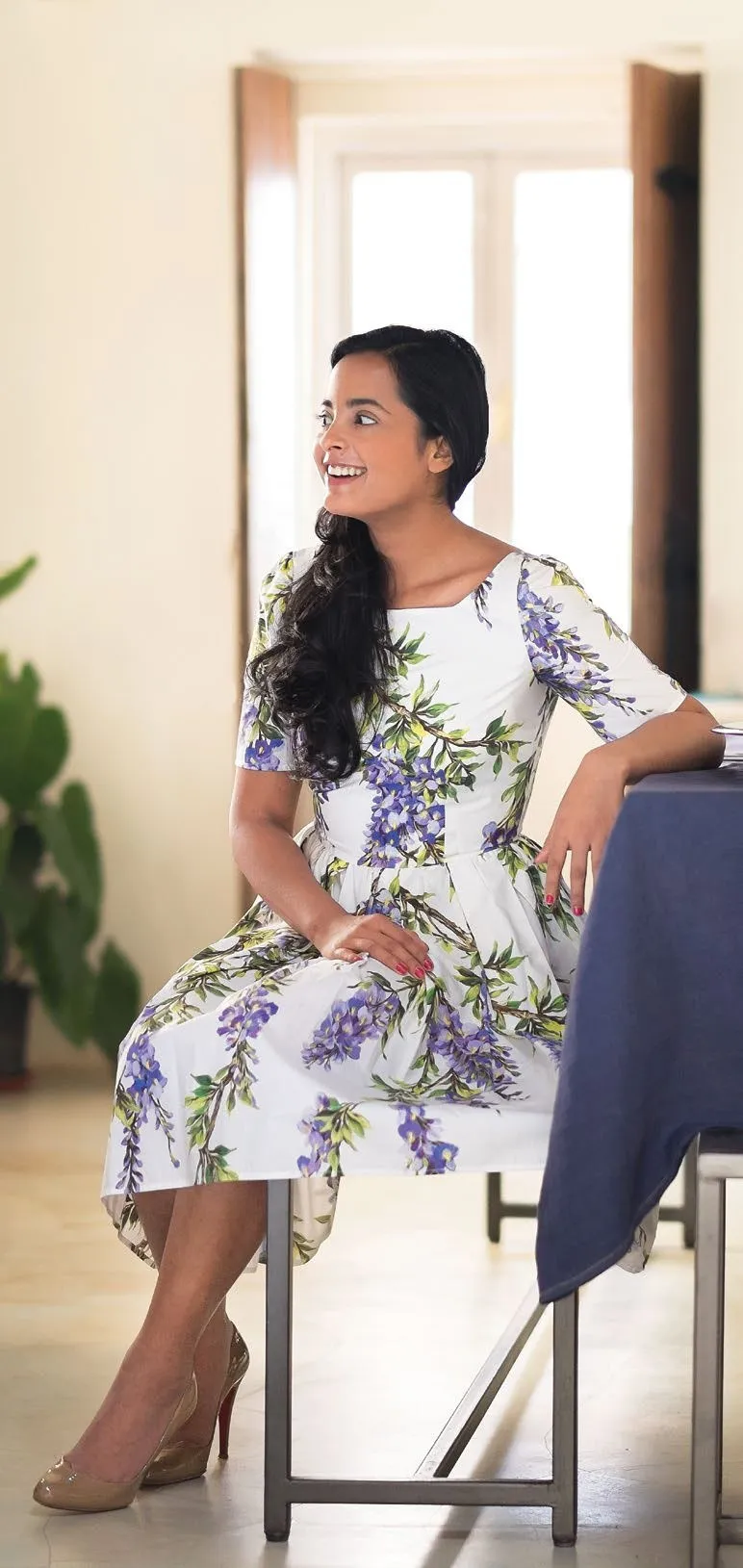




Heiress and granddaughter of Dhirubhai Ambani, Isheta Salgaocar’s individuality is veered by her wizardry with words, cultural semantics that have marked the genesis of an art centre Sunaparanta. She is writing the nemesis of a typecast as she juggles several roles at once.
How do you think a degree in English literature and political science from Stanford has formed your world view of Indian culture?
 L’Officiel India DigitalRead L’Officiel India in the digital libraryEvery issue and every cover story, on TCG Media.Read now
My academic background is that of a truly liberal arts education. English literature has always been my first love, and books were my first friends. Political Science is a passion for me, as I’m keen on keeping up with global events, whilst keeping in mind the history behind them. My relationship with Indian culture–which I see as amorphous–has probably been since birth. Sometimes, one has to go away to be able to see oneself and in my time away from India, I think my understanding of contemporary India was strengthened. I’m as much a news-junkie as ever though.
What kind of role did you play in the screening of the nightly show Charlie Rose?
I worked directly with Charlie, the executive editor and host of Charlie Rose. This included everything from writing speeches, to prepping for interviews with world leaders like Hillary Clinton and Hassan Rouhani. It’s an endless and energising process of creating a show that is informative, intelligent and in aid of keeping the audience abreast of stories, across the world.
What was it like working with internationally acclaimed artists such as Dayanita Singh, William Dalrymple and Julian Opie?
Being in the company of such geniuses is an indescribable joy, which challenges your own boundaries and exposes the world as never before.
Sunaparanta is a strong advocate for the arts in Goa. When did this initiative start in Goa?
Sunaparanta is a not-for-profit institution that was founded by my parents Dipti and Dattaraj Salgaocar as a place for art and its lovers. It continues to be a nucleus of creativity that brings together old masters and young artists, a place for conversation around art. When I was growing up in Goa, there were few places in Goa where one could interact with artistic talent on the national and international level. Several artists come to Goa and have second homes here; Sunaparanta serves as the perfect place for these minds to interact with the local community.
You’re the executive producer of ‘Sensorium’. What is the future of art and cultural festivals in India?
I see art and cultural festivals only getting stronger in India, and this is largely due to the terrific programming that festival directors are coming up with. Festivals are also coming to smaller cities–the Kochi Muziris Biennale and Sensorium for example, don’t take place in a big city and I do believe this is the future.
How do you think Goan culture has inspired your living and dressing style?
Goa, to me, is quite a liberal space. I believe Goans are able to find the positive in most things and that we enjoy the process of living itself, that of interacting with the arts, nature and sports and making it a part of our daily lives.
Who do you look up to for style inspiration?
My maternal grandmother.
Who’re your favourite designers and why?
Among the Indian designers, I adore Abu Jani and Sandeep Khosla, Anamika Khanna and Sanjay Garg. From the younger stars I love Kanika Goyal.
How do you think social media is bending cultural dynamics pertaining to the Indian subcontinent? How do you think Sunaparanta is taking this forward?
Social media allows audiences across the globe to engage with each other, and I fully embrace the trend. In terms of bending Indian cultural dynamics, I think such platforms are changing the way we see the world and how fast we can access information. Sunaparanta too is active across social media platforms.
Who’re a few of your favourite artists?
Among the visual artists–Caravaggio, Gustav Klimt, Yayoi Kusama, Subodh Gupta, F.N. Souza, Amrita Sher-Gil and Shilpa Gupta. More recently, Manish Nai’s work is interesting to me.
How do you envision the future of Sunaparanta?
We are all united in what we want, which is to bring serious programming to Goa and make it accessible to the community. All Sunaparanta events are free, but maintain a high level of quality. In the last few years, we have built on crucial partnerships that help in bringing stronger shows and artists to Goa.
How crucial do you think is Shanghvi’s role in the progress of Sunaparanta as a society?
Siddharth is a dear friend and work colleague. He is Curatorial Advisor to Sunaparanta and the Honorary Director of the Sensorium Festival. He’s been essential in upping the ante at Sunaparanta and bringing in a high voltage to the institution that I appreciate very much, and I probably don’t say that to him often enough!
How do you plan to direct the Huffington Post in the future, given that you’re the editor?
The Huffington Post India launched in India in December last year and we already have a very large number of independent bloggers that write for us on a regular basis. It’s slowly becoming a voice to reckon with in the English press, with some terrific minds across industries contributing their thoughts on national and global issues.
Few of the female writers you aspire to be like... and why?
In my private time, I write some fiction and those who inspire me most are Virginia Woolf, Jhumpa Lahiri, Elena Ferrante. I don’t however like to take a gendered approach to my inspiration.
From the January 2016 issue of L’Officiel India.
Spotted a mistake, or your photo used without permission? Report a correction