Wonder Wool
Born in 1964, the Woolmark symbol has been credited as the sign of excellence, showcasing the innate luxury and versatility of Merino wool. On its 50th anniversary, L’Officiel unfolds how wool rose to fame again.





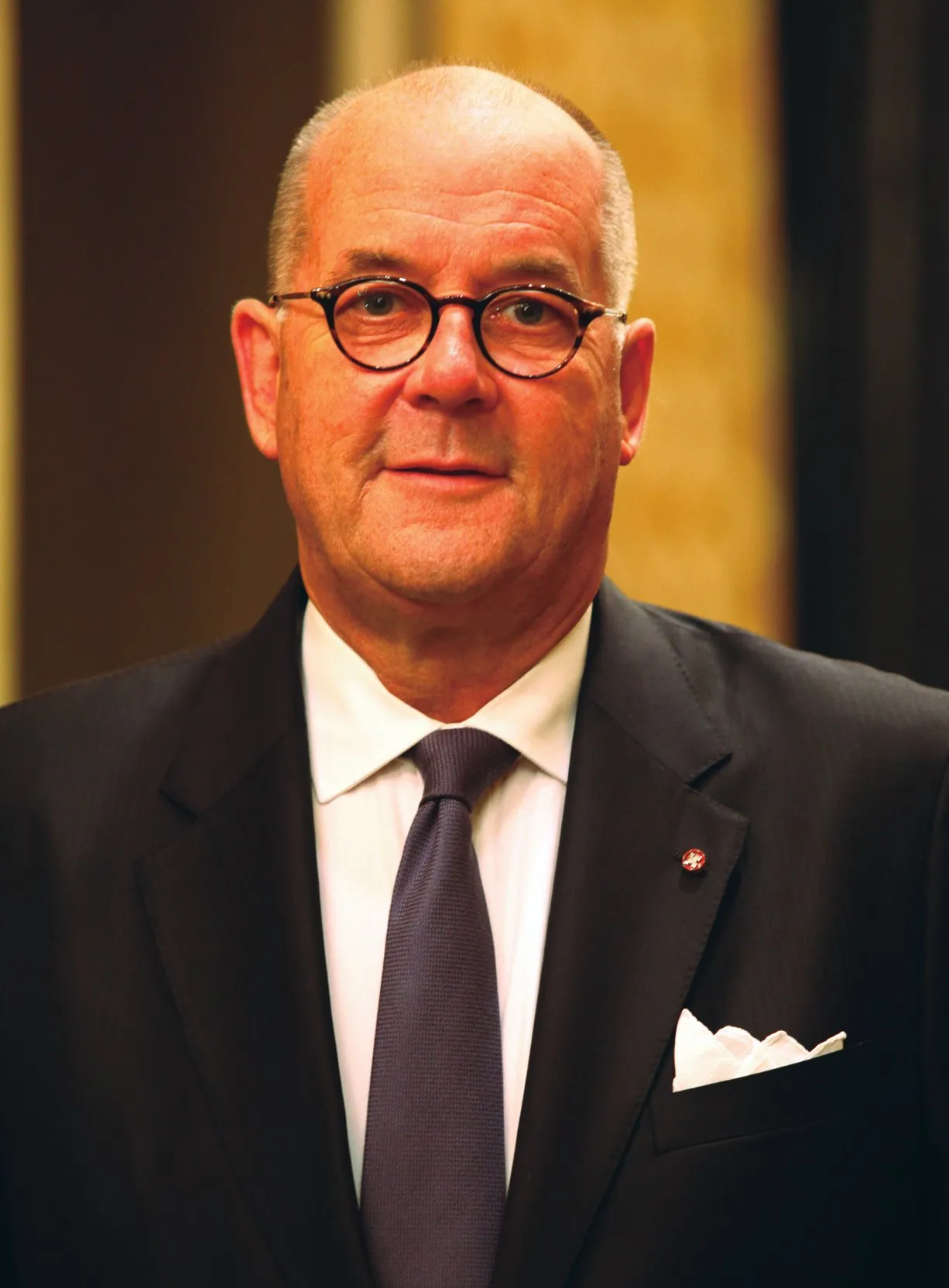
It was 50 years ago that the iconic Woolmark logo was born. Since then, it has become one of the most recognisable textile symbols in the world. The Woolmark logo–five black bands criss-crossing to form a skein–represents the softness, elegance and purity of wool. The design has been credited to be the work of Italian graphic designer Francesco Saroglia, who won an international logo design competition held by the IWS. What’s more interesting to note is that Saroglia seems to have disappeared without a trace since being named the winning designer. There are no books or webpages featuring his other works, no records of any exhibitions, or information about him. And while Saroglia’s actual existence may have failed to withstand the test of time, the logo designed by him is synonymous with the company authorising the best wool in the world. Merino, the world’s finest wool, is a unique fibre which looks, feels and wears like no other. It naturally keeps you warm in winters and cool in summers and is wonderfully soft on your skin. As the global authority on Merino wool, The Woolmark Company works with global textile and fashion industries at every level, developing better textiles and driving consumer demand. The company invests heavily in advancing the fibre and inspiring the world’s leading fashion designers to craft garments from Merino wool. The logo has, thus, showcased the extraordinary versatility and innate luxury of Merino wool, creating a fleece that is coveted across the globe. In an exclusive chat with L’Officiel, Peter Ackroyd, global strategic advisor, The Woolmark Company, discusses the future of wool.

Wool has risen from the ashes and is the ‘it’ thing in the fashion world right now. Tell us about the journey of wool over the past 50 years. One of the low points for wool was the advent of poly viscose, a somewhat unsustainable fibre that swept through womenswear like a bush fire in the ’80s and ’90s. It never had much effect on menswear, but casualisation did take its toll as suits, jackets and ties became very much optional.
 L’Officiel India DigitalRead L’Officiel India in the digital libraryEvery issue and every cover story, on TCG Media.Read now
Can you touch upon the challenges the wool industry faced to bring it back in vogue? It would be naive to say price and retail pressure did not play a key role in the move to cheaper unsustainable fibres. And these factors will not disappear. Global interest in sustainability, provenance and environmental responsibility, however, are key factors in current fashion philosophy. This fits well with the wool industry and it has successfully brought wool’s sustainable credentials to the attention of influential leaders of the fashion industry... assisted significantly by the patronage of His Royal Highness The Prince of Wales’ to the Campaign for Wool launched in early 2010. How do you foresee the wool market magnifying worldwide? I believe the polarisation of retail has resulted in a general ‘trade up’ of the middle market, particularly in UK, Germany, USA and Japan. This has seen key retailers seek a fibre ‘upgrade’ to pure wool qualities. How do you envision the future of this iconic fibre? Sustainable growth of wool will continue as fashion continues to align itself to environmental responsibility. The Woolmark is seen as the guarantor of the fibre’s ecological properties as is being sought after by an increasing number of players in the supply chain. In 1954 the IWS Prize was established. This coveted award recognises excellence and innovation in fashion and promotes wool in its most pure form–natural and luxurious. Indian fashion designer Rahul Mishra rose to international fame after winning this prestigious award for 2013/2014. The Emperor 1688 (UAE) and Bird on a Wire (Lebanon) were announced as the menswear and womenswear winners, respectively, of the 2014/15 International Woolmark Prize.

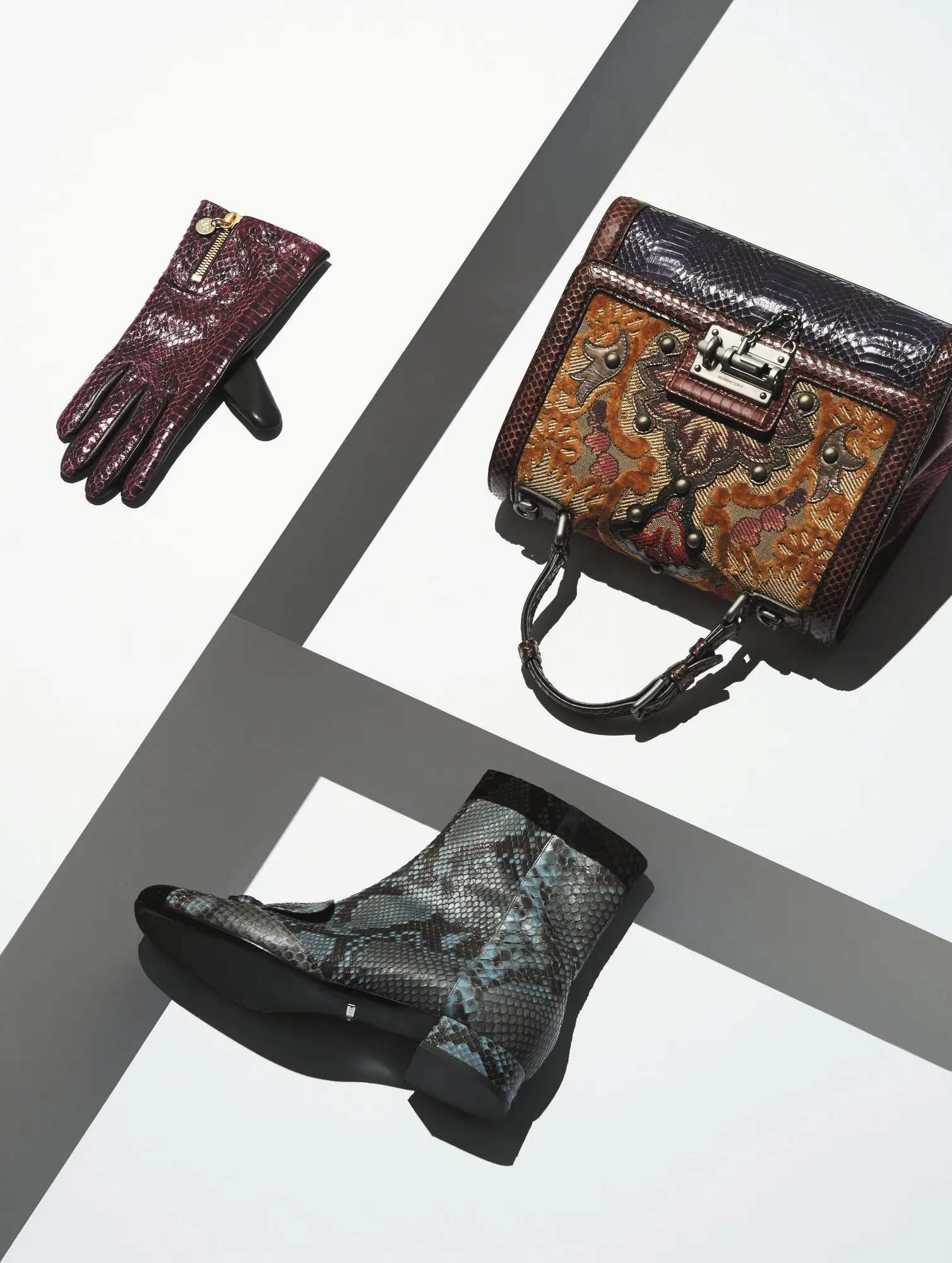
Photograph by adrien toubiana Creative Direction ill-studio THE NEWERA Leather, calfskin and snakeskin gloves, Diane Von Furstenberg, `18,000 approximately.
Python bag, Dolce & Gabbana, `2,08,000 approximately.
Python and metal boots, Gucci, `1,25,000 approximately.

g ym tonic Tweed and PVC sneakers, Chanel, `66,700 approximately.

Cap, Marc Jacobs Men, `40,800 approximately.
Leather backpack, Rochas, `71,400 approximately.
SOFT AND FURRY Rabbit fur cap and leather visor, Maison Michel, `51,000 approximately.
Fur bag, Valentino Garavani, `2,75,000 approximately.
Calfskin velvet and fox fur sandals, Fendi, `86,300 approximately.
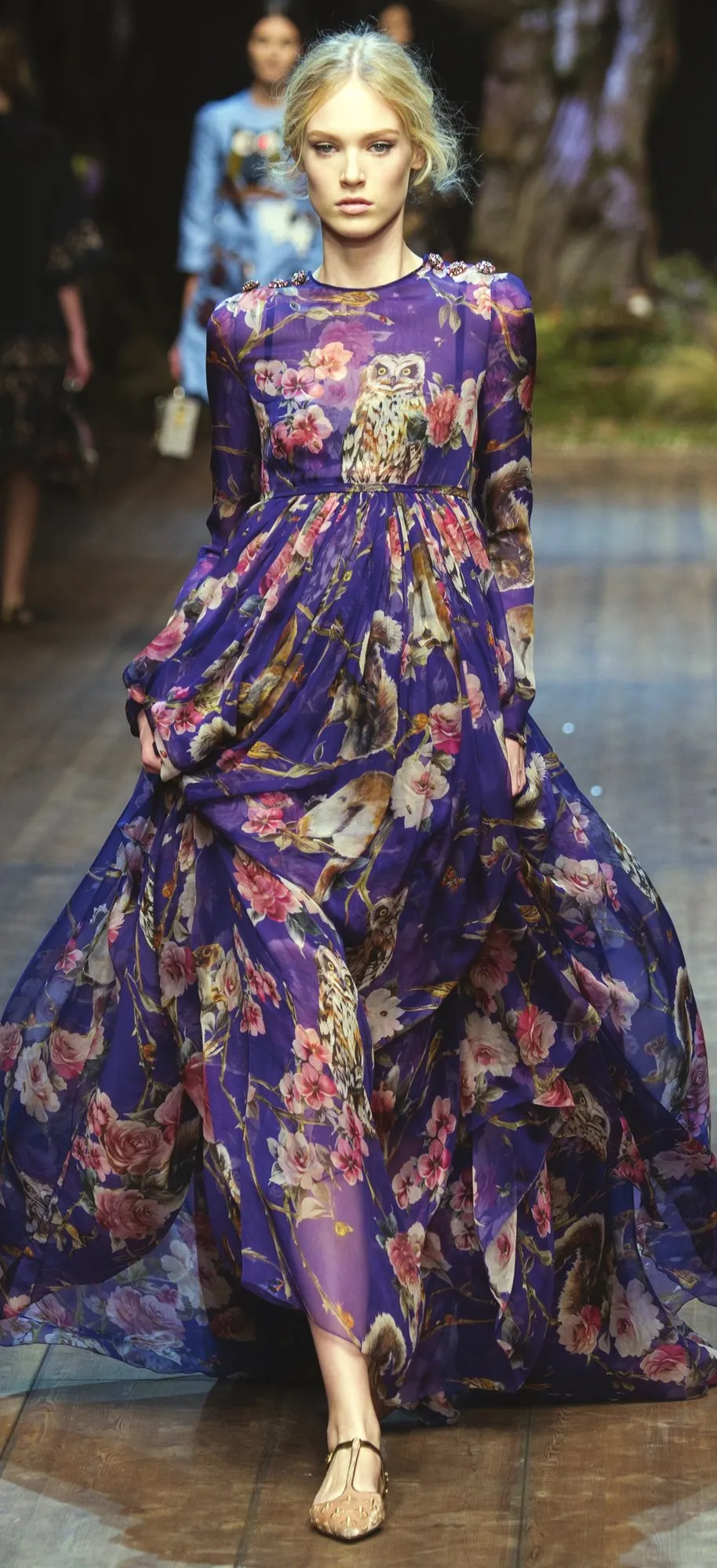
WHIMSand FAN CIES Marrying fantasy to reality, designers take us on a whimsical journey, with enchanted creatures and ethereal prints playing the lead this fall/winter.
1. Dolce & Gabbana, price on request 2. Biyan, `2,58,000 approximately 3. Valentino, `37,700 approximately 4. Charlotte Olympia, price on request 5. Givenchy, `65,900 approximately 6. Talitha, `1,54,000 approximately 7. Giuseppe Zanotti, `1,58,800 approximately 8. Holly Fulton, `1,65,700 approximately 9. Matthew Williamson, price on request Dolce & Gabbana
Spotted a mistake, or your photo used without permission? Report a correction