When art changed forever...
Replacing the Flat Compositions, Unrealistic Colour Palettes and Ethereal, Otherworldly Figures of The Paintings of The Dark Ages with Lively Colours and Painting Techniques. Here Are A Few Of the Iconic Paintings from Western Art History.
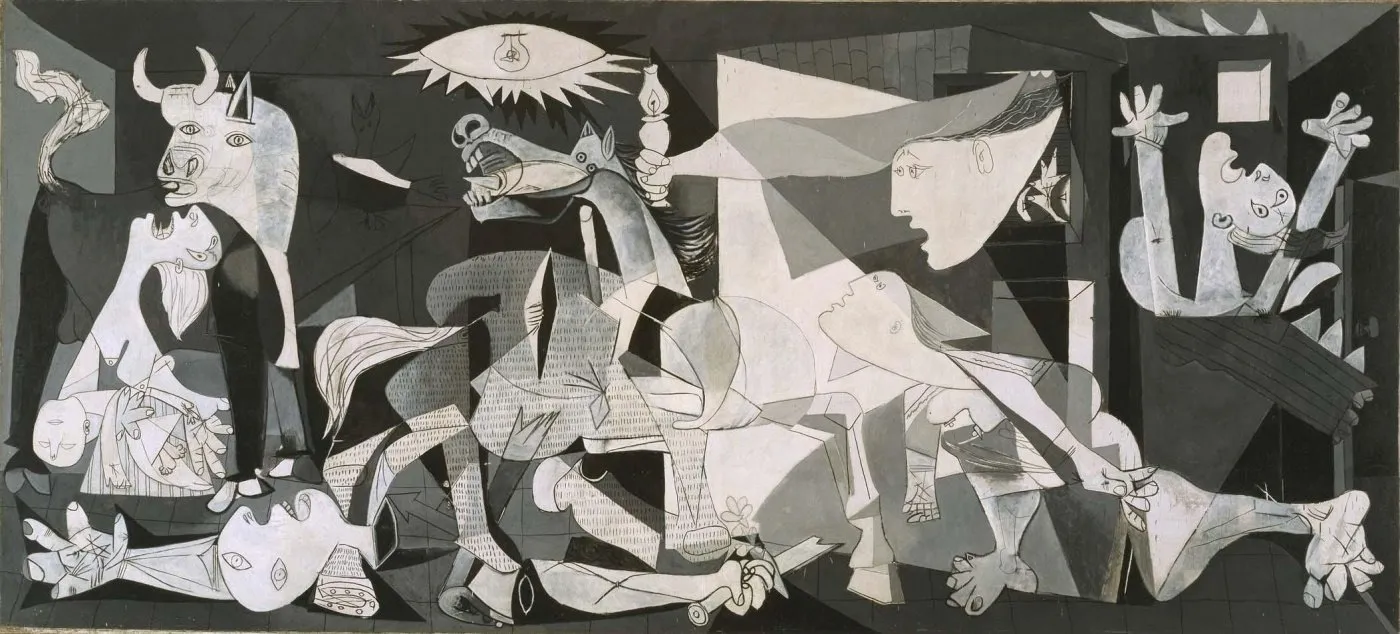




Guernica by Pablo Picasso
Probably Picasso's most famous work, Guernica is certainly his most powerful political statement, painted as an immediate reaction to the Nazis' devastating casual bombing practice on the Basque town of Guernica during the Spanish Civil War. It depicts the tragedies of war and the suffering it inflicts upon individuals, particularly innocent civilians. This work has gained a monumental status and became a perpetual reminder of the tragedies of war, an anti-war symbol, and an embodiment of peace. On completion Guernica was displayed around the world in a brief tour, becoming famous and widely acclaimed. That tour later also helped bring the Spanish Civil War to the world's attention. Thus, this work is seen as an amalgamation of pastoral and epic styles. The discarding of colour intensifies the drama, producing a reportage quality as in a photographic record.
During his creation of "Guernica," Picasso allowed a photographer to chronicle its progress. Historians believe that the resulting black and white photos inspired the artist to revise his earlier coloured versions of the artwork to a starker, more impactful palette. Not only did the artist use a lack of colour to express the starkness of the aftermath of the bombing, but he also specially ordered house paint that had a minimum amount of gloss. The matte finish, in addition to the shades of grey, white and blue-black, set an outspoken yet unadorned tone for the artwork. All in all, the iconography of Picasso's art is a mystical symbol with power over life and death.
 L’Officiel India DigitalRead L’Officiel India in the digital libraryEvery issue and every cover story, on TCG Media.Read now
Look around the artists who endeavoured to capture unravelling scenes on canvas in gruelling month-long journeys.
Las Meninas by Diego Velázquez
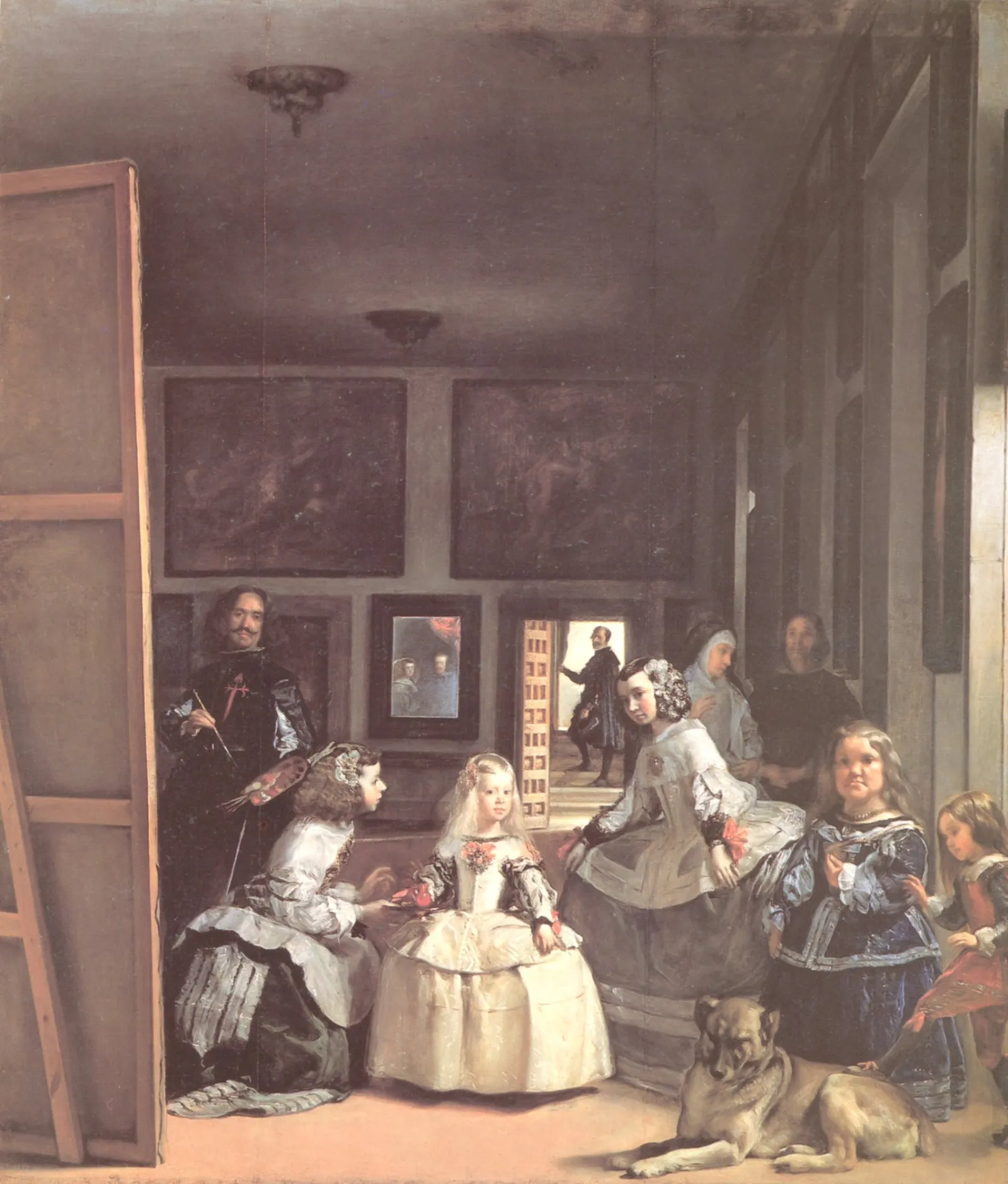
Diego Velázquez’s painting, Las Meninas is a renowned masterpiece that is considered one of the most important and influential works in Western art history. Set in a grand room covered with rich wall decorations, this painting portrays the Infanta Margarita Teresa accompanied by her entourage of courtiers and two dwarf attendants. This painting has been analysed deeply and viewers have noticed numerous themes like symmetrical positioning of figures, representation of power, new realism in Baroque style and its mysterious nature.
The significance of the painting can also be seen through its attention to detail – there are several artistic elements used by Velázquez to capture each character’s individual attributes such as their wardrobe, poses and expressions. Regarding lighting, it is depicted through a single source which illuminates from the side at an angle, creating a dynamic perspective within the composition.
Moreover, Las Meninas, or the maids of the Infanta Margarita, is an inexhaustible collection of human types and situations and also a mysterious feat of imaginative and representative capacity. While it gives us the only reliable self-portrait of the painter, it presents us with absolute fidelity and explains to us his relations with the royalty. And his inventive originality even in a work of official character: in fact, a work such as this had never been painted before. Velázquez shows how paintings can create a variety of illusions while also showcasing the unique fluid brushwork of his later years.
The Sistine Chapel Ceiling by Michelangelo
Sistine Chapel, a papal chapel in the Vatican Palace was erected in 1473–81 by the architect Giovanni dei Dolci for Pope Sixtus IV (hence its name). And therefore it is famous for its Renaissance frescoes by Michelangelo.
The Sistine Chapel is a rectangular brick building with six arched windows on each of the two main (or side) walls and a barrel-vaulted ceiling. The chapel’s exterior is drab and unadorned, but its interior walls and ceilings are decorated with frescoes by many Florentine Renaissance masters. On the north wall are six frescoes depicting events from the life of Christ as painted by Perugino, Pinturicchio, Sandro Botticelli, Domenico Ghirlandaio, and Cosimo Rosselli. On the south wall are six other frescoes depicting events from the life of Moses by Perugino, Pinturicchio, Botticelli, Domenico and Benedetto Ghirlandaio, Rosselli, Luca Signorelli, and Bartolomeo della Gatta.
Thus, the most important artworks in the chapel are the frescoes by Michelangelo on the ceiling and the west wall behind the altar. The frescoes on the ceiling, collectively known as the Sistine Ceiling, which was commissioned by Pope Julius II in 1508 and were painted by Michelangelo in the years from 1508 to 1512, depict incidents and personages from the Old Testament. These two gigantic frescoes are among the greatest achievements of Western painting. A 10-year-long cleaning and restoration of the Sistine Ceiling completed in 1989 removed several centuries’ accumulation of dirt, smoke, and varnish.
Birth of Venus by Sandro Botticelli
One of the most iconic paintings in the entire art history and the painting which takes a significant place in Western paintings as well is The Birth of Venus painting by Italian Renaissance master Sandro Botticelli in the mid-1480s. This impressive mythological composition is centred on the introduction of the figure of the bare-naked goddess, Venus emerging from the shell drifting to Cyprus shore. It practically embodies the rebirth of civilization, a new hope, geopolitical, social and cultural shift which occurred after the Middle Ages turmoil.
Known as the “Birth of Venus”, the composition shows the goddess of love and beauty arriving on the island of Cyprus, born of the sea spray and blown there by the winds, Zephyr and, perhaps, Aura. The goddess is standing on a giant scallop shell, as pure and as perfect as a pearl. She is met by a young woman, who is sometimes identified as one of the Graces or as the Hora of spring, and who holds out a cloak covered in flowers.
Sandro Botticelli uses classical models as a reference for the composition. Venus is painted in the style of Hellenistic sculptures. She stands naked on a shell valve, a symbol of fertility, and covers her breast with one hand and her pubis with the other, in the attitude of the ‘pudic Venus’. The pair of Zephirus and companion flying in embrace is also a quote from an ancient work, a Hellenistic-era gem owned by Lorenzo de’ Medici. Behind Venus, Botticelli outlines a coastal landscape with inlets and a forest of specific fruits called melaranches. The fruit, also known as mala medica for its curative properties, is probably a symbolic reference to the Medici lineage of Florence.
Spotted a mistake, or your photo used without permission? Report a correction