Turning Point
Before the two museums dedicated to Yves Saint Laurent were inaugurated, there had never been a time when art and fashion were so closely linked. We dig deep into it.





“A great couturier is as impressive as someone who collects works of art, lives in refined décor, is surrounded by poets and painters, creates costumes for the theatre, ballet or films, or lends a hand to an artistic creation,” said Gilles Lipovetsky, author of the Ephemeral Empire in his work La Mode de cent ans (1984). In one phrase, he has not only reaffirmed the essence of a stylist’s job, but also underlines the rapport between a stylist and creative artists.
Piet Mondrian and Yves Saint Laurent in 1965, Cindy Sherman and Comme des Garçons in 1994, Richard Price and Louis Vuitton in 2008, Rop van Mierlo and Marni in 2013, and most recently, Céline at Yves Klein and Louis Vuitton’s collaboration with Jeff Koons are examples of that shared camaraderie. The list of brands that have worked with individual artists is long. These collaborations range from collections to advertisement campaigns or even direct references. Fashion brands have never stopped calling to the arts and history to nourish their own. Despite that, fashion has always been perceived as frivolous and futile, while art is considered serious and legitimate. What has now changed is that fashion has become a culture of the masses. Social networking helps in that endeavour. It has entered the realm of pop culture and lost its elitist aura, replaced by an approachable image, which designers are expressing through collaborations with different artists.
 L’Officiel India DigitalRead L’Officiel India in the digital libraryEvery issue and every cover story, on TCG Media.Read now

Kanye West’s collaboration with Vanessa Beecroft comes to mind, so does shoemaker J.M. Weston who recently engaged with Olivier Saillard, director of the Palais Galliera (till the end of this year). Through these two examples, one observes that the fashion industry is trying to reinvent itself with art as its newest Trojan horse, changing through it the image of creative institutions. The success that the Louis Vuitton Foundation in Paris and the Prada Foundations in Venice and Milan have had is a fine example.
Fashion has started to bring forward more and more artists and designers, putting together more exhibits like Raf Simons with his expositions such as The Fourth Sex: Adolescent Extremes (solo) and Disobedient Bodies that he did with J.W. Anderson. And while fashion is involving itself with actual art it also aims to give itself a temporality.

Making an imprint
Like art, fashion has started to think about the place it will have in history. So, museums remain the preferred spaces in which it can demonstrate the impression it leaves on its time. In Le Système de la mode (1967), Roland Barthes wrote: “Changes in fashion appear regularly if we consider a relatively long historical period and irregularly if we reduce that duration to only a few years; regular from a distance and anarchic up close, fashion therefore seems to consist of two time periods: one entirely historical, the other we can refer to as memorable, because it is dependent on the memory that a woman could have of different fashions which preceded those of the current year’s.”

In the case of Italy, from the 1990s, fashion houses started to celebrate their history through actual museums — Gucci and Ferragamo in Florence, for example. In France, the Pierre Bergé-Yves Saint Laurent Foundation has set out on this adventure.
Pierre Bergé, partner and business associate of Yves Saint Laurent, confided in us a few weeks before his disappearance, “This archiving that we have undertaken has, from its very first days, been visionary, because one must understand that from the beginning houses were not in the habit of conserving their designs as they are today. I would also like to specify that this collection consist predominantly of prototypes, designs just as they were sketched, materialised under the watchful eyes of Yves Saint Laurent and sent by him to the podium. It is very important and unique, because these are not designs ordered by clients, whose colours, shapes and sizes could differ from the original sketch. Today, other houses have also developed this interest to hold on to this ‘memory of creation’ and that is why they dedicate so much time and money to acquire and conserve their heritage.”

This month, on the eve of the 10th death anniversary of Yves Saint Laurent, the foundation inaugurated two museums in his honour: one in Paris at 5, Avenue Marceau (formerly the workshops of the house) and another in Marrakech close to the Majorelle Garden. Between permanent and temporary exhibitions, the two museums are going to, from now on, share the extraordinary collections of the foundation that numbers 5,000 high fashion designs, 15,000 accessories and tens of thousands of sketches, photographs and documents related to the creations of Yves Saint Laurent.
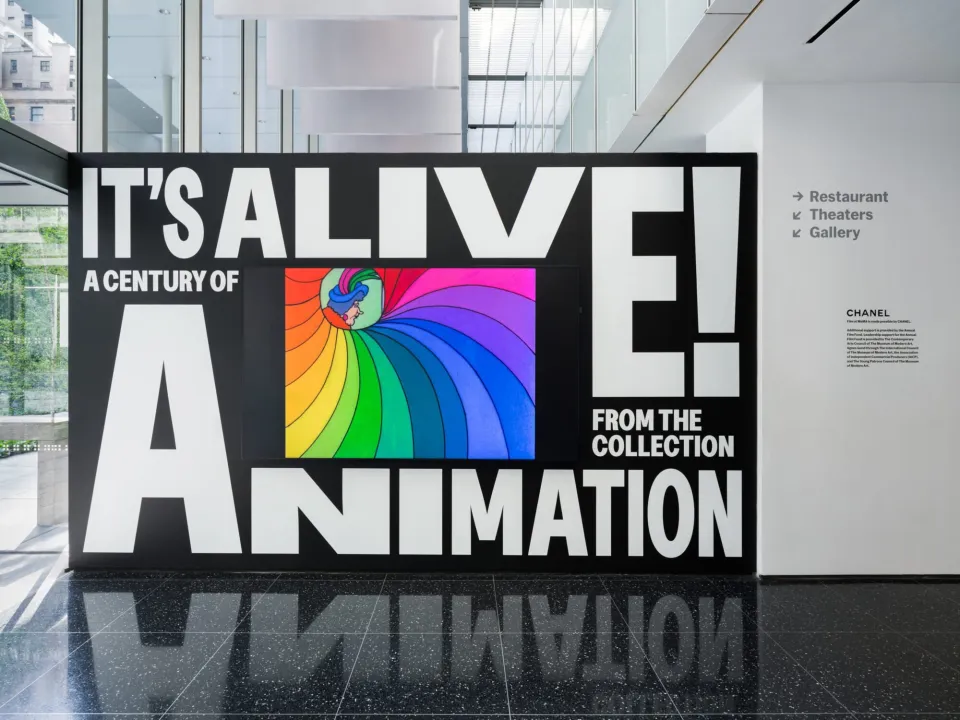
The Palais Galliera will, by the end of 2019, have its first museum in France, which will house a permanent collection dedicated to the history of fashion from the 18th century to today. And thanks to the support from Chanel, the Musée de la Mode de la Ville de Paris will hold a new place.
Contextualise and add value
Now that fashion designers are benefiting all the more from exhibits dedicated to their work, such as the one of Christian Dior at the Arts décoratifs in Paris or Rei Kawakubo’s at the Met in New York, a question naturally arises: how does one exhibit fashion? A line of questioning then legitimises that, in essence, fashion is inconsistent; that it is made of volume and movement. According to Aurélie Samuel, in charge of the Yves Saint Laurent Museum in Paris, one should not look at a museum as a mausoleum of clothes. “A museum isn’t, necessarily, the arresting of time, it is but a moment in its passage, a look. But it evolves, transforms and lives. To do so, a museum needs to acquire, propose a museography that is continually updated, a presentation that allows the observer to truly look at rather than simply see. A museum represents one mission. It does not prevent anything from letting the objects live, giving them a context and adding value to them.”
Last spring, Lapo Cianchi, events and communications director at the Fondation Pitti Discovery, elaborated, “Fashion is the enemy of immobility. It’s a matter of Zeitgeist (the defining spirit of a time according to German philosophy). It is a process that doesn’t just end at the show or styles. Fashion gives a new life to that something that has been forgotten. It is the opposite of the past, condemned to spend eternity… simply as a point of reference. This is where it gets delicate, not only in the relationship between fashion and museum, but also with fashion and itself.”
Björn Dahlström, African arts specialist and director at the Yves Saint Laurent Museum in Marrakech added, “Fashion is no longer the impoverished parent of the museums. It has become a legitimate subject of historical, technical aesthetic and social studies. Museums help to know and understand fashion better. This museum in Marrakech is the first in Africa to be dedicated to fashion. It is surprising to know that this field had never been as dynamic as it is today, and that the African continent has inspired many a couturier. And so, since it had never been done before, this project has been a true challenge. As for the types of works, naturally, things differ from when they are presented in a tableau, which must first be painted then shown. The same applies to clothing… it must first be created then worn. Now that is a major pitfall when it comes to putting everyday objects in a museum, specifically clothes, how to give them life without breaking the imperatives required for the preventive conservation of museum pieces? The exercise is complicated and we have tried everything to make the designs look alive, comprehensible. But one thing is for sure, a dress will never be as lovely as when it is worn by a woman.”
From the October 2017 issue of L’Officiel India.
Spotted a mistake, or your photo used without permission? Report a correction