Time To Stand And Stare
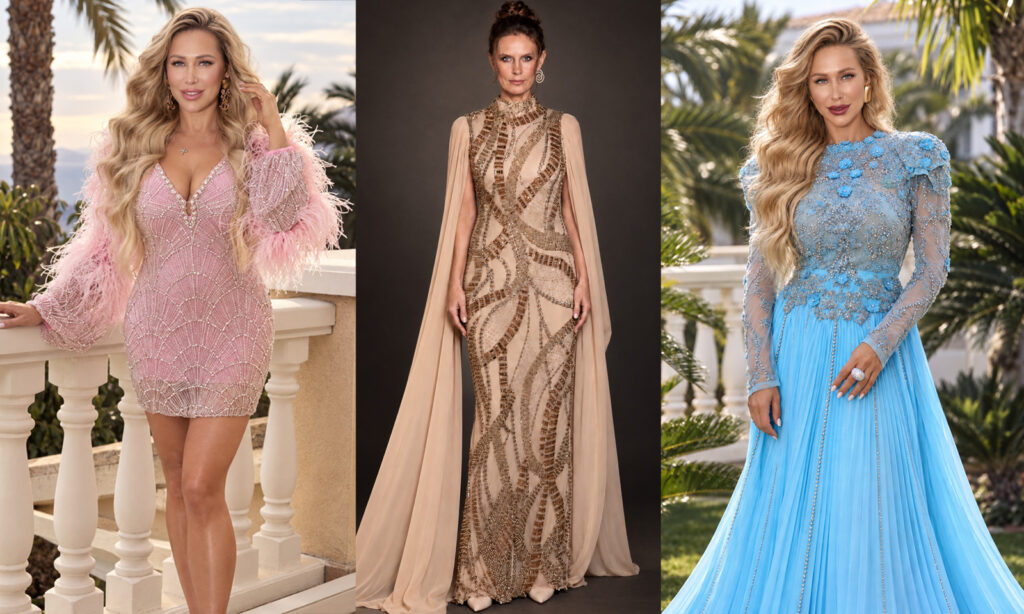
Anamika Khanna is old-school and believes that slow and steady wins the race. The successful couturier, who is on the wishlist of many brides, lets us into her world.





46 August 2014 There are two things you should know about this Kolkata-based designer. First, she loathes interviews. And second, she is a master at what she does, albeit quietly.
Many call her a miracle woman, as she is one of the few style gurus who hasn’t disappointed patrons and critics in the last 15 years. “I am tucked away in Kolkata, working hard, far removed from the crazy world of fashion in Delhi,” she says. “Maybe if I was in Delhi people would write about my life, clothes or kids, but I have the luxury of just flying in to do my show and leaving the next day, back to my ‘normal life’.”
 L’Officiel India DigitalRead L’Officiel India in the digital libraryEvery issue and every cover story, on TCG Media.Read now

Anamika Khanna is someone who hits bull’s eye every time, but Ana, as she is fondly called, believes that every designer is as good as their last collection. “Earlier I was very hard on myself, I would never be satisfied with what I did,” she confesses. “So I would research day and night to get the fabric, embroidery and cut right and then change it a hundred times over—now I am calmer, I guess with age you simmer down.” Perhaps that is why each of her collections is better than the previous one. “I put neverending pressure on myself to do better than the last time.” PLAYING THE FASHION GAMBLE Sitting elegantly, dressed in her favourite pair of comfy dhoti pants—something she adopted, adapted and metamorphosed into a magical drape that women have grown to love—Khanna will tell you that the fashion industry is a tough place to be. In fact, is it a bit like playing roulette. “People who don’t inhabit this world think of it as something that is all about parties and models. What many don’t know is that it is just a fallacy. In reality, it involves a lot of hard work, people skills, and patience—when you don’t talk to the media they call you ‘arrogant’ without understanding that maybe you just want to do your work quietly.” She also tells us that one needs determination to deal with skilled but uneducated labour, to whom you have to explain your aesthetics to get the best out of them. “I am tucked away in Kolkata, working hard, far removed from the crazy world of fashion in Delhi. Maybe if I was in Delhi people would write about my life, clothes or kids, but I have the luxury of just flying in to do my show and leaving the next day, back to my ‘normal life’.”
“My biggest problem is that I have one new idea every 15 minutes,” she laughs. Khanna briefed her team to stop her from making any alterations at the eleventh hour for the recently held India Couture Week show in Kolkata, hers being the only offsite show. She organised an art installation, in her Kolkata store, complete with sculptures, photography and clothes, displayed through ingenious forms. On the guest list were a discerning few to witness Khanna’s love for ancient textiles and how she has beautifully revived decaying fabric that you’d pick out from rusty trunks. THE CREATIVE BUNCH Interestingly, her sisters also ended up in the creative field. Suruchi is a Mumbai-based painter, whom Khanna calls a “special human being and an ace photographer who can answer all your queries about topics ranging from robotics to a suitable border for your sari.” Suhani Pittie, her youngest sister, is an ace jewellery designer. “Suhani respects me a lot and takes my opinion on most things she does,” Khanna admits.

When Khanna was in school, she dreamt of becoming a classical dancer as she had won awards for eight years in a row. You would not expect the eldest of three sisters from a conservative Marwari family to be ‘designer’. But things changed when she finished college and chanced upon a book on African textiles. “I had won the Damania Fashion Award. And when I chanced upon that book, it was really my ‘voila moment’. I instantly knew then that I would create designs that would make people ask, whether it is embroidery or a print and keep them guessing exactly what I did to get that ambiguous effect. And this was from a person like me, who back then did not even know how much a metre of fabric actually was,” she laughs. This resulted in her first line called ‘Shoowa’ with bold Africa-inspired embroidery, converted into modern shapes, with blacks and sand hues on ensembles.
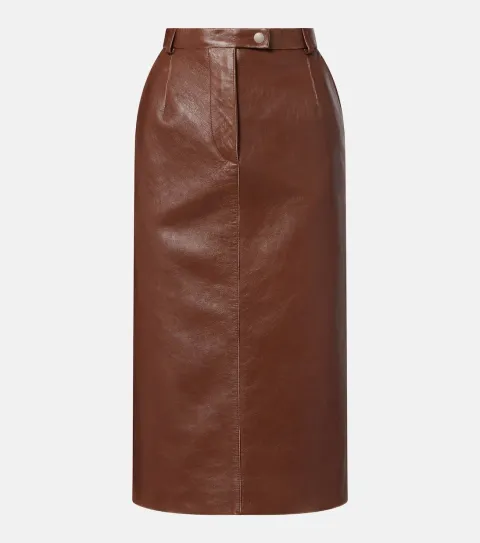
48 August 2014 Khanna never names her lines or collections any more. She feels it is too binding. “I begin my design process by narrowing down my thoughts, sketching, sampling, and adding colour to them,” she says. The couturier confides in us, admitting that she can’t make skirts even though she loves them. Her strengths, however, far outnumber any weaknesses, the foremost being her ability to visualise an outfit before it is completed. “I try and fill in the mood board piece by piece, but I do keep in mind the relevance, rhythm, embroideries and new techniques, even though I am slowly moving back to classic shapes.” SHE KNOWS YOUR INNER DESIRES While most designers are unloading gowns and sequins on unsuspecting women, Khanna has understood what women really want. “As you grow up, you find a balance in what you can do and must do—I try and understand today’s woman, what is she thinking, her body type, age and whether the outfit is feminine enough for her,” she says. Khanna follows a process—she will see first how it looks on her, whether it works and is ready to be retailed. “I am sensitive to women’s needs; and that is also the result of meeting innumerable women over my 15-yearjourney,” she says. “That’s why I decided to revolutionise the sari by taking inspiration from the South Indian and Maharashtrian drape.”
Though Khanna’s collections come with a spattering of sexiness, she knows where to draw the line, never letting it reach vulgarity. She will tell you unabashedly that wearing a strappy, cleavage-revealing blouse is not sexy. However, sometimes even a fully-covered bandhgala can look hot. Khanna used to paint as a schoolgirl, so her aesthetic sensibilities are well-tuned. “I can never make a woman look obscene in the garb of being fashionable— if one shoulder is exposed the rest is kept covered, so it is more of a game of peekaboo that works for me.” Even as her 19-year-old twin boys are gearing up to go to college in America, Khanna has always been clear that she would never let career or fame come in the way of being a full-time, super-involved mom. That’s one reason why she never ventured out to expand her business to home, furniture and accessories. However, she intends to do that now, when the boys leave in August. “I knew I had limited time, so I didn’t want to spread myself too thin,” she says. She is an old-world girl, who confesses to being a romantic at heart. “You know I cry easily while watching Hindi movies, that’s just me, even though I can see my sons looking at me with horror,” she laughs. While she is extremely sentimental, she says it is her strong, willful mind which has brought her this far. With her eye on the future, the designer wants to be remembered as niche. “I think we took it slow and steady, but Gen Next is in a massive hurry... there is no ‘time to stand and stare’ as Welsh poet WH Davies wrote in his sonnet Leisure,” she observes. “They just want to achieve success at any cost—that’s what bothers me and leaves me unimpressed by their design skills.”
Spotted a mistake, or your photo used without permission? Report a correction