The Queen Of Weaves
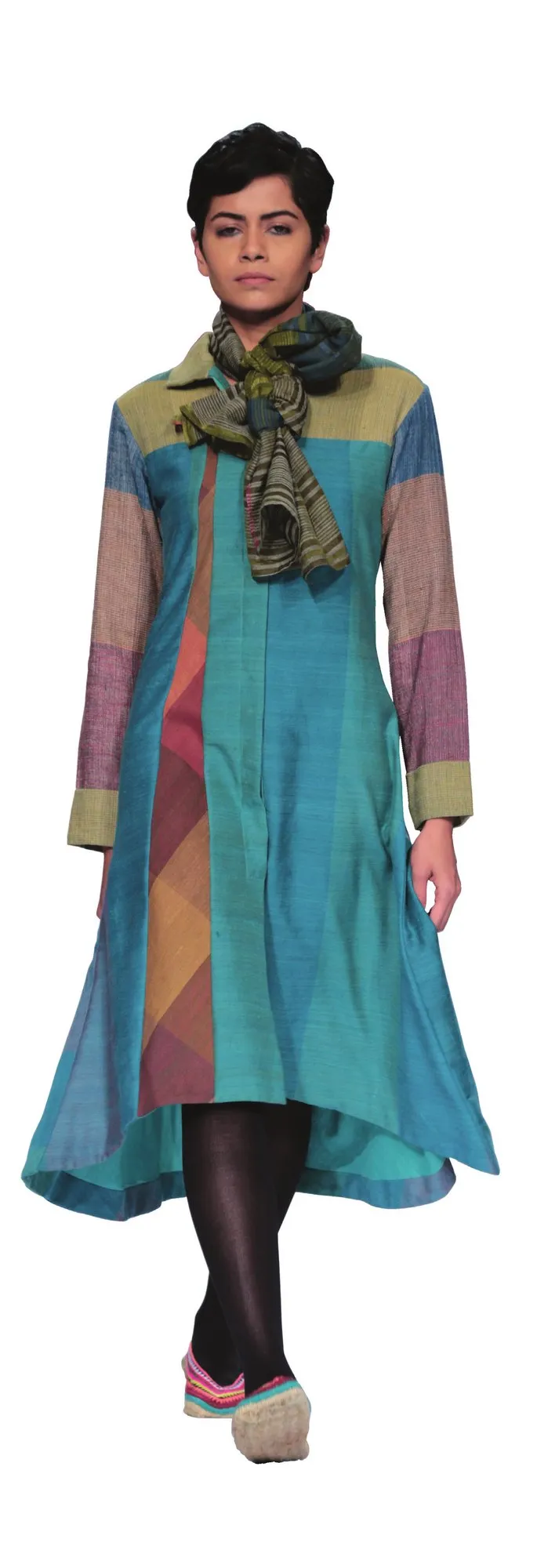




a lot more practical and a lot less dreamy,” she says.
In a country obsessed with bling, excess and embroidery, Paromita remains unfazed, as she believes she is not a wedding clothes designer, though her Pochampallys do have the elegance for such an occasion. “I am not hoping to dress brides—I want to be a niche designer,” she elaborates. “A lot of women would come to our store and say, ‘It is just cotton, why is it so expensive?’ It was hard to explain that this is specially woven, and a bit like couture as it is made-to-order and not mass produced. Many customers also felt that for the same price they can get a lot more embroidery and crystals. But slowly, awareness has increased, and now people are ready to pay the price.” “I don’t understand words like avant garde... what does it mean,” she laughs. “Clothes that you show on the ramp should be such that they can be worn by anybody, with a little bit of mix and match.” So no drapes, no pattern cutting— uncomplicated silhouettes work best for Paromita. And for those who like a bit of bandhani, hand block printing, ajrak and ikat, Paromita’s Autumn/Winter 2014 line has this and more. “I keep going back to the time I started—my first swatch, first dress, first mood board—it encapsulates my journey and that’s a big high for me,” she signs off. “To be able to see where I started and where I have reached, even though there are miles to go...” She will never try and dilute the beauty of a weave by tampering with motifs or its complex edifice. Perhaps that’s why the pint-sized think tank from Kolkata, Paromita Banerjee, believes in the endless possibilities the loom offers. A graduate of the National Institute of Design, Paromita’s first love in college was the weaving class that gave her hands-on experience. “Weavers have a set thinking, so they will not be open to your ideas,” she reveals. “You have to slowly reveal to them that you can’t be fooled. NID enabled me to understand the warp and the weft, along with working with animation, ceramics and terracotta.”
 L’Officiel India DigitalRead L’Officiel India in the digital libraryEvery issue and every cover story, on TCG Media.Read now
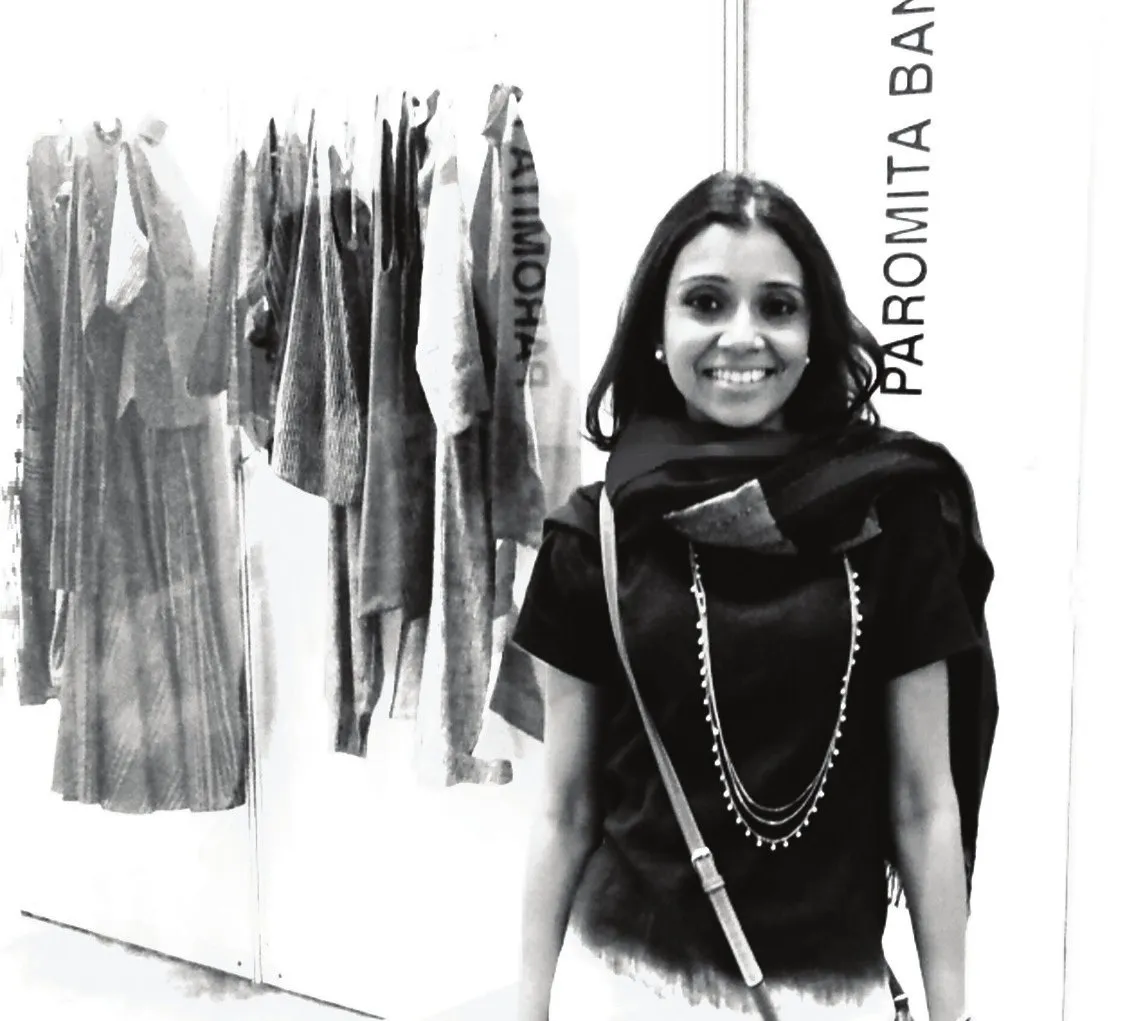
That’s why, unlike other designers, she never sources fabrics from the market. She prefers to work with Sally Holkar’s NGO, Women Weave, for maheshwaris, Phulia (West Bengal) for Dhakai jamdanis, Pedagonnuru (Andhra Pradesh) for mangalgiris, Kangra for merino wool and Ajrakpur for ajrak. “Designers may have realised what weaves can add to the ensemble only now, with the wave in their favour, but I am glad I stuck to them right from the beginning,” she says. “So this is our ninth season, and we have stayed true to our aesthetic.”
When you work with weaves, design comes with a set of constraints, and Paromita knows that only too well. Plus, what she draws on paper may not get translated onto the ramp in exactly the way she has it envisioned. “When I started, I did basic mangalgiris, but now, after six years, I can work with a labyrinthine weave, as I’m much more evolved in my design process,
Spotted a mistake, or your photo used without permission? Report a correction