The Queen Of Green
In her 15-year-long journey, textile revivalist and ardent feminist Deepika Govind has left no stone unturned to understand crafts. But at the heart of her collections are her signature bias-cut, free-flowing dresses.
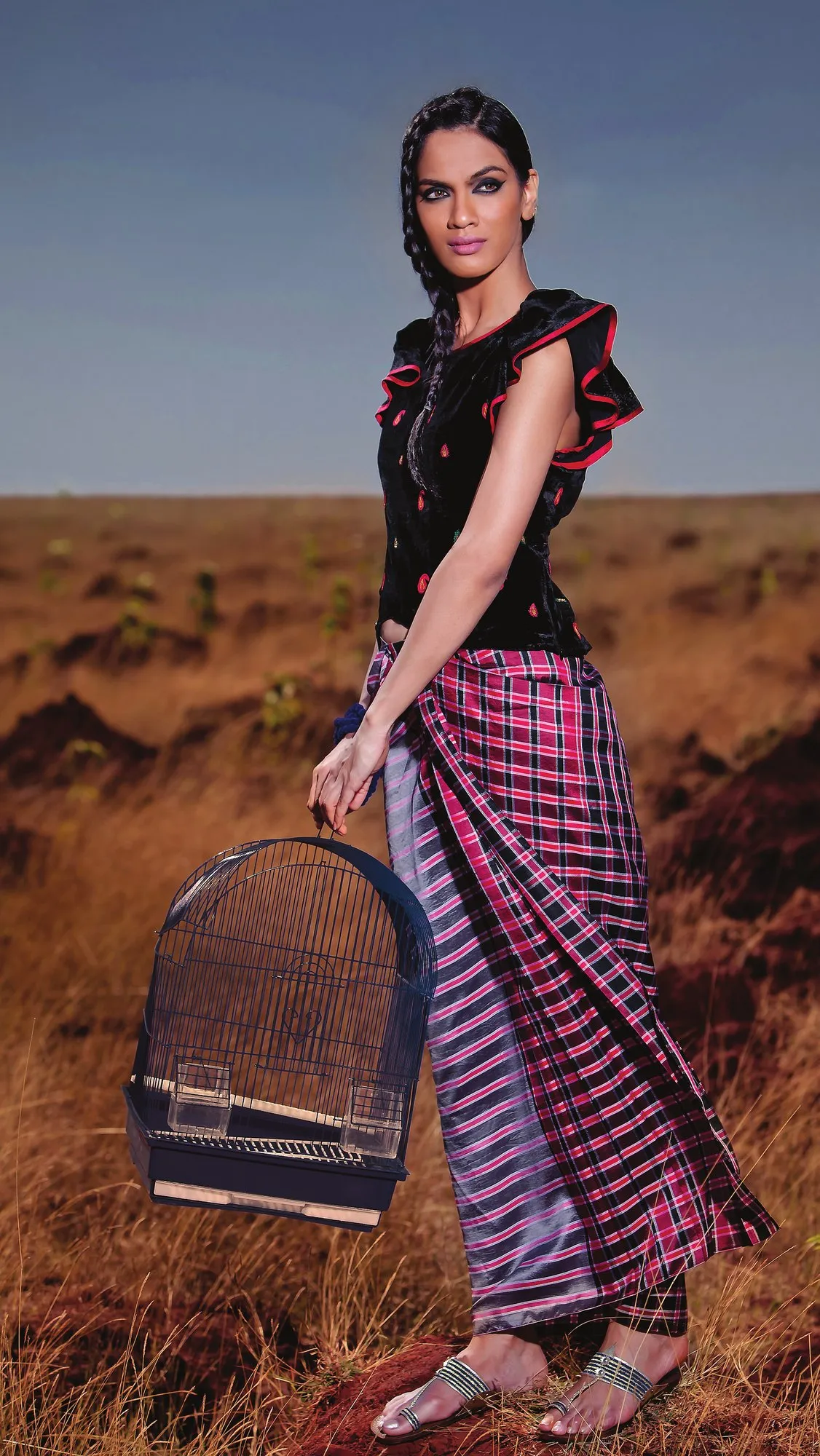




Born in the now divided Andhra Pradesh, Deepika Govind was raised by her father, a serviceman, who wanted her to be an IAS officer. Few know of her interest in economics and politics, but working a desk job and pushing files wasn’t something that interested the creative Tamilian Brahmin. Deepika eventually studied at NIFT, where design became a part of her psyche.
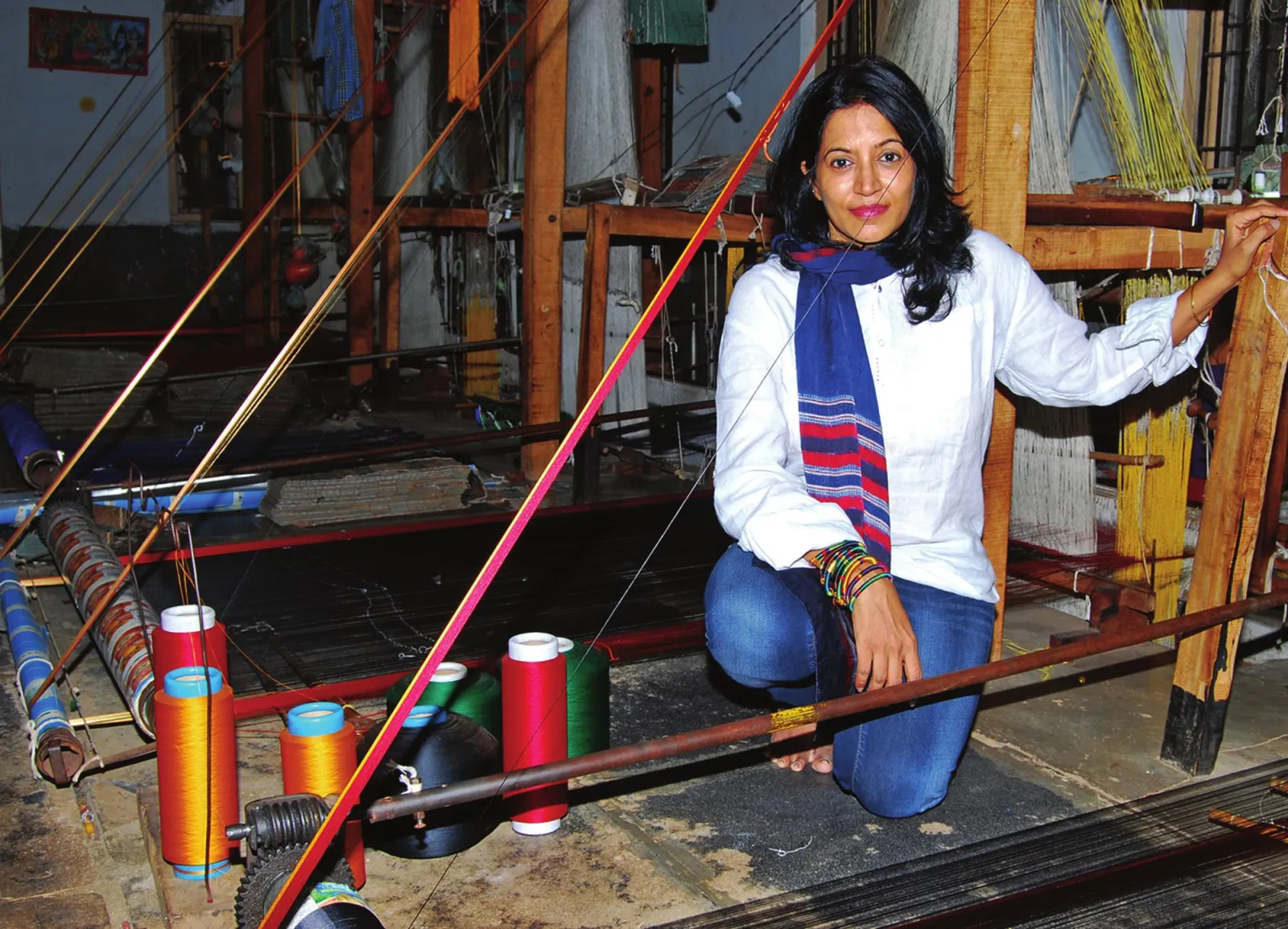
Deepika’s label, which started in 1999, saw her love for textiles take shape in a philosophy that concentrated on adding comfort, drape ability and ease to what was traditionally considered rough and coarse. OF ALL THINGS ECO The designer has a soft corner for sustainable fashion, which led her to making organic denim. In Bengaluru’s Arvind Mills and Madhura Garments, she noticed that almost 20 litres of water is wasted on a single pair of jeans. Deepika’s denim may have been rough, as it was rinsed and not washed, but it was made of organic Coimbatore cotton with used cotton threads instead of poly-thread. “Denim Green was a socially conscious project, to make this planet a better place to inhabit,” she says. THE SILK ROUTE In 2003, Deepika travelled to Udalguri, Assam, where she uncovered a silk farm and fell madly in love with the natural golden haze that surrounded Muga silk. So enthralled was she that she calls it ‘liquid gold’. “The Japanese use it for Obi belts, make umbrellas out of it as it has an inbuilt UV protection and the Assamese wear it as the Mekhla Chaddar,” she tells us. What motivated Deepika to work with Ahimsa silk was that it was non-violent mulberry silk. Then began her affair with Eri silk, which is natural. “Dyeing Eri didn’t come with an instruction manual, nobody had done it before so I learnt a lot in the process,” she reveals. “What makes Eri splendid is that it keeps you warm in winter and cool in summer, so I made it softer, changing its cardboard-ish texture.” THE DRESSING ROOM ACT Deepika’s label has dressed the likes of veteran journalist Bachi Karkaria, paraplegic Deepa Malik, and singing star Lucky Ali, though few know that she did the entire wardrobe for Deepika Padukone, when she shifted base to Mumbai from Bengaluru. “I dress people who inspire me, so commercial aspects don’t come into play,” says Deepika. “I am a feminist, who believes that discerning women who want ingenious cuts and fabrics and who love textiles will always manage to find me.” It is not surprising, then, that she was quite consumed by Henrik Ibsen’s 1879 iconic play A Doll’s House, which was an ode to freedom of thought for a woman who leaves her home and family to ‘discover’ herself. “Women are the hero and the heroine of the stories I narrate through my ensembles,” she adds. THE MARK OF A WOMAN Deepika’s concept of beautiful is non-conformist. Shying away from cleavage-flaunting divas, she mostly cuts away from the body. As a result, bias cuts have emerged as her favourites. And she’s not obsessed with georgette or chiffon. Cotton, linen, silk, blends, Khadi, silk modal, silk lycra, silk knits, organic cotton and denim, tussar, Eri, Muga, Ikats from Orissa and Patola from Gujarat are what you will see in her collections. Her experiments with merging satin with lycra left her disliking the whole synthetic wave. “I abhor polyester, viscose and nylon, as I used to break into a rash every time I wore anything other than organic fabrics,” she says. “When I launched my label, I knew it was going to be hundred per cent biodegradable, and it would not comprise saris that we take out of the dusty back rows of our closets, once in 20 years.” And she will tell you, with textiles, you won’t get the fantastic fall of crêpe, so you must be prepared for the crumpling appeal of fabulous fabrics like linen. TAKING THINGS HEAD ON After 15 long years, her journey culminated into Neel Sutra, at The Oberoi, Gurgaon, when Deepika met FDCI President Sunil Sethi. “We shared a common vision for promoting crafts and Mr Sethi was the right association as he understood what it entails,” she smiles. Neel comes from the love for indigo, which was the “blue gold,” and Sutra is the thread that “binds us all.” The store, soft-launched in October of 2013, provides a platform for the likes of Aneeth Arora, Rahul Mishra, Gaurav Jai Gupta, Arjun Saluja and Anju Modi—designers who are attempting to keep things real.
 L’Officiel India DigitalRead L’Officiel India in the digital libraryEvery issue and every cover story, on TCG Media.Read now
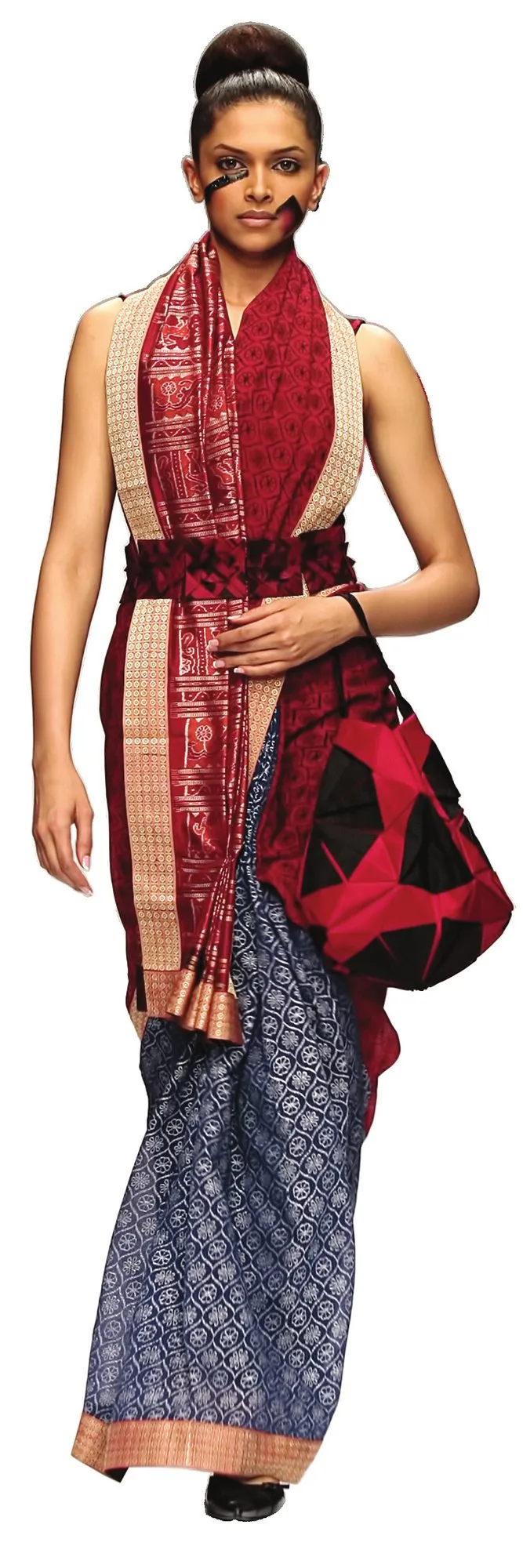
2004: “I discovered my trademark style of patchwork with different textiles and textures in solid black.”
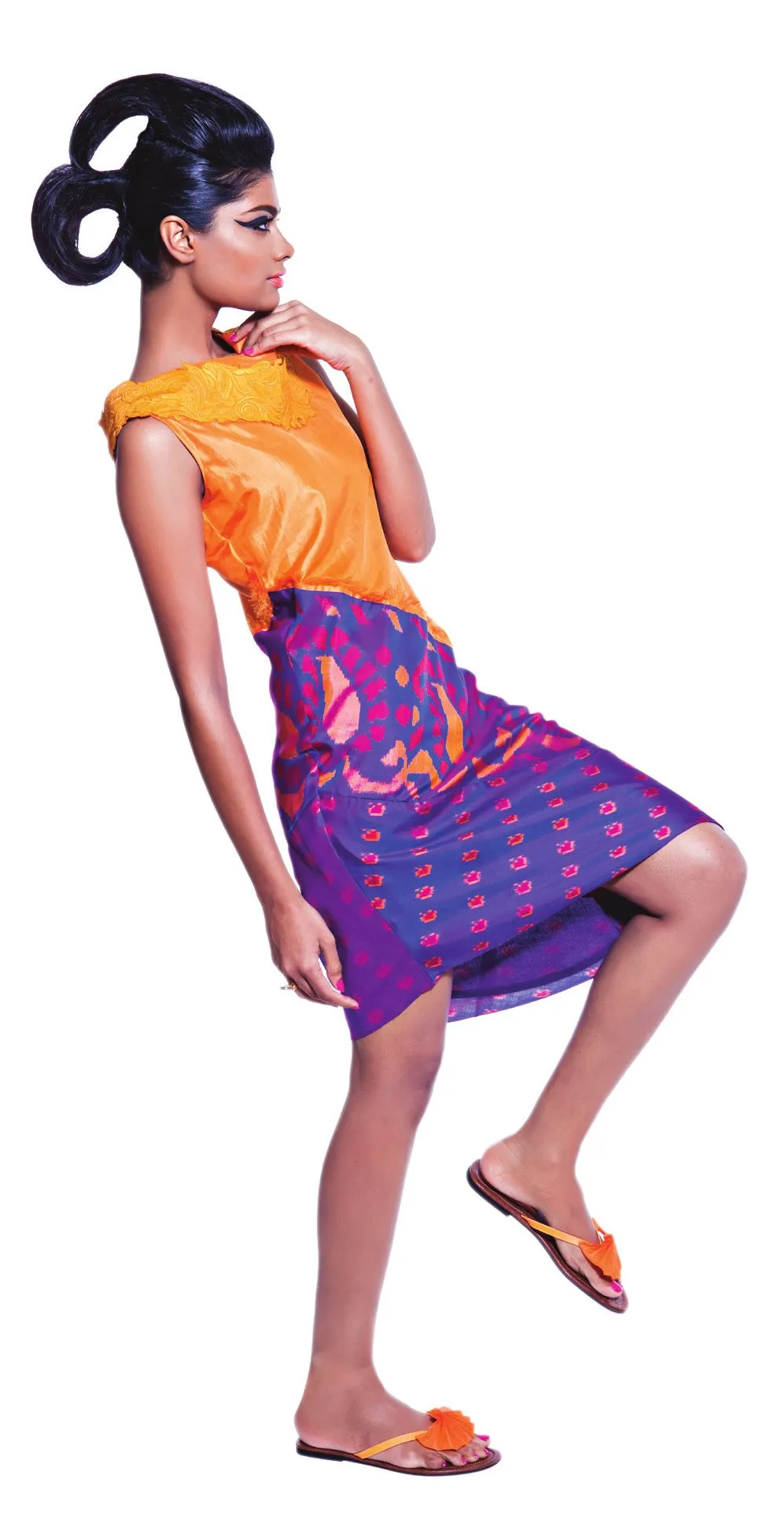
2005: “The year of developments in Ikats—very modern and graphic, along with innovations in silhouettes. Also the year I used Deepika Padukone in my shoot; it was her first India Fashion Week.” 2006: “The Parchment Blues collection marked the rebranding of my logo where I met the most remarkable catalyst—Gopika Chowfla—who also directed my shoot with Vipasha Agarwal.” 2008: “A conceptual fashion showing in a theatrical dimension, an eco-military look with organic weaves in military-inspired pieces. In the autumn collection, one of my favourites, all the weaving in tussar wool was done in Uttaranchal. Low crotch trousers and jackets made a striking combination.”
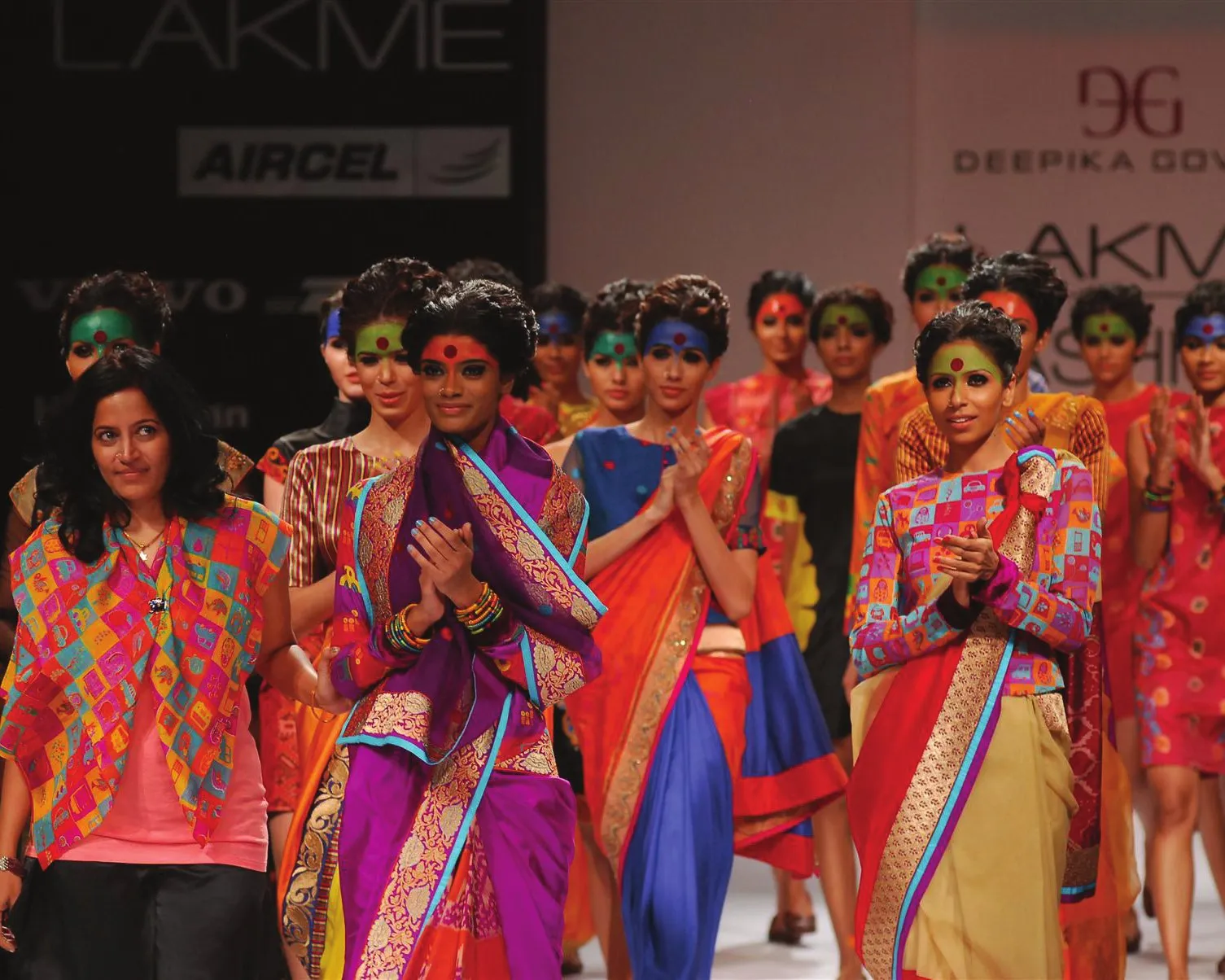
2012: “Reworking on Khadi as Khadi Kool. I wanted to present Khadi to the common man as it was from our very own Khadi Bhandar, with the runs, ladders and slubs. This was to present khadi as a fabric that could be worn and shown internationally complete with modern, edgy silhouettes.”
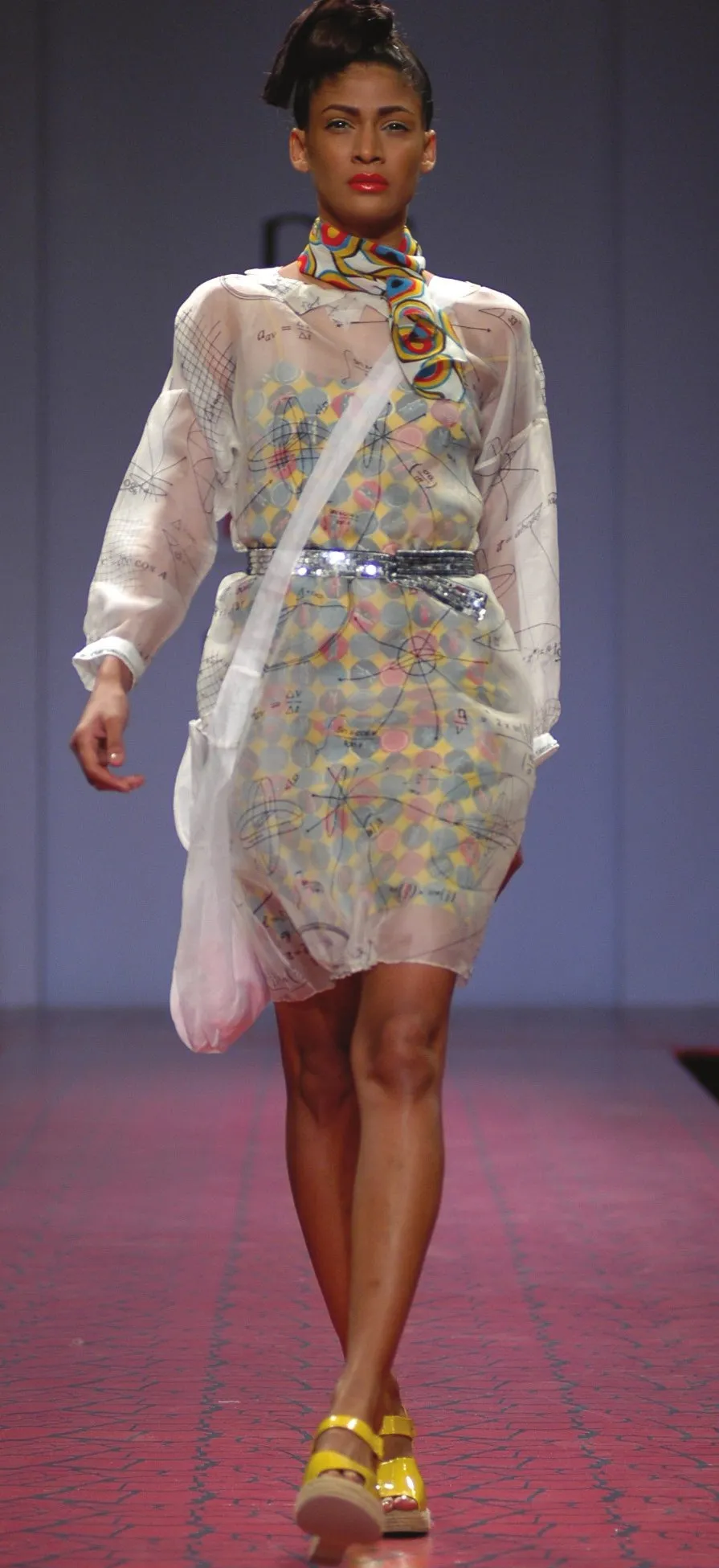
INCREDIBLE INDIA Deepika hoped to understand how textiles worked and how they changed as you crossed borders within our diverse country. She was successful in discovering new, fetching crafts. On one such trek in 2009, she was mesmerised by the underrated Mysore silk, which is the most expensive fabric owing to the weaving of real gold zari in it. She was working with KSIC Mysore Silks on a year-and-a-half long project at the time. “I met Mysore silk weavers and they informed me that the most costly silk sari was ₹19,000,” she says. “I was astonished as I knew some designers who could sell mosquito net-like nylon saris (laughs) for ₹2 lakh and above. This motivated me to conjure the ‘Threads of Gold’ collection and loom-finished crêpe silk saris.” Deepika made a silk sari in pure gold, weighing 1.8 kg, which was sold for ₹1.8 lakh and elevated this craft to couture. KSIC’s turnover, which was then at ₹27 crore, now stands at ₹127 crore. And she did all this for free!
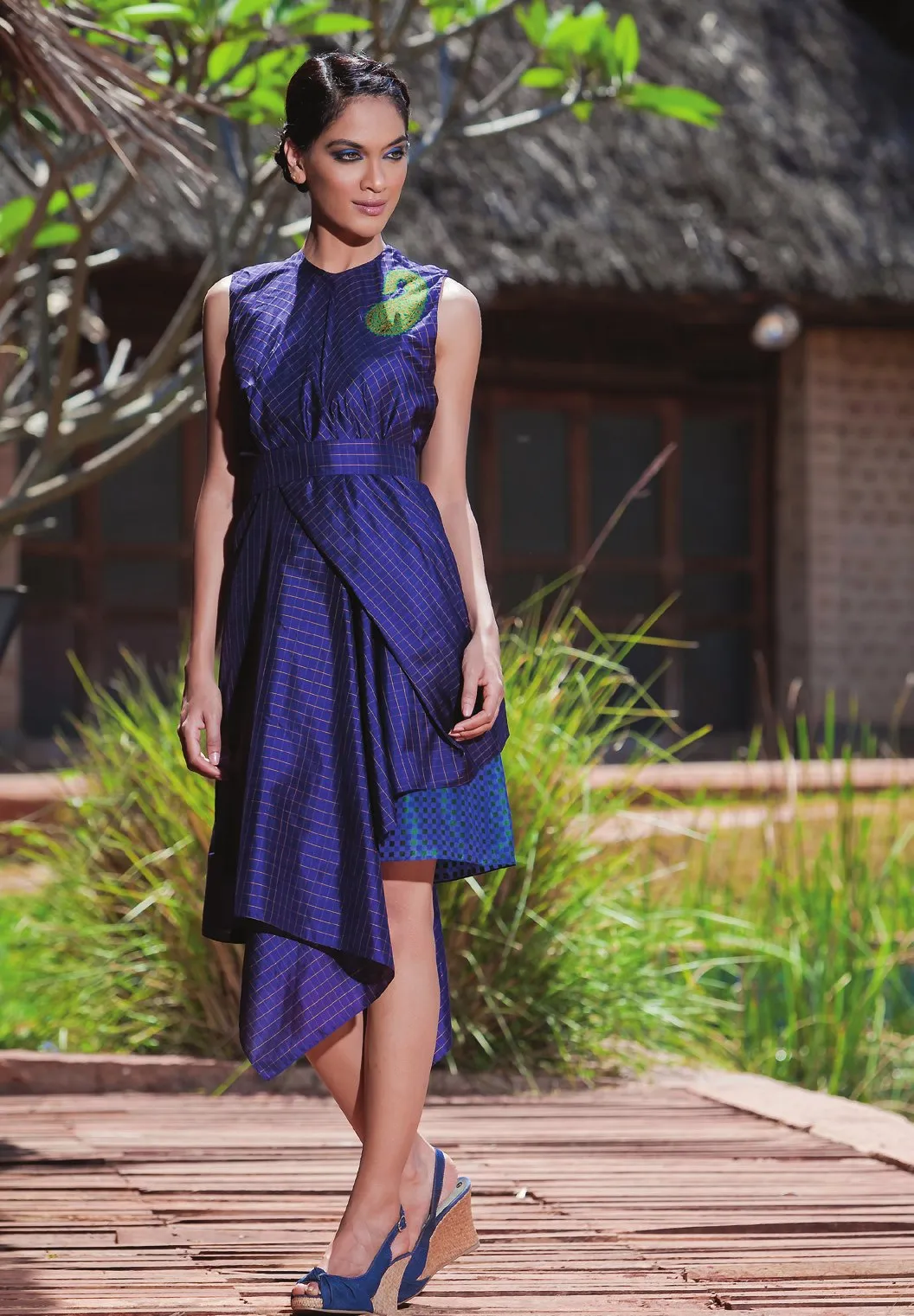
Travelling through India, Deepika also saw how complex each weave was: One technically mind-boggling Patola sari can take almost five months or more to hand weave on looms using only vegetable dyes, and is priced between ₹2-4 lakhs. Her mission became innovation and detailing. Govind partnered with textile company Tencel and the Karnataka State Khadi Board. “If I looked at the numericals of what I was doing, being an economics post-graduate, I would be somewhere else; but I stuck to my belief system,” she reflects. “It may not have put me in the spotlight, but at least I stayed true to the crafts sector and didn’t fall into the trap of embellished gowns and pre-stitched saris to acquire a hefty bank balance.” The mother of two has learnt to be Zen about it all. “I have to be detached and not look back,” she smiles. “Work should be seen and heard—my efforts have borne fruit, and that for me has been most satisfying.”
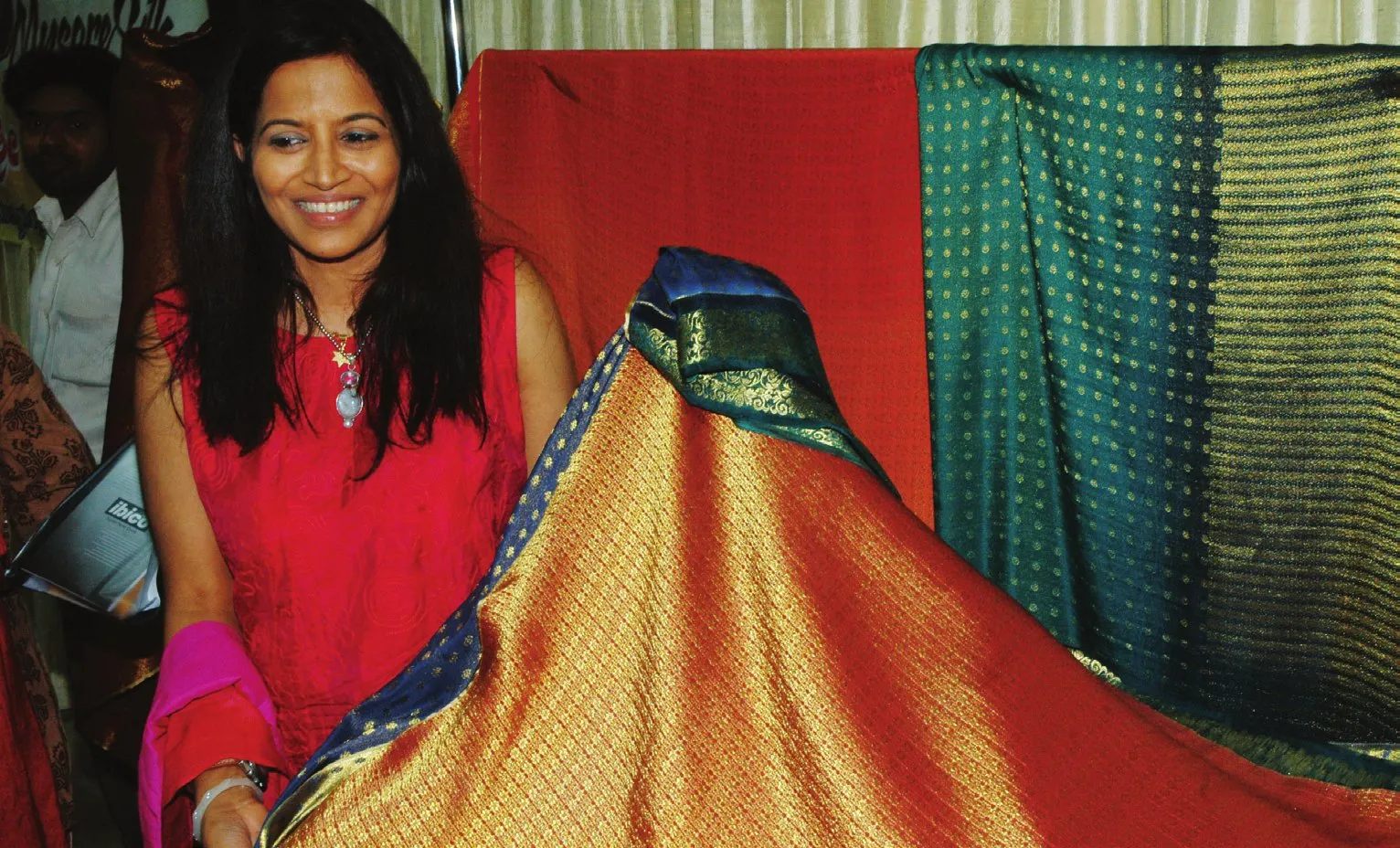
Spotted a mistake, or your photo used without permission? Report a correction