Tales of Gomantak
Goa has so much more to offer than boozy beach nights: the Latin Quarter of Fontainhas, quiet villages, hidden beaches, forgotten forts and islands.
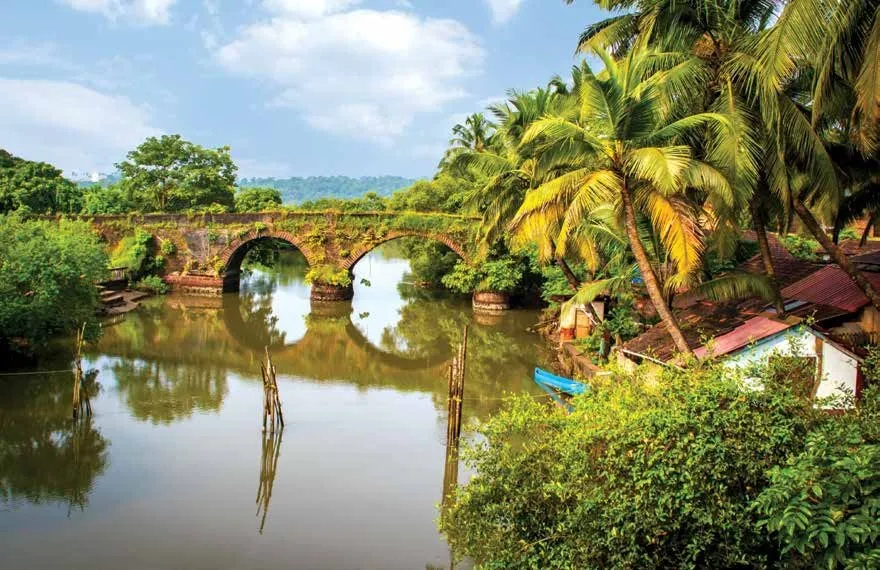




Let’s break down the idea of the illimitable amount of alcohol on the beaches and hangover mornings in Goa.
Goa has so much more to offer than just boozing nights on beaches. Goa is a whole vibe in itself with serene beaches, historical spots, artistic activities, art galleries, water sports and everything one fantasises about a peaceful Goan life in the lap of nature. Goa once known as ‘Gomantak’ was a fertile land. Despite being the smallest state in India it still has a long and diverse history. Once ruled by the Portuguese it has a lot of Portugal influence still present there. You can even find a Portuguese village in Goa and can also witness people widely speaking Portuguese there.
 L’Officiel India DigitalRead L’Officiel India in the digital libraryEvery issue and every cover story, on TCG Media.Read now
Fontainhas, a neighbourhood in Goa also known as ‘Latin Quarter’ is a narrow lane full of colourful Portuguese villas with splendid scenic balconies. This lane is entirely devoted to Portuguese shops, boutiques that sell contemporary art and traditional Goan items. It gives you a vibe of a foreign trip with a lot of eateries and bakeries on your way. During the 18th century, this place was the Portuguese government’s headquarters, but due to a widespread epidemic in old Goa, the capital shifted to Panjim. Today this lane comes under the world heritage site and is recognised by UNESCO (in 1984) as it is evocative of that era and its colonial architecture and Portuguese remnants.
For all the wanderlust and art aficionados, coming here will be like fulfilling their souls. Hence the best way to feel the vibes of this place is through strolling around the artistic houses painted in beautiful hues that will make you fall in love. Here as I said before, you can find bakeries and shops which are 100 years old and are still operating, a lot of old rituals are still followed as the cottages and villas are painted every year after the monsoon as it was a rule back then during the Portugal era and it still remains the same. While walking around Latin Quarters you can indulge in visiting the Gitanjali Gallery which showcases contemporary and Scandinavian art from the 1950s to ’90s. The gallery also hosts book launches, theatre workshops and art courses. It’s a perfect place for all art lovers to explore their horizons of creativity. You can even try your hand at painting tin-glazed ceramic tiles at Velha Goa Galeria, it’s an amazing aesthetic place that still holds its old name. Another spot is Maruti Temple which sits at the top of Altinho hill. It’s a scenic place where one can spend time, gazing at the Mandovi River. This beautiful temple has another worth visiting spot which is the Fountain of Phoenix, a natural spring fountain dating back to the Portuguese era. The spring season brings numerous festivals in the town of Fontainhas and you can find a lot of cottages and villas in this place turning into art galleries where people display their art showcasing Goan heritage. They even have musical and dance events making an art lover go gaga.
The rural life of the Goan people is another bliss to experience. The best time to gel in with the local people is by taking a trip to the villages of Goa in the month of September when the weather is cool and breezy. Certain villages even host a 5-7 days carnival or fiesta to celebrate Goan life. Villages like Mandur Azossim, Betalbatim (a Portuguese village) are thankfully still very quiet and surreal places to visit in Goa, away from the crowd and loud music where you can find palm trees whispering and dolphins swimming in the Arabian Sea. You can find fishermen here and can also experience fishing if you have the tools with you, well people are really kind here and can help you find the fishing tools!
South Goa unarguably has some amazing beaches and village life if you dig deeper into the life of communities. Located in Canacona taluka, Poinguinim village has one of the cleanest beaches in Goa. It is a long-kept secret and if you are willing enough you can find your way to this beach, go ahead, it will be worth it! The place has a temple dedicated to Lord Vishnu called Parshuram temple in the forest groves. What’s even more appealing is that you can find turtles on this beach. Another village for a colourful view of the sunset is the Betul village also located in South Goa in Salcete. It’s a typical coastal fishing village where you can spend your splendid evenings with local villagers talking about life in general. You can stroll around and find undiscovered forts around this village too.
Few of the forts like Fort Aguada and Chapora in Goa are quite common and are often frequented by tourists but if you want to drift away from cliché tourist spots you can visit village Aldona where you can find Corjuem Fort situated on the Corjuem Island. Cabo de Rama is another ruin you can witness as this too offers a great view and is not touristy. This fort was conquered by the Portuguese in the year 1700.
For staying one can actually look for hidden islands in Goa, Divar Island and Ilha Grande are amongst a few you can visit. Reaching it can be a little difficult but that’s the thrill of being on a secluded island from where you can see the broken lighthouse at night. There are other water activities too like kayaking that Goa offers. Moonlight Kayaking is even more beautiful and the trip lasts for an hour to 3 in which you can cover 5-6 km of paddling.
There is so much more to Goa that this can go on endlessly, so I will leave other things for you to explore, happy Goaing!
From the February 2021 issue of L’Officiel India.
Spotted a mistake, or your photo used without permission? Report a correction