Tale Of Two Cities
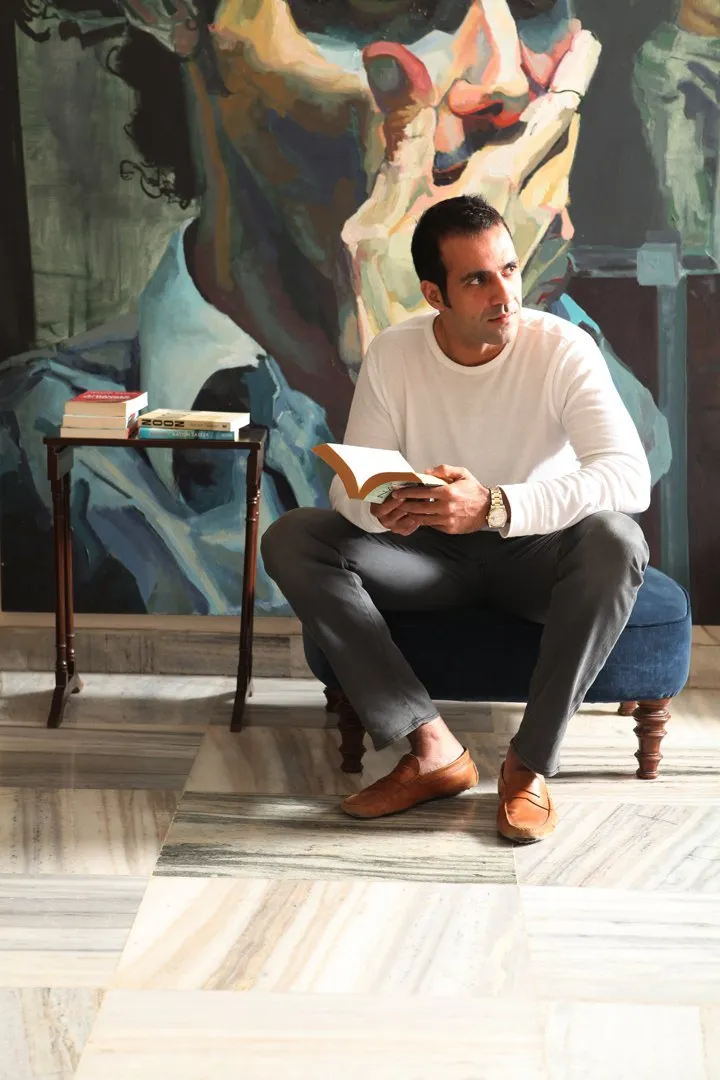
The man in question, does not need to engage an audience with the theatrics that accompany a certain degree of celebrity in his field of work.




1. Could you tell us a bit about your family? Where you've been raised?
There is no cohesive family as such. There was my mother, whom I adore, and rarely see. She raised me in Delhi in a Sikh family, with cousins, and grandparents, and massis. I have an uncle who lives on a farm near Karnal, who I feel very near to. I have a sister in Lahore, who is a soul mate. But everything is very scattered, very diffuse.
 L’Officiel India DigitalRead L’Officiel India in the digital libraryEvery issue and every cover story, on TCG Media.Read now
2. What countries are you currently based out of?
New York and New Delhi. I travel for my work, of course: I’ll be in Benares for a very long stretch this year. I’m very happy there.
3. What kind of themes have you explored in your body of work as a novelist?
The past is my big theme. It came to me in a very simple way: I had a suppressed personal history. It gave me an insight into the price we pay if we don’t face the past. That was my lens. I used it to work my way out of my personal circumstances. I began to see that what was true of individuals was true of societies too. That is the mechanism at work in The Way Things Were.
4. Noon talks about a family structure largely similar to your own. Does it come naturally to draw from personal experiences, or is it a calculated step toward your putting together pieces of yourself?
The personal for me is a prism, a template. It serves as a lens. And it is not as personal as you might think. What I’m interested in are those things in one’s life that have public implication. The idea is not new. It is there in Proust, in Naipaul, in Ben Lerner, Knausgaard, and Edward St. Aubyn. It is not about truth-telling, or confidences; it is an activity powered by the imagination.

5. How would you describe your relationship with Pakistan?
At first – when my father was alive – euphoric. For many years I was full of joy at discovering Pakistan; by which I mean Punjab, really. Later the relationship with Pakistan – the idea of it, not the land – became fraught. I began to sense the calamity of the idea on which the country was founded, an early expression of the trouble that was to be visited upon other parts of the Muslim world. I spent a lot of energy warring against that idea, but feelings are more mixed now. There is a tremendous feeling of warmth and graciousness when I’m in Pakistan, and yet it is hard to ignore awfulness of the underlying reality. It shows up in very real human ways. People who are otherwise full of warmth, and fun, and affection, say/and believe ugliest things. This, in my view, is the true evil of religion, not just in Pakistan, but everywhere: it is stunting; it makes people act against their better natures.
6. How much of a separation are you able to establish between your personal life and your literary work? Can one ever be viewed in isolation of the other?
It cannot. And this is true of every writer I admire. The personal is never just personal; it almost always has a public implication. To discover what that is, is a feature of the examined life. Writers must look hard at themselves, and know themselves, before they set out to know the world.

7. Do you feel you have a stronger connect with any one country over the other?
National cultures speak to me much less than the real cultures of regions and cities. I adore Punjab, and Delhi; old Sanskritic India, I feel, has seeped into my soul. I’m absorbed in its literature for several hours every day. I think it is not wrong to say that I am a Hindu of a kind. The ghar vaapsi brigade will never know what I mean; but those who have old India in their soul know that if you have this connection to the land, you are a Hindu. And I do. There are no two ways about it. The nation state is nothing compared with the connection to the land. It is so imperfect an expression of place, and landscape, of season.
8. Your work shuttles back and forth through a labyrinth of languages in all their complexities. What language do your ideas resonate with the most?
English, of course. But it is fed by Urdu, and now Sanskrit. The miracle of Sanskrit – and the joy of having discovered it relatively late in life – is something that will occupy me now for many years to come. What I have grown especially to love is the commentarial tradition. At the moment I’m reading Ramarshi’s commentary of Bhartrhari, and, given what we have lost in India through our history of invasion, there is something incredible in having it returned to you through the commentators. They are like the ghost of teachers speaking to you across the ages.
9. Did you have to study Sanskrit in detail for The Way Things Were? Did you resonate personally with Toby, who’s portrayed as a Sanskritist in the novel, given your research on the language?
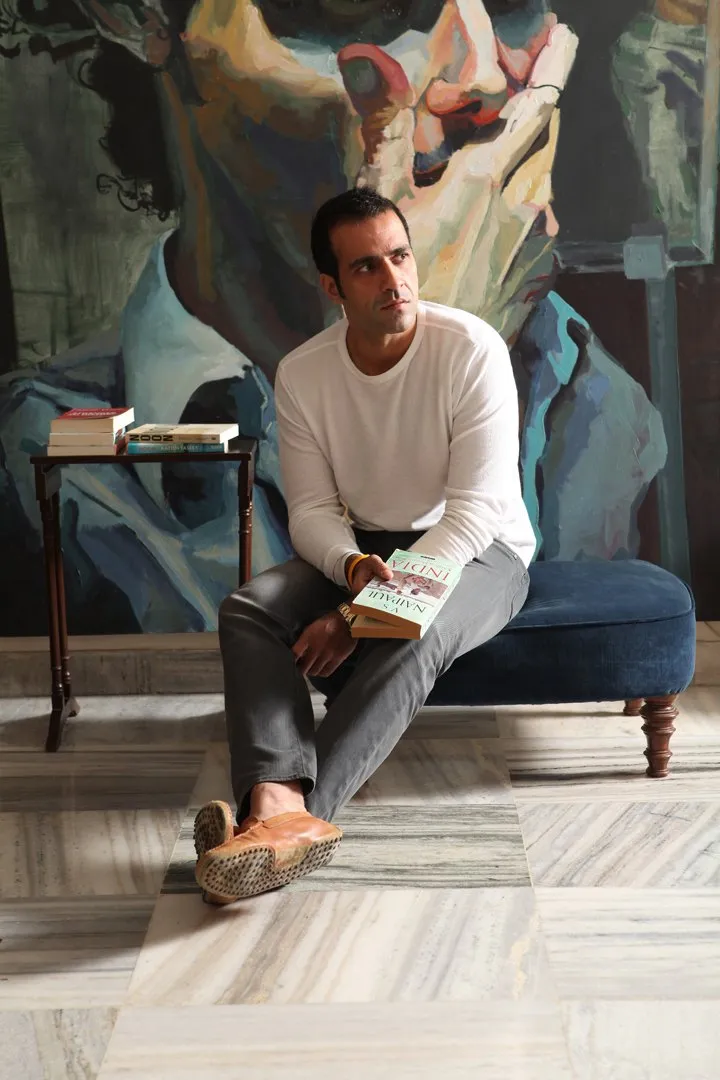
It was the other way around. The Sanskrit came first, the novel later. And yes: I do have sympathy for Toby. But not exclusively. A novelist divides himself among his people. He pours more of himself into some characters, less into others. Toby and Skanda have a largish share, but so does Uma. It is the network of relationships that gives a novel its tension. It must never be that sympathy – which, to my mind, is credibility, and all who are credible, which is to say three-dimensional, are sympathetic -- resides exclusively with one person.
10. How is your relationship with your mother? Did her line of career help define yours as a journalist and then a novelist?
We have a warm, but formal relationship. We see each other for lunch a few times a year. She’s terrific company, but no: I don’t think my life as writer has anything to do with her work, of which I know only little. You must remember that we haven’t lived under the same roof since I was thirteen. I owe her a great debt – my love of reading has come through her – but I wouldn't say we know each other well.

11. Could you elaborate on your stance on the idea of literary fests and that of celebrity from the point of view of a novelist?
They’re a fucking bore, but till I’m at the stage that I never have to think about them again, I’m not going to fight my publisher. I don’t think they help sell books in India; but the media they’re connected to does, and that’s why they must be endured. As for celebrity, of course that matters. If people don’t know your name, they almost definitely have not read your book.
12. Would you like to comment on your translation of Manto’s stories from Urdu back in 2008? What about his work draws you in the most?
He was the beginning of my love affair with language in India. My translation appeared many years ago. At that time there was Khaled Hassan’s bad translation, and virtually nothing else. Now there are many. Manto’s introduced me to a fictional world view I scarcely knew existed. I have tremendous admiration for his use of economy. But my interest in Urdu has been supplanted by the effort required to enter the Sanskritic tradition. The existence of that body of literature in our country is one of the marvels of our history. It would be incredible anywhere, but it is infinitely more important in a place like modern India, where the link to the past has been badly severed.

13. Who are some of your favourite authors/novels?
A Bend in the River by V.S. Naipaul. Stoner by John Williams. The Radetzky March by Joseph Roth. Hope Against Hope by Nadezhda Mandelstam. Kalidasa’s The Birth of Kumara—the David Smith translation. Naturally no list of this kind can ever be comprehensive, but these are five works of literature that I am willing to direct anyone to without the slightest hesitation.
14. Would you ever consider writing poetry?
No.

15. What advice would you give to an aspiring novelist?
Read, read, and read. Then take a walk, or nap, and read some more.
16. Is there anyone that you look up to as a mentor? Stranger to History: A Son's Journey through Islamic Lands was hailed by Sir V S Naipaul. Have you had a personal rapport with him/met/spoken with him?
We’ve had a very close association over the last many years. We have our differences, but I adore the man. The work has improved over time, by which I mean a bigger, and brighter light falls on it, even as the physical man decay. It is really an incredible to see. Jitni badhti gayi peeri, Ghalib, utni mere sheron pe javaani aayi. In India – which is as my Urdu teacher says a murdaparaston ka mulq -- only death will bring him the recognition he deserves. He has towered over our intellectual life, and yet when he came to India a few years ago – it was the 50th anniversary of Area of Darkness – and the Indians, in thanks for his great contribution, abused him for a full week in the press. That’s India for you! What is it Joyce says of Ireland? “The old sow that eats her farrow”

17. What are you working on at the moment? Any novels in the near future?
A work of nonfiction.
18. How would you characterise your time working for Time Magazine? You've also written for Esquire magazine. How similar/different have your experiences been working for the two publications?
It was like working for a large government agency. Excruciatingly dull. I’ve written for a bunch of places over the years, but I’ve recently been asked to do a monthly column, which I’m looking forward to.
19. If you were to choose a different profession in this lifetime, what do you think it’d be?
I would rather die than not be a writer. But the two industries I envy are Bollywood and televisions. I envy them their relevance. It was once the relevance of the novel.
20. Who do you confide in when faced with a dilemma?
Susan Miller, like just everybody else.
Spotted a mistake, or your photo used without permission? Report a correction