Suket Dhir: India’s Crown Jewel





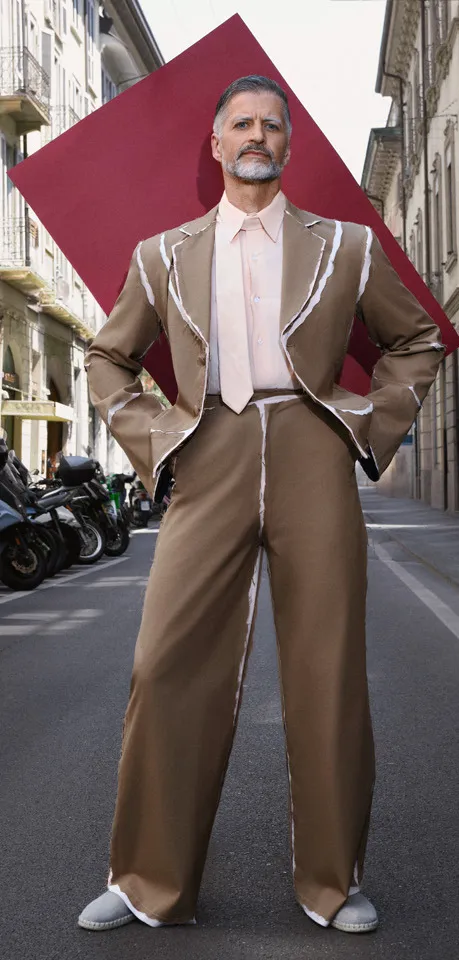
“I was figuring out what I wanted to do, but certainly kept getting to know what I didn’t want to do,” says Suket Dhir, winner of the 2016 International Woolmark Prize for menswear. While sitting at a cafe in Bengaluru, he spotted a guy wearing a Wrangler-designed T-shirt. That’s where the idea zoomed in! Today, the Suket Dhir label is a tour de force. We met the maverick, and took an interesting walk down memory lane with him...
How daunting was the journey towards winning the International Woolmark Prize, especially in the menswear category?
 L’Officiel India DigitalRead L’Officiel India in the digital libraryEvery issue and every cover story, on TCG Media.Read now
I was on the verge of passing out. I had to sort of calm my nerves. I had got two-and-a-half months to fill my entry form and waited for the last 15 days to finish it. Just the sheer pleasure of getting an invite from Woolmark to participate was encouraging and daunting, with the pressure to prove myself building up. And once I put it all out there, I did the best I could; it didn’t remain as tough as it seemed.
What were some of the challenges that you faced on this path to glory?
There were quite a few of them. Firstly, I had to go out of my comfort zone. The officials from Australia had specified only to use Merino (cool wool), whereas most of my garments are crafted from light-weight fabrics, like linen or silk. Secondly, it was a bit difficult to convince my clients to use (cool) wool for summers. Furthermore, we were developing our own woollen fabric with our weavers in Telangana, so that too, was challenging.
Tell us about your childhood. How do you continue to extract elements from your birthplace and sow them into your design repertoire?
Actually, I was born and brought up in a small town called Banga, in Punjab, and I grew up in Dehradun, where I went to Colonel Brown Cambridge for my initial schooling. My parents, in the meantime, moved to Delhi, so we lived there, too.
Were your parents comfortable with you pursuing fashion as a career?
Fortunately or unfortunately, even though my grandfather was a merchant selling textile blocks, and my father a garment manufacturer, they still didn’t think as highly about fashion as today’s generation does. We were from a small town, so my parents weren’t exposed to this glamorous world. Right after school, I went to do my B.Com from Delhi University for a year and did another year of BCA. Soon after, I thought of tapping into short-term, multi-media courses. My parents thought I was fickle-minded. That’s when I decided to join a call centre and worked there for a whole year, where I made decent money and ended up saving up most of it! All this was so crazy that I lost 10 kg, and decided to quit. However, I spent all the saved money travelling. We were in a boarding school (in Dehradun), where I had been sculpting, painting, carving, doing a lot of photography. I got an opportunity of graduating from NIFT as an option and embraced it. I graduated and eventually became a fashion designer.
Are there any garment construction techniques that you favour over others?
Not really. I like the balance of machine and craft, so I think we need to use technology to our advantage, using the best elements of hand-crafting, which is where the heart and soul is put.
Crafts such as Ikat, Kasuri or even Shibori are very hard to master and slowly dying. How do you think your brand would be able to revive such intricate crafts?
I really don’t know. I don’t have a solution to that. I’m just doing my bit. Just focus on the craft. Its simplicity can turn something sterile into pure extravagance and exuberance. Indian crafts are like a poor man’s profession, whereas all over the world, crafts are recognised as luxury. Because of commercial viability and costing, there isn’t much awareness about crafts. It’s great that now we can produce clothes which are accessible to everybody because everyone can’t afford a meticulously hand-crafted sari. If the people who are involved with luxury, focus more on crafts, then perhaps, there’s a solution there. Also, if craftsmen get paid, they would be readily available to work; they would love to continue the same for generations. I think that’s where the West is better than us. There is transparency between the workers and owners. What I do actually enables craftsmen to move towards luxury; and my personal aesthetics go hand-in-hand with the crafts’ myriad aspects.

In this digitally equipped world, fuelled by fast fashion, how do you think sustainability still continues to emerge as an important factor?
I think sustainability is a much bigger picture. It is not about organic garments, natural dyes or natural fibres; it’s more about the ecosystem and everything that goes along with it. You need to sustain the lives of the weavers, your own life, and work towards making a product that can last longer; that is how you can create heirloom pieces.
Over the years, how has art and culture had an impact on your collections?
For this, you would need to visit my store and you will know what I’m talking about. If I start explaining the details of each and every garment and the inspirations, you won’t understand it. Nostalgia has a huge part to play in all my collections till date, and it will continue to do so. Fortunately, I have had an exciting life, so I draw lots of inspiration from it.
Are there any benefits that your karigars are provided with?
I don’t know. That’s a question only they can answer. Most of them seem to be happy with what they are doing. From day one, I have made sure they don’t have that pressure to mass manufacture garments, with someone standing on their heads to finish the job immediately.
What is that one thing that intrigues you about Australian Merino wool?
I think it is the cool wool aspect of it. My weavers have never worked with wool before, as they are used to weaving cotton and linen, so that was an amazing change for them.
How hard was it to impress Suzy Menkes?
Blood, sweat and tears of one whole year I guess! When I was presenting in front of the jury, explaining each and every garment to the panel, as soon as one of my models took off his jacket and handed it to the judges, Suzy Menkes was the first one to stand up and gasp with amazement. I was also told that if Suzy Menkes doesn’t like a garment, it shows on her face, as she is a woman of few words.
You had talented designers who also participated in the competition with you. What was the vibe like?
They are really great guys! During the juries, even when we were doing our initial preps, everyone was jovial. It was quite a roller coaster ride to work with them. Also, they held no grudges against me when the winner was announced. Rather, they all congratulated me in the end.
According to you, is there anything that international designers have, which Indians don’t?

They have got access to better technology and their work ethic is something that I look up to.
They also know their international clientele and the functioning of global markets, so that is a plus point.
What is the commercial viability of your brand? Any distinct competitors?
No matter how beautiful my garments may be, in the end, to keep the business moving forward, they have to sell. If you see them in person, everything is wearable. It’s a great look for the ramp, and at the same time, it would look fabulous, even if you wear it on a daily basis. I have actually worn each and every garment because in the end, I should be happy with what I’m offering the customer.
How has this honour boosted your confidence? What do you plan to do with this money?
There are so many things that have not been done till now which I can now do. I plan to travel, travel a lot to get more exposure. I would love to start participating in exhibitions to make a brand presence, internationally. I need to hire more people, who can religiously follow what I do, in order to expand my brand further. We need to set up a website too, as social media makes a huge impact on one’s brand.
When do you plan on launching this collection in India?
Since our collection is resort wear, we are still debating as to how to go about it. We are certainly going to launch it in Australia, in summer, which is our winter.
What was the inspiration behind this collection?
I have a two-year-old son, who was my inspiration. I remember playing with him in the park, and that reminded me of my childhood. So, that element of nostalgia played a really big role in my ensembles.
What are your plans for 2016?
This was the plan for 2016 and it’s done! So, I can sit back and let this moment seep in. And not to forget...I have to start the production of this collection, so that it can be out in stores as soon as possible.
Do you have a muse?
I’m too lazy to think about a muse. So, for my brand the connecting line is ‘me’.
From the March 2016 issue of L’Officiel India.
Spotted a mistake, or your photo used without permission? Report a correction