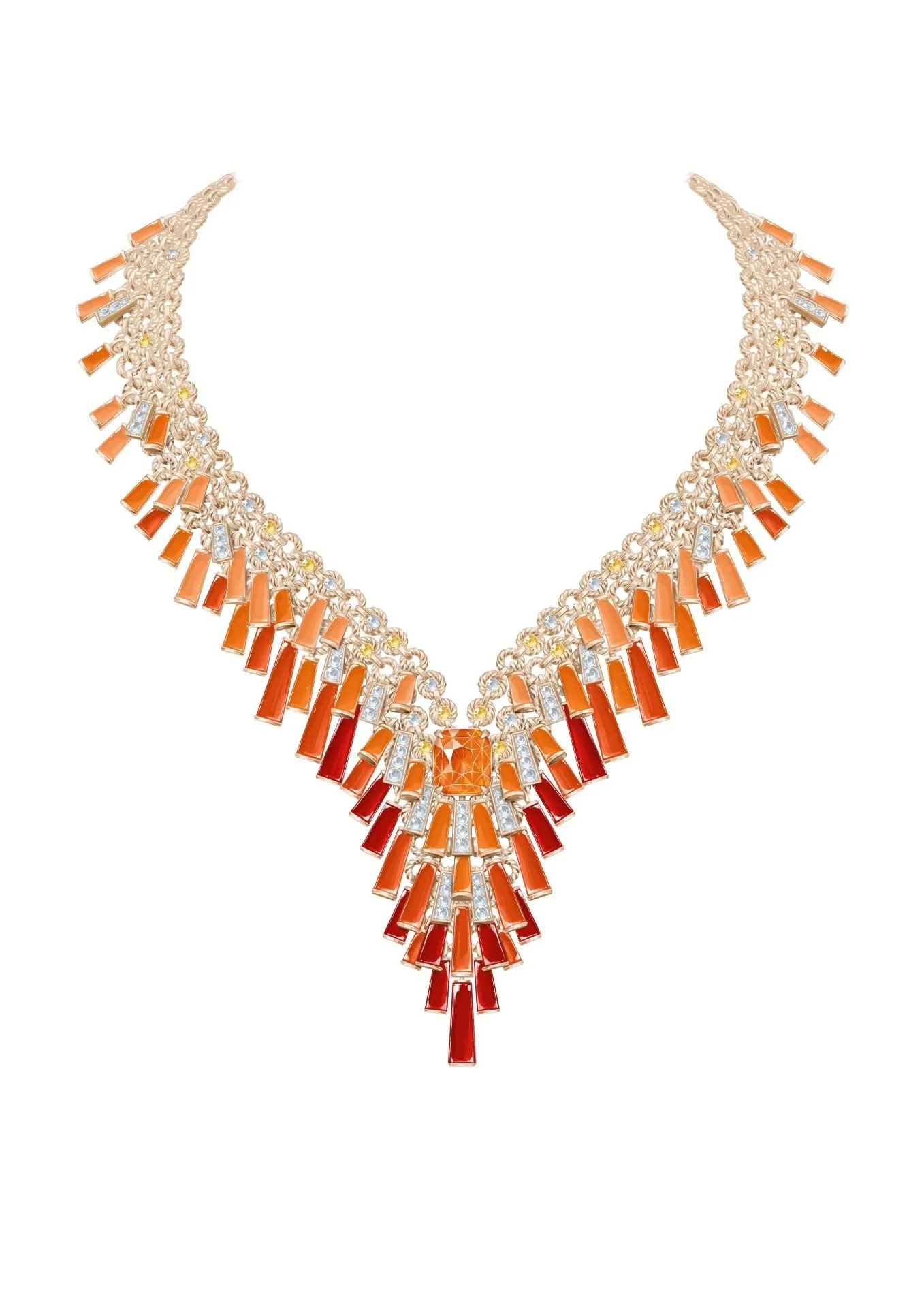
Perhaps it's the carefree glamour, the striking silhouettes, or the unreserved love of colour and craftsmanship, but there's something about the 1960s that still inspires designers today.
With its signature concept of "Extraleganza," a blend of elegance and extravagance that captures the jet-set vibe of the era, Piaget's latest high jewellery collection embraces this idea. Led by Stéphanie Sivrière, the house crafts expressive, detailed, and surprisingly wearable pieces by combining geometric structures, flowing forms, and vibrant colors.
Inspired by the jet-set glamour of the 1960s, Piaget's latest high jewellery collection further explores the concept of "Extraleganza," which refers to the brand's fusion of elegance and extravagance. Under creative director Stéphanie Sivrière, this season's pieces balance organic shapes with structured lines, giving off a sculpture-like, vibrant vibe.
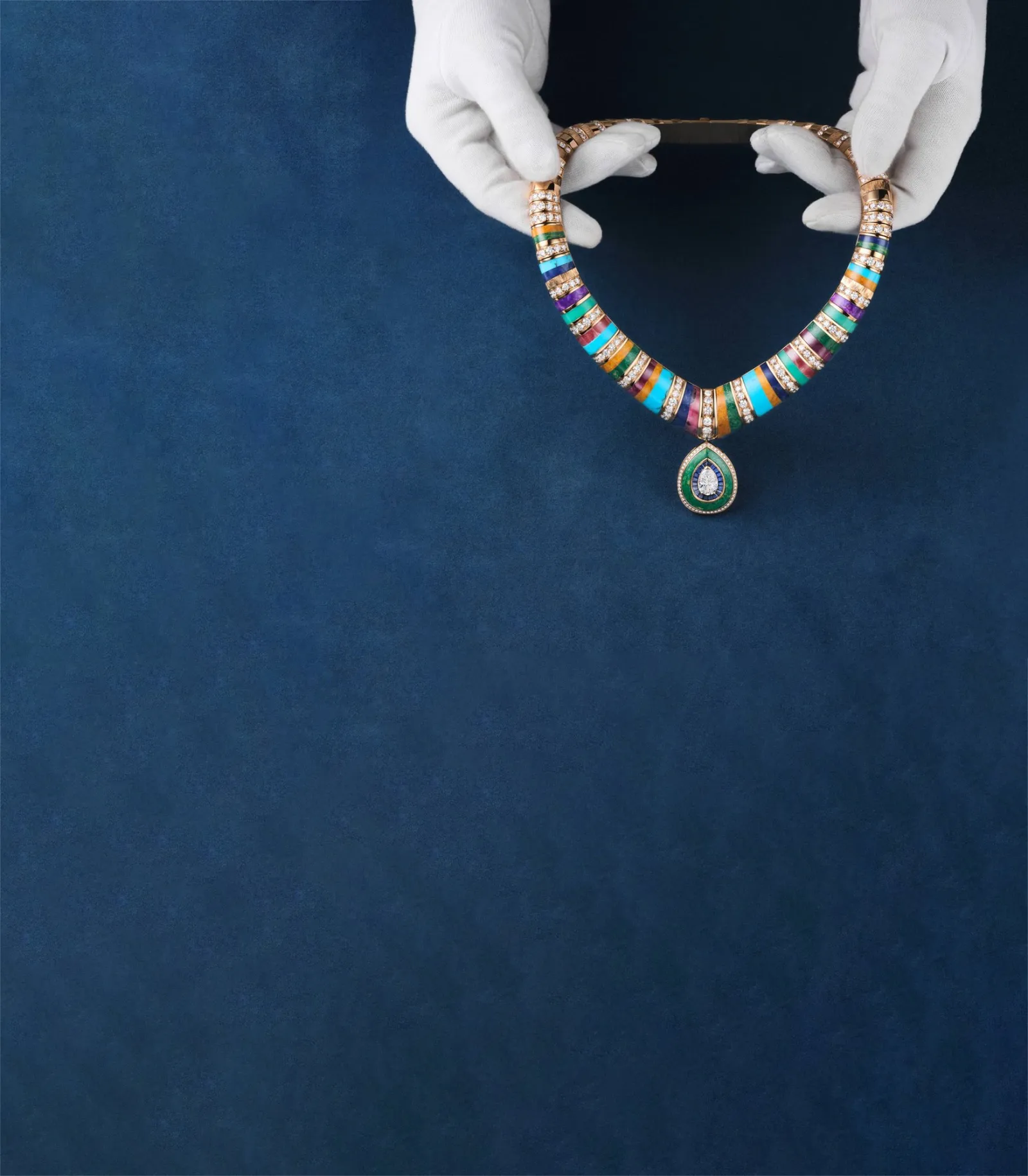
One particularly noteworthy piece is a necklace that features a 3.01-carat pear-shaped D-IF diamond set into nine different coloured hardstones inlaid using the traditional pietra dura technique. It is striking yet elegant, and its visual interest is enhanced by the contrast between the central diamond and the colourful stones.
Instead of being unduly formal, it's a fun and expressive take on luxury.
A changeable cuff bracelet that showcases Piaget's artistry is another highlight. It has a lattice-style bracelet set with a pink sapphire from Madagascar (4.42 ct) and a spessartite garnet (6.40 ct) on top of rose gold Milanese mesh that has been edged with diamonds. The brand's iconic Décor Palace motif, which was first created in the 1960s, is engraved on the textured gold surface, connecting it to the collection's retro themes.
All in all, the pieces are opulent without being overly conventional. Although there is a noticeable nod to vintage design, the movement, colour, and asymmetry give them a very modern feel. It's an assured collection that pushes its limits while drawing inspiration from Piaget's distinctive aesthetic.
Despite their luxury, what's noteworthy is how wearable these expensive pieces of jewellery feel. The pieces' emphasis on movement, colour palette, and transformable elements imply that they are intended to be lived in rather than merely displayed in vitrines.
On a larger scale, the collection capitalises on a developing high jewellery trend that values transformability, sculptural form, and vibrant colour over strictly traditional silhouettes. Jewellery that tells a story, embraces vintage references, and encourages movement is becoming more popular than minimalist pieces. These pieces are expressive and celebrate individuality and craftsmanship. Piaget's emphasis on colourful hardstones, asymmetry, and adaptable design illustrates how modern luxury is more about playful sophistication than restraint—an aesthetic that is wearable, intimate, and emotionally stirring.




 L’Officiel India DigitalRead L’Officiel India in the digital libraryEvery issue and every cover story, on TCG Media.Read now