Siddharth Dhanvant Shanghvi: The Art of Brevity
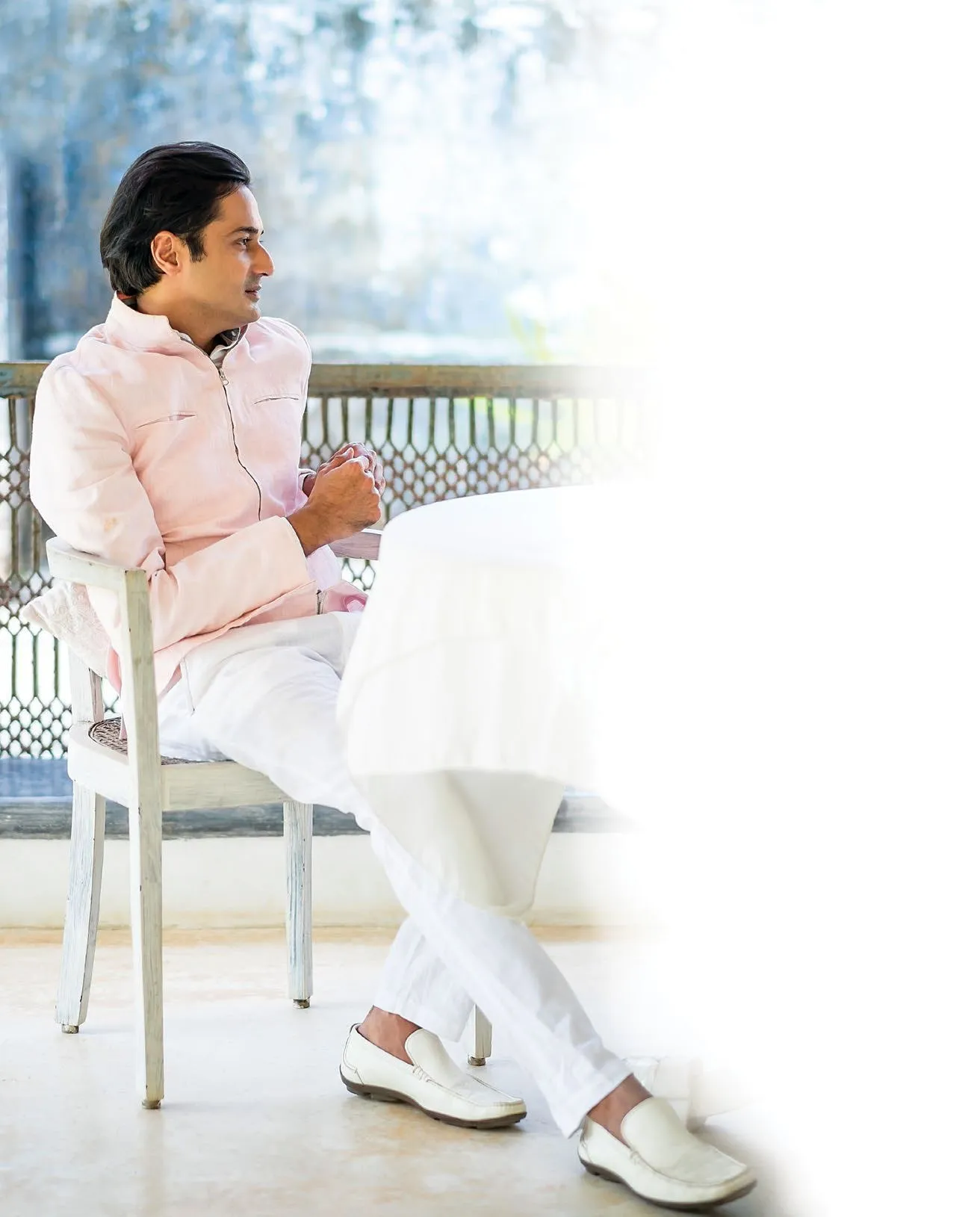




Siddharth Dhanvant Shanghvi’s writing style has been compared to Salman Rushdie and Vikram Seth. However, his ingenuity emanates from music and photography more than books or authors as he thinks these comparisons are “lazy” and “reductive”.
When and how did your association with Sunaparanta start?
 L’Officiel India DigitalRead L’Officiel India in the digital libraryEvery issue and every cover story, on TCG Media.Read now
I had set up a home in Moira, Goa. Isheta Salgaocar introduced me to her father, Dattaraj Salgaocar, patron of Sunaparanta. Raj invited me to the board of his institution and I initiated the Shanghvi Salon the same year, a conversation programme exploring how work is made and the challenges of the artistic process.
How do you think your individual effort merged with Isheta’s in taking Sunaparanta ahead?
Isheta and I have different but complimentary strengths. At heart, I’m a village boy; she is worldly, cosmopolitan. I hate crowds; she can work a room like she owns it. I’m interested more in private conversations with artists; she can make sure they deliver on time. We are also close personal friends, I’ve grown to find it also keeps alive our friendship, as I am not someone who can chat about nothing or meet friends at parties. I find that sort of socialising vacuous. To build a working relationship on shared passions and a singular motive for growing an institution has been an extraordinary boon.
What is your relationship with Goa?
Goa gives me a great mix of solitary calm and the freedom to meet people outside the complications of city life. Very few folks are going to do a power number when they’re on the beach. I like the ability to drop by a studio practice, to work with local artists and see how they think about work.
How have you explored gender and sexuality in your literary work?
If you read my books you will see those subjects were at the heart of both novels. My belief is the debate around the sexual self has to transcend the banality of category,. There are few things as boring to me as straight or lesbian. People are sexual and this means they will always find ways to live, desire and explore love. We seek out people for many things—conversation, sex, money, love. Not all of this is going to come from the same person or the same gender. Be open. Be true to yourself in the moment.
Do you think your family has been influential in your work?
Yes, my grandfather was a key influence. A student of Dr. Carl Jung, his books exploring portions of the Gita and his dream analysis had a great shadow on my life. I was lucky to know him because he put scholarly inquiry and the evolution of his self on the same scale. It was always his endeavour to balance them.
Your writing style has been compared to Salman Rushdie and Vikram Seth.
I feel grateful for the flattering comparisons although I think they are reductive. I always found it boring that people reviewed two authors because they were ‘Indian’ or ‘women’ or ‘black’. Some people might think of it as a subtle form of racism to plonk two people together because of race; I believe it’s just lazy. My inspirations are from photography and travel more than from books, so to compare my work to other authors is just an easy and facile cop out.
How has photography and music helped carve your writing?
Music is the internal parenthesis within which work was built. Whole scenes in The Last Song of Dusk were first composed to pieces of music, a certain raga, a concerto. It’s like an aspic you carry the work in and when you sit down to work, you bring it forth out of this music. Photography, which I trained in, gave me knowledge of composition—how to say as little about a character and enough with a single telling detail.
How do you think writing is a communal act?
Writing is a communal act because it emerges from reading other works, travelling with people, falling in and out of love. All of it is put together in solitude, though.
Who’re few of the contemporary Indian writers you admire?
I’m afraid I don’t admire writers because of their national origins.
Your favourite photographers...
Photographers I admire include Sooni Taraporevala, Roger Ballen, Dayanita Singh (who technically is a ‘bookmaker’). From them I’ve learned how to bring out the dramatic in the everyday, how to bring concision to a scene, and how to recognise that some things are just authentic to the moment. The moment passes, the thing changes. In writing you can revise and edit; photography allows that in some sense, but you have to know the bones of a good photograph before you can do anything with it.
Which is your favourite book and why?
The English Patient by Michael Ondaatje, for the writing and the invention of a form. Beloved by Toni Morrison, for its discourse on love and politics.
What was one of the most surprising things you learned while creating your books?
The most important thing I learned is you cannot keep writing books. I cannot do this. I am not a factory. These are mercurial things. I am drawn to doing things I can be true to, so I coast from writing novels to making photographs to creating a salon and now to running ‘‘Sensorium’’, an arts festival. I don’t ever want to be one thing only. I am easily bored, quickly distracted, and I do only what helps me become more myself.
How deeply has your personal life affected your work as a writer and photographer?
My personal life has been shaped by the love affairs with very singular people; some taught me how to edit; others impressed me with the discipline. And a few taught me, by example, what failings to avoid as a human being.
Which has been your most favourite character you’ve written and why?
My favourite character was Nandini, because she was true to her nature, her sexual inclinations, because she was private and solitary and given to art.
How has Bombay impacted your work?
Bombay now repels me. It’s dirty, boring, the politics is wrong, the money is bad, the conversation is plain stupid. It’s a love affair gone dreadfully wrong, I’m afraid. There’s no ‘there’ there.
From the January 2016 issue of L’Officiel India.
Spotted a mistake, or your photo used without permission? Report a correction