Right of Passage
Illustrator Jasjyot Singh Hans explores queerness, gender, sexuality and self-love through his art, and criticises how pop culture mocks bigger bodies.





Illustrator Jasjyot Singh Hans is unafraid of letting his creations raise a mirror to the society, without conventional distortion.
We call you a non-conforming, conscious artist. How would you define yourself and your art?
 L’Officiel India DigitalRead L’Officiel India in the digital libraryEvery issue and every cover story, on TCG Media.Read now
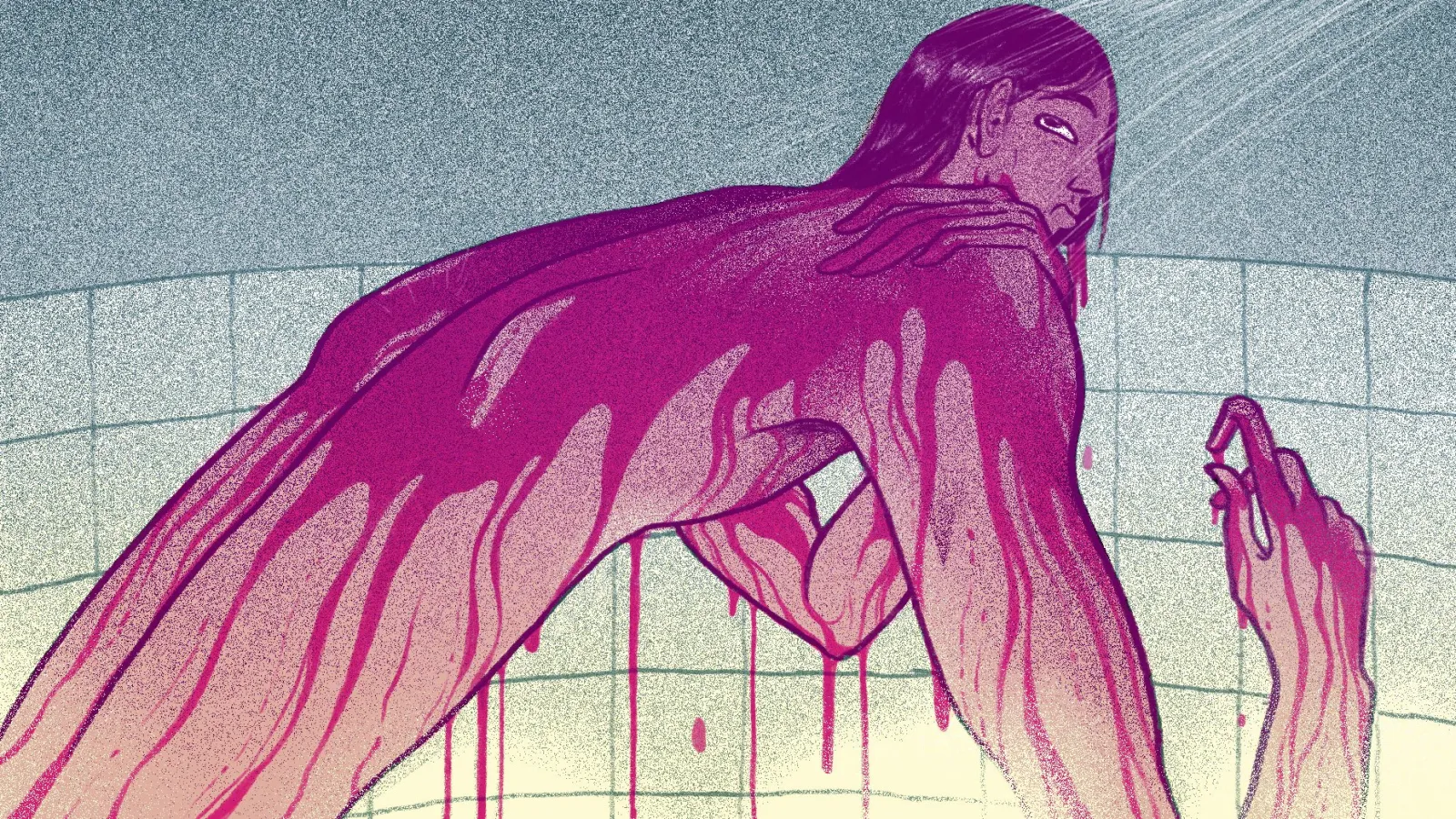
I don’t like the baggage that comes with the word artist. So, I just call myself an illustrator. My art is a celebration of the body and tries to explore and uncover subjects such as queerness, gender, sexuality and self-love.
How were you as a child? Were you always inclined towards art and illustrations?
I was a pretty sober child, I think. I was quiet and not naughty. I kept to myself, and have been drawing for as long as I can remember. But if I opened up to someone, I wouldn’t stop talking!
Growing up, how did you see the world? Did you think it was unjust, especially how we portray the human body in popular culture?
As a kid, I guess you just see things as they are, the instinct is to think the fault lies within you, and the thing that needs change is yourself. But as I’ve grown older, and come into my own and my sexuality, I realize my point of view is unique, valid and important. And I embrace/ celebrate that, even in moments of self doubt. The way the human body is portrayed in pop culture is problematic, especially bigger bodies. They’re always there for comic relief, being the butt of a joke. And I always hated that. I knew I didn’t find that funny even as a kid, it just made me angry.
When did you decide you wanted to be an artist? Were there moments of doubt?
NO MOMENT OF DOUBT EVER. I always knew I wanted to be an animator, but in a sense the idea of doing something around art was always exciting to me.
You grew up in Delhi. How did the city influence you as an artist?
Yes I always loved observing people. And I was surrounded by the most wonderful and crazy bunch. We lived in a joint family, three families on one floor. Since there was never enough private space, the people around me really influenced my art, especially the women. Visiting the National Gallery of Modern Art, India Gate was like entering a magical space. I drew there during summer vacation, in the outdoor space by the sculpture garden and saw rooms full of Amrita Sher-Gil’s nudes and Jamini Roy’s luscious tempera work.
What inspires you? Do you like to hand paint or use a computer?
I don’t think inspiration ever has a singular source. So I’d say that I get inspired by everything. I like working by hand as much as I love working digitally, and being able to use the medium to my advantage/ based on its application.
When did you notice that everyone is taking a keen interest in your work?
I just kept posting and people kept watching, it wasn’t really until I started Instagram, a dedicated social media channel, was I able to directly see how many people were actually watching.
What kind of reactions did you get for your illustration when you started out? Has it changed over the years?
The reactions have always been positive, and that outweighs the negative by a landslide. Over the years it’s only been more and more positive reaction. To keep that in check I always look to my close friends to call me out/ give me criticism when I need it.
Last year, we did a beautiful photo shoot with members of the LGBTQ community. In their interviews, each of them said that it really helps (and matters) when the family is supportive of their child’s gender and preferences. Do you agree?
Yes. My family has been fiercely supportive of my sexuality, and my public voice as a gay man. But at times I felt like I had to take a step myself for them to see that I was getting nothing but support, to strengthen their support further.
You have been collaborating with fashion designers and brands. How did that come about? How has your experience been?
It started with my first job, at Sabyasachi. It came about when I collaborated with (then) fashion blogger Surabhi Chauhan AKA Lovestruckcow on a series of fashion illustrations, one of which happened to be of his 2011 collection. Since then I have been able to work with Péro by Aneeth Arora on illustrations for press kits, Manish Arora Paris as a print engineer and with Suket Dhir on illustrations for his Woolmark Prize pitch. It’s always amazing to work with people who have a strong creative vision, and be able to collaborate. And I have enjoyed every bit of it!
What are the limitations in the collaborations? Is there more that you expect from these collaborations as an artist?
For the most part, things work out well. I am an illustrator, so my goal going in is to not have my own expectations, but understand the need of the assignment, fulfil that to the best of my ability and make sure it looks kickass.
The sketches and moodboards that we usually see have skewed sense of human form, the idea of beauty and gender roles. Do you consciously challenge these?
Over time I have become more conscious of what I’m drawing. When I started, it wasn’t to be radical or different, it was just my point of view, and what I wanted to see as part of fashion imagery. But now I see it has become a way for me to actively revolt against normative beauty standards.
Can commercial gains and inclusivity ever be achieved together?
It is RARE, but not impossible. Haha. You just have to keep your head down, continue making work and the good stuff comes rolling along when you least expect it. Even if I don’t get commercial work that completely aligns with what I personally do, I continue doing that on my own anyway.
Tell us something about your book, To Babes, With Love. What emotions you went through while creating the illustrations?
To Babes, With Love is a 48 page comic I worked on as part of my MFA thesis at the Maryland Institute College of Art. It focusses mainly on my relationship with my father, and how things changed (or not) since I came out to my parents. It was a difficult process to dig through past experiences (sometimes really unpleasant ones) and make it live in a comic in a compelling way. I’m happy with what I got, but understand that there’s a long way to go with it!
What does inclusivity mean to you? Do you think we, as Indians, have let go of prejudices or at least trying to?
I feel like we have a LONG way to go, but we’re definitely on our way. Colonial damage left us with a borrowed European beauty standard, something we continue to live up to with products like Fair & Lovely. Inclusivity to me is better representation of people of all sizes and skin tones in popular media. Meaningful content centered around these bodies is something we still don’t see much of, and I think that would be a good place to start.
How are artists like you changing the narrative around body positivity? What more can be done?
I’m just putting out into the world what I would want to see more of in terms of imagery in fashion, and that’s a very small part of it. I want to see bigger brands, fashion & lifestyle hire diverse models instead of being fixated with popular Bollywood names.
What are the projects that you are working on?
I’m working on a series of editorial illustrations for Columbia Journalism Review magazine. I will be working on new zines, printed by small press publisher Tiny Splendor in California.
Spotted a mistake, or your photo used without permission? Report a correction