‘Raf Was An Intern In My Company’
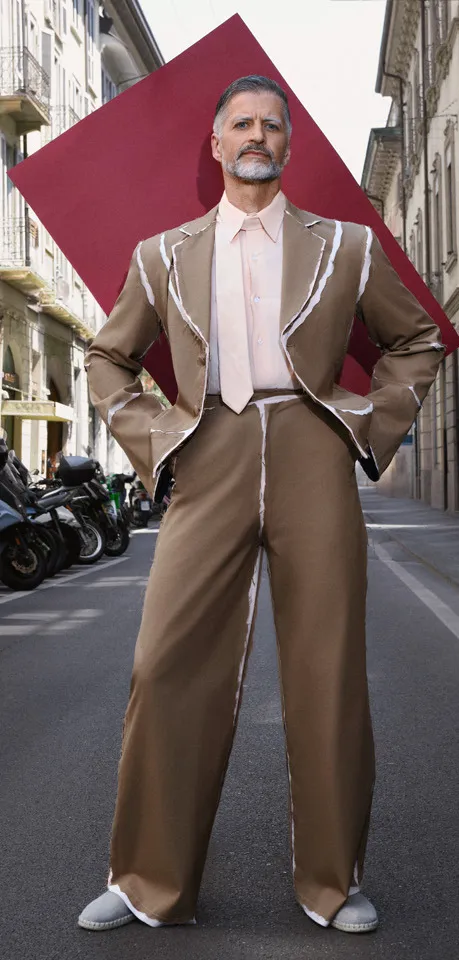
Head of the Fashion Department at the Royal College of Fine Arts in Antwerp; teacher, guide and confidant to fashion industry stalwarts like Raf Simons and Kris Van Assche of Dior fame and Demna Gvasalia of Vetements and Balenciaga fame, Walter Van Beirendonck is the poster child for non-conformism.




1. Which of the phrases plastered across your fall 2015 menswear show spoke to you the most? Were there any specific incidents or moments in time that inspired you thusly?
“Stop Terrorizing Our World” was the opening slogan of the fall 2015 show. It is the slogan I have been using for several years now, and unfortunately it is increasingly relevant to what is happening in our world today.
 L’Officiel India DigitalRead L’Officiel India in the digital libraryEvery issue and every cover story, on TCG Media.Read now
2. You are the Head of Fashion at your alma mater, Royal Academy of Fine Arts in Antwerp. What kind of pedagogy do you believe in?
I have been teaching at the Royal Academy of Fine Art’s, Fashion Department in Antwerp, since 1983 and since 2007 have been the head of the department. I believe in intense guidance. Our students are guided on a “made to measure”, one-on-one basis, according to their needs. That, coupled with an extremely demanding program with focus put on developing their own unique signature and personality, creates strong individual designers, ready to conquer the world of fashion.
3. Your design aesthetic is laced with political and social radicalism. What brought you to adopt this aesthetic?
From the moment I started my collections in 1985, I saw fashion and my collections as communication. Over the years I started spontaneously adding statements into the collections. That, combined with working with colours, patterns and cuts creates unexpected content and tension each season, which have now become my Walter-signature.
4. Would you credit your revolutionary aesthetic to your education at the Royal Academy of Fine Arts? Any mentors whom you still cherish?
Our teachers were Merry Prijot and Marthe Van Leemput. Merry Prijot was a reincarnation of Coco Chanel, with a very French and “bourgeois/traditional” taste. It was mostly my group of friends (which later went onto becoming 'The Antwerp Six'), that created an enormous energy! We were very adventurous; we wanted to conquer the world! This experimentation in combination with the taste of our chic teacher, created a nice atmosphere, which pushed us forward.
5. Would you tell us about your retrospective at the Antwerp Fashion Museum in 2011 titled “Dream the World Awake”?
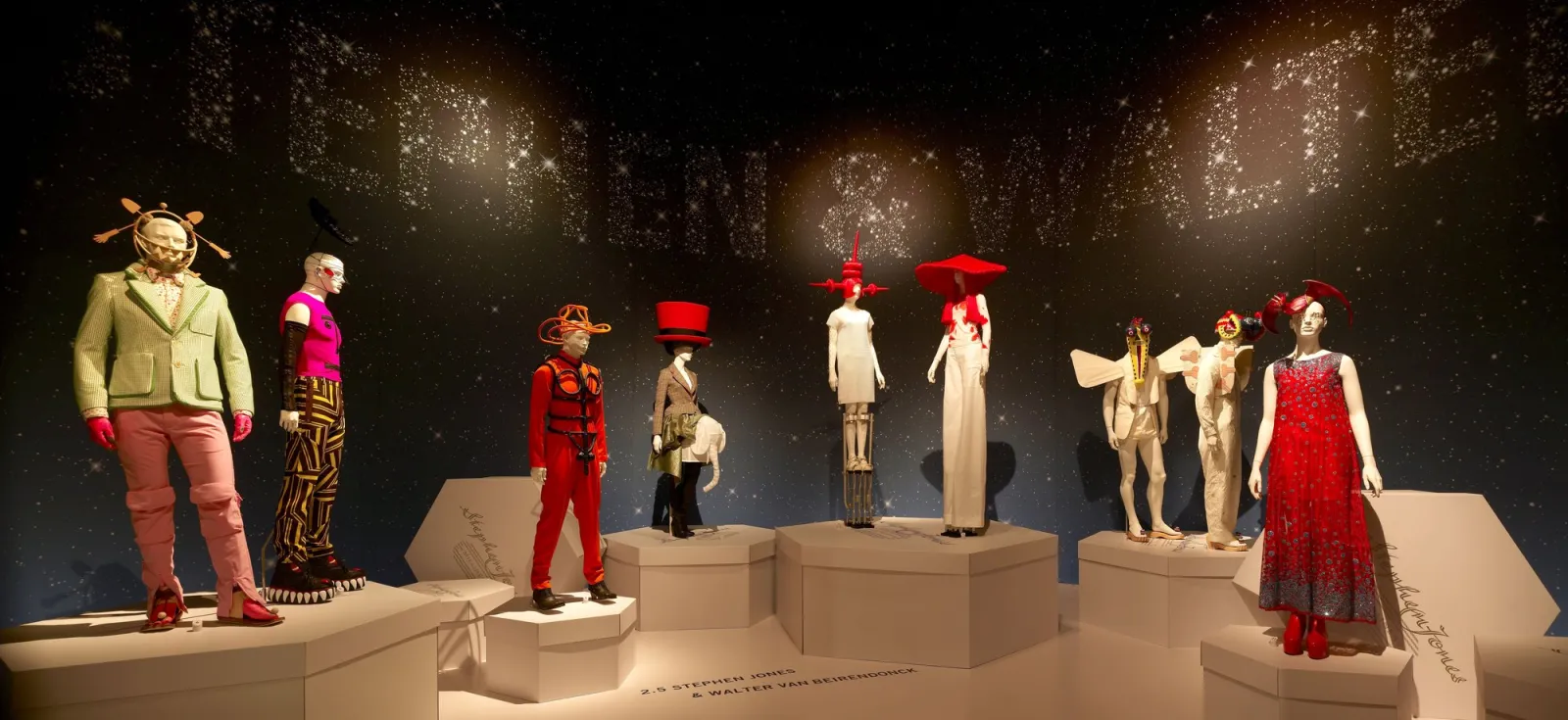
“Dream the World Awake”, was a fantastic retrospective, which also travelled to Melbourne in Australia. It was the first time I had seen all my collections come together; it was a very special feeling, and I am very proud of the clear WVB-signature that I have developed over the years. It was also the first time that a fashion designer, had showed his way of working, his inspirations and the link and respect with other disciplines and the world. My scrapbooks and sketches literally came alive on the “Wonderwall” which was situated next to the collections.
6. Your campaigns have been shot by some of the most illustrious photographers all over the world, and featured in the print version of Dream the World Awake, like Jean-Baptiste Mondino, Ronald Stoops, Juergen Teller, and Nick Knight. Do you hold any one photographer and his style in the industry in high regard? Do you keep an artistic compatibility as a factor when zeroing in on such collaborations?
I have been really fortunate to have worked with such talented photographers. Mondino, Juergen Teller, Nick Knight were perfect ‘fits’ for my vision and their own strong style, added power to my work. I’ve been working with Ronald Stoops since the ‘90s, he understands me perfectly, and is always fantastic to work with. I am a big believer in collaborating with other creative minds as working together creates an enormous synergy and it gives your creativity wings.
7. You’ve taught some of the leading talents in the industry like Raf Simons and Kris Van Assche. What do you think of Simons’ work as the erstwhile creative director of Dior and of Van Assches’ as the creative director of Dior Homme?
I'm very proud that a lot of the designers working in fashion today were once guided by me. Raf (Simons) was an intern/trainee in my company. He graduated in industrial design and got fascinated by fashion in my studio. I took him to see his first (fashion) shows in Paris and introduced him to the art world by accompanying him to the Venice Biennale. Kris (Van Assche) was a dedicated student, whom I worked very well with. Both have built out amazing careers. There are dozens of talented creatives that I’ve had as students, working all over the world now. Another example is Demna (Gvasalia), who was first my student, then a trainee in my studio. I made his first introduction for a commercial job, after which he went onto Paris and now is the creative director for both Vetements and Balenciaga. That to me is, amazing!
8. What in your opinion does the exiting of Simon’s from Dior and of Alber Elbaz from Lanvin say about the pace at which the fashion industry is moving?
I decided to step out of the W< (Wild & Lethal Trash) contract with denim giant, Mustang in 2000, as I found that the pressure from big companies in fashion could possibly kill a person! And all the money in the world cannot compensate for this. I restarted from scratch, and now I’m perfectly happy, working in an extremely small structure with total independence whilst doing what I want and at the same time getting respect from the press and my clients.
9. Could you tell us a bit about your collaboration with IKEA and the concept of Wondermooi? Have you always nurtured an interest in home décor?
The collaboration with IKEA came about after they contacted me and I realized that they had already been following my work closely for years. I like to work on commercial projects, and by creating the Wondermooi story and characters, I made a series of prints and products with a soul and a story.
10. What do you think of the new crop of millennials that are taking up fashion studies at Royal Academy of Fine Arts in Antwerp?
Every year there are new talents enrolling in our fashion department, and I love the energy of all these students coming in from all over the world to Antwerp, to be raised as fashion designers in a manner which is typical of Antwerp.
11. Tell us about being a part of Antwerp Six. Any particular incident that comes to mind when you think of the cumulative and now separate, very distinct identities that each of you have carved for yourselves? Are the six of you still close?
We were all very good friends during school, totally naive, not knowing how to break out of Belgium, but ready to conquer the world. The spontaneous decision to put all of our collections in one big van and to go together to the British Designer Show in London (in 1988), changed our lives and gave us the name “The Antwerp Six”. Martin (Margiela) and I were in the same class at school, so he was also part of this group of very close friends. The best were our dressed-up parties! A lot of creativity and fun! As 6+1, we had the chance to travel the world (Japan, USA and Europe), discovering so many new things together. From time to time we still meet up, and share souvenirs and stories.
12. Your ad campaign images featuring Alexander McQueen shot by Jean Baptiste Mondino, and the one with Kate Moss in “Sexclown” are marvellous! How was Mr. McQueen to work with? Are you an admirer of his work?
I was in constant touch with McQueen when he had just started out. We saw each other from time to time, and I liked his temperament a lot. With the passing of time, and his increasing fame in the industry, we lost touch. When he committed suicide, I really felt sad and sorry for him. This should not have happened, and I blame the fashion world for this incident. The day of my “Believe” campaign shoot featuring him, and shot by Juergen Teller he was very happy! He was fascinated by the prosthetic horns which were glued to his forehead and he was posing proudly with his pet Bull Terrier. When I went to see his retrospective, it felt like he was there; hearing his voice and seeing his amazing creativity all together was very emotional for me.
13. How is your relationship with designer Craig Green? What do you think of his design philosophy?
Craig Green is another fantastic story. He worked at my studio for a season; became very motivated seeing my way of working and made an incredibly quick and impressive move into the fashion world, with a lot of impact! We’ve always kept in touch, and I like him a lot.
14. Which book are you currently reading? Any piece of art, poetry, a film or music that has left a lasting impact on you?
I used the saying by Gandhi - “An eye for an eye, only ends up making the whole world blind”, in my fall 2015 collection. These words tell exactly what has always been wrong in this world. The people of the world should urgently look for solutions to be able to survive.
15. You’ve been a patron of gender fluidity much before the rage it is right now. What makes you design this way?
Gender has been a long-time fascination. I’ve done several statements around this subject. By mixing up gender and body-types during my shows and combining this with my collections; pushing forward the boundaries of (men's) fashion I’ve reacted to the conditioning that we receive by society. We are forced to think in a certain way by our world. That kills identity! I’ve always cherished the possibility to be free; to be able to think like a child, with a free vision.
16. How much of a role do you play in the art direction, choreography, casting and soundtrack of your runway shows?
Of course I do work along with talented people who realize my ideas, but all initial ideas from the collections to the runway shows are by me. I think that it is needed to make a 100 percent personal presentation.
17. Your invites are always a bit of a conversation starter. How involved are you in the creation of those?
A 100 percent involved. I select the topic, image and the name of the collection and then I find executors for the artwork. I’ve done really nice collaborations with fantastic creative people making these invitations. Paul Boudens is my long-term collaborator for the designing of my invitations and books.
How would you describe your working relationship with Mr. Van Saene?
I met Dirk (Van Saene) in 1977 in school. He was enrolled in the first year while I was in my second year. Since then we are together, and he is my big love and my talking buddy and 'catalysator'. He is my best critic, as he knows me so well. He has amazingly talented, producing great fashion designs and ceramics.
Do you borrow inspiration from the Indian fashion industry?
All the fantastic embroideries that I use on my collections are made by Indian hands! For several years now I’ve been working with Archana Jalan of Devi exports. She is a fantastic person, and they are able to translate all of my ideas into fantastic embroideries and objects.
What future do you envision for your label?
I envision a bright and glowing future, full of energy and experimentation!
Spotted a mistake, or your photo used without permission? Report a correction