Making Their Choices, Right
What it takes to live a regret-free life? Suneet Varma and Rahul Arora, Purab Kohli, Ritesh Agarwal and Sairee Chahal are proud of their decisions, even if it means swimming against the conventional tide.




What it takes to live a regret-free life? Courage, conviction or commitment? We prod four accomplished people with varied expertise — hospitality, acting, women empowerment and design — who are proud of their decisions, even if it means swimming against the conventional tide.
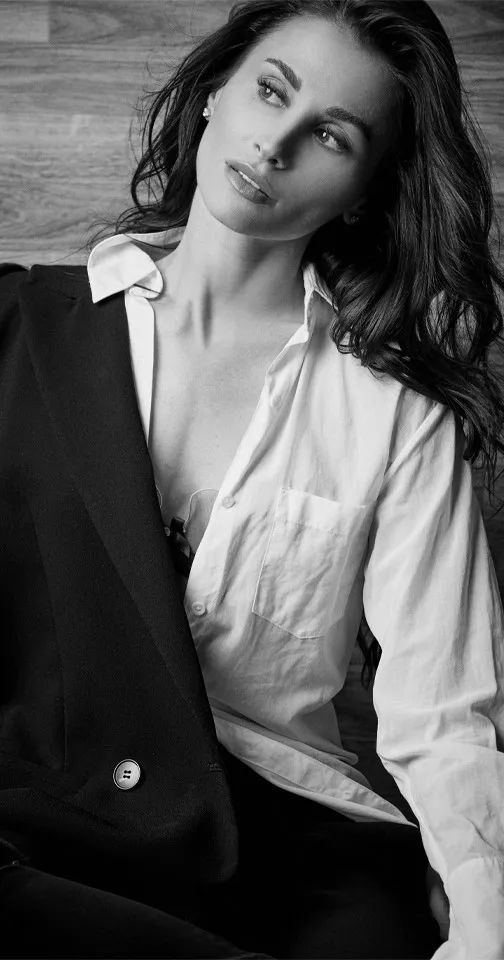
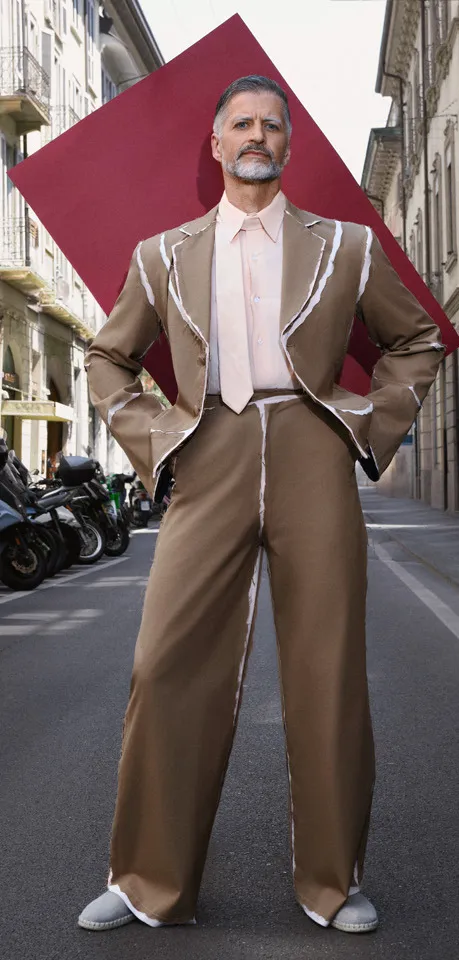
Suneet Varma and Rahul Arora
A rainy night in Delhi, nine years ago, was when we were set up for a blind date. Thanks to the rain, we were unable to meet one another till it was time for the pub to shut shop for the night. A shout-out of the code word we were given changed our lives forever and clearly for the better. A long courtship and marriage, (we have been married for four years) the ceremony was in New York, we are each other’s better half, in every sense of the word.
 L’Officiel India DigitalRead L’Officiel India in the digital libraryEvery issue and every cover story, on TCG Media.Read now
They say one should never mix business with pleasure. We disagree. As luck would have it we would like to see each other more often. One would think working together would mean being in each other’s faces all the time but that doesn’t hold true for us, one of us is always either travelling or busy with an assignment. But that’s only geography, our hearts are with each other always. We love working with each other and enjoy what we do. Over the years, we have, each of us, taught the other a thing or two. But more importantly, we have grown together.
To keep a balance between our personal and professional lives we have defined our roles. To begin with, three scheduled meetings a week to remain on the same page and discuss brand development, our vision, therefore, is in sync. The plan is to reinvent the brand and keep it relevant in this rapidly changing world, and to have the right sort of collaborations to keep the process exciting. Naturally we agree to disagree on certain points and yet always find common ground after a discussion and a fair amount of debate. One of us is involved with design and visualisation; the other oversees financial matters, manages shows, social media and advertising. Years of experience on the one hand and newer ideas on the other. It’s the right amalgamation of classic thought processes and fresh perspectives. Where there is a dreamer the other needs to be the sort who does a reality check.
When it comes to our personal lives, we have our dreams, but those aren’t the be all and end all of our lives. Our sexuality is a part of our personalities, there isn’t anything extraordinary about it, we just look at it as a part of our private lives, one of the many dimensions of personalities, we are creators and business owners and family men, not letting one aspect of our personal lives define who we are. Fortune has truly smiled upon us, we are surrounded by supportive family and friends. Unconditional is what our families have given us. And since we are Indian how is that love expressed, through delicious and scrumptious food. Members of the fashion fraternity, as well, haven’t treated us differently. For them we are two people in love, who also happen to be the brain behind their own brand.
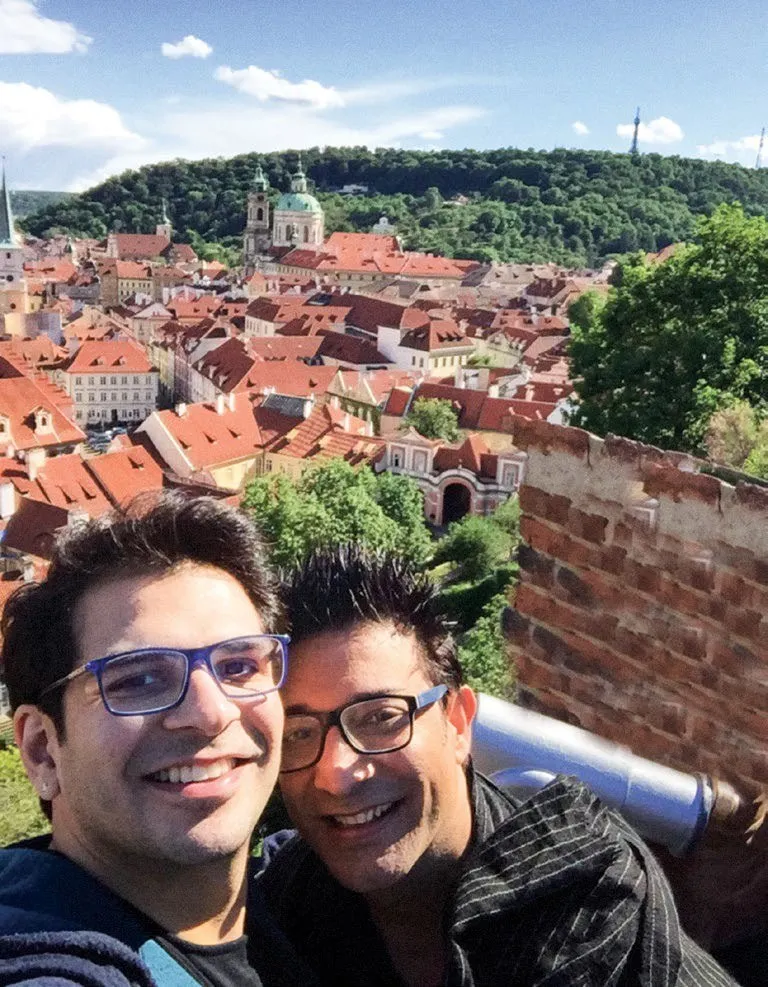
One might say that there are not many same sex couples who lead a prominent public life after having taken a courageous step of showing their love for each other openly and getting married. It does seem that people from the creative world, specifically the arts live more liberal lives and are forthcoming about their choices. But what people tend to overlook are the numbers. There are more gay software engineers and doctors than there are fashion designers.
Our relationship is like anyone’s. The very same logic applies to us. Marriage was the next logical step. Would things have been easier for us if we were not in the public eye? Maybe, maybe not. There isn’t an iota of doubt when we look back on our decision of getting married. Neither do we pay attention to the fact that we are rooted in the same place, the home and the office. It is our love that binds us and inadvertently frees us.
Love cannot be defined in a word. It is a feeling of compassion. It is communication. Above all, it is acceptance. It is important that love does not change. It is also important to have freedom in love, to give the other person space and time to grow in. When one can love the good, bad and the ugly in another it’s called ‘being in love’, and we are irrefutably in love with each other. It could, at times, be easy to take a decision, but to live with it sans regret is another story, to be able to do so requires conviction and a lot of grit. Living a life without regret isn’t an outlandish proposition if you are content with the choices that you have made. For us, we are thankful that we found each other and we wouldn’t change that for anything in this world.
As told to Nidhi Raj Singh
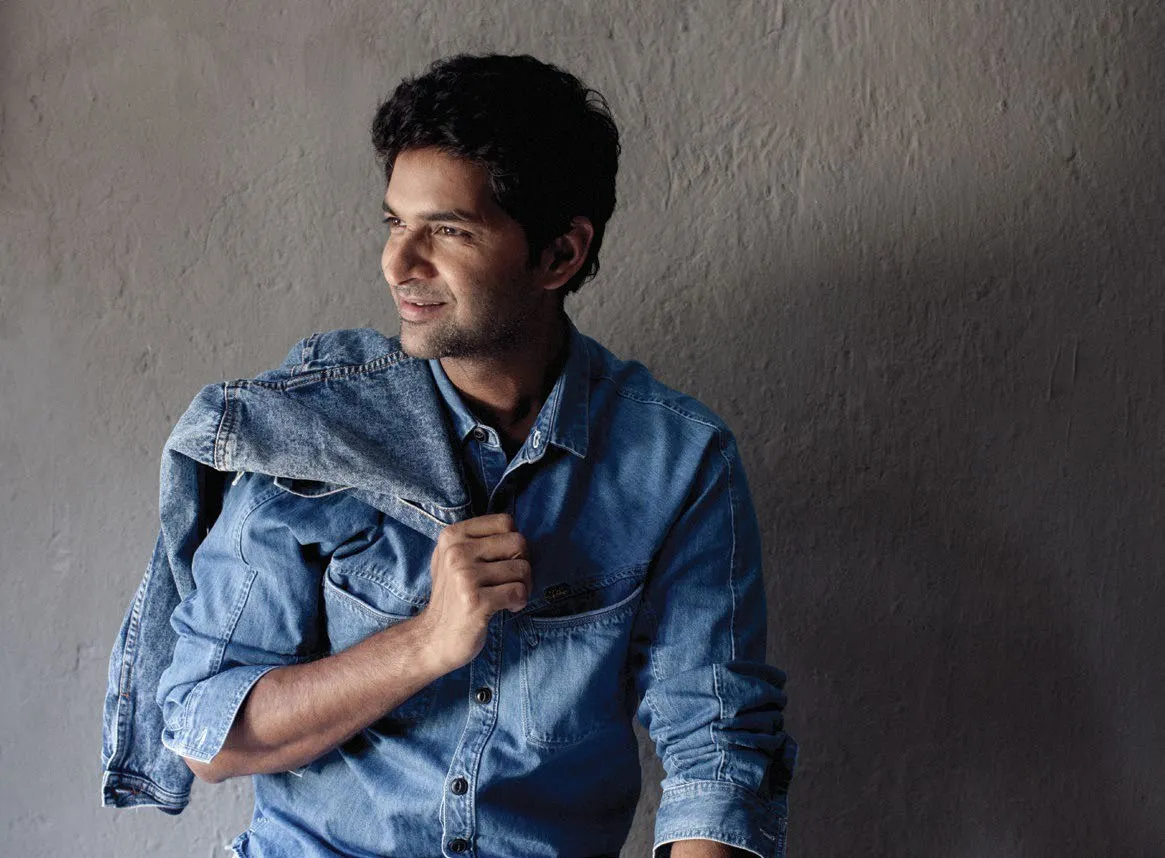
Purab Kohli
Acting was serendipitous for me. I was not inclined towards acting. It was the opposite actually. I never imagined a career in the film industry.
My father, Harsh Kohli produced films till 1981. He gave that up a couple of years after I was born and our family moved to Lonavla, where he set up a hotel business. So, growing up, there was no real firsthand influence from the film industry in my life. Lurking somewhere in the background of my consciousness though, was the fact that my father came from a massive film family. The Anands (Chetan, Dev and Vijay) are my grand uncles. Maybe then, completely unaware, the bug hung back somewhere in my genes. In spite of being related to some of India’s most talented actors and directors, I chose to train as a pilot. But I never completed my training. As a matter of fact, I barely even started it properly. Just some ground training exams, and a couple of flights later, I quit. I gave it up since I was afraid that I wouldn’t get a job, given that the airline industry was non-existent back then. Acting as a career was nowhere on the horizon or so I thought.
Even after getting my first acting stint with Hip Hip Hurray (1998-2001), I was certain that it was something I was doing just to fill the time till I found my true calling. It was only in 2005 after acting in My Brother Nikhil that I gave in to my DNA and started swimming with the current.
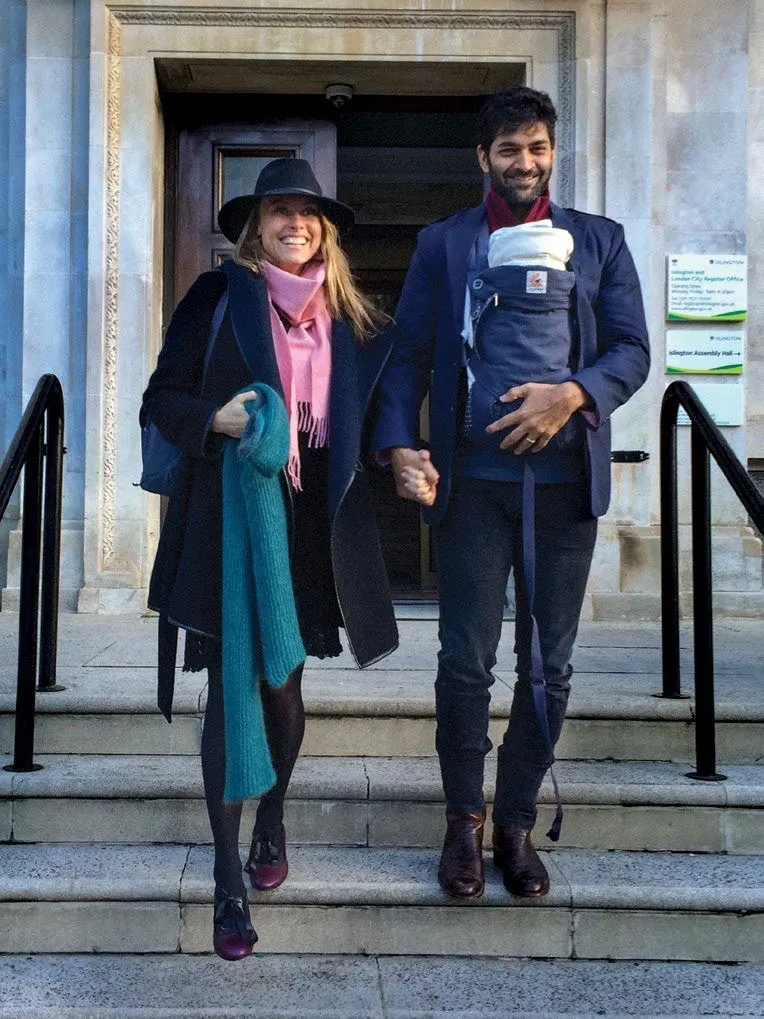
Love for me, contrary to what many people may think, was more traditional on many levels. Most people think of our relationship as quite modern, and us as forward-thinking people, but if you were to carefully observe the details we had quite a traditional start to our love story. Lucy and my sister went to school together. There was definitely a strong attraction from the beginning, I never gave it much thought though since the both of us lived in different countries. We finally started seeing each other only after a long time of correspondence over emails. We were in a long-distance relationship for a while and saw each other once in three months. I think, the only way to stay in this state of love is to have the courage to be true to yourself, and that’s the conviction. Lucy and I are in love. We trust what comes from within us. We may have not planned to conceive our daughter Inaya, but we waited for her arrival with open arms. She taught us many things and most importantly brought us closer together. We actually started living together only after our daughter was born. I love being around Inaya and try to be as hands on as I can. I do fuss over her a lot.
There was some turbulence in the family because of our decision. It stemmed from the fear of being judged. Addressing those initial fears for others only made us more confident about our decision. When you are going against convention, it requires a strong sense of responsibility for those you love and integrity to take other people along. But then at the end of it, love is love.
To love is when there is no resistance in your being, your sensitivity heightens with a surge of energy, and you trust everything. When you can associate this feeling with a person (a thing or an idea), you are in love with them. I feel the same about Lucy and Inaya. For Inaya, there is a feeling of being responsible. In fact, I am torn between the accountability I feel towards her, to provide for her, which means the need to stay out and work, and wanting to do nothing and spending time with her. Reason helps me balance the two.
It is natural to look back at choices we make in our lives. From a very young age I have always looked at making decisions which were right, and when I say right I mean right according to me. And not by wallowing in the decision-making process but by being proactive and doing what it took. As Ratan Tata puts it: ‘I don’t take right decisions. I take decisions and make them right.’
As told to Nidhi Raj Singh
Ritesh Agarwal, founder and CEO, OYO
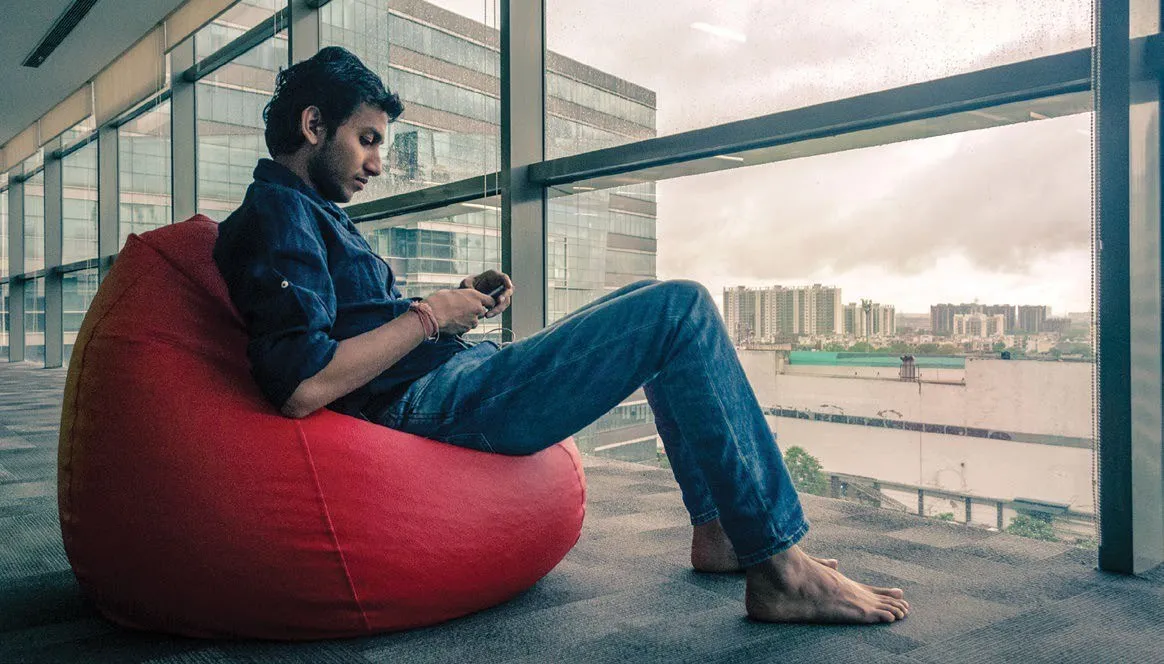
To be fair, it’s not because of the college or the experience that I decided to drop out, I was just sure that I wanted to start out on my own and I could not wait to get cracking.
So naturally college did not seem like the best use of my time. I was extremely patient, even happy, during the entire process. When I decided to take the plunge in 2007, there were stories about dropouts-turned-entrepreneurs doing well. There was no stigma attached to it. I spoke to my parents about considering the time off as a gap year if my venture did not take off. As far as I was concerned I wasn’t planning on going back to college ever. I was completely zen because I was so sure of myself. A little naiveté is good. At least it kept me from stressing out about stuff that I had no control over. What creates stress or fear is too many choices or conflicting points of view or paths to follow. But once your mind is made up, you can ignore the distractions and just follow your dream. Blinkers on.
Attending start-up events and mixers in Delhi while studying in Kota, Rajasthan helped me a lot. By the time I got to college I had a certain amount of clarity about the industry I wanted to enter. I enjoyed travelling and thought of building an Airbnb-like offering in India.
I started with Oravel which was meant to be a listing site for budget accommodation – inns, guesthouses, B&Bs and so on – across India which would become discoverable on the platform. I travelled extensively and stayed in more than 100 of these small hotels and guesthouses trying to strike a barter deal in return for listing them on my site. No one hosted me for free, but I got an insight into the budget hotel experience in India, which was not good. There was simply no way of knowing what sort of a hotel one would end up in when booking online, whether the service would be decent, or if the room would be clean or the staff cordial. So really when travel industry folks say Indians do not book hotels online, or that hospitality is a difficult business to crack online – they are focusing on the wrong end of the problem. The issue was not making these hotels discoverable, but predictable and standardised. And of course, that was easier said than done.
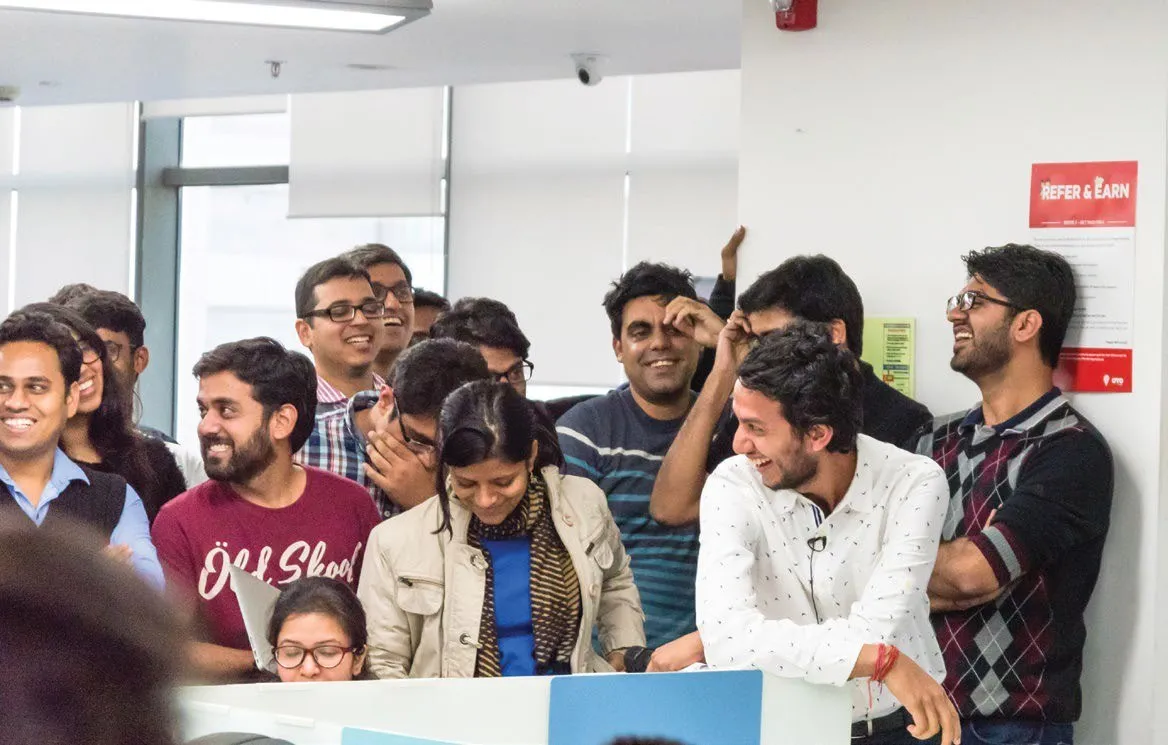
That is how OYO came into being in 2013. This was also the time when I was accepted for the Thiel Fellowship and got the opportunity to be mentored by Peter Thiel, founder of Paypal. A lot of thinking and internalisation happened then.
At OYO we are innovators, not just disruptors. We are inventive, not derivative. Since we are involved with upgrading urban social infrastructure, we believe everyone in the team is an engineer. We want to focus on solving real problems that impact large populations, so that we can drive significant change and transformation. This is at the core of what we do. It is a good time to be an entrepreneur in India. The market is huge. There is a large young demographic, the offline to online shift is going to be monumental, and we are right at the cusp of it. India is the right mix of opportunity and challenges. If there weren’t any big problems to solve, the potential impact and transformation opportunity would not be as significant.
I am too young to have regrets, don’t you think? On a serious note, one can only plan and prepare for how to deal with crisis or failure and it is in hindsight that you think of what could have been handled better or dealt with differently. I never look back at my decision of dropping out with regrets because I saw no worthwhile reason for spending a few years on a formal academic programme when I was so clear on what I wanted for myself. I believe, from my own experience, that if you have conviction in your dream or goal or passion, deciding to go for it is the only tough decision. Everything else that follows is extremely easy in comparison.
As told to Nidhi Raj Singh
Sairee Chahal, founder, Sheroes
I have been an entrepreneur more than once and experienced corporate life as well. At 21, I co-founded Newslink Services, the world’s first newspaper for mariners, and worked with large organisations such as Heidrick & Struggles and the Confederation of Indian Industry. I have seen, firsthand, how women don’t only struggle to keep their jobs, but are mocked for breaking glass ceilings.
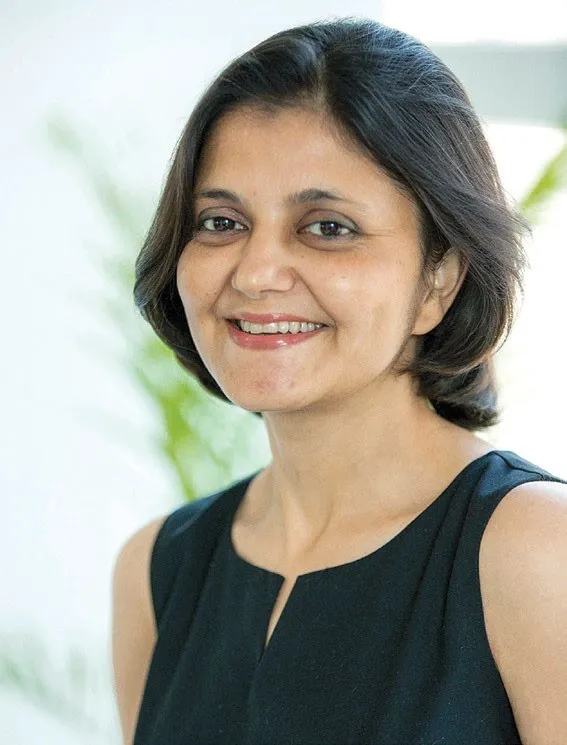
India has the largest number of female graduates in the world, and yet only 17 per cent of them are part of the formal GDPed workforce, only five per cent of them are in positions of leadership, and 48 per cent quit their jobs before reaching mid-levels. Most of that 48 per cent never go back to work. A lot of these women battle with their identity, confidence and the lack of opportunities to be able to make conscious decisions with respect to professional lives. I intend to change all of that.
Sheroes was set up to support women so they can continue on a career path of their choosing and excel in it. It is built on the principle that you can have multiple jobs over the course of your life but your career is forever. We are a complex nation – women have ownership and, for the most part, single-handedly run the caregiving sector of family life (from the children to the elders, family obligations and duties and the list goes on) and while they are wrapped up in all of that their professional lives stop being a priority for others, and sometimes, after a while, even for themselves. The few women who have made it to the top of the corporate ladder are paid a lower salary than their male counterparts. Women in the corporate world need more opportunities, but how many companies actually look at flexible work options and non-standard business hours? Not many.
Today, I can say that I am proud of having helped a lot of women across the country, women who call us for career advice, jobs information and service queries. Their stories are truly inspiring and that, in turn, fuels us to work harder for them and others like them.
This one time, a woman called from a village near Gorakhpur, Uttar Pradesh, she had found our number in a local newspaper. She had a Master’s degree and soon after receiving it she was married into a traditional family. All she did was look after her husband, his family and the kids, she wanted more. She got in touch with us because she was looking for a way to be able to follow her dreams, put her skills and education to some use and find work that would fit her life. We were able to find her something she could do from home. And that desire, dream became a reality. There are many women who use our platform and community as their support system, giving them the confidence and chance to pursue their interests and dreams.
Our latest project, SEW (Support Every Woman) aspires to touch the lives of those women who do not have access to online platforms. Our next step is to reach out and help women in Tier 2 and Tier 3 cities.
But before Sheroes, there was Flximoms.
Women’s career growth is significantly affected by family life, pregnancies or decisions to take some time off to attend to the family’s or rather the children’s needs. It is, therefore, difficult for them to maintain a steady growth curve. I felt a tremendous need to do something for those women, but I needed to first find a way to tap into this incredible reservoir of talented professionals and provide them with options that would be right and fair to both them and their families. And that’s when Fleximoms came into existence. With it I could bridge the gap and bring women into the workforce, keeping their needs in mind.
It is a travesty that because of social conditioning women tend to have a lot of regret since they have always been expected to put the needs of everyone else before their own. In my opinion, to be able to live a life without regret we must work at doing what needs to be done all the while making sure that it is fair to ourselves and all others, by teaching ourselves to make decisions that way we will help hardwire the no regrets policy into our conscious and subconscious mind.
Hits and misses are a given and if we learn from our failures, every misfire will turn into a stepping stone to success. Regrets only result in negativity, an energy that can’t possibly have a worthwhile outcome. There is no sure shot solution or strategy to stay true to your aspirations and family commitments. But you must try to keep reinventing and strategising along the way. For me, it is a dynamic process, and I keep experimenting to see what works best for me and does not put me in a fix. I also believe that we should not, we need not be, so hard on ourselves for not staying true because things do not always work as planned. It is ok to give in to the madness of the moment.
As told to Nidhi Raj Singh
From the July 2017 issue of L’Officiel India.
Spotted a mistake, or your photo used without permission? Report a correction