Marie-Agnès Gillot: Dancing The Odds Away
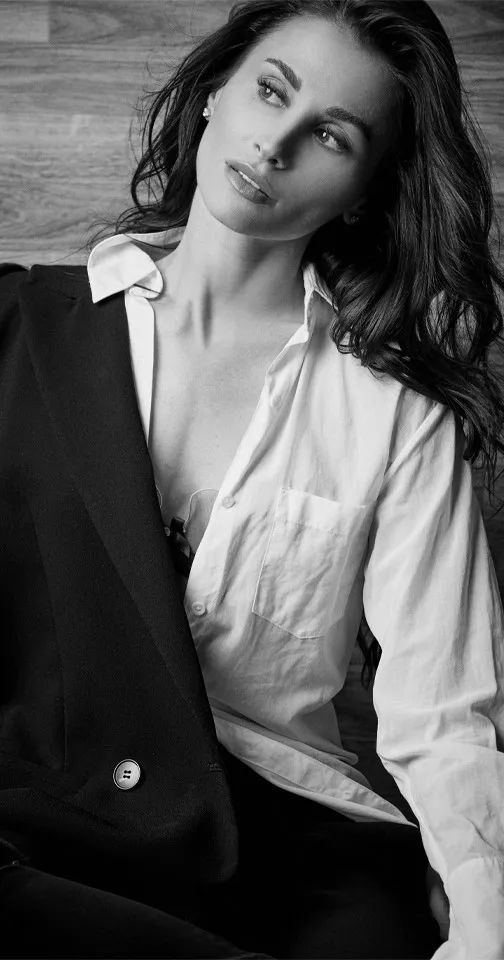
Marie-Agnès Gillot spent her entire childhood in a corset and still managed to become a prima ballerina at the Paris Opera. This year she bids adieu to it.
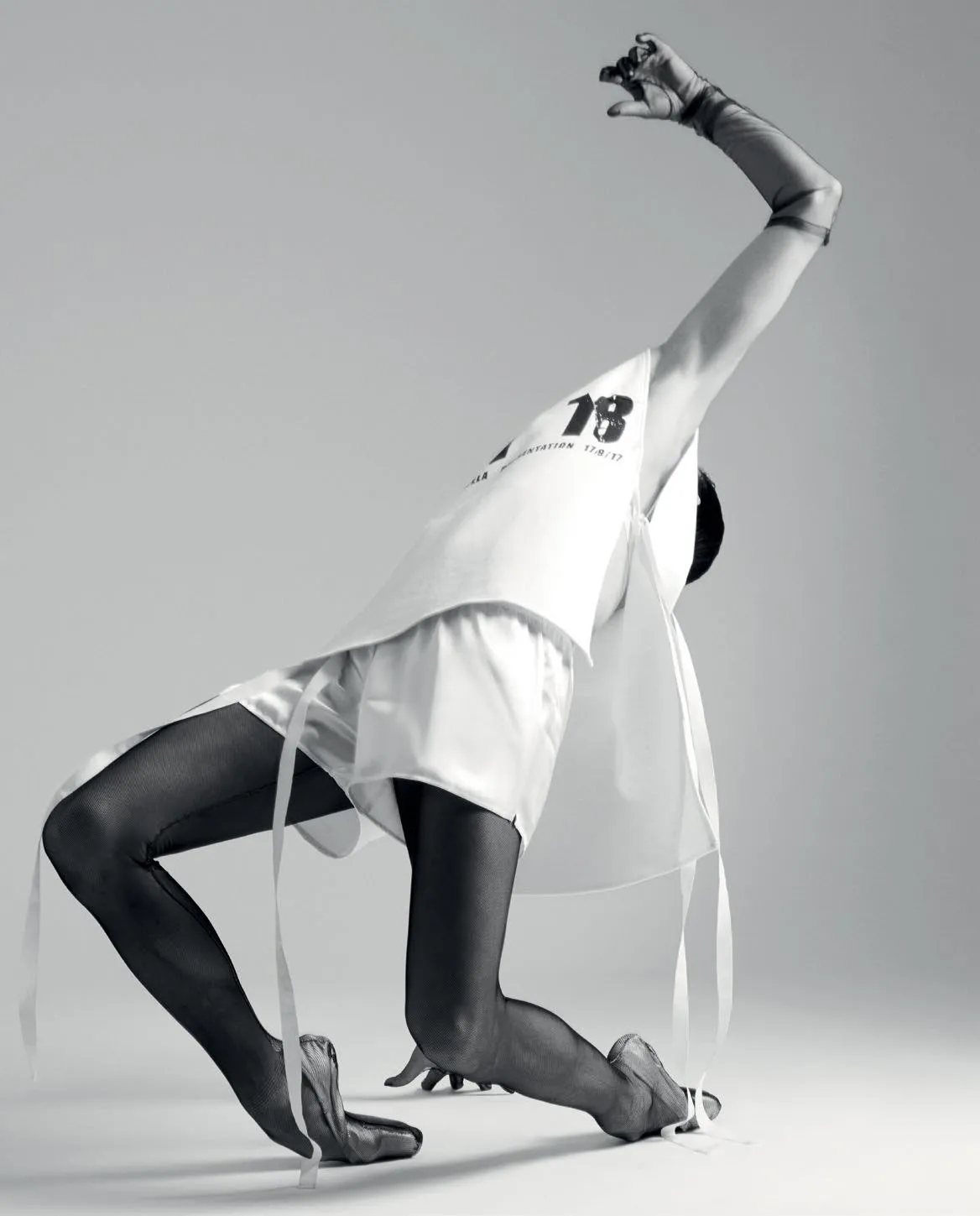




By her own admission, she cannot stay in one place. Marie-Agnès Gillot admits soon after arriving at the photo studio. She wears a large pair of trousers, an oversized overcoat and boots. The prima ballerina places one of her legs on a railing to do a few stretches. When she plays a role, it is less of a delicate diva but more of the fuss-free, cheeky, funny girl with a mouthful of foul words and a smile for each one of them. But ask her to sit still for thirty minutes and it is pure torture for her. However, at 42, forced by rules and regulations, she will soon have to bid farewell to the Paris Opera.
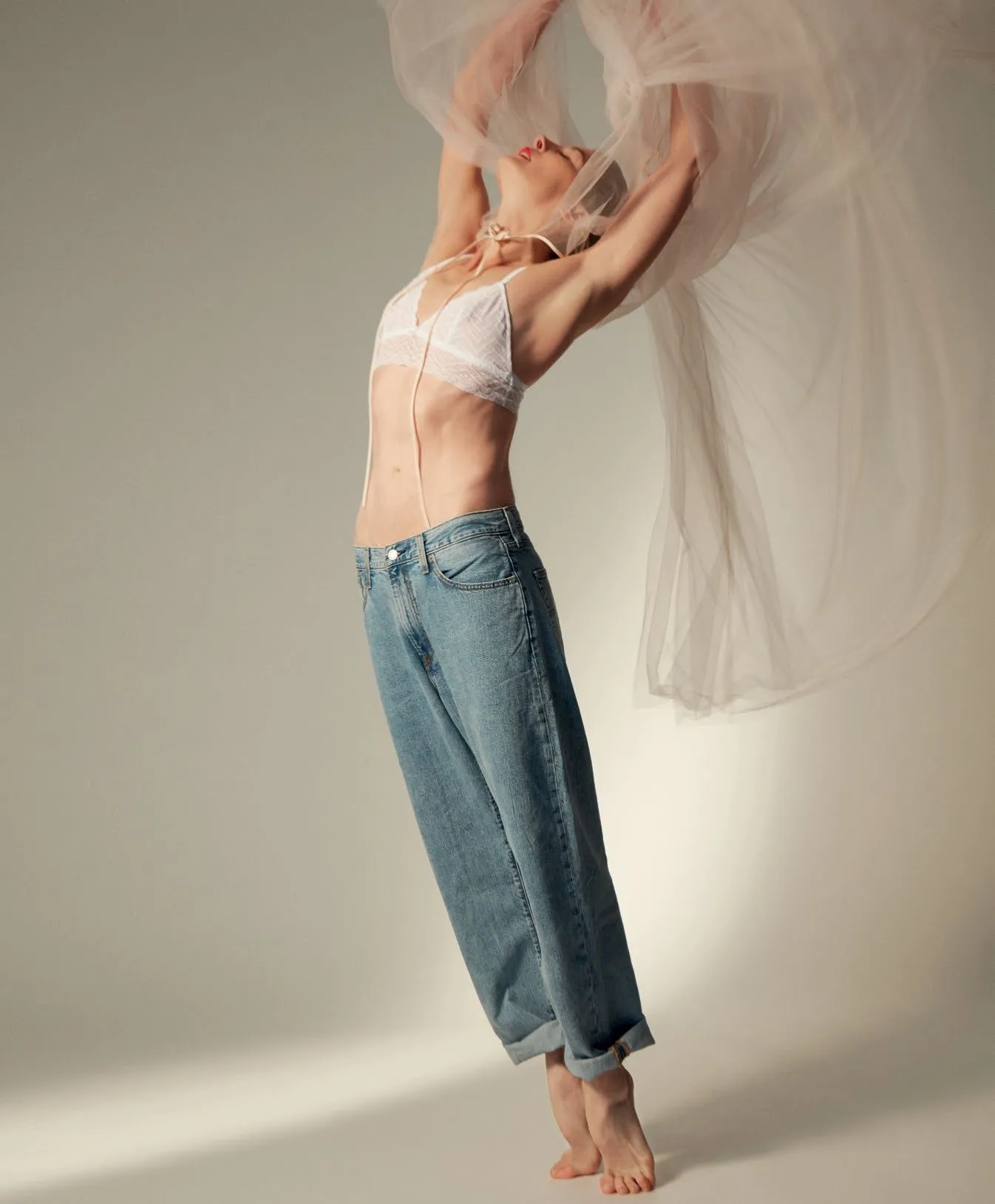
After 33 passionate years of dancing, Marie will just take a break. She will not stop dancing, as the world is big enough for other opportunities, as she puts it. Whether it is for a fashion show, an ad campaign, for Restos du Cœur or, more recently, for Intimissimi lingerie, she never economises on her pirouettes. As the shoot begins, she finds her natural language, the language of her legs, in her liberated hands, on the tips of her toes and her muscles, and animates like a child. She never looks for a beautiful movement but creates one. Marie is the furthest from the cliché of a prima ballerina. On seeing her, one would think more of David Bowie. It is mostly because of her muscular and asymmetrical body that resulted from scoliosis, because of which she was held together inside a corset her entire childhood. Maybe this is the reason that she does not wear a corset anymore. Excerpts from the interview:
 L’Officiel India DigitalRead L’Officiel India in the digital libraryEvery issue and every cover story, on TCG Media.Read now
For your farewell at the Paris Opera, you will do two roles that you know very well, Boléro by Béjart and Orpheus and Eurydice by Pina Bausch.
One always dances differently. Each time, there are always things we do not understand. I hope that I have evolved or this one will just mean that I am bad at what I do. For Boléro, Maurice Béjart trained me before he passed away in 2007. He wanted me to dance like a high priestess, in a very mystical manner, where the movements are very sexual.
Did you choose Orpheus and Eurydice for your adieu?
That is not going to be my last performance, because I will be back the following week to prepare for a ballet with choreographer Crystal Pite. In truth, my last performance will be on May 24. These are farewells… but false ones. I leave but will come right back the following day as a guest. Those who speak of my farewell do not know me well (laughs).
You have absolutely no desire to leave it seems...
If I could I would have stayed on, but rules are rules. Benjamin Millepied wanted to keep me on for longer, but the new direction was in no frame of mind to make an exception. It is normal though, why should I be treated differently?
Are you sad?
Right now, I can talk about it but from September to December I will probably cry about it every day. Dance is passion for me. I love everything about dance, and this feeling is not something that will fade with time. That is something that happens often since physically the job is so demanding that one can look at the end as a relief and as comforting. Not for me! I have always had the same desire, the same passion. It is catastrophic! I would have loved to be like the others.
Can your body still keep up?
I find it a lot more obedient than it was in its 30s. At 40, we know each other a lot better, my body and I. We do not get unnecessarily fatigued anymore. We do not do it the wrong way anymore. And ever since I became a mother I have this tremendous amount of energy. I woke up to childbearing a bit late, but I would love to have another one, an adopted child perhaps. There are so many children out there in the world who have been left behind that I often ask myself if it is too selfish to want to have a child of one’s own.
You never doubted?
I do nothing but doubt. It has always worked like that when I moved forward. When one is a ballerina we are never sure if we will be able to do the movements every day. And if I lied to myself about it, I would have never made it to this level.
How do you see the evolution of the ballet since you started out?
I was fortunate enough to have arrived at a time when there was a demand for classical dancers to have a more substantial repertoire, opening up to neoclassic and contemporary. Rudolf Noureev had started inviting William Forsythe to the Paris Opera. In 1988, Brigitte Lefèvre, director of dance at the Opera between 1995 and 2014 continued to nurture contemporary geniuses. The countries of the north such as Belgium and Germany, and not just the United States mostly carried the change. I was lucky enough to have been chosen. I think that I have the ability to be a sponge, like putty in one’s hands, and that is something because of which I was never bothered when I had to start from zero, to relearn everything. One should never be afraid of being lost.
You had also been named prima ballerina for a contemporary ballet, and that is something unusual.
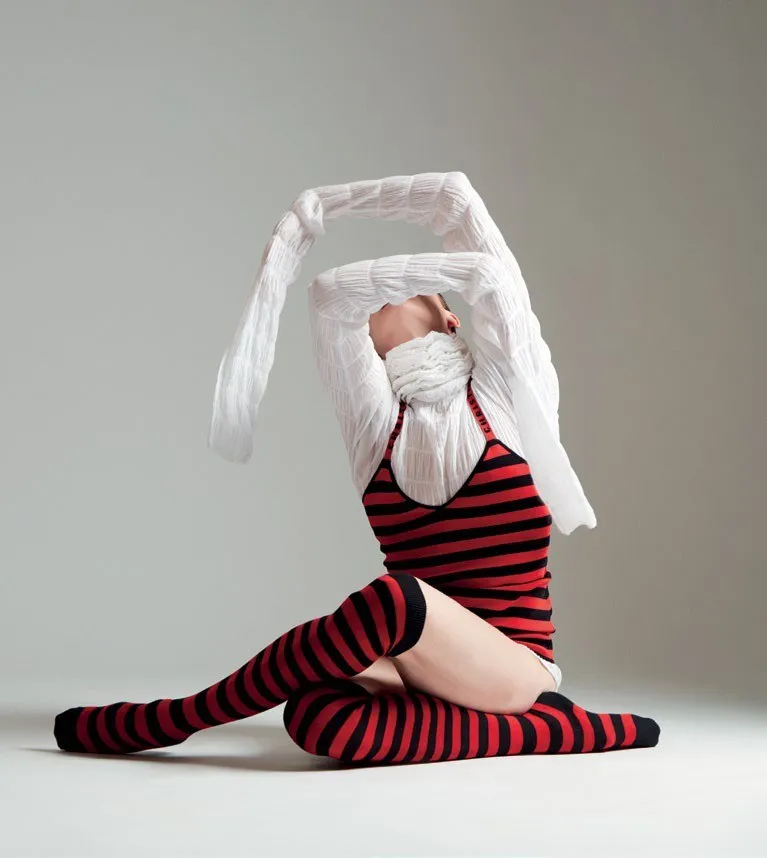
Before that they had me dance all the classics, Raymonda, Don Quichotte, Giselle, Swan Lake, all the milestones in a repertoire.
You have always stated that the world of classical dance is very competitive. Was that a sort of driving force for you or a cause of suffering?
I did suffer a little because I am more collegial. I always accepted group ballets, while certain dancers do not mix with the others once they become a prima ballerina. I love the effect of a group dance. It creates emulation. It is nice to dance by yourself, but with everyone else, it is a lot better.
Did you know early enough that you wanted to become a dancer?
I never dreamt of becoming a ballerina. It was just something I knew I would become. People who dance, know it, others imagine it. When we have something, we know very well that it exists. But on the other hand, I had no idea what that would entail, in terms of the work that needed to be put in and the discipline. I was seven when I said that I would become a dancer and at nine I left my family to do that.
From such a young age you wanted to be the best…
That was because I was the only one who had a handicap. It was my way of surviving.
It is impossible to imagine when we see you dance…
I wore a corset for 21 hours every day because of scoliosis. If you look at my back, it is not exactly pretty.
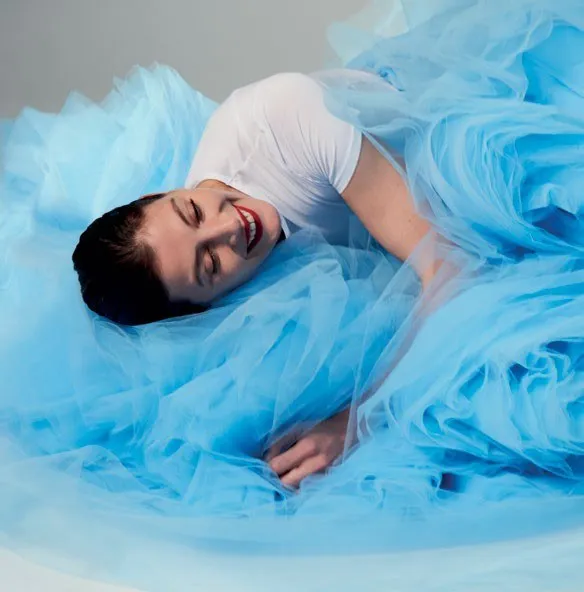
Were you always comfortable with the aesthetic, the tutu, the pink and the fragile grace of movement…
I am just as strong as I am fragile. It depends on what I am dancing. But certainly, I never had a choice. I could either keep the delicate and fragile body that I had as a child or I would intensively build muscle, so I could stand straight without the corset. It was a fight with the doctor to be able to do that.
Your learning, for the most part, happened in solitude.
Yes, but I did make acquaintances outside the world of dance from the beginning. I have always been a fan of the theatre. When I was not dancing I would go there every evening. I need to admire as watching others inspires me. I had been grabbed by contemporary art very early. I went elsewhere to have experiences that helped me grow.
Does one have to suffer to dance?
I never had any injuries in my career, which is rare. I have beautiful strong feet, even if I had my eyes ready to pop out of my skull as I was on the verge of vomiting from pain.
What will you do after this new step in your profession?
Many things, just as I do now. I write poetry. I will continue to teach and choreograph. I have a permanent spot at the Palais de Tokyo in Paris. I created two pieces for the Nuit blanche. I was in jail for eight months with killers who had been sentenced to life imprisonment. I dance, I do contemporary works, installations, performances, I style, paint, sketch and embroider.
Do you care for photo shoots, like the one this one?
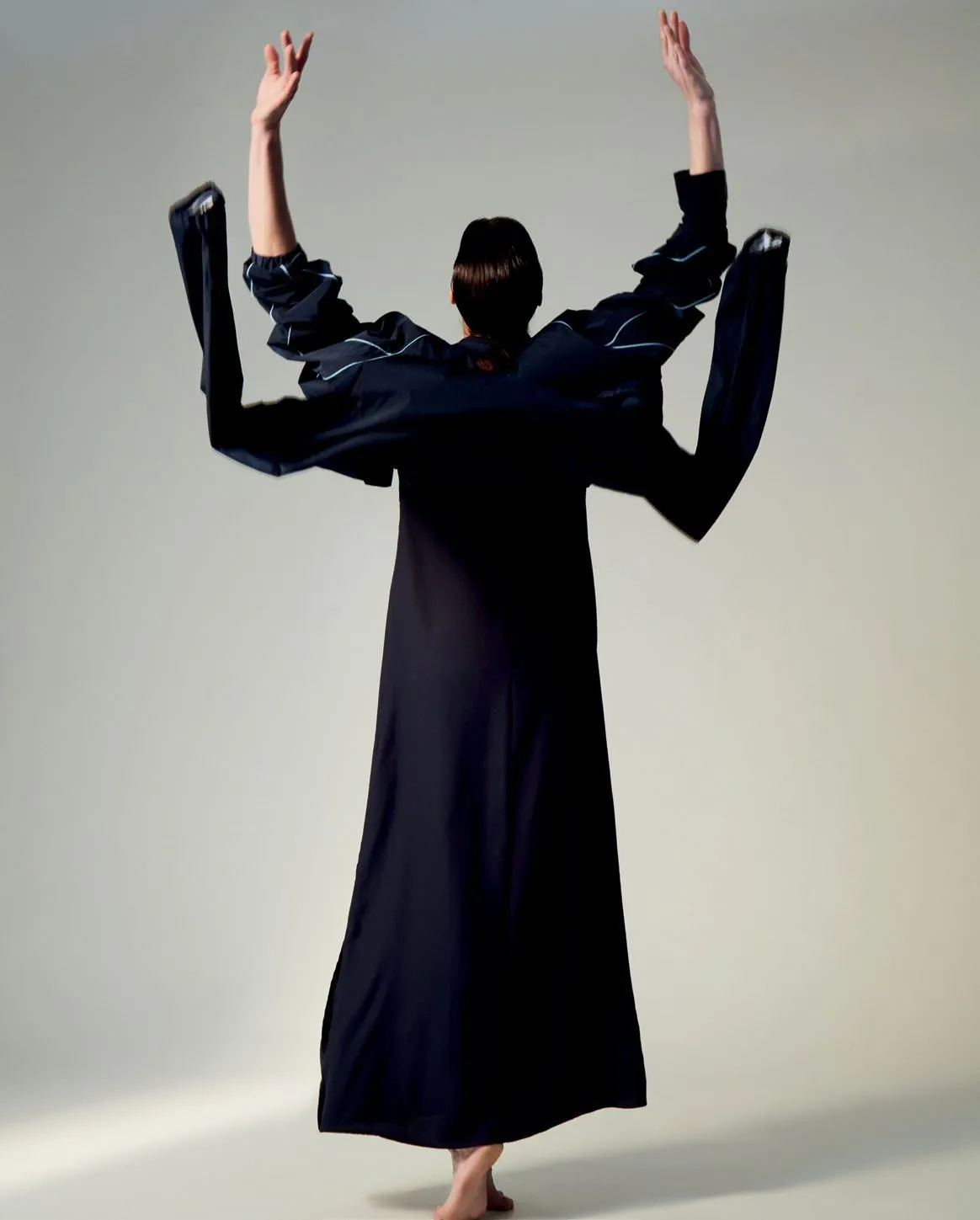
I like it just as I would a role that I was to play, like a game. I love fashion and watch a lot of shows. But, I find myself drawn more to a piece than to a specific designer or brand. It is the articles that do, individually, catch my eye, it could be something very sobre or very eccentric, just like my personality.
You also collaborated with Intimissimi. How was it?
They wanted me to create an evening for them. The idea was to have me put all the clothes on at one time and then remove them turn by turn, gradually. It is important that I like the project I am involved with. I always give whatever I do a hundred per cent. I started working in cinema and the same thing happened with that as well, I do more than just act, I dance too. It is funny actually, if I do not move I have more trouble remembering my lines. When I am asked to stay in one place, I do not feel comfortable. The film is a comedy by Pascal Thomas with Pierre Richard. They were looking for a woman to play Death.
You literally cannot stay put.
I do not know how to. I am very disciplined, but at the same time I easily appear off my rocker. The physical superiority of energy is something that people do not seem to understand. I have been like this ever since I was a child. And my son is just like me in that respect, ten times more powerful I should say.
Do you make him dance?
No, but he dances nonetheless. One day he did a front split for me, this is when I have never shown it to him. It is incredible, all that we transfer to our children through our genes.
What does the future hold for you?
Life continues just as it began, with full force.
Photography: Julien Vallon. Styling: Donatella Musco.
From the March 2018 issue of L’Officiel India.
Spotted a mistake, or your photo used without permission? Report a correction