Maria Grazia Chiuri: When Italy Met France
First woman to lead the House of Dior, Maria Grazia Chiuri believes in feminism, dreaming and making connect with the millennials and design for them.
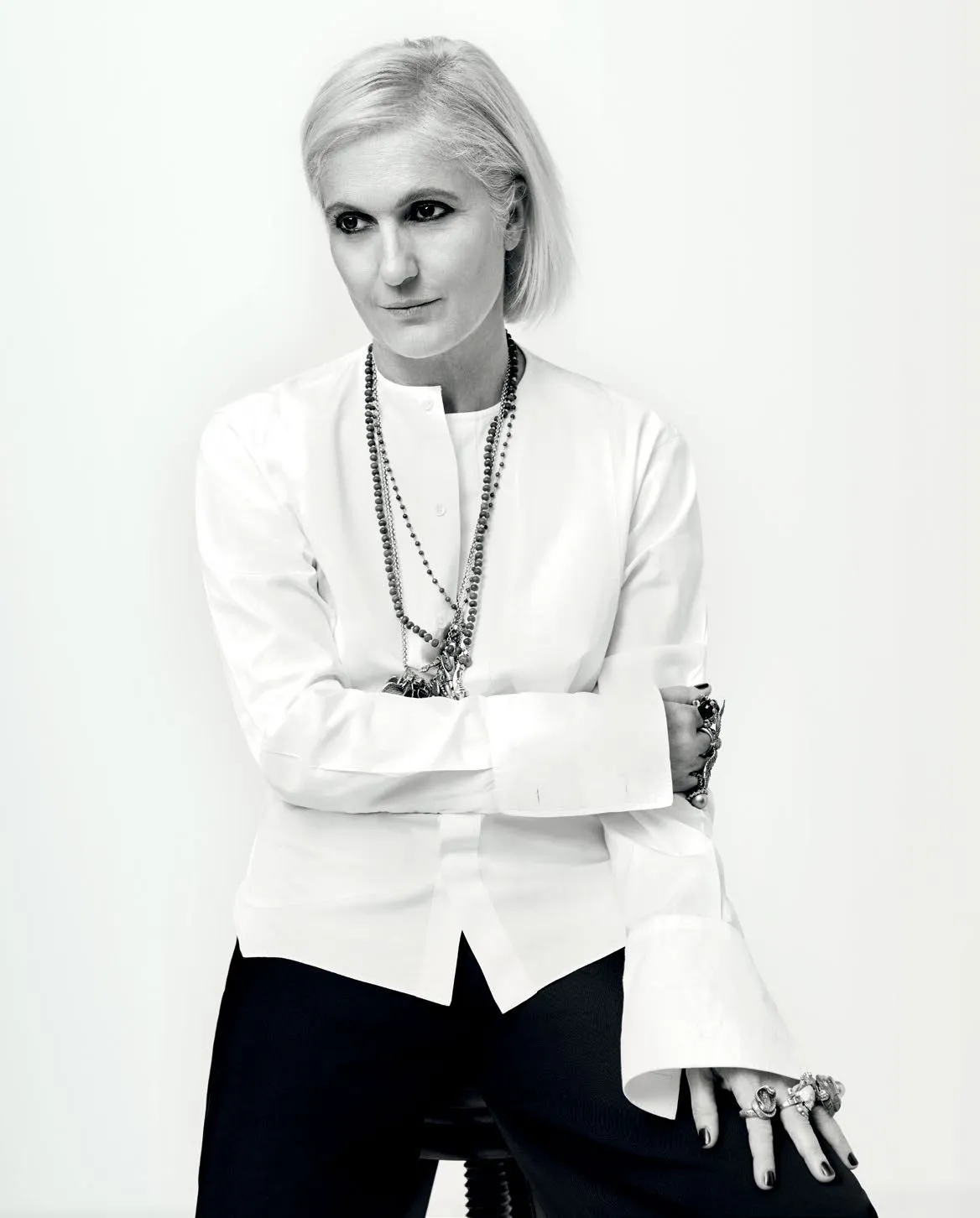




Seated out in the sun, under a cosy canopy of one of Dior’s salons, Maria Grazia Chiuri greets us with a serene smile. “It is a bit cold, isn’t it? In Italy, summers are warm and very cold in winters. It is a split up,” she says. Now that we have covered the transalpine weather situation, we continue.
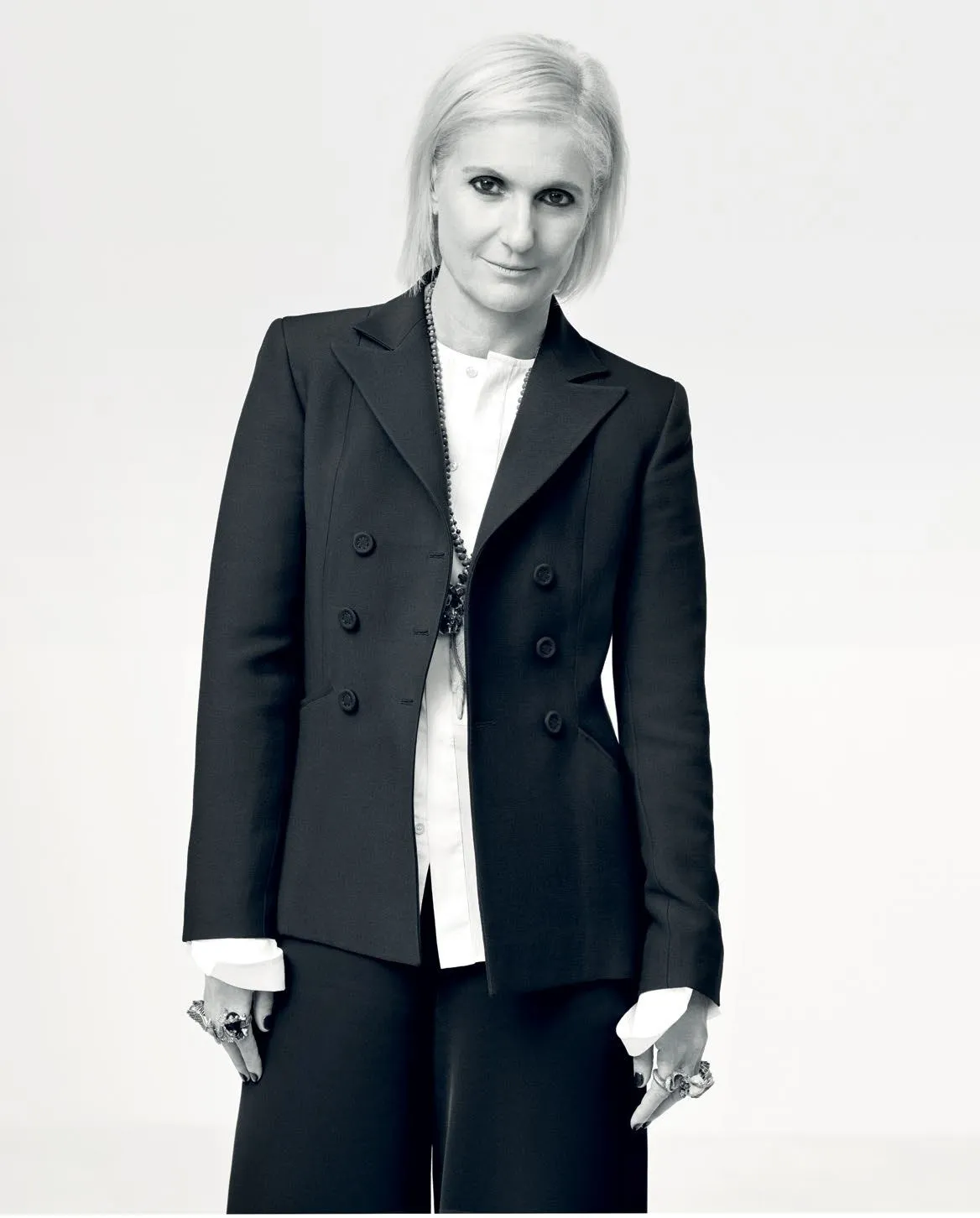
Platinum blond hair, tied at the back with a side parting, held together by an understated band. A smoky look, highlighted by a thick black line of kohl. A nude tone, lightly applied. On each of her fingers baroque, imposing and personal rings. And round her neck? A multitude of necklaces, at the end of one of the chains the S of Superman, a gilded version. A dash of style gifted by her daughter Rachele to her super mum. This morning on Rue de Marignan, she is dressed in black. Pure elegance...almost feline.
 L’Officiel India DigitalRead L’Officiel India in the digital libraryEvery issue and every cover story, on TCG Media.Read now
She now lives in Paris, in an apartment near Les Invalides. She is the one who has taken over the controls of one of the most important fashion houses of the world that still functions out of the country it was established in. Born in Rome in 1964, the daughter of a couturier, she knew, at a very early age, that she would have a career in fashion. As an adolescent, she would go surveying the old markets, studying at the Istituto Europeo di Design in Rome. On graduating, she worked with Fendi first and then Valentino, where she worked alongside Pierpaolo Piccoli, her associate and friend, to create, for this Roman house, some of the most desirable collections. In 2016, Maria Grazia put an end to this 17-year long collaboration to become the first woman ever to have held the position of creative director at Dior. While the House from Avenue Montaigne is celebrating its 70th anniversary this year with a spectacular exhibit at the Musée des Arts déco in Paris, we open the pages to the most Italian of Dior women.
You are now a solo act having worked in a team of two for so many years. How do you feel?
In all cases, even at Dior, I work with a team. Earlier we were two; right now I am the only creative director. Fashion is a job of a team. The only thing that is different now is that I am the only one to give a point of view, which is probably the closest to the woman I am.
You say that you are first a woman and then a designer, which means what exactly?
I say this because my personal and family lives (children Niccolo, 24 and Rachele, 21) are very important. I love my field more than anything else, but I am looking for equilibrium between work and my private life. I have managed it in the past and hope to keep it up now as well. I believe that there are certain priorities that do not change over the course of one’s life.
Like what?
My children! At the same time, I need to be me, to express myself, to go to the limits of my passion. Sometimes and particularly for a woman, they make us believe that we need to choose between our personal lives and our careers. I think it’s impossible to find the perfect balance between the two.
How do you manage finding this balance, what’s your trick?
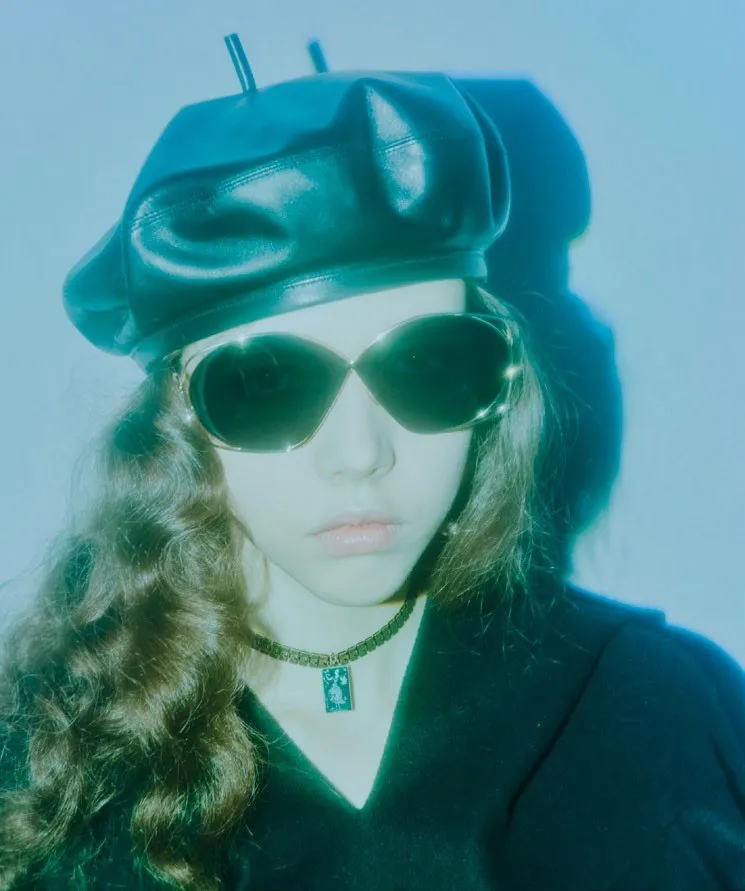
We must simply stop making ourselves feel guilty and accept that we aren’t perfect. We are simply human beings who try to do the best we can. And it isn’t wrong to make a mistake. The trick to transform even the mistakes into good energy helps us evolve.
So, you are saying that you aren’t a superwoman?
Absolutely.
And yet you’re wearing the S for Superman?
Yes for Supermum! It was a gift from my daughter, Rachele, a thank you to me for having helped her and supported her through her decisions in life.
What sort of a woman are you?
Oh, I don’t know really. I try, every day, to understand myself better. I think I am just a regular woman, who wants to do what she loves. I want to be free. I try to be independent. I don’t care to be liked by everyone. At the end of my life, I hope I can say to myself: I am happy to be who I am. I am doing everything to achieve that. I don’t quite know if I will make it that far.
What kind of women do you like and respect?
In all honesty, I love all women and their company. I love spending time discussing things with my daughter, my mother and my grandmother. I don’t believe I have an emblematic woman in mind. I appreciate women who have, in the past, fought to do what they want to do. Right now, I am reading the biography of Carla Lonzi by Giovanna Zapperi, an Italian feminist art critic of the 60s and 70s. Her thoughts on art and women have enriched the Italian culture. At the same time, I love Mother Teresa, who is a completely different figure. I am curious, not selective. These days, I am very passionate about the books, films and overall works of Niki de Saint Phalle. She transformed something terrible into something marvellous through her art, her creations. I find that beautiful, to see how creativity can help women in their lives. I am very sensitive about that. I am always wonderfully surprised when a person turns something negative into something positive. And creativity allows that to happen. I believe that works for me as well.
Is your vision of femininity feminist?
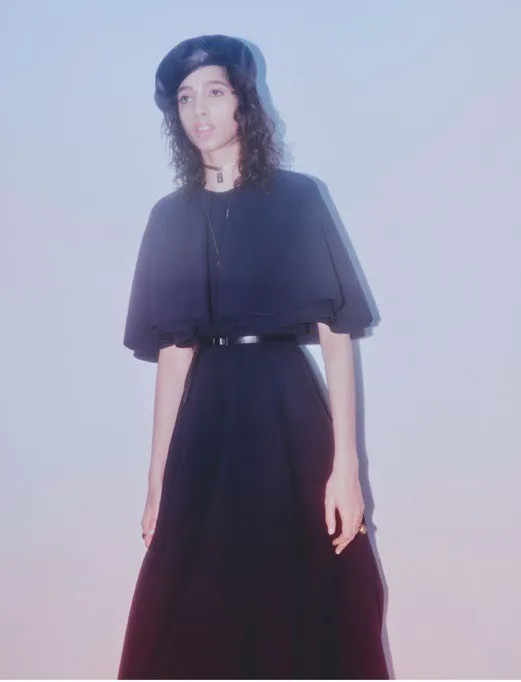
I think when one is talking about women it isn’t possible to not talk about feminism. It represents the equality of choice. It talks of the body differently. Fashion, too, talks about the body. Like all women, I want to be the only one who has control over my body. That idea isn’t that strange. I find it’s the same thing with men, they have the same problem.
Is fashion good for the body of a woman?
That is what we need to think about.
Is it a fundamental question?
Absolutely! When I got here, everyone said to me that Dior is a feminine brand. I said great, but I am a woman and what does it mean to talk of women, of feminism, today? We are at a new and important moment. Fashion needs to understand that. The new generation is completely different, it is very proud, and Millennials react to fashion. We need to have different responses and change things.
What things and how?
To begin with, we should not impose anything. We should propose it and open a dialogue. Women are different. They are a lot freer, better informed, more aware of themselves. They want to be unique. As a designer, I need to keep in mind all the changes. I find that very exciting.
To be able to remain open to the world, you say that we need to understand the youth. We need to talk with, as you certainly do with your children, this generation of Millennials?
It is imperative. They are my point of reference. I have two children in their 20s. Speaking with them helps me develop a point of view with respect to the times. They are the future. I must take the brand to the future. This new generation has more information. They have different values. It applies to everything, not only fashion. For example, they believe in something saner. Food is an important concern for them. When I was young, the world was different. I was not obsessed with healthy food, since, at the time, all food was considered and was healthy. This manner of living is strange to me. When I look at my son, who wants nothing but organic produce, I am surprised, but then I think about it and realise that it is what is important in today’s world.
How do you talk to them about luxury, fashion and consumption?
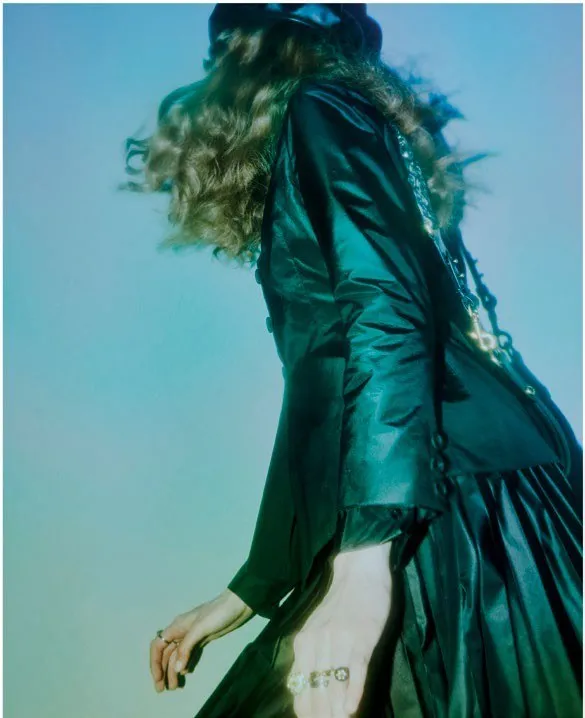
Their approach to luxury is very different. Our generation was often fascinated by fashion that was beyond our reach. It has become a lot more accessible. You can just get onto the internet and buy whatever suits your fancy. To understand the definition of luxury today is a pressing matter. Luxury, at the end of the day, is desire. The values that go with it. If there isn’t any desire, there is no luxury. A person is attracted to one brand more than the other because that one coincides more with the person’s own values. If you were to buy something haute couture, would it be because you are aware of what it is, or its quality. Do you have a couture culture? And at the same time, you could also desire things that are simple. Luxury is writing a new history for itself now.
And consumption?
People are obsessed with things that are unique, close to them, in which they see themselves.
At Dior you offer people that?
Yes, we take care of people. That is, in fact, the definition of the couture culture itself. It is the only question worth asking. Women come to Dior for a special kind of service, something that is adapted for them, which is also unique. It is relatively simple.
To remain close to women and their evolution, you have already put maille, denim and streetwear lines into your collections. Could we be talking about a new wardrobe?
Yes, it is not possible to think about a woman dressed in just one single outfit. I need good jeans, well stitched trench coats, pretty shirts, beautiful dresses and lovely embroidery. A wardrobe that helps with the everyday. The problem with fashion is that people think creativity cannot be wearable. But, at the same time, one can find many a creative and wearable things in the world of fashion. Just as was spoken of modern art and classical art. Some said that in modern art everything is good. In classical art everything is controlled. I don’t think so. There are works of modern art that are marvellous and others that are hideous. The same applies to classical art.
It is always about the balance, it would seem...
Yes! A simple pair of jeans can be extremely creative. It is relatively easy to make an evening dress and add some beautiful embroidery. It is more difficult to turn something simple into something creative and cool. It is easy to be spectacular with an haute couture gown but difficult to create a simple but magnificent pair of jeans. I think that isn’t clear to everybody. When things are striking, they give the impression of being more creative.
Maybe, but this new generation of which you spoke earlier are not dupe, they know that there is ton after ton without quality or creativity…
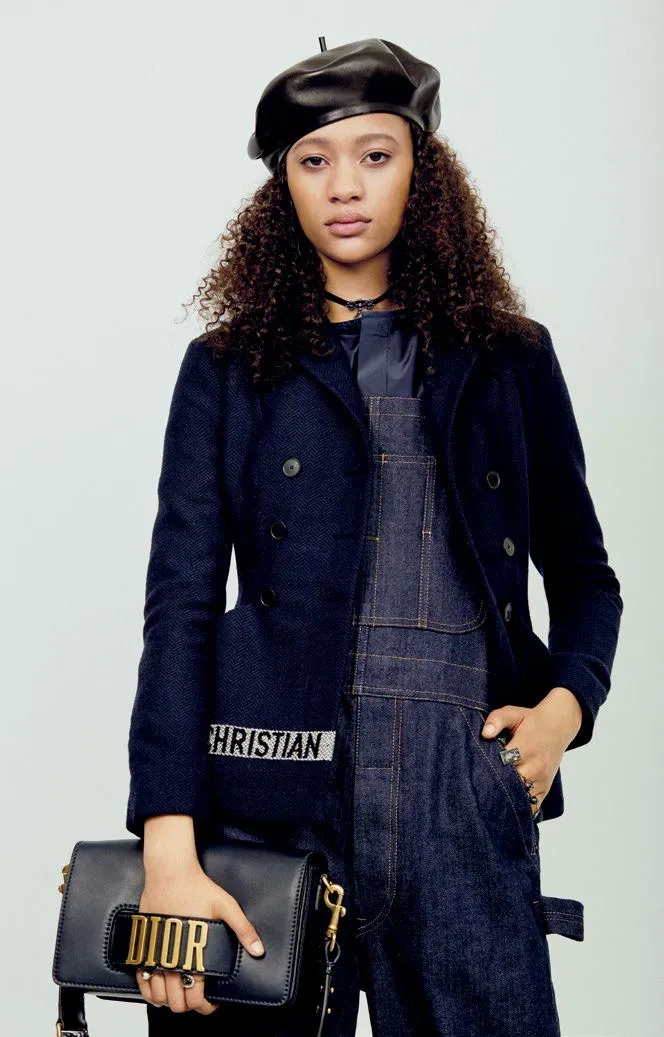
Yes, I believe that is in the process of changing, even if stereotypes exist. In fact, we are free to turn to excess or simplicity that depends on the moment or the product.
You are an Italian but work for a French fashion house. Where is the Italian in the Dior woman that you are proposing?
One should ask that of the French (laughs). I am trying to find a good mix of the two cultures. Italian culture puts craftsmanship, quality and cuts first. Italians really love fashion. French culture is obsessed with heritage and history. I try and maintain this heritage while making our way towards the future. Trying to make it speak a language that is spoken in the now, in the present.
European language?
An international language, with European leanings certainly, but I think that fashion speaks to everyone across the world.
What have you discovered through the retrospective exhibit at Musée des Arts déco?
The archives are extraordinary, every step along the way I find something new. It is instinctive and a connection with a precise moment. In fact, what I wanted to do was to walk through the exhibit all alone, with no one talking to me or to talk to. I did that once and I am waiting to do it another time.
If you had an image of Dior to hold onto, which would it be?
It is impossible to choose just one.
To which couturier do you think you are closest?
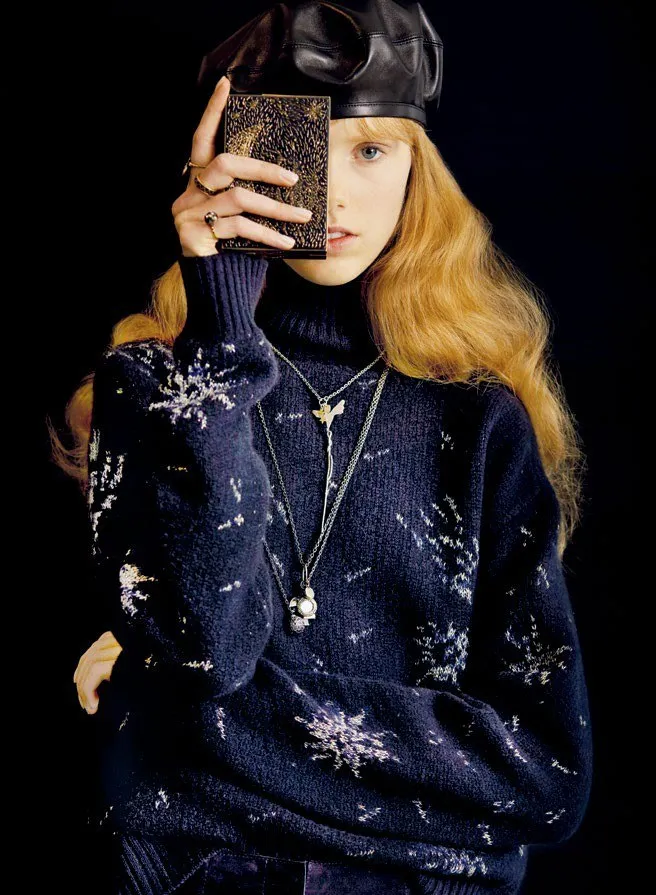
That is a complicated question. As a designer, I would say all are dear to me. Yves Saint Laurent, Marc Bohan, Gianfranco Ferré, John Galliano, Raf Simons… Each of them had been at the right place at the right time. They were talented visionaries. As a woman, it’s a different thing. Which dresses did I wear or would I have worn? Clearly those from the end of the 60s and those of the 70s, the entire period of Marc Bohan. It is amusing because I would have never believed that. I have an immense attraction for Yves Saint Laurent, which comes after that for Dior. The ’60s and ’70s were crucial, I was young, women were getting their freedom, fashion was changing, skirts were getting smaller. We are, today, amid a pivotal time as well, one that will mould the foundations of what is to come.
Do you think it is more difficult to be a designer today with all the social networking?
No, the world is just different. The difficulty and the difference are perhaps only of today, if you make a mistake you don’t have the time to correct it, you are immediately put into the category of people who have made a massive slip-up.
The title of the book dedicated to the exhibit at the Arts déco is Christian Dior, couturier of dreams. Is it important, according to you, to dream? Is it one of the purposes of fashion?
It is essential. I dream every day. I wouldn’t be able to start a collection if I didn’t dream. Fashion isn’t just a matter of clothing, it clearly represents dreams. I often compare fashion to the cinema. You want to tell a story and for that one needs to find the setting, actors, costumes. The last high fashion show was in an area close to my apartment. Every day I would pass by it in the car and the person who worked with me on the décor would tell me, “You look at it as if your dream were turning into a reality.” And she was correct.
But when do you dream? At night, during the day?
I try to dream every day, all through the day, but everyone disturbs me (laughs). I try to keep a distance from people who might distract me. Sometimes I manage, sometimes I’m not smart enough.
Every woman would like to dream longer, isn’t it? And that has a lot to do with being a child?
Absolutely! I think that it would be impossible to be creative if you weren’t in touch with the child within. As I’m getting older, I find that I am looking to bring to life all my childhood dreams.
You have the same zodiac sign as Christian Dior, Aquarius, and you were born on the 2nd of February like Victoire de Castellane, creative director of jewellery at Dior. Do you believe in magic, poetry and signs? What signs do you see in all of this?
I think what is magical is rather normal. That everyone in the world has a right to their magical moment in life. I don’t know if all of it is true, but I would like to believe that it is. Magic changes life into something more playful. I believe in signs as well, but I also believe that we need people to give us their opinion and open our minds. I believe in certain connections that are good for us.
Are you a very instinctive person?
Very. I use my reason very little, which is a problem at times (laughs). I would like to be a little colder, more distant.
We have got to know that you would like to travel the world before you die. Why? What are you looking for?
Exposure. I am a very curious person. It enthrals me to discover new cultures and places. I would also love to have read all the books that exist, to have looked at all the works of art that have been created on this planet.
Which has been your most memorable trip? Which will be the next one?
Egypt fascinated me. I have been there twice and I would love to return. I also loved Peru. Machu Picchu is unbelievable... we find such a multitude of things in humanity. Nature is just breathtaking. I went to Kenya recently for a safari... not to kill animals (laughs). I was in complete awe of them. There are so many beautiful things to be seen on this planet. My next trip will be to Sicily, by boat with my husband.
Our French edition’s cover girl, Grace Hartzel, is part of the Dior gang, who else, apart from her do you like?
I also like Ruth Bell and Selena Forrest. They represent the new generation of girls who are aware of what fashion is. They work in it for now, but that isn’t the end for them. They think about the future, of who they will become. Earlier, models were only pretty girls without a voice. Now, with the internet and social media, they have a platform to speak on, in the image of Adwoa Aboah and her site, Gurls Talk.
You give a lot of yourself, you communicate. What is your secret to being so optimistic?
I work at being happy every day. And it is not easy, honestly, but I do my best. We need to find that good energy, a good state of mind. Listen to good music, surround yourself with kind people. And when my husband, Paolo is having a difficult day, well it’s quite simple, I step out for a bit and tell him to let me know when he is in a better mood. It works clearly because it has been 25 years since we got married on December 21 in Italy.
From the October 2017 issue of L’Officiel India.
Spotted a mistake, or your photo used without permission? Report a correction