Lost And Found In Dresden
Swathed in legend and luxury, with one of the most evocative cityscapes in Europe, Dresden, the capital of Saxony, Germany, makes for an unusually quixotic destination. Drop by and enjoy being a time traveller.
Think romance and you don’t exactly find yourself singing passionate ballads dedicated to Deutschland. But look beyond the competitiveness and clockwork efficiency and you will see the country’s deep-seated love affair with grandeur and luxury. To dig into Germany’s softer side, you will need to think beyond the ribaldry of Oktoberfest and poker-faced daredevils cruising the Autobahn. Consider the charms of Lower Saxony, boasting some of Germany’s best-preserved medieval towns and spas nestled among its rolling hills. Whimsicality and legend are around every bend, from the Pagan stronghold of the beech-and-walnut-enrobed Harz Mountains, to the delightful Märchen Straße (Fairy Tale Road).
 L’Officiel India DigitalRead L’Officiel India in the digital libraryEvery issue and every cover story, on TCG Media.Read now
When you’re done ducking from the Pied Piper and bumping into Little Red Riding Hood, it may be time for a date with a more decadent, grown-up romance. Should you swerve away from the formidable Berlin-Hamburg-Frankfurt troika, the Saxon capital could be just the flamboyant and dreamy escape you were looking for. Not the sort of city that is wildly populated by tourists, Dresden is perfect for a honeymoon, or a fantasy-fuelled, recharging vacation pour deux. Here’s how you can time travel your way around a city built by visionaries and heroically rebuilt after one of the most controversial air raids in the second World War.
‘Florence on the Elbe’
German historian Weinart succumbed to Dresden’s charisma as late as the 17th century, but the Elbe valley has been populated since ancient times. It housed Slavic tribes in the 6th century and became the capital of the Lutheran movement during the Wettin dynasty, the longest ruling Germany dynasty at 829 years. Located on the direct route between Paris and Moscow, Dresden long remained one of Europe’s most accomplished cities, a spectacular specimen of Baroque architecture and artistic renaissance.
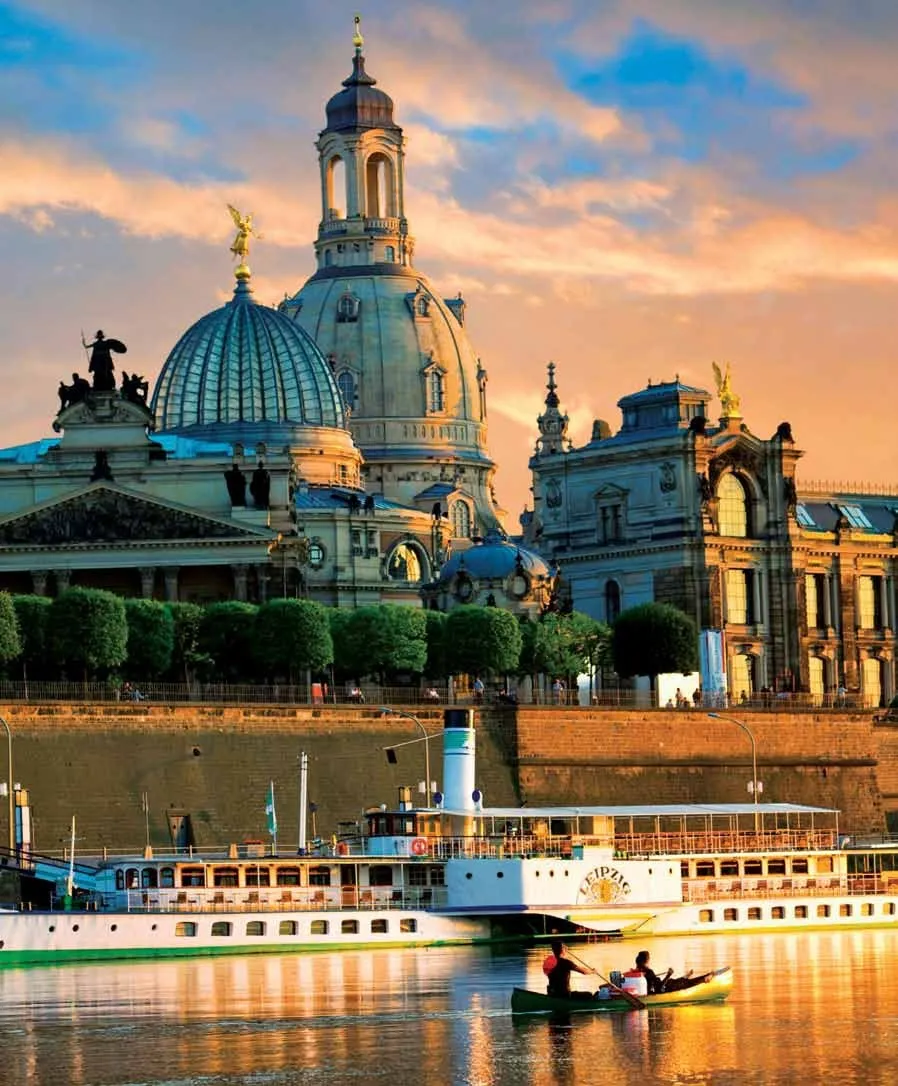
Take yourself back several centuries with a sunset walk over the Augustus Bridge, overlooking one of Europe’s most charming city silhouettes. Against the backdrop of carved spires and palatial domes — as if on cue — a paddle steamer softly whistles by on the waters below. These historic boats, now refurbished with modern motors, are available for you to channel your inner Victorian lady on a secret rendezvous. Book a ride on a cruiser or salon ship with the Sächsische Dampfschiffahrt company, which will take you all the way up to the enchanting hills of Saxon Switzerland National Park.
Pint-sized pleasure
Abandoning the pleasures of Dresden for a quaint ‘toy village’ may not seem like an ideal day trip. But Seiffen’s sloping lanes, slate-roofed houses and elfin charm will make you glad you took time off from playing aristocrat. An hour’s drive from Dresden, Seiffen is ensconced in the heart of the Erzgebirge (Ore Mountains), legendary for their Christmas traditions. Should you make it during the holidays, expect the aroma of Bratwurst (fried sausage) Lebkuchen (cinnamon rolls) and Glühwein (red wine, rum and spices in a steaming concoction).
A 500-year old mining town, Seiffen reinvented itself when its silver and tin deposits reduced, by turning to lacemaking, weaving, and most successfully, carving world-class wooden toys. You will see the town’s mascot staring solemnly at you from everywhere — the mustachioed and uniformed Nutcracker. That gentleman is joined by an army of hilarious Smoking Men (including a bald Santa and some portly hausfraus, arguably among the world’s best souvenirs). At the Ore Mountain Toy Museum, you can even buy a miniature farmhouse — replete with tables, pitchers, lamps and the littlest Holy Bible — precisely arranged in a matchbox! Settle down for the weekend at the rustic Erbgericht Buntes Haus Hotel, and don’t miss the Neinerlaa (nine things) a traditional meal with each course signifying something — the lentil soup blesses you with money, and the cranberry and blueberry pie keeps you away from illness.
In tune with artistic genius
Dresden’s creative lineage has played host and inspiration to 19th century’s most significant European composers, Richard Wagner, a man whose unparalleled acoustic skills still inspire Hollywood music makers. Apart from being the Royal Saxon Court Conductor in Dresden from 1843 to 1849, Wagner’s rags-to-riches story and his inexplicable luck with the ladies (the twice-married, plain-looking Wagner carried on several illicit affairs with his patrons’ wives) gives rise to a fascinating legend.
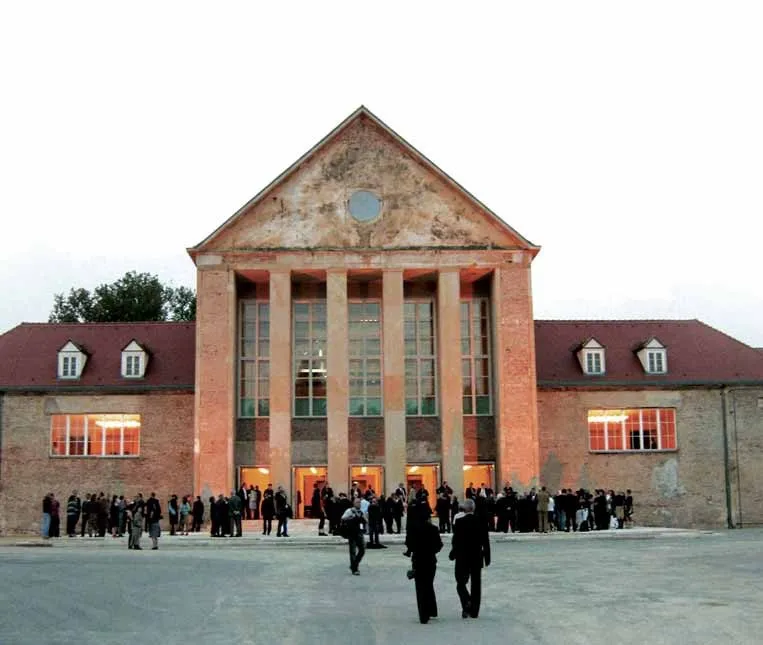
Whom you’re less likely to know about is Dresden’s 21st century resident global artistic icon. One of the world’s most sought-after choreographers, William Forsythe is famed for reinventing classical ballet into a modern-day art form. He has created memorable works for the Stuttgart ensemble and ballet companies in Munich, London, Basel, Berlin, Frankfurt, Paris, New York and San Francisco. The Forsythe Company though, is headquartered at Hellarau, a suburb of Dresden, at the vibrant Hellarau Festival Theatre building and it’s on the cusp of launching Forum Kulturcampus, a new centre for contemporary arts and sciences. Scholarship, anyone?
Trip on gourmet
Progressing systematically from the 20th to the 21st century, Dresden’s bohemian and trendy Neustadt district is home to the plush Hotel Bülow Palais. Its tour de force is the gourmet restaurant Caroussel. Helmed by the young and dashing Michelin-starred chef Benjamin Biedlingmaier, the elegant restaurant is the place to indulge in award-winning, light and contemporary cuisine. As the youngest star chef in Saxony, Biedlingmaier’s refreshing creations are the perfect conclusion to a splendid night about town, although the daytime bistro offers delicious pastrami with marinated slices of tamarillo and cress. Ask for Lobster with Bergamot and Avocado, and the Oxtail with Guava and Romanesco Broccoli. Forget the humble Bratwurst and stodgy meat fests — one ride on the Caroussel and ‘German cuisine’ will never be the same again.
Party like a monarch
Walk along Hauptstrasse, and you can’t escape the Goldener Reiter (Golden Rider), a resplendent Roman Emperor in full swing on his steed. Augustus the Strong, the Elector of Saxony and the former king of Poland, was Dresden’s most iconic ruler and architect. A controversial figure — whether it was angering the Lutherans with his conversion to Catholicism or allegedly fathering more than 350 children borne by his mistresses — this monarch shaped Dresden as the metropolis of its time. A testament to his vision is the stunning Zwinger, the space between the inner and outer ring of the city walls — as a 10th century party space, it beats the competition hollow.
An afternoon exploring the Zwinger could leave you with a severely regal hangover. Fancy yourself in elaborate petticoats, billowing taffeta gowns and bonnets, joining a merry court procession, guzzling golden goblets of Tokaji wine (Augustus II was known to down at least seven bottles at a time) as bells toll from the roof. You can also sigh over one of the world’s greatest collections of Renaissance art, which includes Raphael’s Sistine Madonna. Emerge again into the inner courtyards to frolic at the Nymphenbad fountain. Merely sitting around the ‘Bath of the Nymphs’ — a glamorous venue for the monarch’s umpteen parties, — will transport you to another era.
Rent a (recent) piece of history
Dresden has a hidden gem for architecture aficionados. If you’ve fantasised about traipsing through Europe on Art Nouveau while being chained to your modern metropolis office, a solution could be an hours’ drive away. Book an elegant off-shore corporate shindig at Villa Esche. Commissioned in 1902 by textile scion Herbert Eugen Esche, and built by Belgian artist Henry van de Velde, this former family home is now one of the largest examples of Art Nouveau and Belle Epoque architecture. Van de Velde’s work in the 20th century fused industrial era functionality with aesthetics, showcasing his unique take on the geopolitical concept of Lebensräume (living space). The restored villa now holds Germany’s first Henry van de Velde museum and is available for concerts, book readings and business conferences.
The changing Chemnitz artists’ gallery on the ground level, its terrace overlooking the manicured lawns, is open for private parties.
From the April 2014 issue of L’Officiel India.
Spotted a mistake, or your photo used without permission? Report a correction