Intelligence, Redesigned
What happens when the worlds of high fashion and technology join forces? We look at their most important crossovers and the future of fashion.
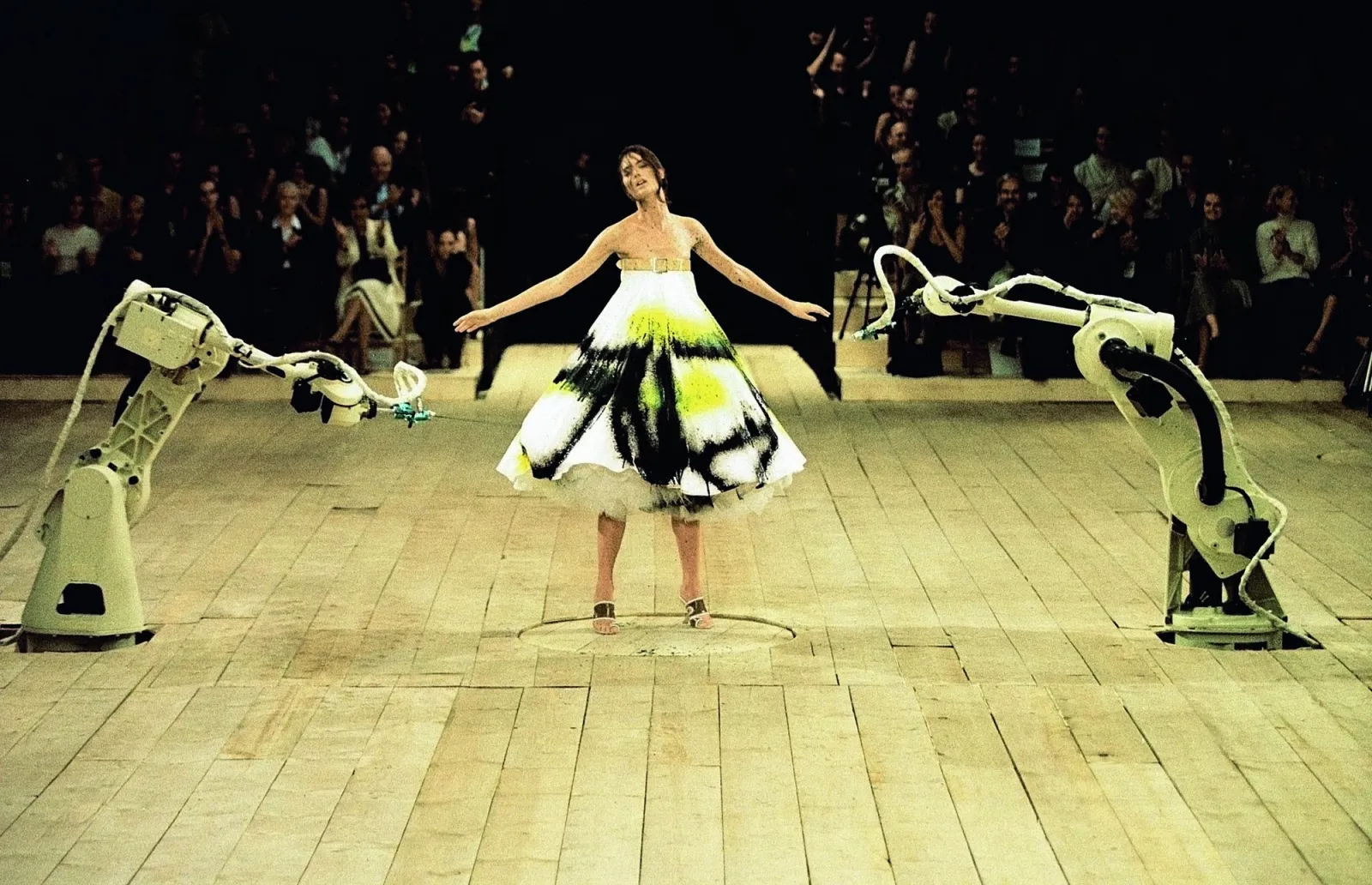




If the interbreeding of fashion and technology is currently at a peak, it by no means is a new phenomenon. Case in point, Alexander McQueen’s SS ‘99 where two robots were programmed to spray-paint a white strapless dress or Givenchy’s FW '99, Y2K collection, where McQueen collaborated with Studio van der Graaf for a glow in the dark plastic suit with flashing LED lights. As the term “wearable tech” takes a life of it’s own, surpassing it’s once upon a time trending cousin, #selfie, it is important to remind ourselves that the two disciplines are long intertwined.

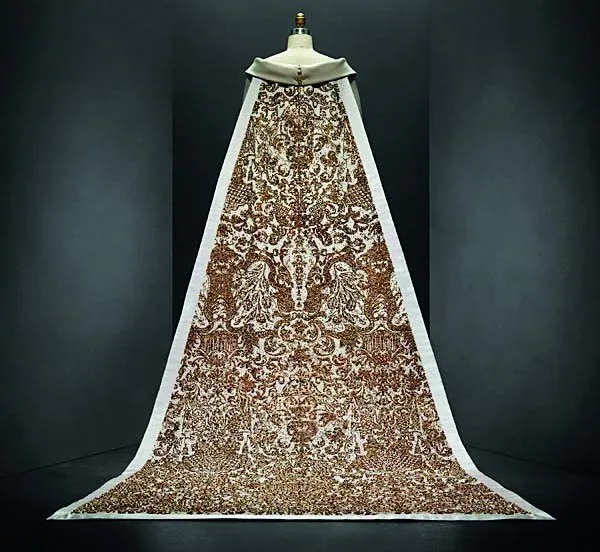
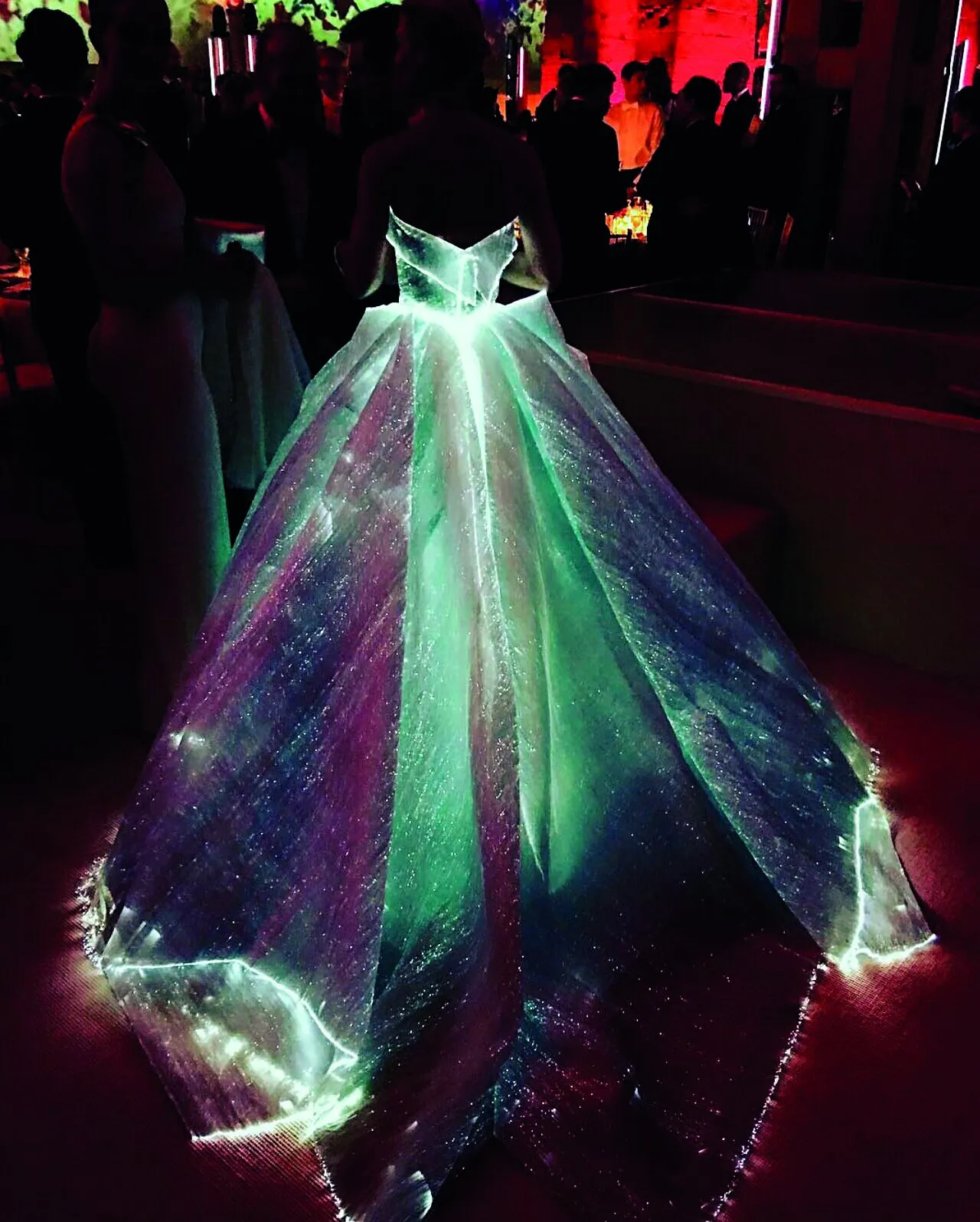
The 2016 Met Gala theme, Manus x Machina: Fashion in an Age of Technology essentially investigated fashion’s evolution from hand stitched garments to its ultimate dependency on machines, alongside 21st-century methods like 3-D printing and computer-generated patterns. The main spectacles at the exhibit, Yves Saint Laurent’s Mondrian dress, 1965, a complete machine made creation (except for the hand-done hemming) alongside Chanel’s Fall 2014 bridal gown involving hand painting, computer manipulation, machine printing, and hand-embroidery which took merely 450 hours to complete, paved the way for more advanced level of gadgetry and robotics one might expect when using the word, technology. Karolina Kurkova, kept the dream alive by showing up in an Artificial intelligence dress by Marchesa powered by IBM at the Met Gala. With 150 LEDs in handmade 3D flowers, the dress lit up with the hashtag #CognitiveDress. Watson's Tone Analyzer then senses the tone of people's tweets, and picks a colour that best delivers their emotional response. Zac Posen, teased his contribution to the gala as well, with a Cinderella-style gown made from fiber optic woven French organza worn by Claire Danes.
 L’Officiel India DigitalRead L’Officiel India in the digital libraryEvery issue and every cover story, on TCG Media.Read now
Closer to home, IBM Watson’s cognitive garment made it’s Indian debut, courtesy, Falguni and Shane. On their experience, Falguni comments, “We were able to analyse the dominant prints and silhouettes for each season, which we could use as a starting point to explore further. An analysis and insight was shared with us based on all the fashion weeks internationally, as an interactive web application hosted on IBM Cloud where we could explore the colour trends for the next season, analyse the key prints and silhouettes for each season and derive inspiration for their new collection".
"Fashion is usually considered a right-brain activity. So it was very interesting to approach it from a left-brain perspective of logic and data. The data presented by IBM Watson helped us look at the insights as a springboard for our thoughts and helped us think in newer directions.” Says, Shane.
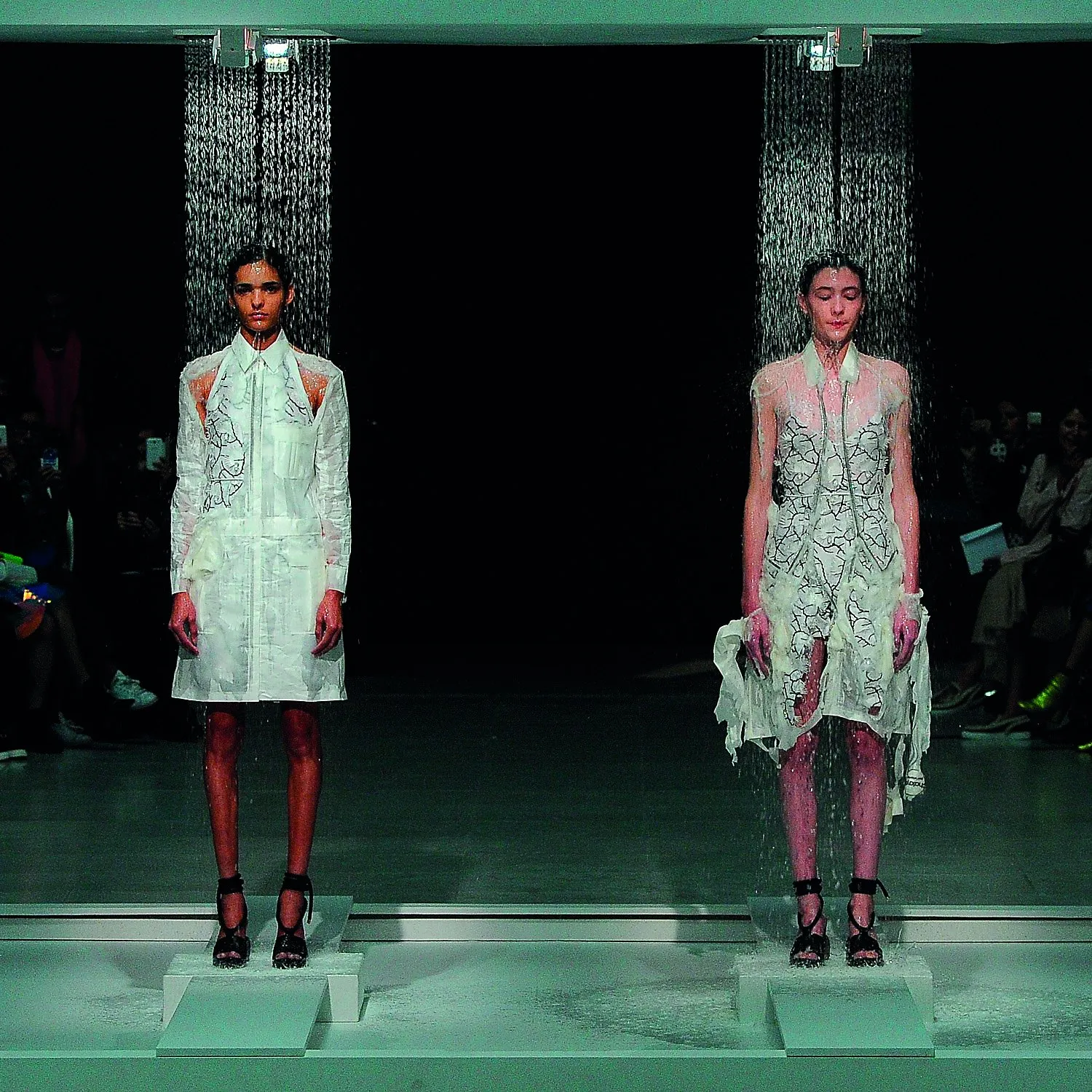
Hussein Chalayan’s too has long probed into the synergies between his garments and the part technology can play. For Autumn Winter 2000, he transformed a coffee table into a skirt, all the way to Spring Summer 2007, where he teamed up with the animators of Harry Potter, to mechanically transform his dresses on the runway. The hourglass Dior New Look reconfigured to the Paco Rabanne metal-link shift, thus moving decades into fashion history within seconds. His Spring-Summer 2016 collection included dresses that were water soluble only to reveal newer garments underneath.

Another early example of the affiliation is the Dutch Designer, Iris Van Herpen. Being the first designer to have models traipsing down in 3D printed garments, back in 2010, the likes of Karl Lagerfeld, soon followed suit with 3D-printed details on iconic tweed Chanel suits.

Taking a broader view of the interplay between fabric, texture and innovation, Issey Miyake uses computer software to calculate the composition of different cotton and polyester weaves which in response to the steam turn into three-dimensional patterns that are tried as paper prototypes first. The master of draping has come up with a new type of fabric that when exposed to steam, contracts into rigid structures, called 3D Steam Stretch.

Wearable computing however has found its dream market in sportswear. With the inception of the biometric technology, you can turn your shirts or even your socks into smart devices that act as a monitor for heart rate, performance, fitness, calorie intake, etc. They warn you if you are getting too stressed too! With its coevals moving into the digital space, Nike has added to the list of offerings, self-tying shoes, for athletes whose shoes keep coming undone during workouts.
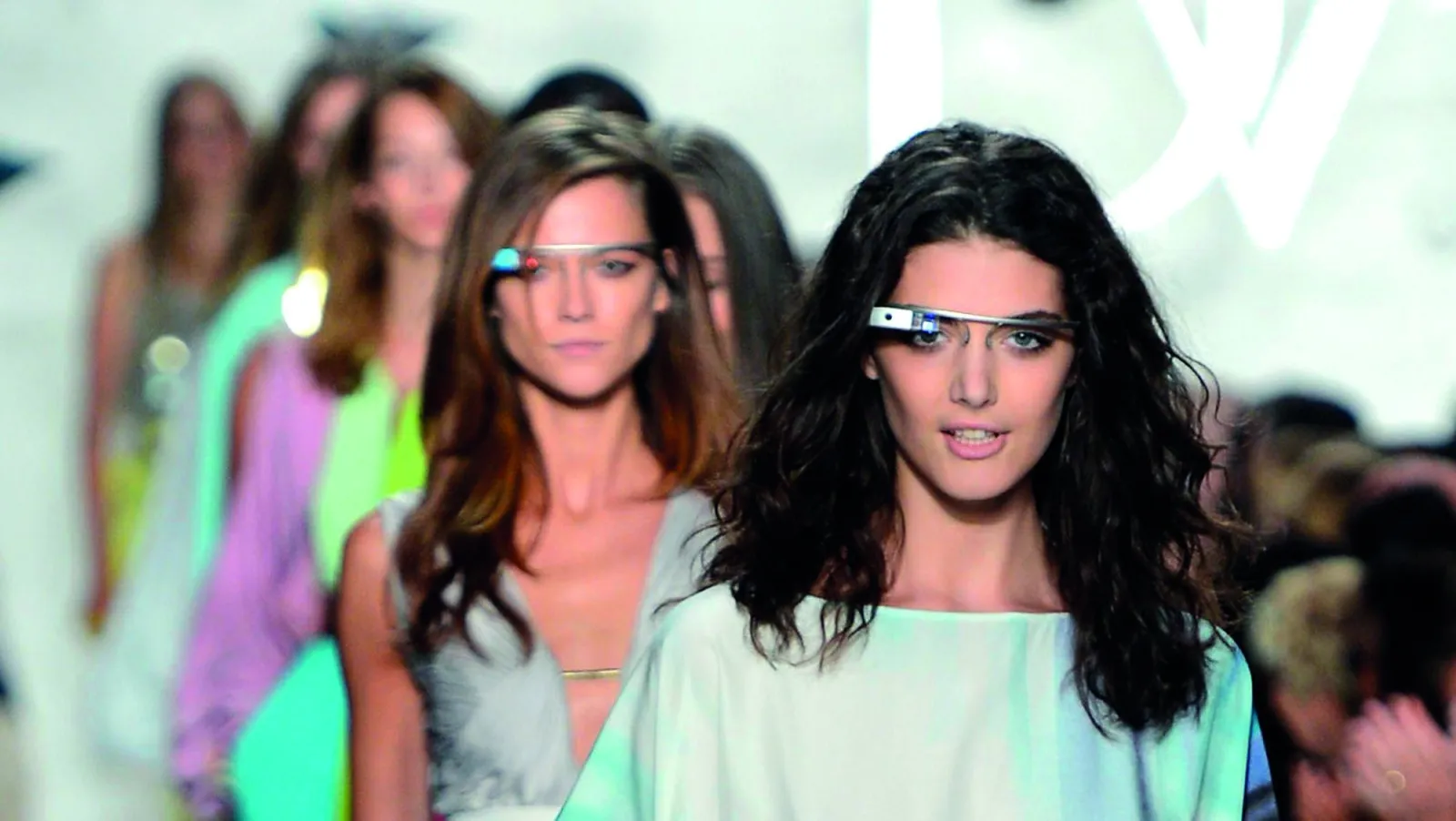
In an attempt to popularize Google Glasses, Diane Von Furstenberg models were lensed donning the eyewear. Exploring this ongoing alliance, tech giant, Google, also joined hands with Levi’s on Project Jacquard to create a denim jacket with conductive threads and a Bluetooth cuff to pair the jacket to a smartphone, which allows you to check the time or play your music with just a gentle stroke on your sleeve. With Apple’s debut of the Apple watch during Paris Fashion Week and playing host to The Met Gala, two years in a row, this case poses a serious question.
Is the Tech industry more reliant on fashion to boost their acceptance? With that said, whether or not the tables have turned, with the collision of both worlds, they will inevitably become one.
Spotted a mistake, or your photo used without permission? Report a correction