Heirloom Couture
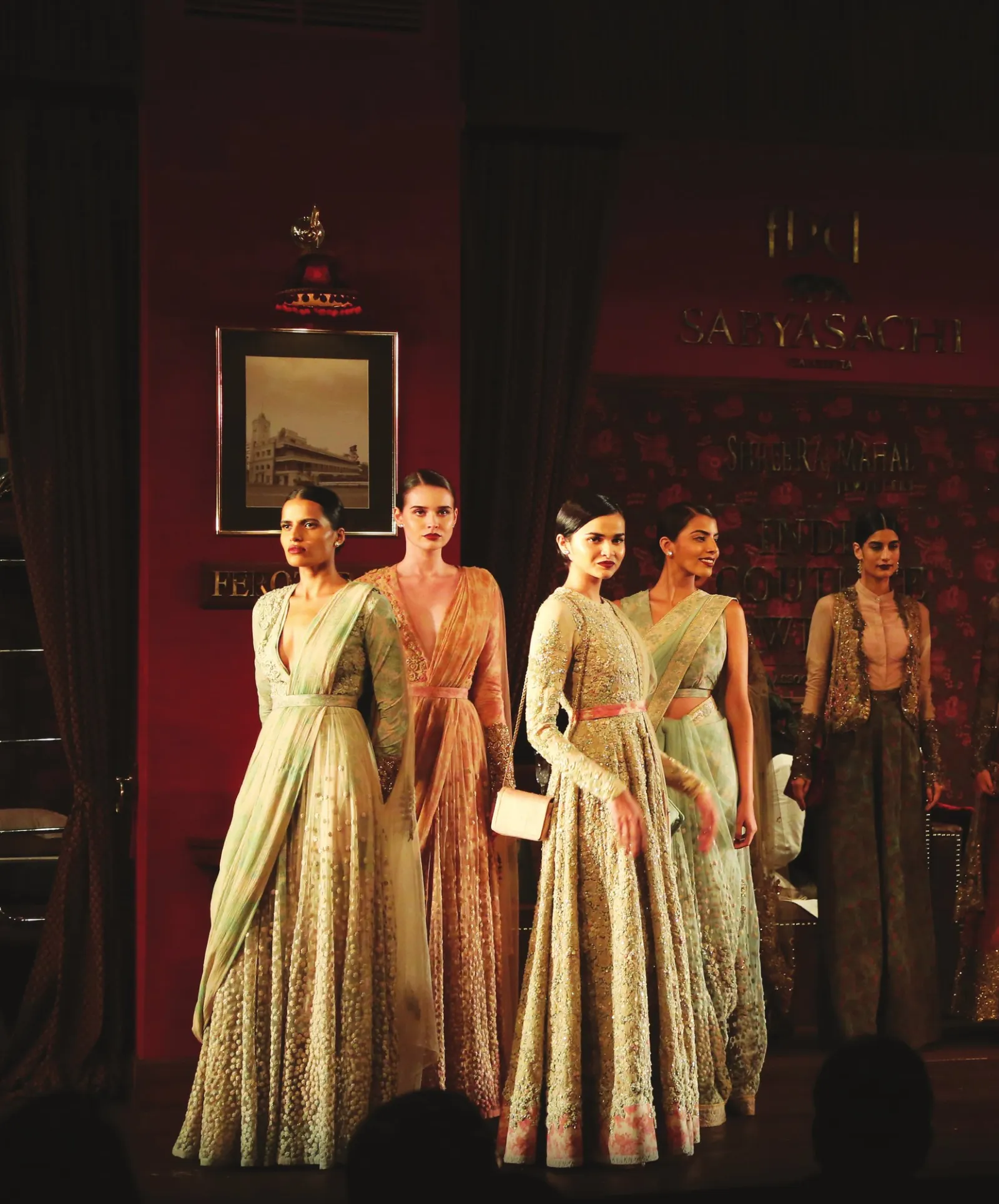




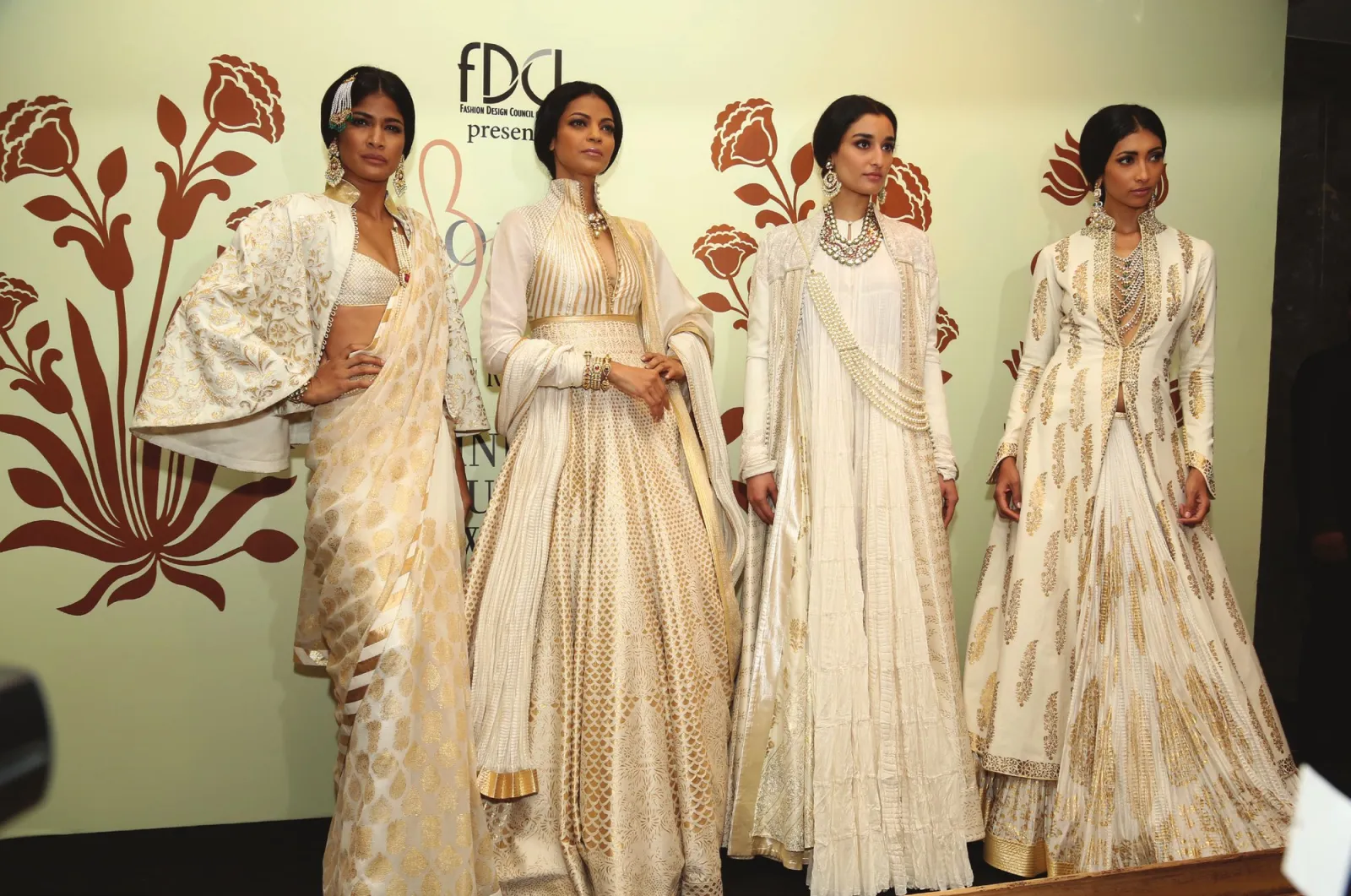
22 August 2014 From getting weighed down by concepts to creating the illusion of being seriously simple, Indian couture has come a long way. It’s no longer about complicated silhouettes, gimmicky outfits or shock-inducing materials. It’s about craftsmanship and enduring finishes, about finding that rare balance of tradition and innovation, about humbly precious things that deserve to be passed down generations. The trip to Sabyasachi’s Ferozabad was much in this ‘new timeless’ zone. The collection inspired by the city of bangles unleashed a wave of opulence on to the ramp—transformed into an ornate train compartment set that matched the outfits in resplendence, splendour and, of course, perfection. All that Sabya is revered for. This time around, his couture had innovative flourishes… Belted lehengas worn with delicately embroidered, floor-sweeping coats; evolved kurta-churidars with trail-like khadi and tulle dupattas; royal, printed bandhgalas with 18-carat gold buttons…all with a smattering of handcut crystals, here, there and everywhere. But what stole our hearts was the unorthodox transformation of the humble canvas into regal lehengas, colourful men’s jackets, dramatic trousers, breeches and much more, heavily adorned with an array of embroideries, zardosi, crystals and bugle beads. Teamed with unusual companions such as khadi blouses, brocade crop trousers and pashmina shawls, his clothes were poetry in motion. Poetry that paid a beautiful tribute to many crafts from appliqué to Parsi embroidery. This is one luxe train you will not mind boarding, irrespective of whether you are a bride, a bridesmaid or just someone who cherishes decadent luxury wrapped in the abundant hues of heritage. DIFFERENT SHADES OF OPULENCE Rohit Bal’s media preview combined the richness of ivory and gold with classic silhouettes, each with a modern twist. A sari teamed with a bolero cape, a laacha with a front-open sherwani, an anarkali with a jacket and another with a plunging neckline...the grandness of the four garments he put on display left us asking for more for the women and disappointed in the ordinariness of the menswear. Manish Malhotra’s Portraits dazzled with traditional craftsmanship and voluminous silhouettes, which were teamed with contemporary fabrics and cuts. So Kashmiri zari, vintage embroidery in jewel dust, mirrorwork and ivory threadwork found their way on to jewel-tone fabrics— beige and wine silks, emerald and ruby red velvet, and tulle. The seamless symphony of a rich heritage and modern opulence. And, of course, classic Manish Malhotra. The candles placed through the extravagant set seemed to be symbolic of the timelessness luminosity of crafts handed down the generations, reworked to a timeless context. Just like his creations… just right for the contemporary bride, perfect for posterity.
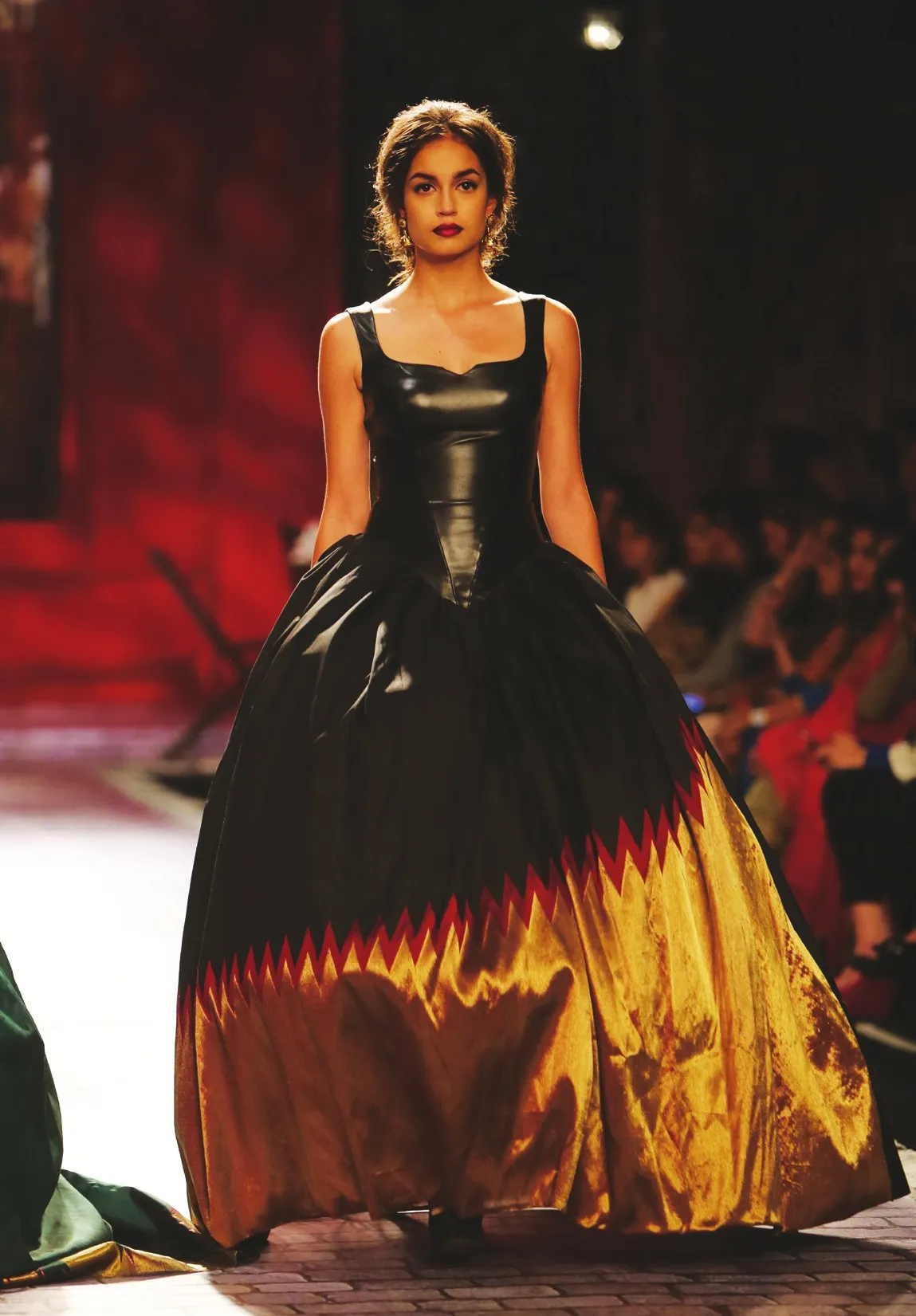
24 August 2014 Monisha Jaisingh’s World Bride curated traditional ethnic elements and placed them in a European context.
 L’Officiel India DigitalRead L’Officiel India in the digital libraryEvery issue and every cover story, on TCG Media.Read now
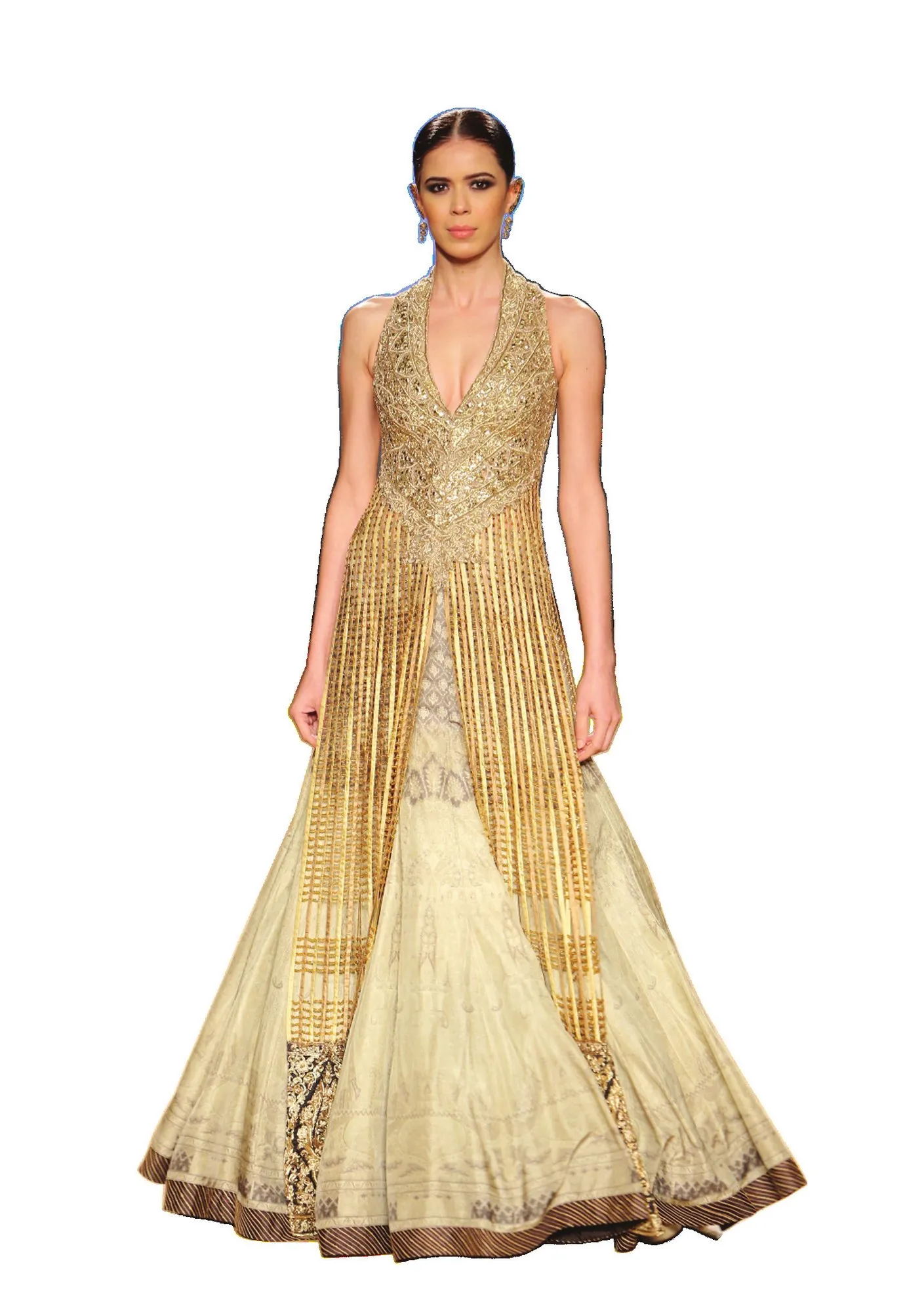
Like the temple-print Madras silks stitched into gowns with flouncy Victorian silhouettes, but the corset of one of which was made of leather. Like the sari gowns, which though de rigueur in most contemporary bridal collections, shone with the edgy allure of copper zari and the peplums that formed a part of the silhouette. Like the brocade sherwanis teamed with printed leggings. Like the show-stopping leather lehenga that was teamed with a white boyfriend shirt, yet the gold threadwork and the cut screamed tradition. And the set became a part of the narrative, with the Indian bride walking down the café- and artist-lined streets of Paris. Because the fashion capital had to be where classicism gets a bohemian, baroque interpretation, which is luxe all the way. BOHEMIAN CLASSICISM Manish Arora’s Kaleidoscope was, once again, quintessential Manish Arora. Technicolour. Check.
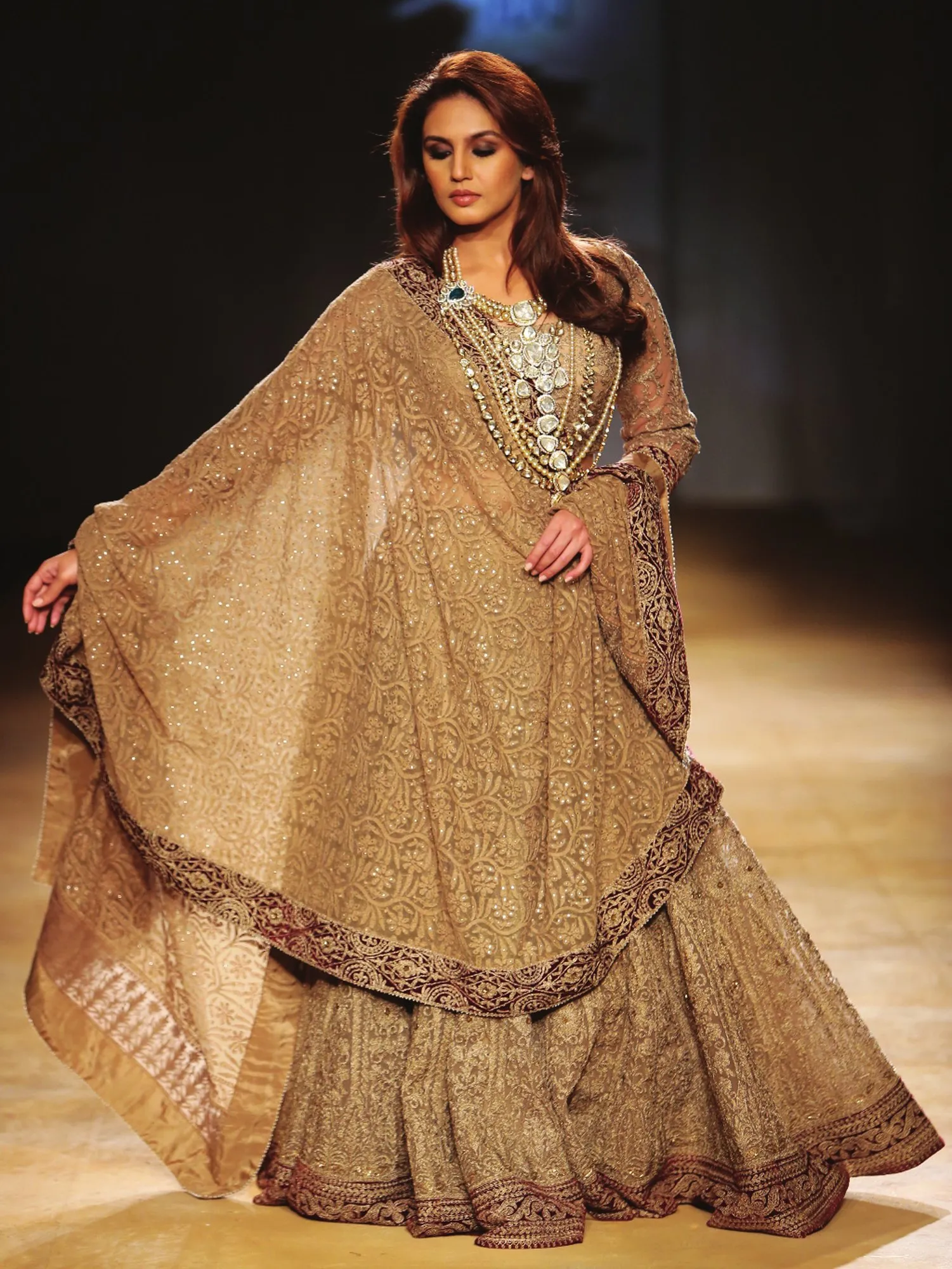
Fantastic prints. Check. But this time, there was one more element… Iridescence. Our man played with jewel- and peacock-toned fabrics to create garments that were pure fantasy. The generous use of gold, applique and traditional motifs lent the garments that bridal air.
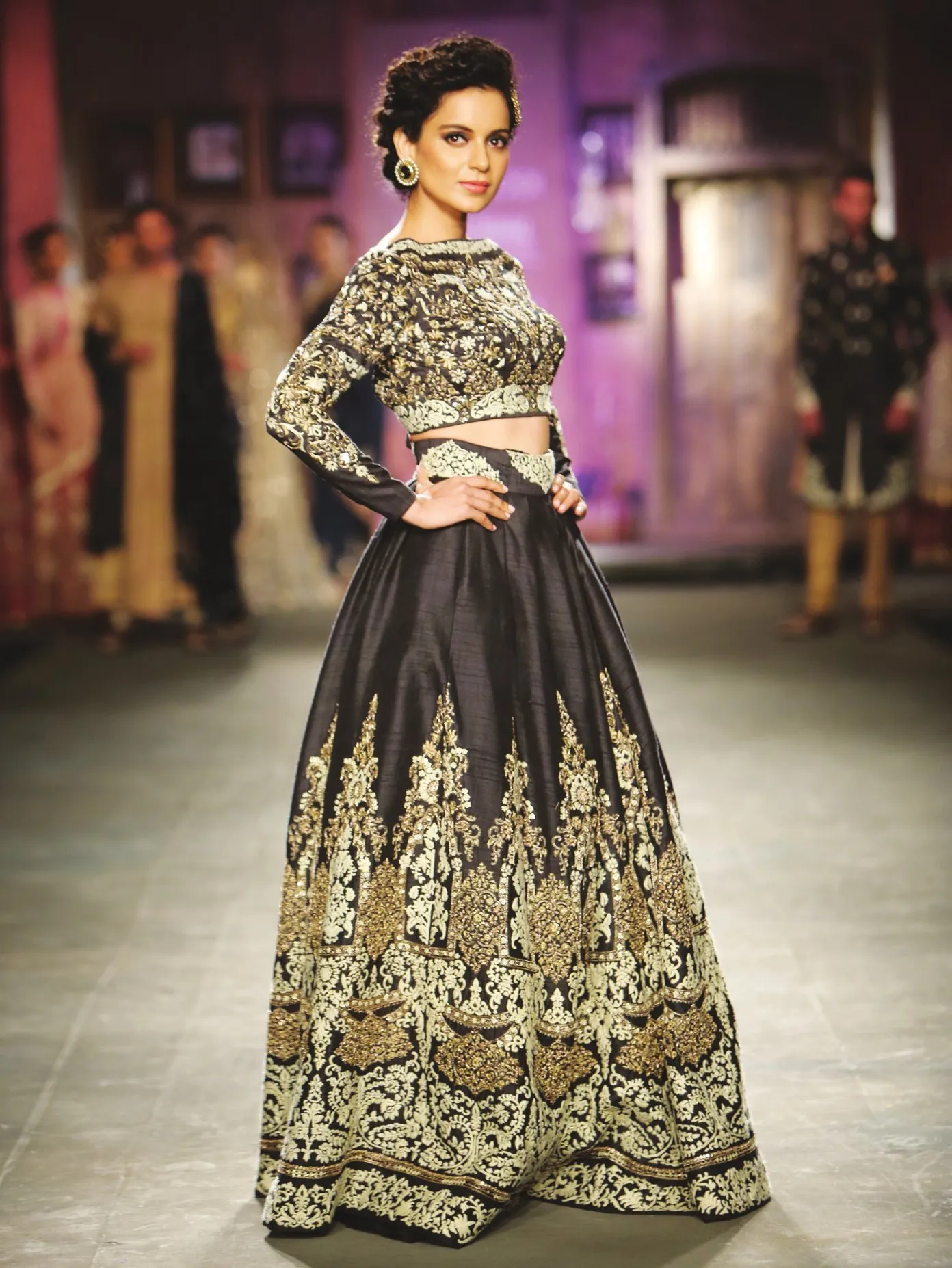
But make no mistake, this is one collection that’s definitely not for the faint-hearted. Sheers, body suits, diaphanous fabrics, futurism was writ large all over. And the elaborate headdresses and floral helmets, along with the overdose of bindis holler out to the bride who really dares.
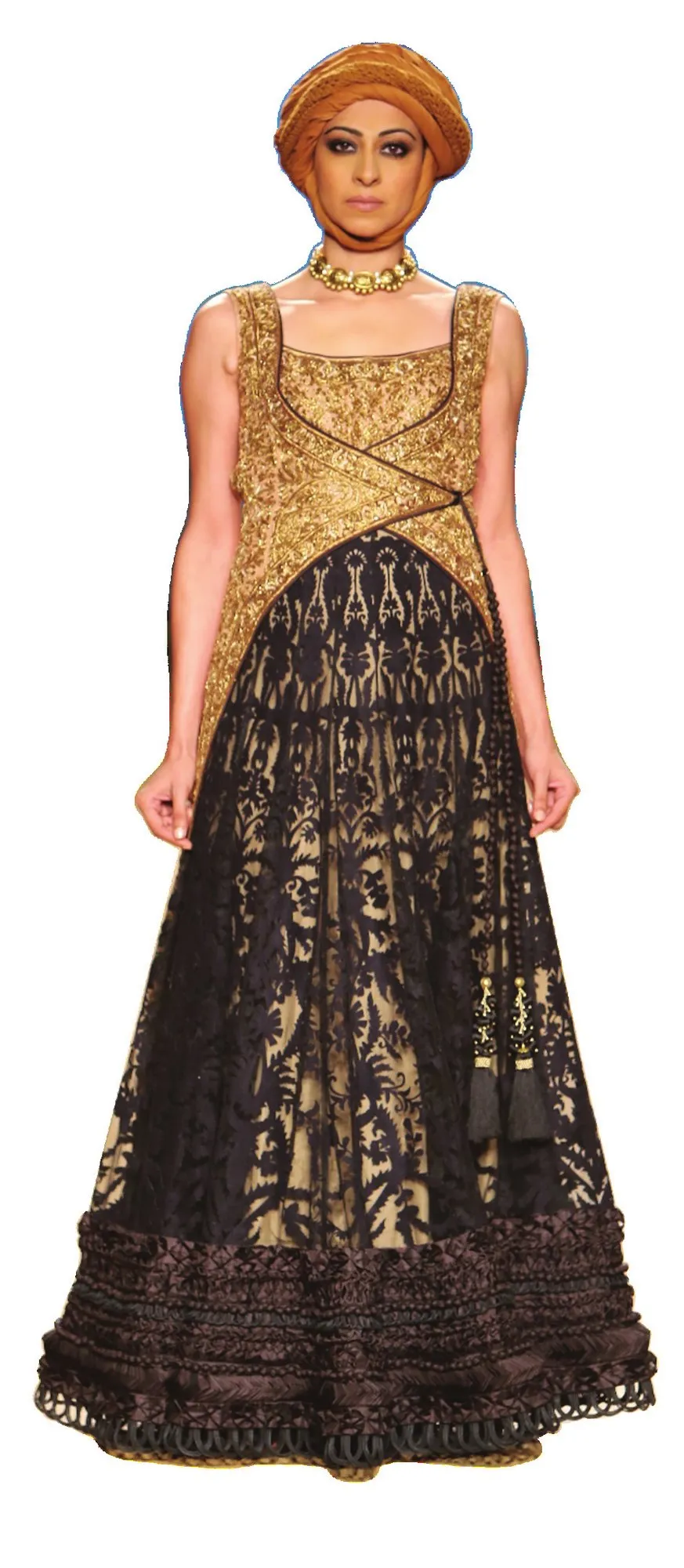
Anju Modi’s Manikarnika pulled us into another era. Celebrating the woman of today who values age-old craft and ancient techniques, the collection was replete with understated royal luxury. The models walked on to the ramp in exquisite embroidered creations inspired by the architecture and the paintings of Ajanta-Ellora, with the carvings of the ancient caves forming a mesmerising backdrop. The white thread embroidery, zardosi and kashidakari shaped into floral motifs, voluminous lehengas and saris, the unusual pairing of net with silk, the use of velvet in embroidered dupattas, high-heel peep-toes embellished with embroidery, and, of course, Modi’s signature dhoti silhouettes, layered quite unusually in some instances, gave the collection a timeless feel, just like its inspirational site. We especially liked the slate grey lehengas and the very intricately embellished full-sleeved blouses. However, we did feel that this collection didn’t measure up to Draupadi, Modi’s couture collection last year, which was also inspired by mythology. Unlike Draupadi, where Modi presented more innovative and sleeker silhouettes and played rather open-mindedly, or should we say, whimsically with craftwork, Manikarnika stayed focused on bridal wear and somewhat got limited by its historical reference point. Considering it is the veteran player of heritage—Modi—we are talking of here, we hoped to see her re-interpreting the past with a larger-than-life flourish, rather than recreating it. And yet, we can’t deny that Manikarnika is an uber-luxurious collection, subdued yet immensely plush, silently seductive, a piece of history revived, that every bride would love to own and cherish.
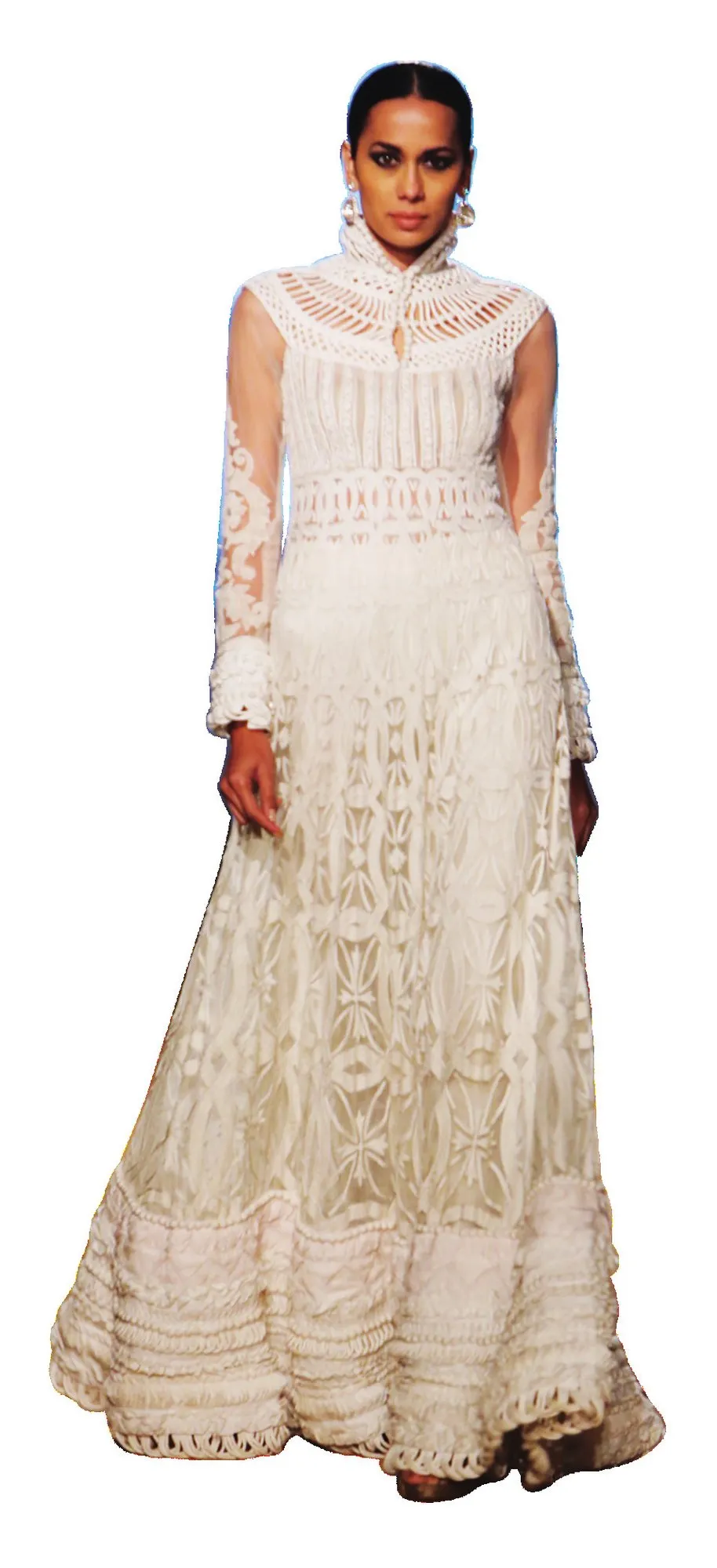
26 August 2014 Rimple and Harpreet Narula’s Eternal Wanderlust drew from the far evocative north-west. The land around and beyond the Hindukush. The land where the sands and deserts meet the mountains and rivers. The land where the wandering tribes, the Islamic regions and Hindustan meet and live in harmony. Rimple and Harpreet translated the enormity of this region and its diversity into their repertoire, all the while keeping the collection whole. Shades of ivory and beige, from eggshell to fawn, to dull gold and copper, combining textures, embroideries, crochet, embellishments and laser cut work on tulles and silks, the collection paid ode to the geography of the region, while integrating its crafts. An impressive first show by the duo, it successfully brought forth the character of the region it drew inspiration from, aesthetically and as a vibe.
Spotted a mistake, or your photo used without permission? Report a correction