Golden Girl
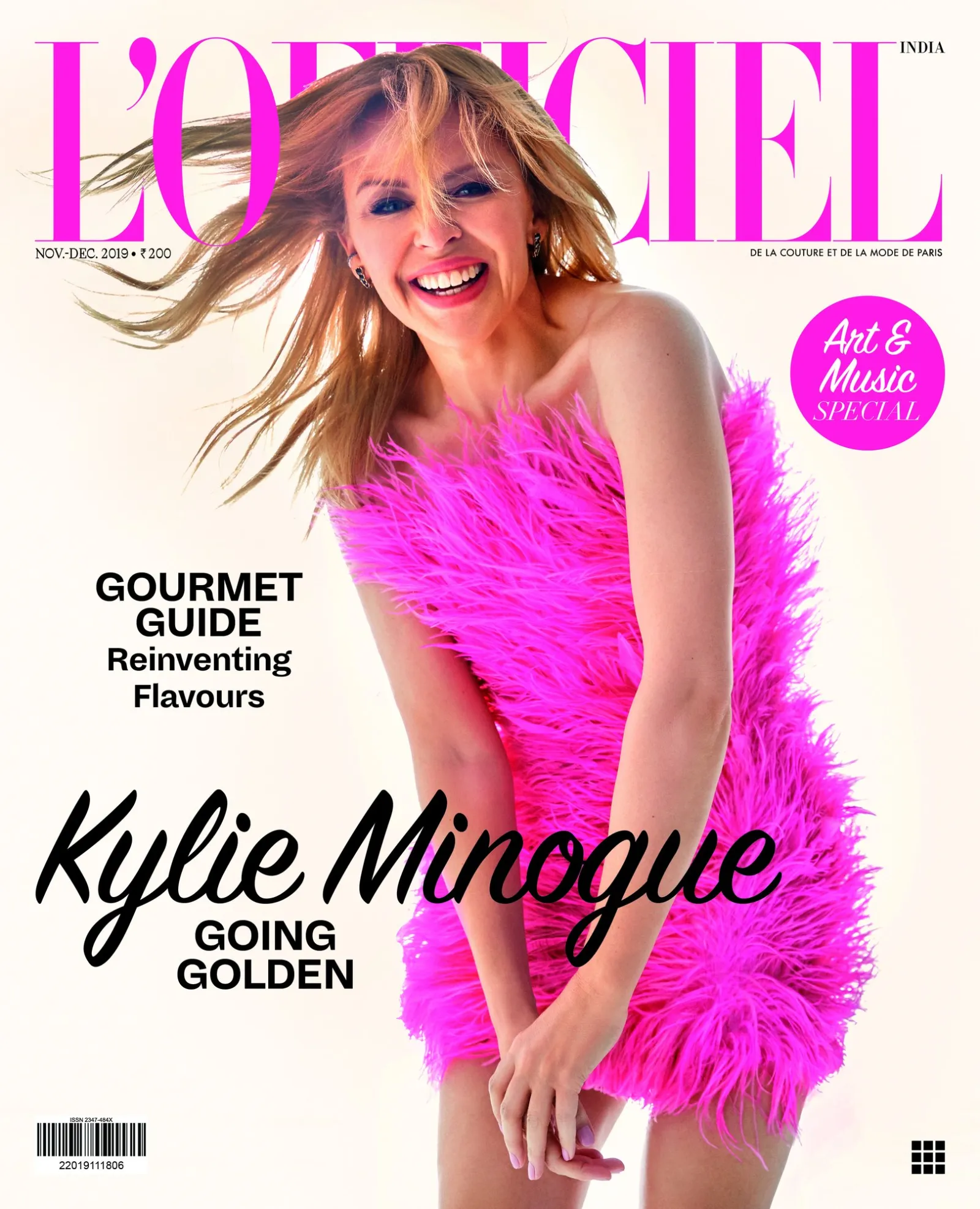
Thirty years of career, thirty years of hits, thirty years of ultra glamorous outfits. GiambattistaValli interviews the Australian singer on the relationship between music, creativity and fashion. From the beginnings in the 1980s to the present: from "Locomotion" to "Golden".
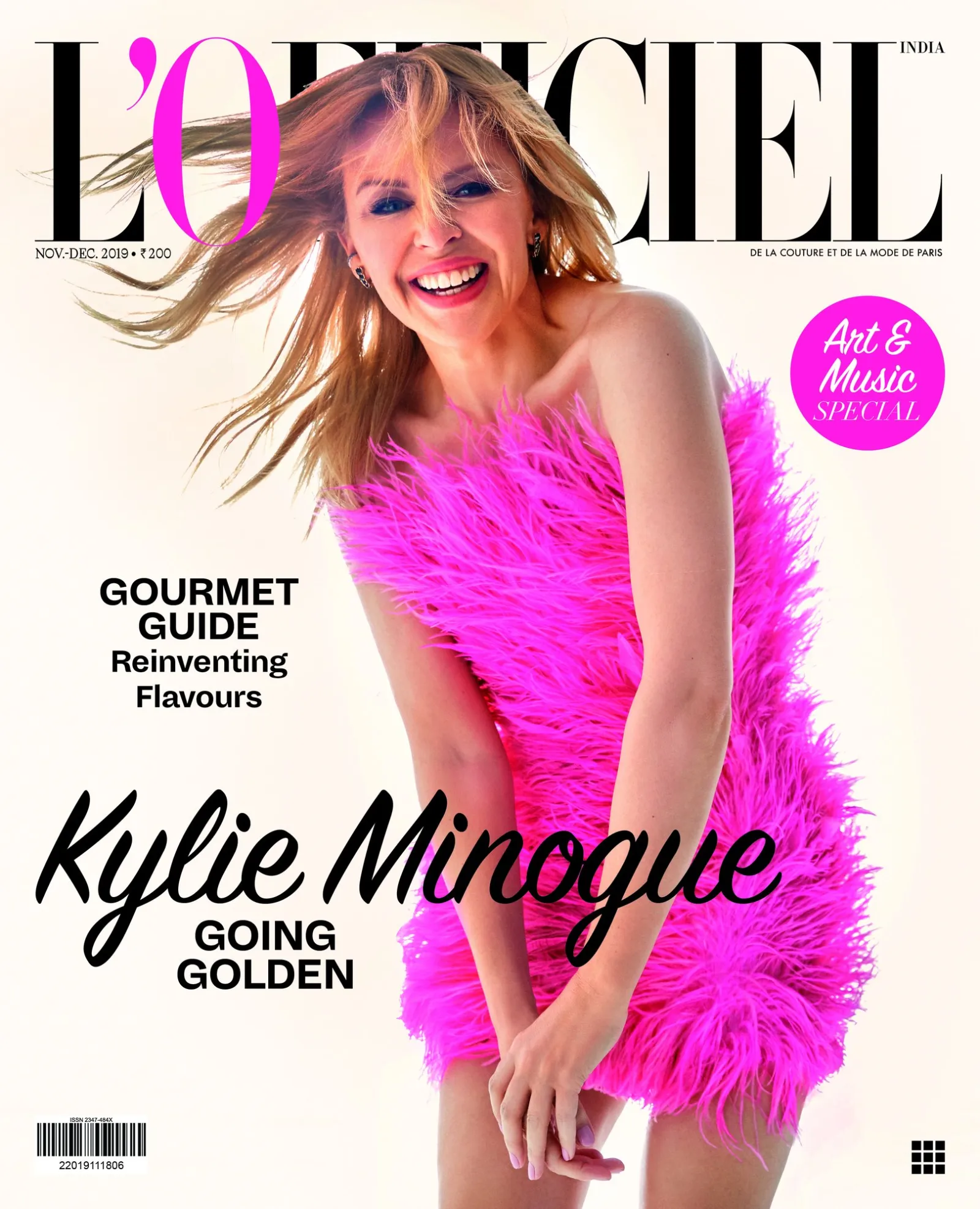




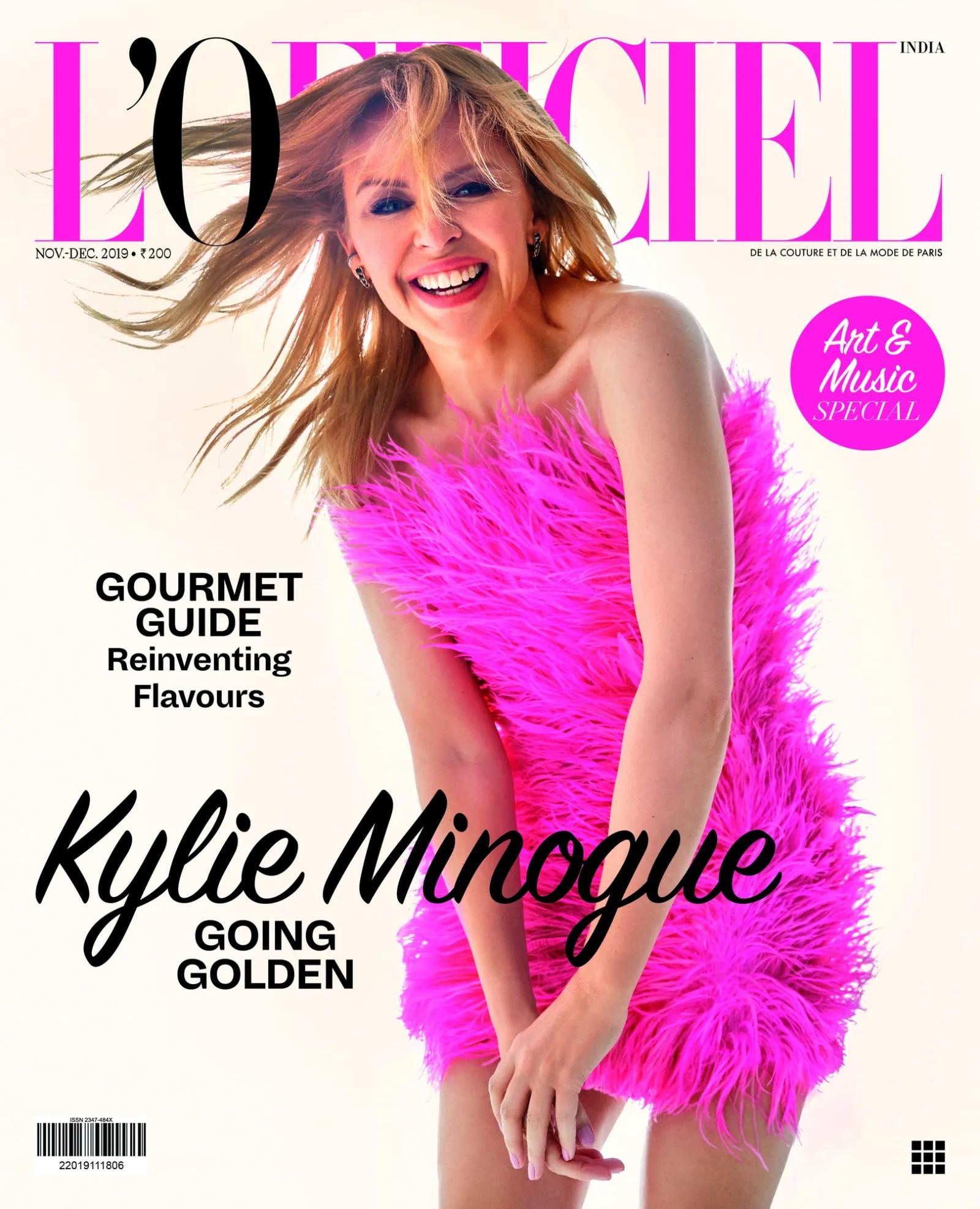
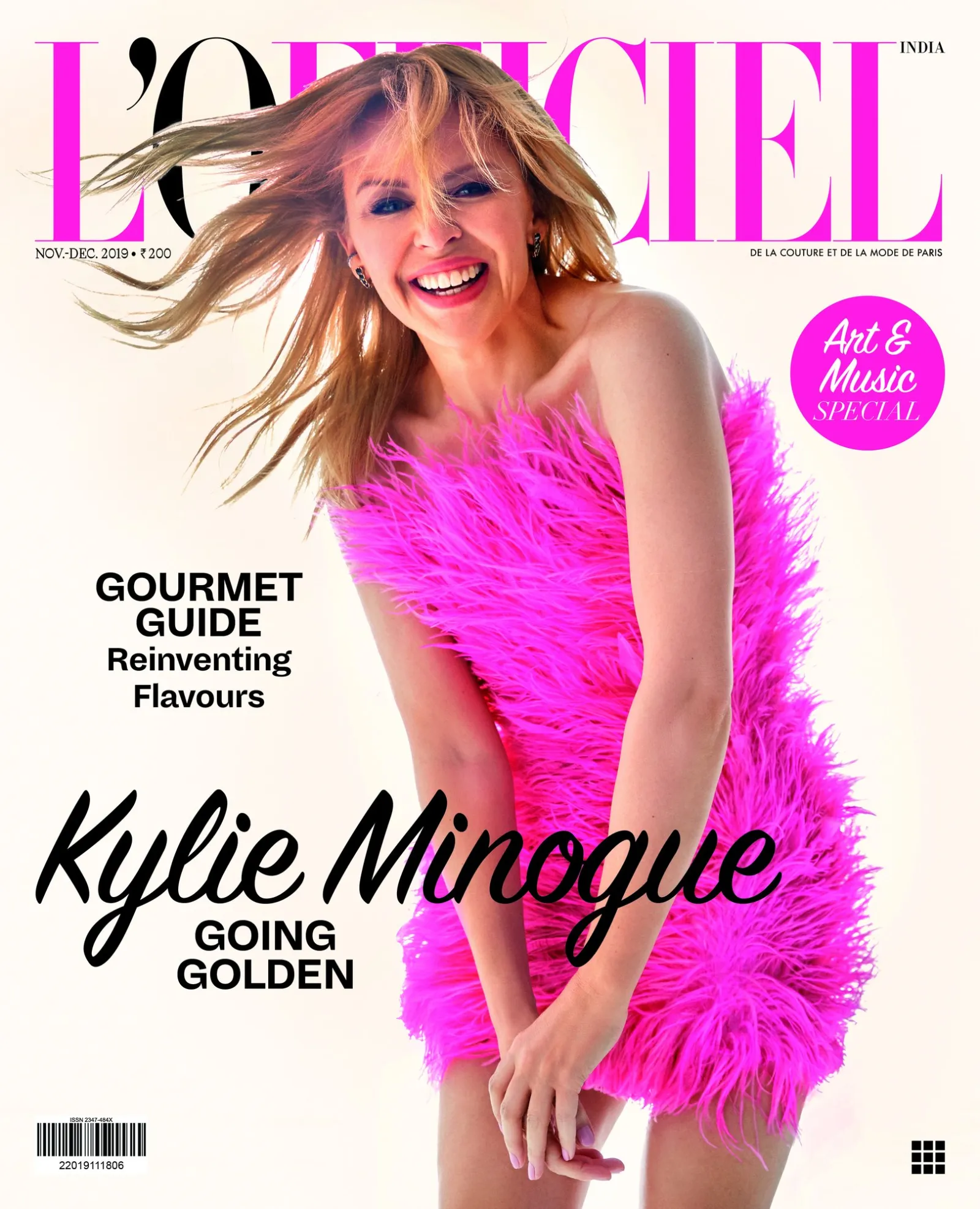
Photos By Richard Phibbs
Styling By Rosy Arkell-Palmer
 L’Officiel India DigitalRead L’Officiel India in the digital libraryEvery issue and every cover story, on TCG Media.Read now
His thirty-year career is studded with successes that have triggered entire generations. Kylie Minogue, chameleon-like, has changed her face and look countless times, always with the same contagious energy. The last album, released in late June, "Step Back in Time: The Definitive Collection" (BMG, Warner distribution) is a collection of his greatest hits: from "I Should Be So Lucky" of the eighties, to the duet "Where The Wild Roses Grow" with Nick Cave & The Bad Seeds and the inevitable "I Can't Get You Out Of My Head" from the Fever album, awarded with five platinum records.
GiambattistaValli: Let's start with a trivial question. What prompted you to become a singer?
Kylie Minogue: I didn't wake up one day thinking, "I want to be a singer". I think I gradually became aware of it as a child. My first memory related to music goes back to when I was in a rhythm course, at four years old. Then I took violin lessons, for a few years I played the piano and for a while also the flute at school. As for singing, I began to get excited at eight, nine years: my first memories are related to "Grease", to the Abbas, to the "Bad Girls" album by Donna Summer, which I sang from beginning to end (without understanding the meaning, of course!). So I started fantasizing about a future as a singer. I don't remember if it was a concrete aspiration, but it is certainly a dream that has accompanied me throughout my childhood. At the age of sixteen I started studying singing: I had acted in some TV series, so I had put aside some money, invested in lessons and recorded a demo (in my head I needed to get other actress parts). The rest is history: after the experience in the "Neighbors" series I launched a single.
GB: How does your creative path work?
KM: I don't have a copy-paste method to compose my songs. I didn't write the lyrics for the first records: Stocks, Aitken & Waterman dealt with them through PWR Records. But after a while a sense of frustration took over, because I wanted to have more say in the matter. So slowly I started writing them by myself and now it's one of my favorite aspects of my work. On the other hand, I stopped playing: despite having approached various instruments, I abandoned them all once I grew up (I still seem to hear my grandfather's voice: "You'll regret having stopped studying music" and that's exactly what happened!). Every song is different. It may happen that you arrive in the studio and my team has already started working on a track, then maybe I can think of a melody or a rhythm; at that point I tend to record when I first listen. Sometimes I have a feeling that I want to pull out, or a phrase that buzzes in my head, I've framed the rhythm, I just need someone to create music.
GB: You wrote an important page in the history of international pop. What do you feel when you listen to yourself on the radio?
KM: I still find it very exciting. The first time it happened in Australia, in 1987, with the song "Locomotion": when I heard it I literally went crazy. It must be understood that the context was different: today it is possible to listen to a song always and everywhere, but at the time the radio was the host and the stations were few. Everyone tried to get their song through; then I arrived, the soap opera girl who decides to throw herself by launching her first single. Even when a new single comes out, I always feel the same emotion on the first radio pass.
GB: How did you manage to reinvent yourself every time?
KM: I am curious by nature, an almost insatiable curiosity, and to make matters worse Gemini. In the past, such questions put me in trouble. If someone told me "You reinvented yourself again", I thought, "Okay, I understand that from the outside it looks like this, but if you spend days with yourself, the change is not as sudden as it appears on the outside". Therefore for me it is not a reinvention, but a constant evolution. I never take it for granted that people accept my changes: as I grow up, I mature, I experience new things; sometimes they are a resounding success, sometimes a total fiasco.
GB: In June you celebrated thirty years of career, celebrated in the collection "Step Back In Time: The Definitive Collection". What inspired you to reinvent yourself musically? And so how did your look change?
KM: I'll give you two examples: "Goldenˮ, the previous album for this greatest hits, had country influences, so we went in that direction even with the look. If instead we think of "Fever", released in 2001, the sound was more electronic and cold, and so was the look.
GB: What approach did you adopt over the years to create your outfits?
KM: I went by trial and error, learning from my mistakes. When I was little my grandmother taught me to sew, to design patterns, to make clothes by machine, to knit. It was she who took care of my stage clothes, just as she did for my mother, both as a girl and for her work as a dancer. I succeeded at the end of the eighties, a decade that is coming back into fashion, but for almost all the Nineties I tried to overcome that phase: big hair, giant earrings, huge shoulder pads. And in the midst of all this I was there, so small and petite! If there is a concept at the base of the album, the look is dictated by the music, otherwise I happen to oscillate between periods in which I am very keen on fashion and periods when I have no idea of the latest trends and I only think: " It has been working for years, why change? ". I think of a pretty dress, light as a feather, with a masculine cashmere cardigan on it: it's my nineties outfit, I'll never abandon it. Or just a pair of jeans with a shirt or a shirt. I have often thought that if I did not do this job I would probably not be so attached to essential items: I would be more fanciful in everyday life. Actually, I realized that the best part of a magnificent outfit lies in the emotion of wearing it with the right attitude: putting it on, showing it off and taking it off. What happens in between - whether it's a dinner, a social evening, an award ceremony - you could almost jump.
GB: In addition to making music, you actually create fashion. What are the outfits you are most attached to?
The Mr. Pearl corset commissioned by John Galliano could be a good starting point. Galliano had made both costumes for my “Showgirlˮ tour: they were real works of art, a nightmare to wear, but an incredible show for the public, as well as a true fashion statement from me. And speaking of style statements ... I hate to talk about it again, but that white one in the "Can't Get You Out Of My Head" video looked like a rag and instead ... Keeping the sense of modesty wearing it was a real own challenge! And then there are the golden hot pants that a friend of mine bought in a thrift store for 50 pence. If I had to mention one of my looks that had become iconic, it would be those hot pants: they stayed in my closet for months and when we were about to shoot the video they somehow popped up. In one of my most distressing nightmares (I have several) it happens that they call me on stage and I don't find the costumes. What happened to them? Why doesn't anyone listen to me? There is a close link between the performance and the clothes you wear on stage. Often, before a concert or an exhibition, I say to myself: "I can't do it with these shoes, but they are beautiful, so ...". It's a game of balance. We must find the compromise and ask ourselves: what should I give precedence to? How much can I dare? Can I really perform without anyone noticing the torture I am inflicting on myself? It's complicated!
GB: Your biggest regret and a dream for the future.
KM: My biggest regret... I wanted to keep a journal. Today we have so many memories thanks to mobile phones, but when I made my first international trip outside Australia, everything was different. I'd like to be able to re-read everything I've done and the moods I've experienced. For the future: my dream is simply to continue to live stimulating and rewarding moments for me, transmitting joy and emotions to the public at the same time.
Spotted a mistake, or your photo used without permission? Report a correction