Dries Van Noten: India Inspires Me




Spearheading the fashion revolution that sprouted with the discovery of Belgium’s talented “The Antwerp Six” in the 1980s, is designer Dries Van Noten. Reserved, articulate, tasteful and one of the pioneers of the idea of luxury infused with prêt-à-porter, his is a world of believable couture, a couture that is artisanal in its make, but as ready-to-wear as it gets. Here he talks culture, independency in the face of conglomerate regimen and his refusal to be caught in the dizzying pace of the unforgiving fashion industry.
The Antwerp Six: Iconoclasts of Belgian Fashion
 L’Officiel India DigitalRead L’Officiel India in the digital libraryEvery issue and every cover story, on TCG Media.Read now
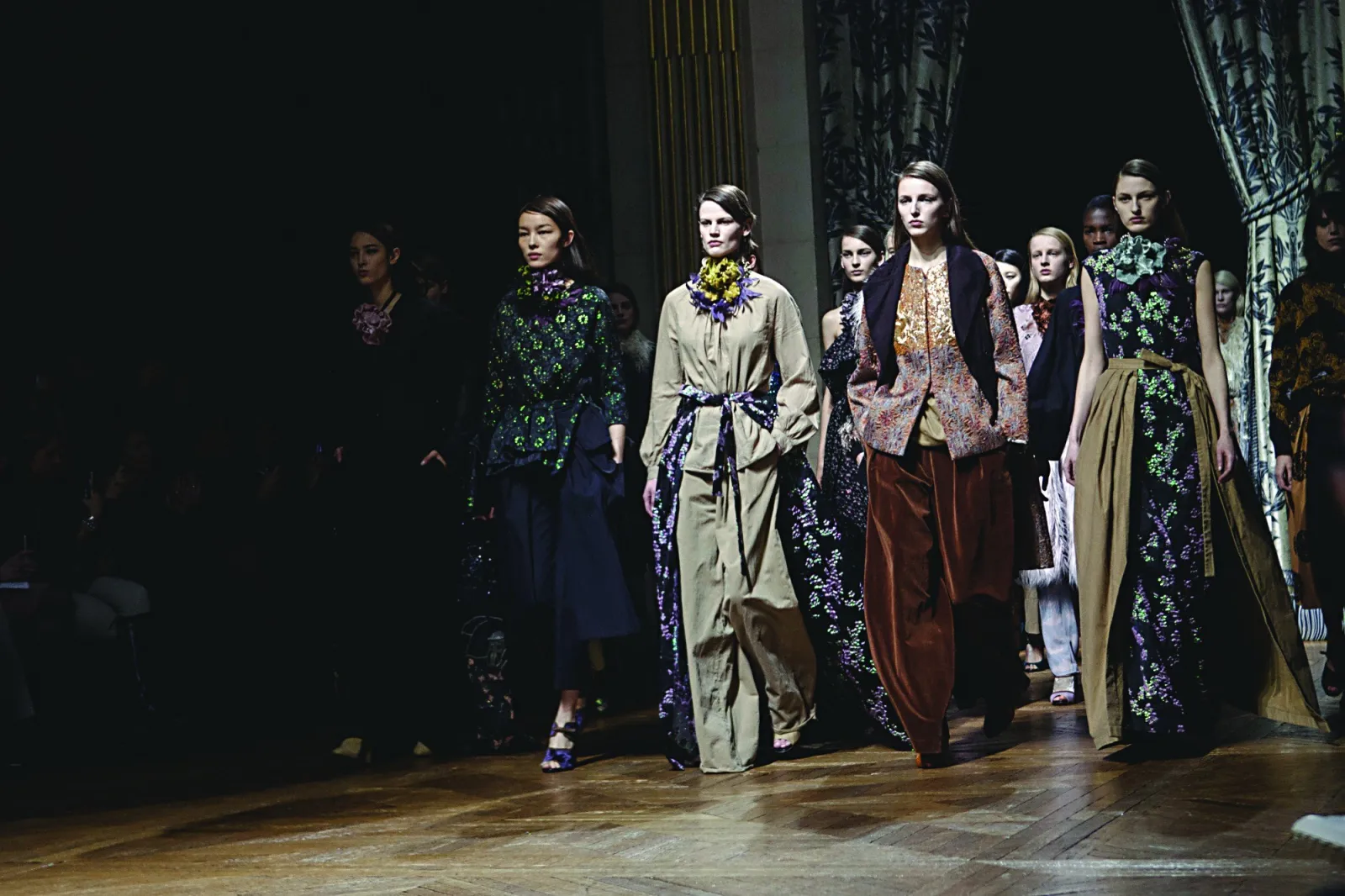
What starts out as a trot towards discovering novel ideas becomes a gallop when it comes to Belgium, such is the voracity of a rather small country by virtue of its size and its thirst for the ‘new’. The nation rose to the demands of culture and clothing in the 1980s, with Antwerp’s Royal College of Fine Arts alumni and the revolutionary “The Antwerp Six”, as anointed by the press. Ann Demeulemeester, Dirk Van Saene, Walter Van Beirendonck, Dirk Bikkembergs, Marina Yee, and Dries Van Noten rode in the back of a truck, their fashion collections and degrees from the Royal Academy in tow, towards an undeniable amount of spotlight from the industry at London’s British Designer Show at the turn of the 21st century. The last of the mentioned designers, an essayist in eclectic taste, is Dries Van Noten. Belgian design discretion is an exercise in egalitarianism, wherein the philosophical context of the term is explored in various ways by shows of excess in the richness of brocade, or the display of minimalism in the simplicity of khaki. The fashion industry has been inundated with questions surmounted by the origins of the next who’s who of design. Belgium seemed to have been nurturing the future crowning jewels of the fashion industry, plastered against a backdrop of the revolutionary sensibilities of Claude Montana and Yves Saint Laurent, and the reigning beacon of punk-rock chic with Vivienne Westwood in the ’70s. He said of “The Antwerp Six” and their education in Belgium, “Each of us has a very individualistic style of designing which separates one from the other.” And right he is. His footprint is that of gossamer weightlessness paired with the implicit royalty of brocade, gilding and sequins.
The Countdown to Success
Mr. Van Noten’s identity boasts of a sense of sobriety that comes with the groundedness of humble beginnings. Born to a family steeped in design, the artisanal facet of clothing came to him naturally. His upbringing in Antwerp has been the unofficial shrine at which he worships, with his multi-storeyed brick and mortar building, The Het Modepaleis, standing tall in the city, housing his independent eponymous label. He voices his unequivocal love for Antwerp, indicative of his hometown’s connectivity to European cities like Paris, Berlin and London, with “the proximity of the town (Antwerp) and ease of travel (to other European cities) fascinates me.” His shows depict a modicum of modesty wreathed with a kind of tangible grandeur, a thing of circumstance. The flamboyance in Van Noten’s work is like that of Baz Luhrmann’s cinematic landscape. It’s rap lyric, ballad, an exotic cuisine, an intense sport, all at once. The point that his collections drive home every single time is that of unabashed contrasts. His spring-summer ’15 and ’16 offerings have been set in a makeshift garden inspired by John Everett Millais’ painting ‘‘Ophelia’’ and a warehouse respectively. When questioned about the rustic settings that are juxtaposed with the regality of his choice in fabrics, he said that they added a “touch of believability” to his lines. “My collections are based on the idea of contrasts. That for me is very important,” he added. The Royal Academy has helped establish his solitary existence in the industry and he attaches a sentiment of civic sense and nostalgia with it wherein he returns back to the Academy to teach a newer bunch of designers, in an annual workshop.
Commerce versus Creativity
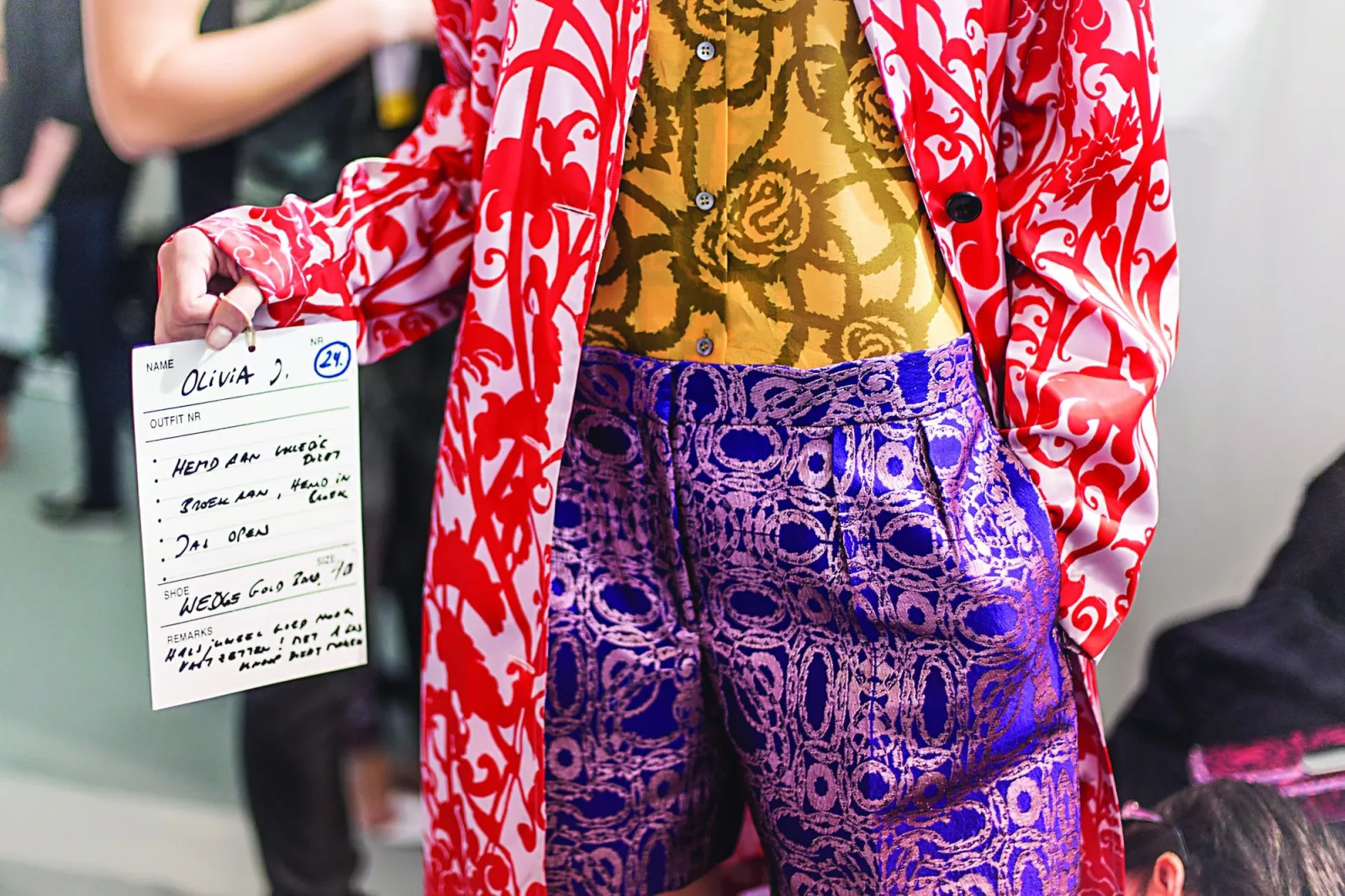
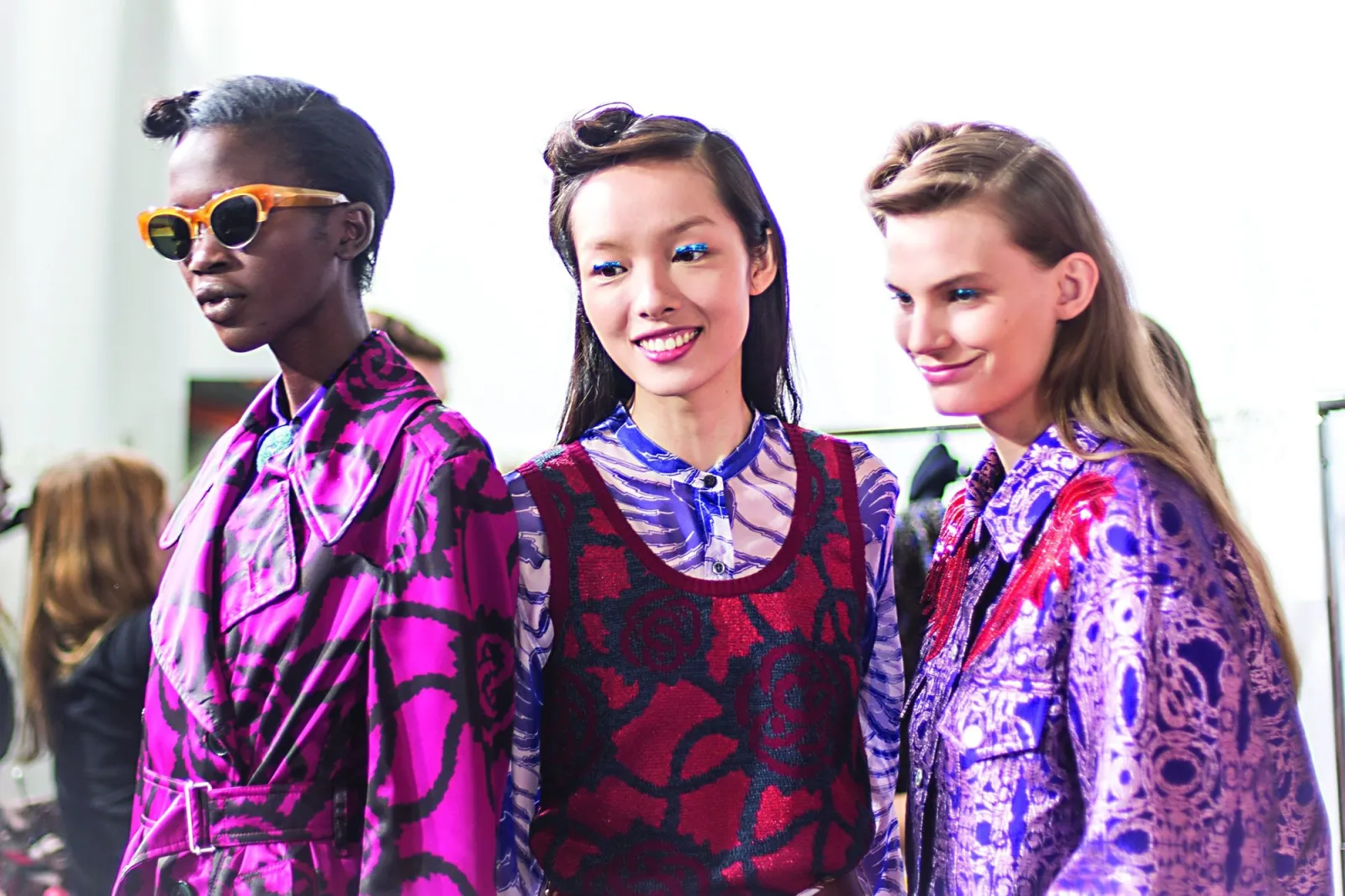
The fundamentally jarring tug of commerce at the delicate thread of creativity is what drives the proverbially ‘lucrative’ careers of the world. With fast-fashion having the larger populace of the world convinced that they need a grand total of 30 pairs of shoes for each day of the month, the cyclical gaze of consumerism is only getting harsher and more concentrated. Dries does, unlike his artistic director counterparts, a total of four collections per year (two for womenswear and two for menswear). His belief is directed towards fine-tuning his smaller show of output as a token of appreciation to creativity as opposed to submitting to the insatiable greed of the industry’s arduous demand-supply chain. “The fashion industry today is full of a lot of young designers, who are looking at the commercial side of fashion as opposed to doing it for the love of fashion,” he added. His words are worthy of their own plaque mounted in every design school the world over. When asked about the size of his team based out of Antwerp that helps realise his collections, he resorted to calling it a “medium (sized) team”. Citing them as creatives who “inspire me; who push me to do better”. His lexicon does not take into consideration global geographical confines, evident in his unperturbed usage of Indian brocade, Chinese silks and 1920s Parisian charm. “I think fashion is global,” he said. “So it’s not so much a question of whether it’s Chinese or Indian I love the lushness of the fabrics.” His ties with India, however, are pronounced in the embroideries that adorn his collections season after season. He said, “India inspires me a lot. I love the attitude of the people, the colours that they wear, their way of living.”
Word of Mouth
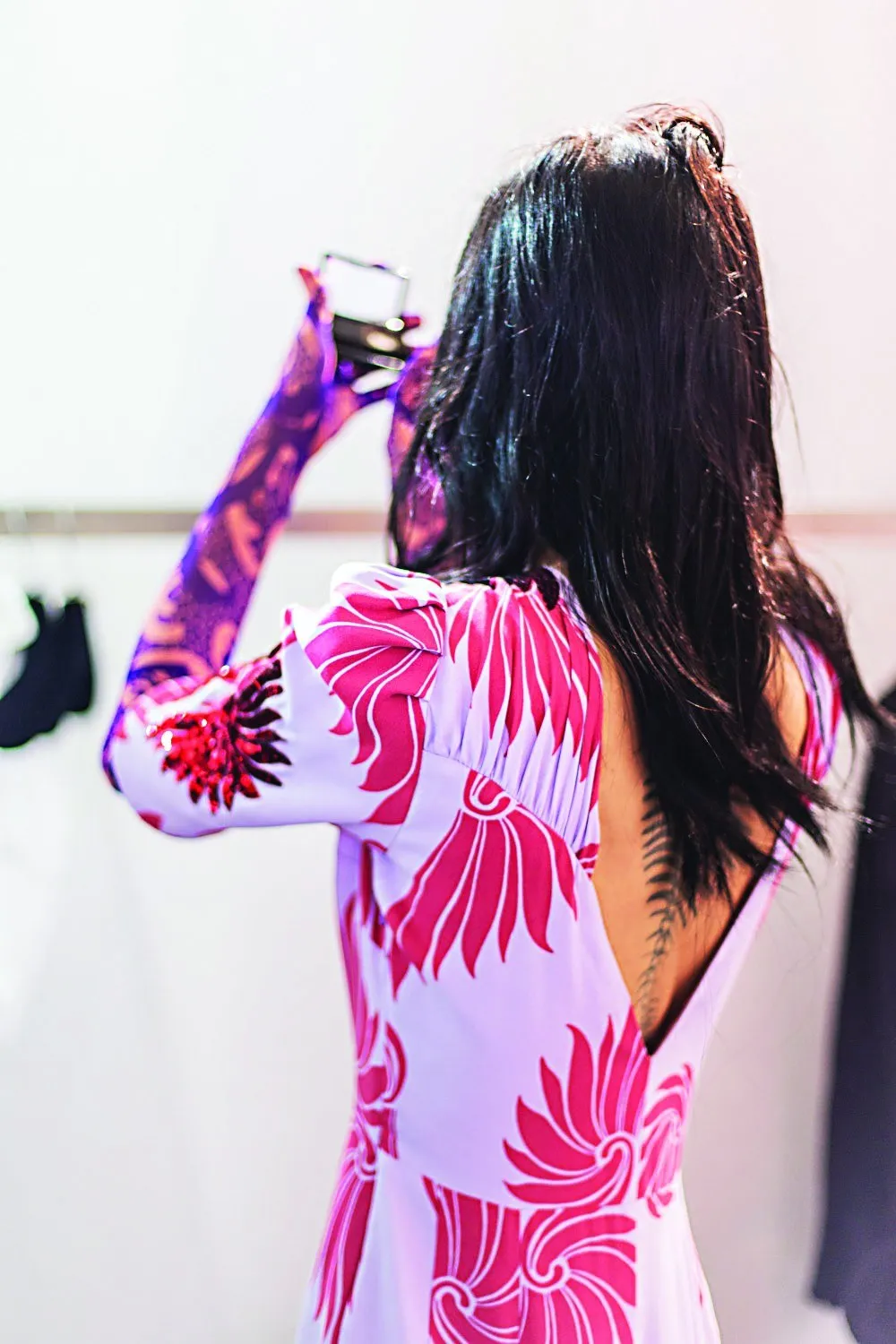
He said, “When I started out, I didn’t have the money to advertise, so I’ve maintained it that way ever since. Besides, with advertising you’d have to pick a man and woman who represent your collections. Is she tall, dark-skinned, blonde, fair-skinned? If you look at our runway shows, you will see that we use models of all ages and nationalities. So we are very global.” It is this dynamic that perhaps drives the sales of his resiliently independent company to a staggering double-digit, million-dollar turnover, every year. His decision to stay independent in the face of conglomerates like Kering and LVMH has been organic, a perpetuated nod towards taking things at his own pace, making his label stand alongside the few other independent luxury labels like Oscar de la Renta, Versace, Giorgio Armani and Dolce & Gabbana.
The Spectacle of Showmanship
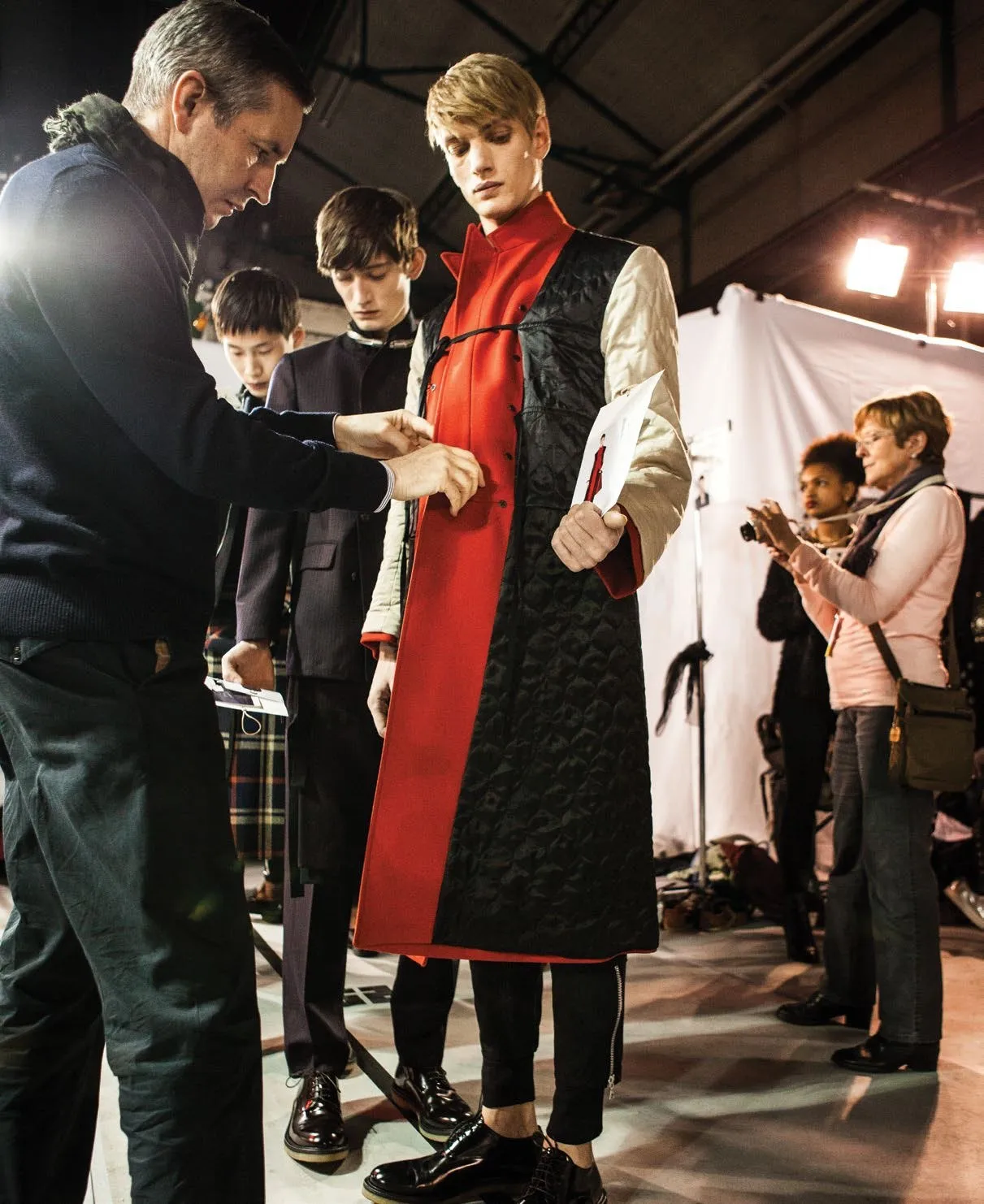
Mr. Van Noten has made the conscious decision of steering clear of the traditional meaning of couture, in favour of a kind of ready-to-wear that is every bit as tedious in the making and has a similar visual appeal as would a declared couture-clad runway. He said, “I like to be able to design clothes that are believable, like with prêt-à-porter.” The precision and adeptness with which he crafts his mix of quilted fabrics with the gilded ones, is humbling. He likes being a front-runner, carrying out the execution of the end product in favour of giving out orders. “Right from the colour of the yarn, to the selection of the sequins, I oversee everything,” he said. The runway is also an entity of circumstantial relevance to the Belgian designer, where the paraphernalia for the showing of his collections on which he labours for the larger chunk of his year, must be a thing of perfection. He said, “For me, it’s very important to get the art direction, choreography, casting, the lighting, and the soundtrack exactly how I want it to be perceived.”
He does so with his long-time collaborator and fellow Belgian show producer Etienne Russo of the Brussels-based production house Villa Eugénie. His shows are guided methodically by cultural, geo-political, artistic and periodic references that are reflected on the runway in his use of British photographer James Reeve’s work as digital prints on his spring-summer ’12 collection, or the furnishing of the runway in a carpeted daze, mirroring the forest floor in Ophelia in his spring-summer ’15 show, commissioned and made by Argentinian artist Alexandra Kehayoglou. His calculated words break into a soliloquy by his standards at the mention of things that inspire him. His recent visit to the Frieze Art Fair in London reminds him that it’s one of the best places for him to be inspired. He said, “I was just recently at the Frieze exhibition, and that’s always a great place for inspiration. There are six galleries. There are a lot of seasoned artists exhibiting there, but there are also a lot of young artists, who are always inspiring to watch.” Inspiration for his latest winter collection will be borrowed from a book that he is reading currently, the title of which he refused to disclose for the sake of the element of surprise on the runway. The languidness of Dries’s staple kicks paired with his blazers is a lesson in a reverential measure of yin and yang that he holds in high regard. His own effortless sense of style is a sanguine nod towards the power of luxurious ready-to-wear, in the face of couture on one hand and austerity chic on the other. In F. Scott Fitzgerald’s words, Van Noten’s world is down to the infinitesimal detail, a testimony to the “inexhaustible variety of life”.
From the February 2016 issue of L’Officiel India.
Spotted a mistake, or your photo used without permission? Report a correction