Dev r Nil: Dream Catchers
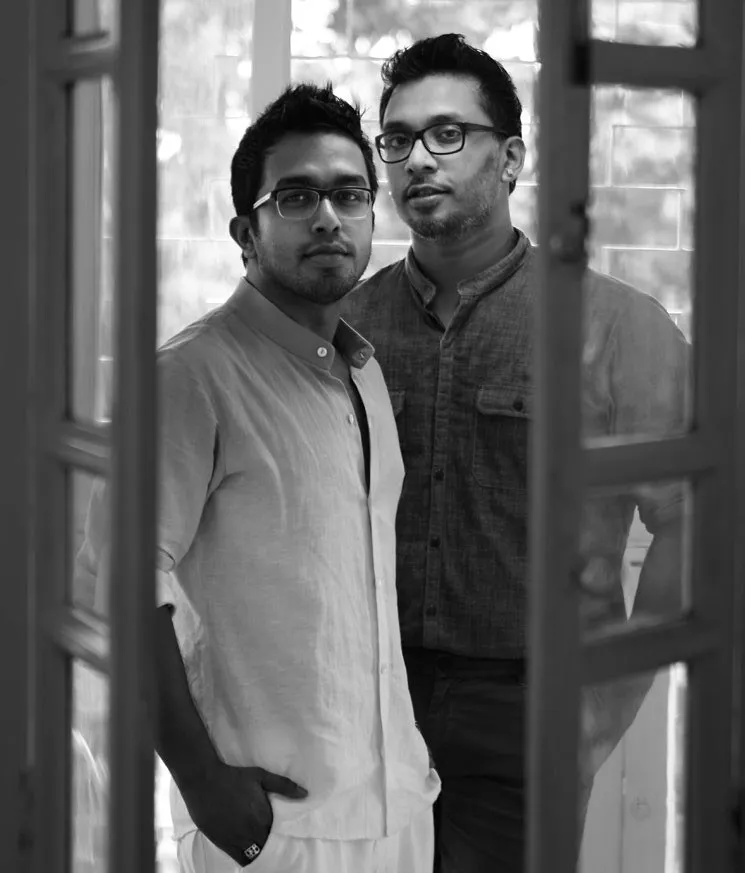



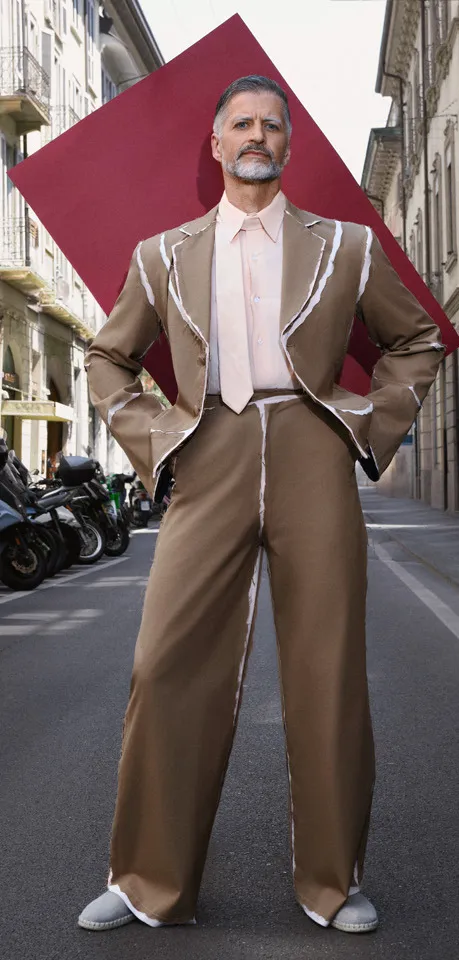
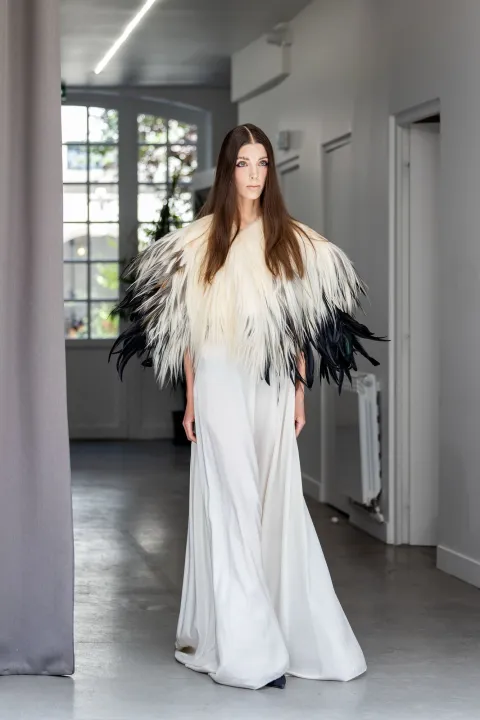
Simple yet robust, Kolkata’s Debarghya Bairagi and Navonil Das from Dev r Nil are offering clothing which may be Western in its interpretation, but remains Eastern in its appeal. The lesson learnt in this 11-year-long journey is that success is not instant; it is continuity that matters the most.
When you started in 2004, what was the ideology with which you began?
 L’Officiel India DigitalRead L’Officiel India in the digital libraryEvery issue and every cover story, on TCG Media.Read now
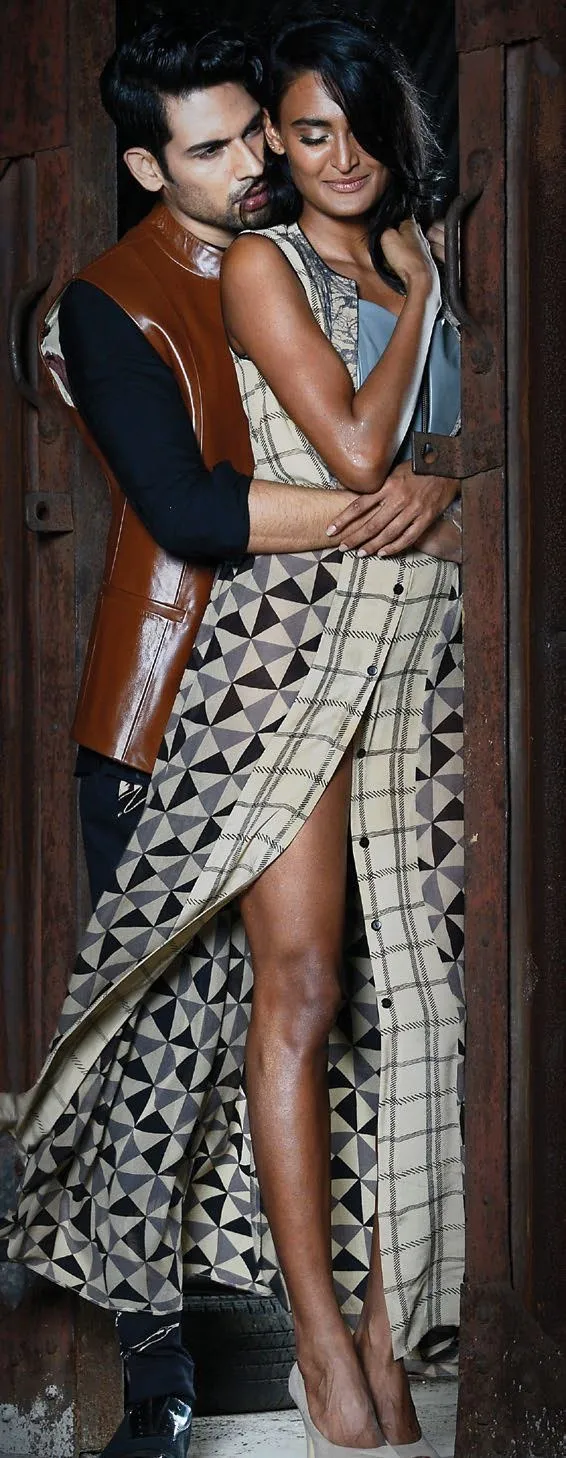
When we started, the market was full of people copying one of the strongest voices from the city, with Sabyasachi Mukherjee being primarily one of them. We realised it was an easy way out for most of them, but we put our heads together to enter and create a market, which was in its nascent stages in Kolkata then. We chose to design women’s Western wear, as it was a niche market. Actually, a lot of people laughed saying Kolkata (Calcutta then) was not the right place to start this line. It has been 11 years and things have changed dramatically. We concentrated on cuts, textiles, garment finishing and subtle texturing. Now that we look back, it seems to have worked for us as we stuck to it.
Kolkata has always been a centre for art and culture. How did the city influence your craft?
The pressure of the city’s history, art, craft and intellectual society commenting on your work, has always been there. The trick was not to get affected by them, but to thrive amongst these streams of contrasting opinions. We like the inherent contrasts of this city—on one side you see the serenity of the river with the bridges framing your view and on the other, you see this seemingly absurd, chaotic, dysfunctional city, with continuous protests, strikes and what may seem as lethargy to work. People of this city have fine-tuned the art of using the brain as a substitute for labour! We can claim a bit to be one of them. Thus influences of the city had to be dealt with factoring in a sense of restraint yet with an appeal to the larger audiences beyond the city limits. We had to find the balance between the old and the new to track a path for the future with our print and weave stories.
Can you explain the concept of ‘wardrobe from the East’?
We always get to hear this concept of ‘Western wear’. How about acknowledging that it is the East, which is continuously influencing the West. Our concept of ‘wardrobe from the East’ was based on a bizarre experience during one of the feedback sessions from a famous buyer from Browns at a fashion week. He said, ‘‘We really love your collection... love everything about it; but why don’t you see the collections of Lanvin, Balenciaga, Prada and adopt those silhouettes and put in your print and texture on them? We will buy you more easily!’’ We both were stunned and felt insulted; after all this effort to be original, here we were being asked to copy! We remember having a strongly worded argument with the buyer and immediately from then on, we stopped pursuing international buyers per se.
Our decision was that we will only design what we deem as good for the Indian market and if international buyers have to come and buy, then they will buy the stories, the way we like to tell them and we will not try to please them. It worked for us.
How did you both meet and become business partners?
The story of strange coincidences has been told so many times but in short we are not brothers, twins...(as we are frequently asked); neither are we childhood friends.
Nil came back from Australia after studying fashion along with a few years of work experience and immediately within a few days met Dev through a common friend (almost like matchmaking), who insisted that we should talk on the phone or meet. When we did catch up we got along really well. Within six months of meeting, we decided to launch our own label. It was a spontaneous decision, which we kind of regretted for the first few years as we had fights. But then, when we realised that we have to agree to disagree on decisions pertaining to designing, things fell in place. Frankly speaking, we both have opposite characteristics, but over the years it seems all these characteristics have actually got interchanged!
How much does a fashion school hone your natural talent? Both of you studied in NIFD and Australia, respectively?
Dev is from NIFD Kolkata and Nil is from CIT, Australia. Fashion schools help you understand the craft of making clothes in a much more detailed way. There is a science behind it, which can be acquired over the years, but when taught technically, it makes the flow of knowledge far easier. While Dev studied in India, soaking in the rich traditions of crafts, textiles and embroidery, Nil’s studies in Australia helped him understand fashion from the technical aspect, mainly patterns, finishing, grading, quality control and the most important, business planning. Thus, both of us brought in something of our own to make the brand work.
Your aesthetic has been crafts, and surface texturing. Can you tell us what remains at the core of your ensembles?
From the beginning, our efforts have been to explore as much of the art and craft traditions without getting bogged down by a signature look early in our career. Our idea was to have fun and with each collection we explored a new weave, a new embroidery or a new technique to print, or a new story to tell. Thus, over the years, with each collection we were able to surprise ourselves. Our core is to explore many avenues in fashion, to create simple and clever styles and to offer quality clothing.
We have learnt not to take ourselves too seriously. What we create does affect only a certain number of people and their livelihoods (nothing earth shattering, life changing as some people like to believe), but frankly in this capitalist society we are rather proud to be survivors in the long run, as we have seen too many ideas drowning in their own glory. We feel we are lucky that while we are happily sailing, we had loads of fun and adventures to share with our next generation.
Prints have a language of their own. What are the innovations in this genre that you have done?
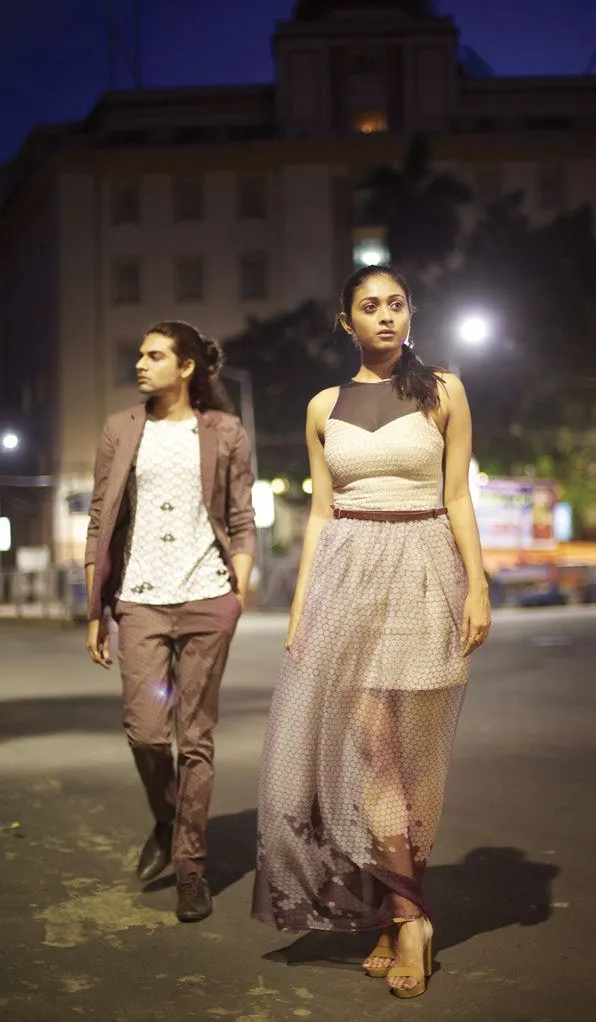
We first started experimenting with block printing, but realised it had its limitations and too many people were using this technique. Eventually we landed up working with batik for the longest time. We gave batik a breath of fresh air with contemporary, quirky interpretations for fashion. We loved it for its imperfections. But as they say, too many imperfections and all good things have to come to an end. We couldn’t continue using batik for long as our suppliers were failing us on deliveries as the demand for our products increased compared to the slow and tedious production rate. Plus, there were too many unknown factors determining the print outcome in the case of batik, water supply, workforce and weather. We moved on to find screen printing more reliable and stable with the increase in the volume of the business. We now have fine-tuned the art of using one single design with multiple screens and using multiple layers together, or singly. This optimises the investments to create a set of design, and maximises its usage. Still we have not fallen prey to digital printing, as we don’t find it versatile enough for one single design to be divided into multiple layers.
Primarily, we use a lot of everyday objects and inspirations in our story-telling process thus making people think of taking a second glance at these objects, making them aware about the value of art in our daily lives.
You are celebrating the 11th year of existence as a design house. What are the valuable lessons you have learnt, in this journey?
Yes, we have slowly become a design house over the last few years as we cater to a whole gamut of categories for both men and women’s wear, but frankly the journey has not been easy. From solving interpersonal egos (when two creative minds are working together) to managing finances, human resources or creating new collections, every step has been a slow learning and re-learning process. We can’t complain, as it has kept us on our toes ever since. Most importantly, we learnt that success is not instant. Rather it’s on the basis of continuing with an idea long enough for it to stay and become successful. It is all about consistency. Fashion as a creative pursuit seems glamorous and intoxicating, but in reality we forget it’s about six months of absolute hard work, each season followed by just 15 minutes of glory!
What are your future plans?
Our online website is ready and our App is getting almost completed for the launch. It will have simple ways to interact with us, view or shop with us. It’s one of those big technological advances, we are making for our design house.
You also wanted to adopt a girl. That is a brave thought.
Acceptance comes in unique forms. While Nil’s family was completely aware of his sexuality early in their career, my family had a tough time accepting it. Recently, during a family gathering Dev’s mom quietly asked me, “Why don’t you both adopt a baby girl from a single surrogate mother since you guys are so fond of kids?” She really meant it. Dev’s reply when he heard about the incident from me was “are you grown up enough to adopt?” I was more like, “let’s give ourselves till 40. Then we surely can adopt, and I promise to grow up until then.”
From the November 2015 issue of L’Officiel India.
Spotted a mistake, or your photo used without permission? Report a correction