Food for Thought




Four hotels have turned culinary offerings on its head by including cooking classes as part of their immersive experiences, which also happens to be in sync with the local culture.
Four Seasons Resort Chiang Mai, Thailand
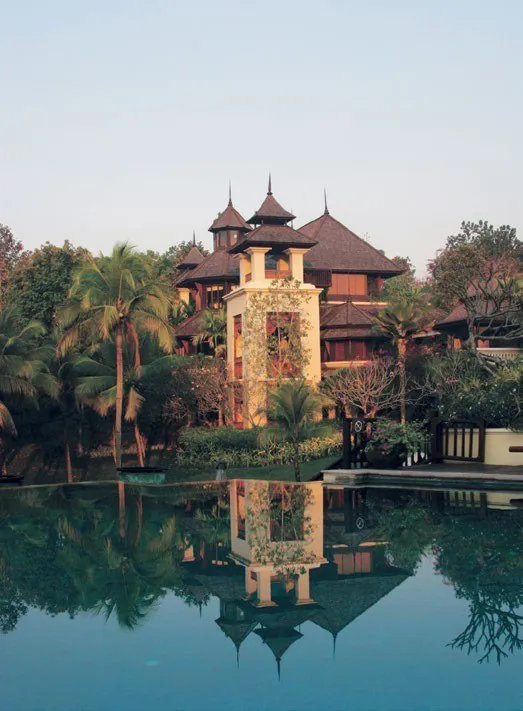
A haven of peace situated at the heart of the paddy fields and the misty mountains of the Mae Rim valley, in the north of Thailand far from the hustle and bustle of Full Moon parties. Sleeping arrangements have been made on individual pavilions constructed in the characteristic architecture of the region, a harmonious fusion of contemporary design and ancestral Siamese works of art.
 L’Officiel India DigitalRead L’Officiel India in the digital libraryEvery issue and every cover story, on TCG Media.Read now
Aimed at an exploration of the rich cultural heritage of the region, this resort offers authentic experiences pivoting on the concept of sharing. It includes a discussion with a Tibetan monk, bathing with water buffalos in the company of farmers, unravelling the secret beauty rituals of the women of Thailand or sit down with reiki healers who align your chakras.
The classes are given at the Rim Tai Kitchen, situated in the midst of a densely vegetated tropical jungle, overflowing with banyan trees, a sacred tree brought from India. Waking up at the crack of dawn, the budding chefs make their way to the local markets accompanied by the chef, who would not miss taking the guests to uncover all sorts of spices and learn about the lesser known aspects of Thai cuisine. Once they are back at the hotel, where the magic is to happen, after neatly fastening their aprons it is time to put together one’s own dishes with help from an assistant.
Within this temple of Thai taste, decorated like a traditional market place, there are fully equipped workstations, where one learns how to sift through and work with the best of the organic produce grown on the property making curries, woks, infusions, and smoothies with local fruits and herbs. The best part of this experience is eating together as a family. During night, it turns into an interactive culinary space, where each person is encouraged to converse with chefs of the resort, to learn tips and secrets of the art that make the difference to the end product. All of that while making one’s way through the many different tables with the best of Thai cuisine, papaya salad to mince pork with basil from the garden, cooked in a wok, not to mention the desserts.
Borgo Santo Pietro, Tuscany, Italy
Snuggled in a Tuscan locale, this retreat is spread in an 80 hectare biological farm, a stone’s throw from Siena. Entering through a passage of the most glorious cypresses, the visitors are invited to spend the golden hour in the sublime gardens of the property, through secret passages and alluring caves. Situated in a villa dating back to the 13th century, the rooms and suites are uniquely decorated with fresco murals handpainted and have marble fireplace, crystal chandeliers, canopy beds and velvet tapestry. The culinary school experience at the Borgo Santo Pietro is a proof of its splendidly luxurious nature: the Italians most certainly don’t take gastronomy lightly. Bordering on being the national religion, the culinary arts make up one of the founding pillars of this lively place where the philosophy of the farm to table has been around the beginning. Here one gets to explore the rich variety of flavours, textures, fragrances and foods, titillating each of our senses.
Surrounded by organic vegetable gardens, the academy emphasises on the entire process of nutrition, educating its students from all walks of life about agricultural techniques used for harvesting, planting, gathering along with effective methods required for the preservation of seasonal ingredients.
It offers an opportunity to learn the secrets of making an ancestral Tuscan comfort food, the sort that grandmothers pass down through the generations. Here it is through Olga, who generously shares her grandmother’s recipes. You can learn how to work with truffle in all its forms, to make a pâté from the liver of a chicken, her pappa al Pomodoro (a thick Tuscan bread soup with fresh tomatoes), or the mouthwatering peppery beef stew typically from the valley of Chianti.
The Saint-James Bordeaux, Bouliac, France
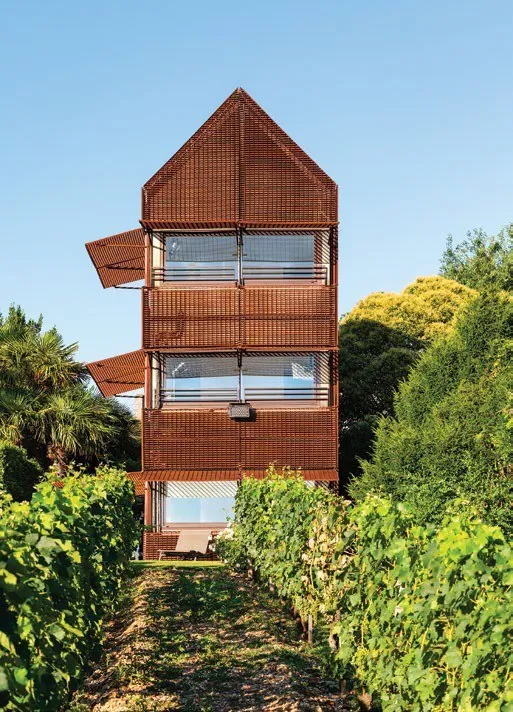
Situated in Bouliac, also known as the balcony of Bordeaux, thanks to its panoramic views of the region, it is a majestic longhouse from the 18th century. It was transformed and expanded by star architect Jean Nouvel, categorised as a heritage site of the 20th century by the Ministry of Culture, that generously opens up onto the surrounding landscape letting one catch a glimpse of the Landes de Gascogne Regional Natural Park.
Nestled in the heart of wine country, this establishment of four buildings, inspired by old tobacco dryers, offers spacious suites with windowed glass walls and mix and match furniture, which includes creations by Jean Nouvel and objects belonging to collections by Verner Panton or Charles Eames. A hot spot for oenotourism, Saint James is also well known for its restaurant where genius chef, Nicolas Magie calls the shots. This artist of the oven, whose past includes the Crillon, brilliantly reinterprets culinary classics of the land, from black truffles of Périgord to foie gras and its carpaccio with grilled figs and boletus mushrooms, including a spicy caramelised suckling pig with aged parmesan and an exquisite blue lobster cooked as one would fish and chips.
Named Côté Cours, the culinary school, run by the sous chef of Nicolas Magie, Célia Girard, is an institution. Situated on a veranda bathing in accentuated light around two large pristine islands, it offers to all gastronomes the opportunity to discover the secret methods used by chefs behind the scenes. Open to all, beginners from the ages of 7 to 77, this taste school offers a large variety of courses, the perfect excuses to buy that ticket and go meet the specialists of France, of the Navarre region and of the Savoie and of Brittany along with those from Corsica and the Franche Comté. It is here that succulent dishes from the restaurant menu are prepared during the Comme au Saint-James session, followed by classes aimed at understanding the multiple facets of contemporary cuisine during themed workshops. Like those on confectionaries (snacking par excellence). What the key steps required to be learnt in preparing game, shellfish, vegetables and exotic fruits? And even more crucial questions answered to the fullest by those trained in and having perfected the art of French cuisine.
Belmond Las Casitas, Yanque, Peru
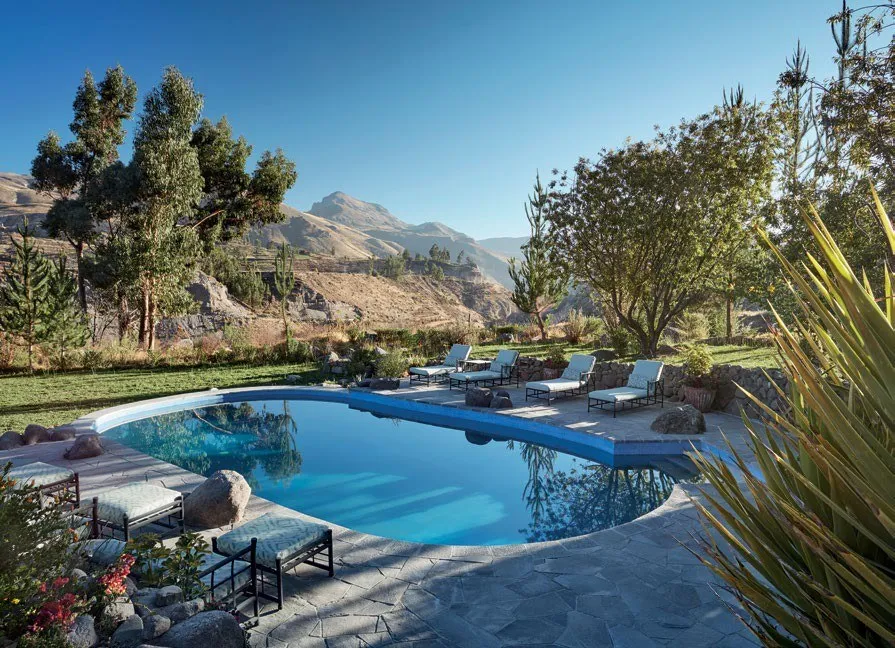
Hidden away in the heart of the Andes in the majestic Colca Canyon in the south of Peru, this hotel has only 20 villas — the original casitas or little villa — equipped with private pools. Spread over 11 hectares of exotic vegetation, it is where one is initiated into Peruvian culture, the first aspect absolute respect for the flora and fauna that surrounds you. The hotel has taken an eco-friendly and environmentally responsible theme, constantly striving to minimise its impact on nature. With a vegetable garden and an integrated farm, it offers organic meals made exclusively from fresh ingredients, inviting guests to participate in sessions of fishing or in feeding alpaca babies, including two treks and one trip on horseback to explore the region. A head-first-dive taking one to the core of south American culture, cooking classes given on the premises, in the middle of all that richness and diversity, in food, in plant and animal life, in everything mastering local culinary arts. Adapted to the season and with respect to what is growing when in the gardens. The participants are invited to join the chef of the inhouse restaurant named Curiña, a passionate homage to the city of Arequipa and its thousand flavours. What, you ask, is on the programme for this masterclass in the open-air cradled in the Andes?
The preparation of ceviche and other delicately marinated meats, with Pisco seasonings and other exotic fruits with an acidic flavour. It is also the perfect place for beginners to learn about the virtues of superfoods, which have only recently become a rage in Europe, but have been an integral part of Peruvian culinary heritage. Among them are the maca root and also quinoa. The chefs divulge their best-kept secrets on how to prepare a perfect quinoto, the local equivalent to a transalpine risotto with a base of quinoa and yellow Peruvian chilli, or for an Aji de Gallina, a Peruvian chicken dish with slices of chicken served with rice and cheese sauce.
From the January 2019 issue of L’Officiel India.
Spotted a mistake, or your photo used without permission? Report a correction