Reclaim The Night
Clubbing has broken the shackles of conformity to evolve into a new culture where local musical heritage is being consumed and appreciated.





Paris, October 2017. A flock of ‘neoweirdoes’ are collecting at No. 114 on Rue Oberkampf. It is at the exact address that 824 hours has just opened, an ephemeral club, the latest conception of the Bonjour Bonsoir collective. Here, there is no authorised photography, but is a space of freedom, a neopunk establishment unaware of the extent of their programmed obsolescence.
A décor between the ’70s squat and neon retro, as if it had been plucked out of the imagination of Alexandro Michele, an exigent enterprise and, definitely, the bringer of smiles to the Parisians of the night. A godsend in a capital where evenings continue between elitist clubs and private after-parties. The end of hostilities?
 L’Officiel India DigitalRead L’Officiel India in the digital libraryEvery issue and every cover story, on TCG Media.Read now
Where does one go dancing after hours? More than half the clubs have shut shop since 2005 in London. In New York, it is the same fight, the same music, the same sort of people everywhere. But not here, no, you will not do that anymore. It is elsewhere that the night beckons you, between the beaches of Mexico and the underground of Kiev, the cabanas of Durban and the lost and forgotten hip hop festivals in the middle of China.
The underground scene has morphed, breaking the shackles of conformity. The future of clubbing is here.
Germany: New sound of music
an anti-tourist countryside having taken over Berlin for a few years now and institutions such as the Berghain battling to maintain an air of exclusivity, we now see a wave of more intimate clubs emerging, where the local or transnational artistic communities find each other at evenings centred around the music than the party itself.
We set out for Ohm and Der Monarch to discover collectives such as artsy and odd Creamcake, aiming to promote young artists spotted on social media, the heads over at Trade bring DJs with an avant-garde sound or gigs with the people at Berries, the ambassadors of hip hop, new school and urban rhythm, invested in what they do and feminists to boot. If for someone, activity and energy of Berlin is a bit over the top, they head to calmer places such as Düsseldorf, where the Salon des Amateurs or, more recently the Golzheim is home to the lovers of deep house and trance.
Nowadays the desire for more intimate settings has taken over Scandinavian countries as well. In Copenhagen there is Mayhem, the entrance to which is almost impossible to find, you cannot just chance upon it. It is known for inviting experimental artists, live performers and DJs in a constant search for new sensory experiences. Collectives such as Klub Ana and Rare Nights transform the quasi-squat Stengade into a place of convergence for all the cool young people of the city.
In Stockholm, we visited the Hosoi, a club hidden away at the At Six Hotel. Here, we found a variety of people rubbing shoulders, even as young DJs and record producers are on the rounds to perform and listen.
The New East: Rave revolution
Now that Berlin no longer turns to savage parties and techno music, it is more to the east that one needs to migrate, to the post-soviet nations, where the advent and subsequent popularity of raves seems to symbolise the end of decades of oppression.
In Tbilisi, Georgia, it is on the terraces of the national football stadium, Dinamo Arena that we found the entrance to Bassiani, followed the corridors of reinforced concrete, where the imposing beats resonate from performances of internationals DJs. The dance floor of this club was once a functional swimming pool. The space does, till noon, host a variety of human wildlife from across the world.
In Kiev, it all happens nowhere, but the CXEMA — a rising symbol of the creative revolution that followed the political events of 2014 — where we find intense raves in abandoned buildings surrounded by the local youth dressed in vintage sportswear. Here, just like at Closer, another temple known for its non-stop events that start out Friday evening and end Monday morning, people move to a more experimental techno brought by DJs such as Lollibou, artists such as Casablanca 913 and labels like Systema, a collective based in Odessa, just as well known for their ambient parties as they are for their post-gothic image.
Latin America: Clandestine nights
If the tourist spots of Mexico have been transformed to cater to spring breakers, Mexico City has seen, in the last few years, the emergence of an all new underground scene. At the head of that movement is the NAAFI collective, known for its artists and DJs that have electro beats mixed with influences from across the board, grooving to Reggae ton passing through tribal beats and Latino rhythms. These parties are organised on the beaches sheltered from the hordes of tourists in cultural centres, the evenings take place in abandoned buildings or clubs such as the recently opened Yu Yu, their events are an expression of the youth of a country that is in a neo-libertarian state, with alternative performers from New York, London and South Africa, setting up a sense of belonging with the Latin-American community and the global clubbing culture.
A more delicate harmony exists in cities like São Paulo in Brazil, where recent gentrification has allowed authorities to favour large promoters and establishments with multiple floors and stages, in the face of clubs willing to spend more money, the smaller and older establishments cannot keep up. And if we could still count on places like the Casa da Luz, an 19th century villa very well known for its hip-hop andelectro nights, today it is emerging collectives that we need to look at to find the true mood of the city, between political engagements, young talent and the LGBT community. And then the feminists of Mamba Negra, Metanol FM or Vampire Haus, with their techno events, which while abiding within the constraints of the law, put up updates for their evenings.
Africa: Electro Shrine
Privileged by occidental clubbers for the Afrika Burn festival, organised every year since 2007 for the troops of the now gentrified Burning Man, South African does, most certainly, welcome the most vibrant electro scene in its continent. An evening at Fiction or The Waiting Room, in the Cape, to discover local afro-house and afro-tech DJs. We also went to Durban, a coastal city and home to the gqom style of house music. The movement began in 2013 in which the sound was raw and brutal, rhythmic and at times tribal. The sound is so popular now that it has even been exported to the best recording studios and clubs in Europe.
A must-visit for all who have been forewarned, taxis blasting gqom tunes with a heavy base as they pick you up and drop you off to the clubs on South Beach for a mix by Rudeboyz (if they are not touring the US). Along the same pumping vein are the cities of East Africa, like Kampala in Uganda, where the label Nyege Nyege is established, a house known for producing the best pan-African techno artists, all born from very local movements: Balani Show rhythms from Mali, the Hipco rap music scene from Liberia or the modern day electrochaabi from Egypt are all stirring things up. There are also others from Nairobi and Kenya, where only recently the Nu Nairobi hip hop movement took its first steps, created by a young collective named EA Wave. Reuniting visual artists, producers and DJs, this famous crew with a Kenyan heritage mixes an ultracontemporary sportswear style of music with bits that are more difficult to decode but in their flow, find themselves somewhere between Tyler, The Creator, Frank Ocean and Rejjie Snow.
Officiating along with another collective named Cosmic Homies O.N.E., they are setting up for a new movement that we must watch closely and experience at the Alchemist, Nairobi’s best club.
China: Advent of Hip Hop
By the end of January 2018, the Chinese government banned hip hop from every establishments as part of a campaign with the pretext of saving and valorising a more sane and noble culture. Another spoke in the wheel for the young local scene which had only just started to dominate the megalopolis where clubs flourished amid the thousands of expats that came through, places such as Diva in Shanghai or Babyface in Pekin. And even if some of the underground electro clubs like the recently opened All Club in Shanghai is worth spending an evening at, it is quite obvious though that hip hop is what the local ‘cool kids’ are into.
At Arkham Shanghai that regularly welcomes international sensations such as A$AP Mob or Indonesian artist Rich Brian. To follow closely are Come Correct Crew and 1Ster collective, mixing rappers off of Soundcloud and new Chinese discoveries such as singer R&B ChaCha. But it is definitely at Chengdu, a city with 14-odd million inhabitants, where the hip hop scene is thriving.
Electronically tuned voices, dreadlocks and a ’90s aesthetic, groups that are now becoming popular across the nation, are creating an echo of neotrap rappers, who came from the United States such as Lil Pump and Lil Uzi Vert. Among them are also the Higher Brothers, who mix aesthetic hip hop with references of Chinese cultural heritage in clips of an expecting self deprecative style. The true hip hop heads will invariably check out the movements in cities such as Sichuan to go dancing at the Nasa and attend the mini festivals that take place several times a year bringing together musical performances and artistic installations competitions. Till the next lock down by the government?
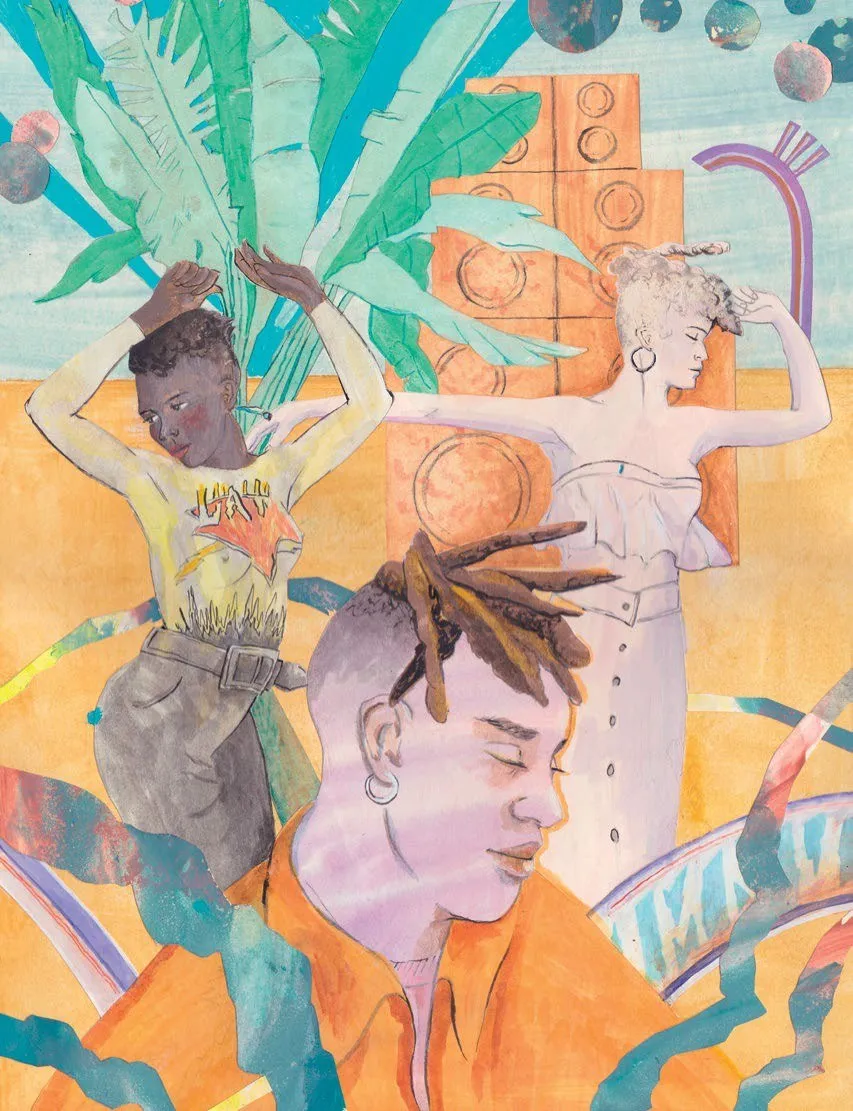
Illustrations: Laure Wauters.
From the March 2018 issue of L’Officiel India.
Spotted a mistake, or your photo used without permission? Report a correction