Classic Notes, Timeless Twists




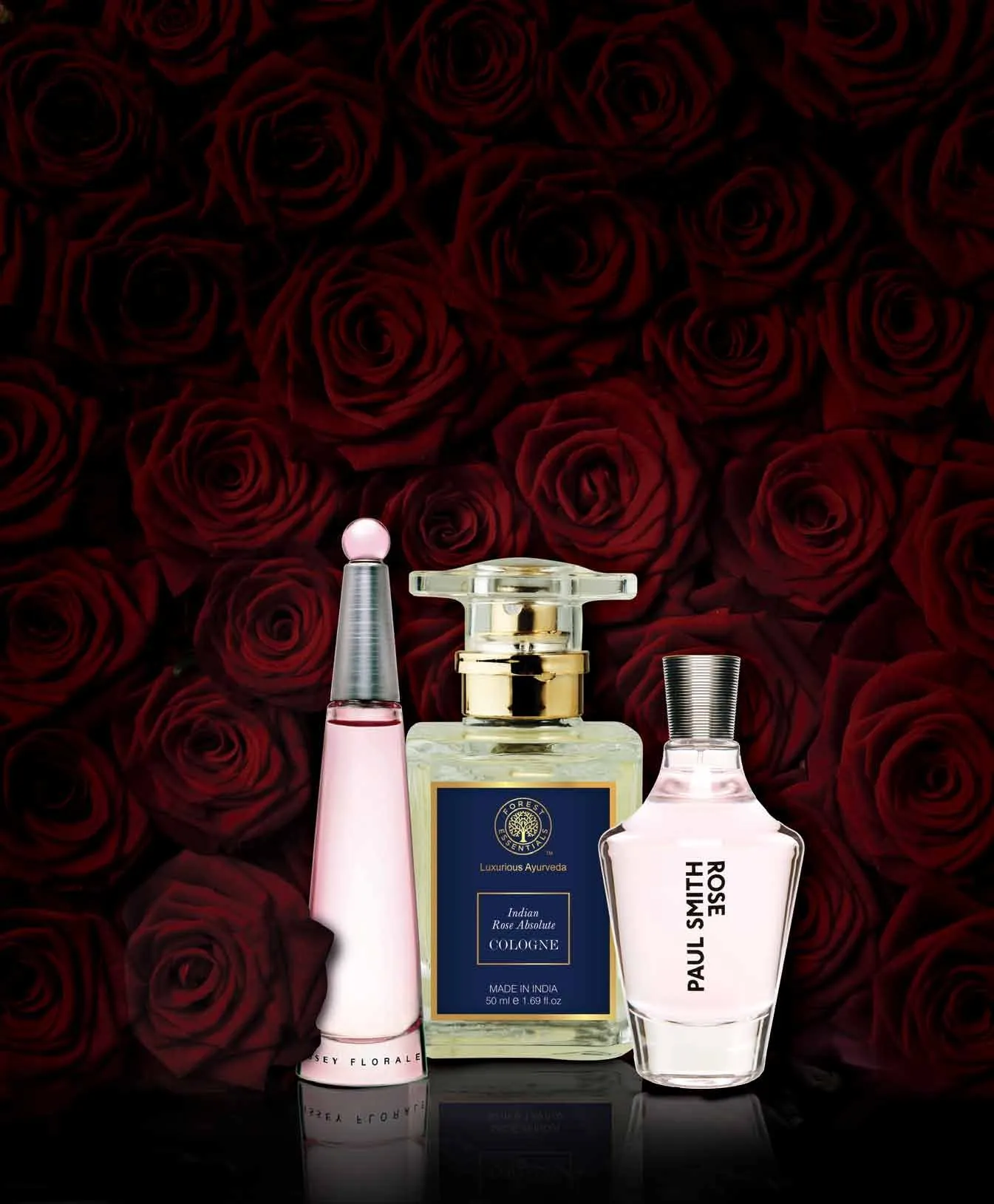
Rooting for rose When people go to perfume counters with the notion that they don’t like rose in their scents, they are mostly thinking of their grandma’s cloying rose attar. In the literary world, a rose by any name would smell as sweet, but in the olfactory world, noses have been remixing this regal ingredient with interesting paramours to get stunning fragrances that are not always sweet. Rose oil was first made in 10th-century Persia, specifically for perfumery purposes. This irresistible scent of romance maintains its royal position as the queen of the perfumery world. Modern rose fragrances are crisper, fresher and lighter. Acquaint rose with citrus and green tea for freshness, get her to mingle with jasmine, gardenia or orange blossom for a sensual, seductive potion or let her flirt with spices for an intoxicating scent.
Issey Miyake’s L’Eau d’Issey Florale is a fresher interpretation of the iconic original L’Eau d’Issey, capturing the transparent freshness of a budding rose with ginger lily and luminous orange blossom.
 L’Officiel India DigitalRead L’Officiel India in the digital libraryEvery issue and every cover story, on TCG Media.Read now
Forest Essentials Indian Rose Absolute cologne features intoxicatingly rich, full-bodied roses from Kanauj in Uttar Pradesh, India, famed for its rose attar.
Paul Smith Rose is fresh and airy, as Turkish rose oil blends with green tea, magnolia flowers and a woody accord, giving it an addictive quality without any overwhelming sweetness.
Lusting for Leather One of the earliest perfumery notes, leather’s olfactory genesis lies in the art of glove-making. Scented gloves, which were perfumed with oils, musk, herbs and civet, to mask the unpleasant odour of animal skin, became popular in the mid- 16th century amongst the aristocracy. It is said that King George III was so fond of the smell of scented gloves that he asked Creed, a royal glove maker, to make a body fragrance, which was christened the Royal English Leather. Since then the scent of leather has evoked regality, sophistication, sensuality and power. The essence used in perfumery is not of genuine leather but an artificial scent, made of honey, tobacco, synthetics, cassie flower and bark, cade oil, myrtle and wood tars to create the smell of scented leather. Though commonly used in masculine fragrances, its warm, rich and smoky character is ideal for unisex fragrances. Leather brands (Hermès, Loewe, Ferragamo, and Prada) especially use this note to link their products to their perfumes.
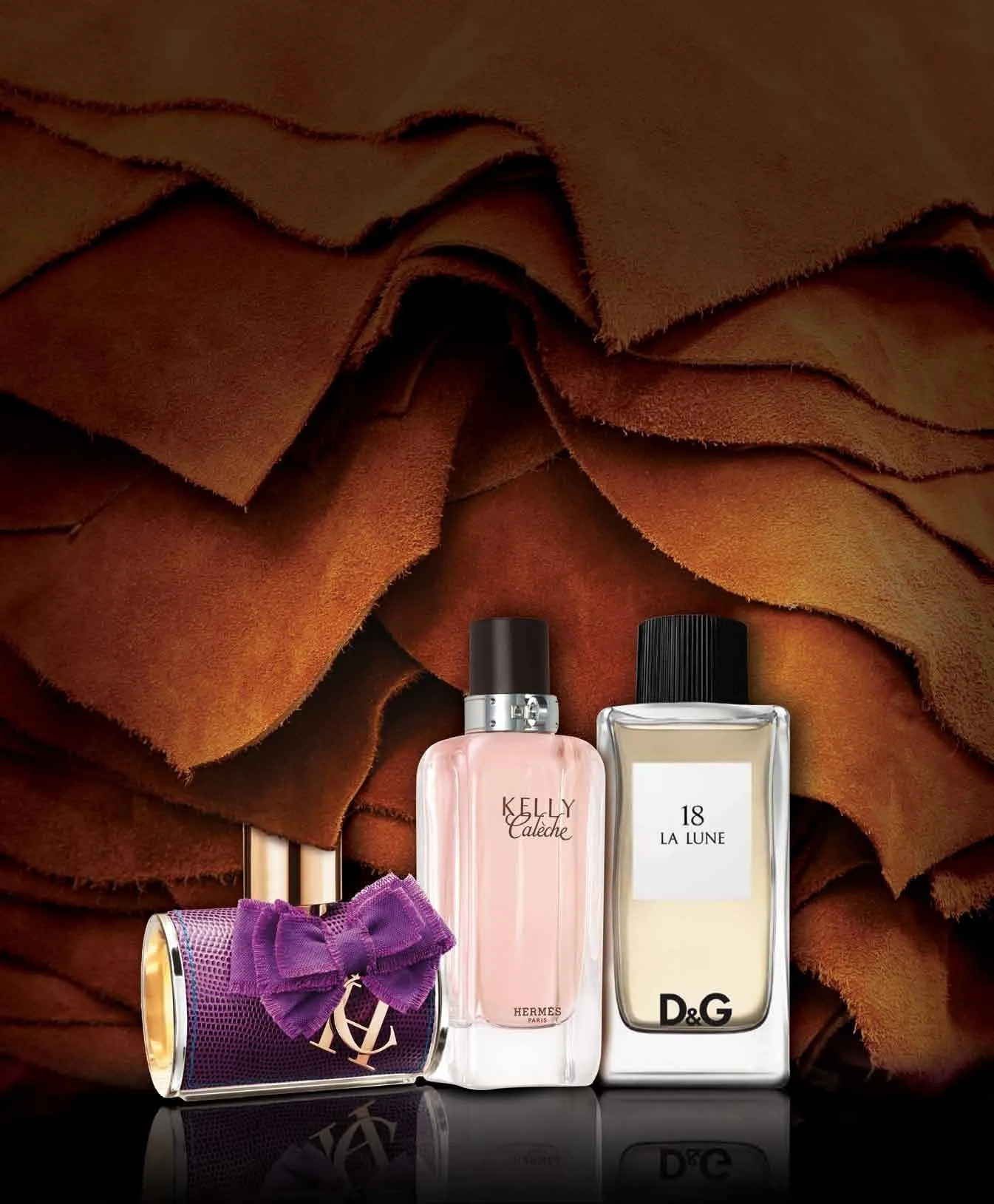
CH Sublime has strong leather flirting with bergamot and passion flower, vintage accords of patchouli blended with modern notes of watery rose and exotic orchid.
Hermès Kelly Caleche smells like a floral scented handkerchief in a Kelly handbag. Powdery face of iris, with gourmand, yellow mimosa and rose... the signature scent of the original Caleche gets a leather addition. La Lune 18 by D&G stars leather in the base rounded by sandalwood, musk and orris root doesn’t take away the delicacy of the lily and tuberose notes in the heart.
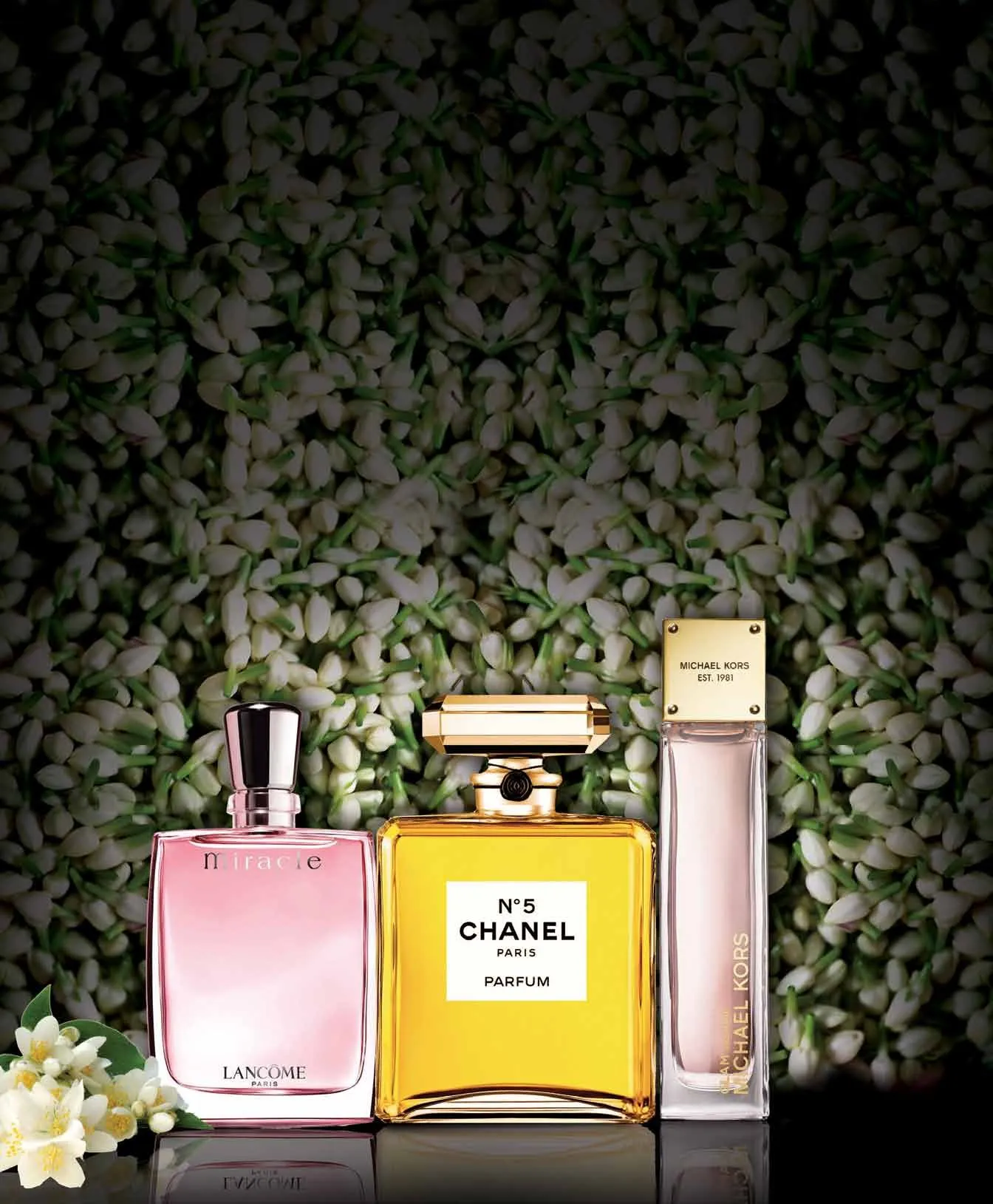
Joyous about Jasmine If rose is the queen of perfumery, then jasmine is its king, as it can blend well with any other oil or absolute. The white petals evoke a sexy, sensual aroma. Considered an ace aphrodisiac, jasmine essence lends a seductive layer to any formulation. This exotic ingredient finds its origins in the Far East—India and China, where for many centuries it has been used in aromatherapy and for ceremonial purposes. India alone produces about 42 species with various olfactory characteristics. Being sweeter and fruitier than other jasmines, Jasmin de Grasse is the most prized jasmine available today. One of the most expensive essences, 8,000 carefully hand-picked blossoms are used to produce one gram of Jasmine Absolute. Jasmine is usually used as a middle or base note in perfumery. While it is not uncommon to find a fragrance where jasmine is the dominant note, most interesting results are created when it is blended with bergamot, clary, frankincense, geranium, lavender, orange, mandarin, neroli, palma rosa, rose, rosewood, sandalwood and ylang-ylang. Jasmine and ginger make a wonderful aphrodisiac blend, too.
Lancôme Miracle has a spicy, floral composition of ginger and pepper in the heart, with jasmine in the base resonating with sensuality as it gets amber and musk for company.
Chanel No 5, rich in floral notes, with a sparkling quality from the use of synthetic aldehydes, has jasmine and rose at its heart. Each 30ml bottle of No 5 perfume contains 1,000 jasmine flowers from Grasse, France. Michael Kors Glam Jasmine gives centre stage to Kors’ beloved floral note—jasmine enveloped by warm woodsy and sparkling citrus notes.
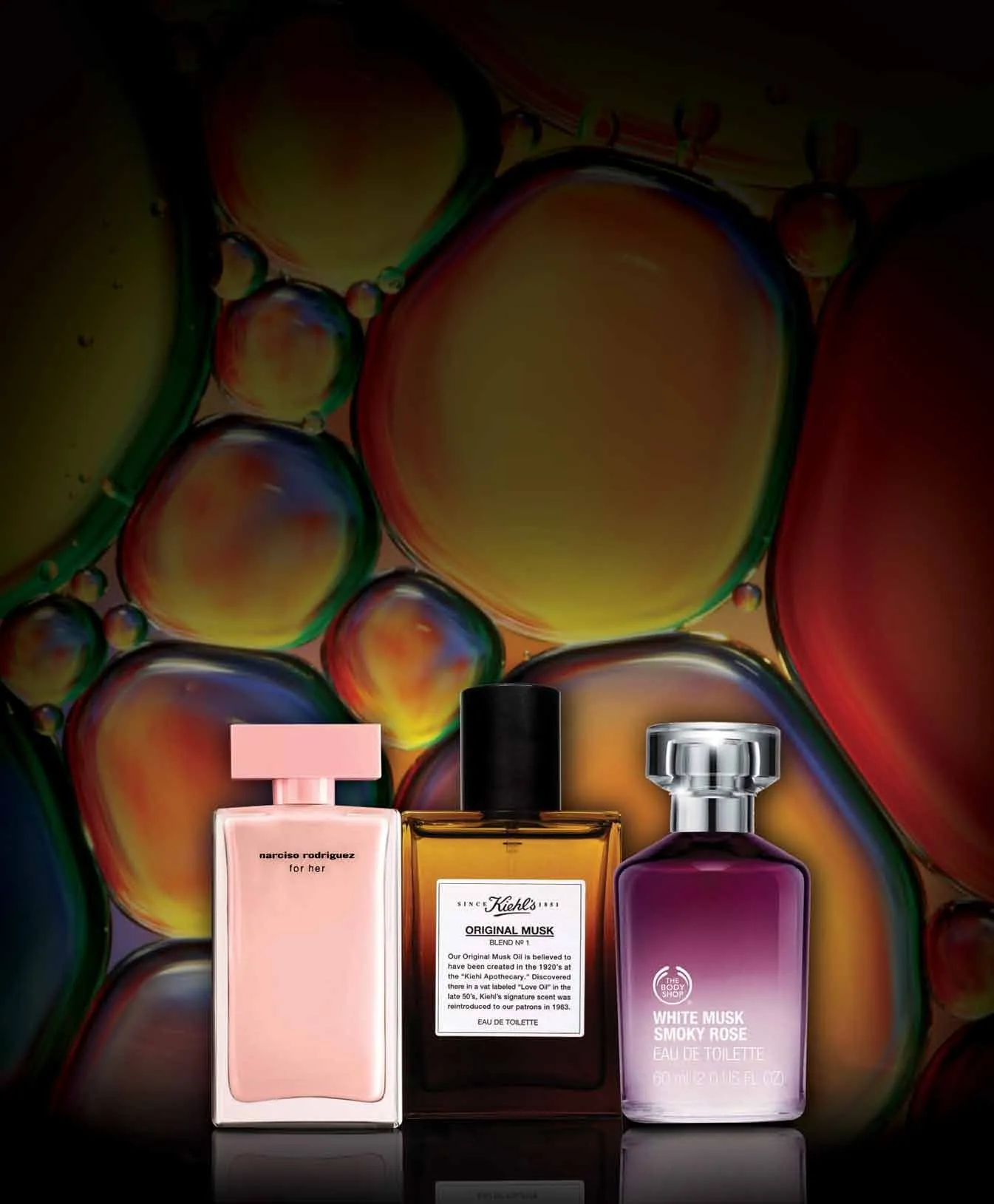
Mad over Musk Musk has been the hero in the world of perfumery since centuries. There are references to deer musk being used in perfumery as early as the 6th century by Arab traders. Commonly used as a base note due to its high fixative prowess that makes the fragrance long-lasting, it forms the pedestal upon which the entire fragrant composition stands. Described as animalistic, woody and earthy, this note lends a veil of warm sensuality to both masculine and feminine formulations. It is present in most scents thanks to its versatile olfactory character ranging from sweet, creamy and powdery to leathery, spicy and woody. The use of natural musk obtained from the gland of the male musk deer is long over, mainly because it takes the lives of almost 150 deer to produce a kilo. Even before 1979 when the musk deer became protected as an endangered species, modern perfumers had started using ethical and cost-effective synthetic musk, also called white musk.
Narciso Rodriguez For Her takes a detour from the convention, with musk beating at the heart of it instead of the base and the result is simply intoxicating—like the sensual scent of warm, sun-kissed skin.
Original Musk by Kiehl’s is a floral woody musk unisex fragrance with tonka bean, musk and patchouli in the base.
The Body Shop White Musk Smoky Rose opens with a fusion of bergamot, pink pepper and blackcurrant before rising to a floral-musky heart. The sophisticated blend of cruelty-free musks and immortelle flower creates a bold fragrance.
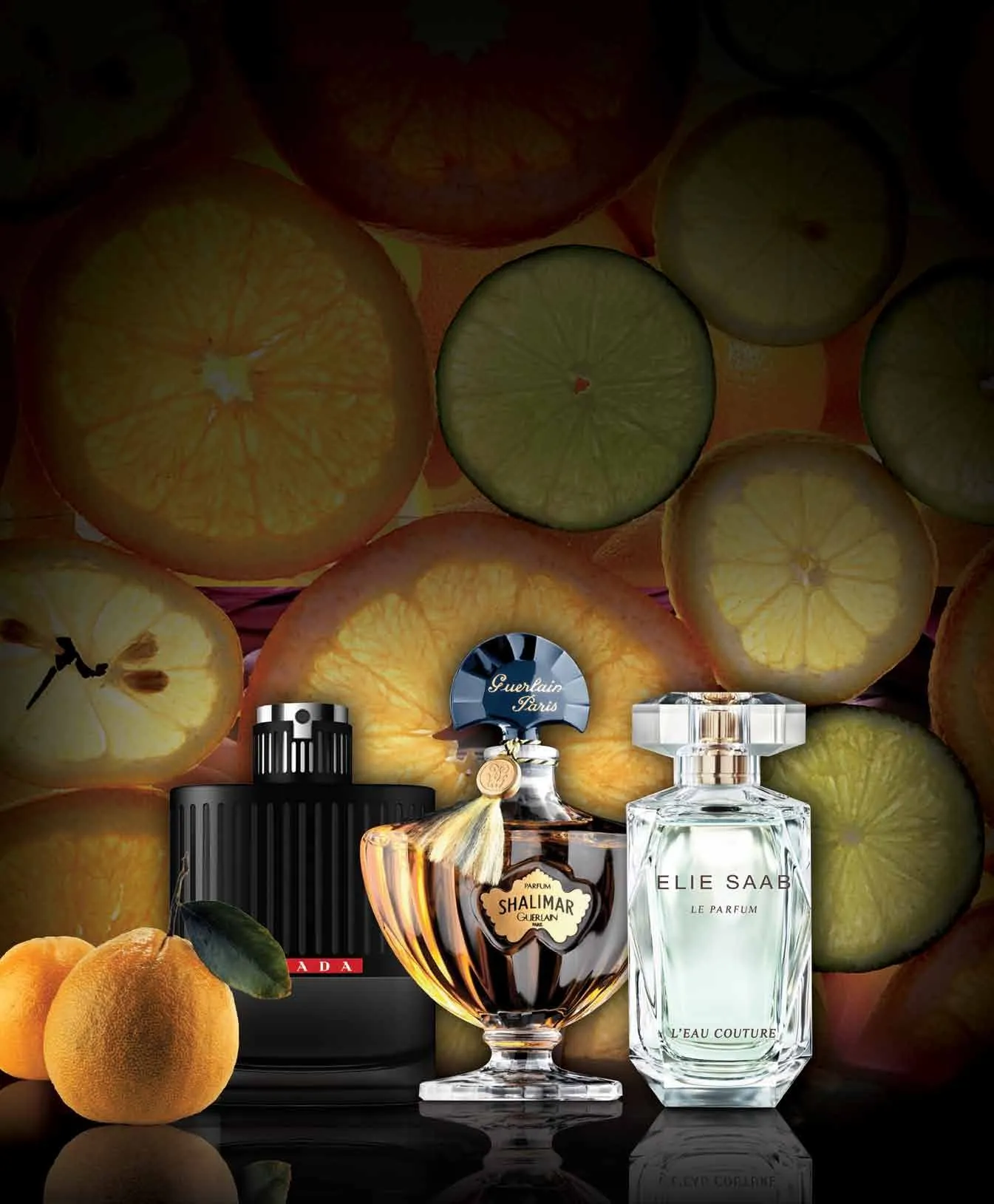
Bowled over by Bergamot This note is not meant to linger, but to entice. It was a component of the original Eau de Cologne developed in Germany in the 17th century. Today, this zesty, sparkling ingredient is a very common top note in most modern fragrances, from fresh colognes to seductive orientals. In recent times, it is very difficult to come across a successful fragrance without bergamot. Its fruity-sweet, mildly spicy smell tames the heaviest of notes. In perfumery, bergamot takes its place along with oakmoss and patchouli, the Holy Trinity of notes that make a fragrance a classic chypre. This citrus fruit, grown in the south of Italy, in the Calabria region and also in Sicily, is cultivated essentially for perfumery as the fruit is inedible. The essential oil of bergamot is expressed from the ripe fruit peel and is used extensively for its sweet freshness.
Prada Luna Rossa Extreme has zestful Italian bergamot invigorating the mature spice of black pepper, activates fresh lavender notes and smoothes the rich vanilla pods.
Guerlain Shalimar is the first oriental fragrance. The timeless classic embraces the richness of woods, vanilla and floral accords in the transparent luminosity of bergamot oil. Elie Saab L’Eau Couture kicks off with a citrusy top note, a Calabrian Bergamot essence, derived from fruit carefully selected at the beginning of the harvest so that its sumptuous floral facet can fully blend with another key note—magnolia.
Spotted a mistake, or your photo used without permission? Report a correction