Canvas As A Memoir Of Love
As the season of love approaches, Dive into these iconic art Pieces capturing the true essence of love.





Art has the power to evoke a wide range of emotions, and perhaps none is more profound or universal than love. From the subtle nuances of the Monet landscape to the bold strokes of Picasso’s portrait, paintings have long been used to capture the essence of love in all forms. Art is a powerful tool for exploring and understanding the many facets of love. It allows us to see the world from another perspective and to gain a deeper appreciation for the beauty and mystery of this most fundamental of human emotions. And in these times when life can be tough, it’s important to have a reminder that love is what keeps us going.
Chez Le Pere Lathuille, Edouard Manet:
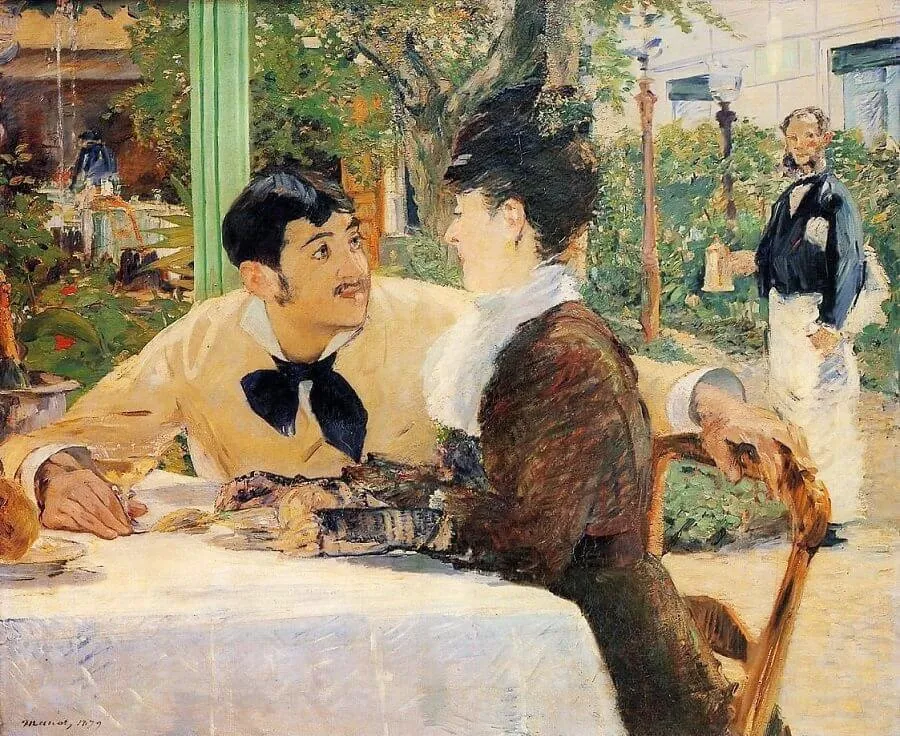
This art piece created by Edouard Manet in 1870 is a captivating masterpiece that has stood the test of time. Manet found the inspiration to create this masterpiece at the Pere Lathuille restaurant in France.
 L’Officiel India DigitalRead L’Officiel India in the digital libraryEvery issue and every cover story, on TCG Media.Read now
The focal point of the painting was the couple sitting at the table. The woman dressed in a classic luxurious dress was the striking muse Mlle French, who had taken over as the model from Manet’s original choice. The young man in the painting was the son of the restaurant’s owner, M. Gauthier-Lathuille. Manet met him at the restaurant where this young man was working as a waiter, and Manet was immediately drawn to his charm and impeccable fashion sense.
Art is a powerful tool for exploring and understanding the many facets of love.
The setting of the painting plays a vital role in emphasizing the overall emotion of the piece. The outdoor table is adorned with luxurious white linens and cocktails, adding to the atmosphere of grandeur. The painting depicts a period of wealth and prosperity for the French.
Manet’s skill as a painter is evident in his capture of the complex emotions between the two models in the painting. The young man’s gaze is filled with adoration and longing as he looks at the woman, his body language suggestive of flirtation as his arm drapes behind her chair. He seems enraptured by her every detail. On the other hand, the woman sits upright and looks down upon the man, her expression aloof.
One of the most intriguing elements of the painting is the older man in the background, his gaze fixated on the couple. Whether he was posed by Manet or simply a passerby, the man’s presence adds an air of mystery to the painting. The painting evokes a sense of nostalgia as if frozen in time.
The Lovers II, Rene Magritte
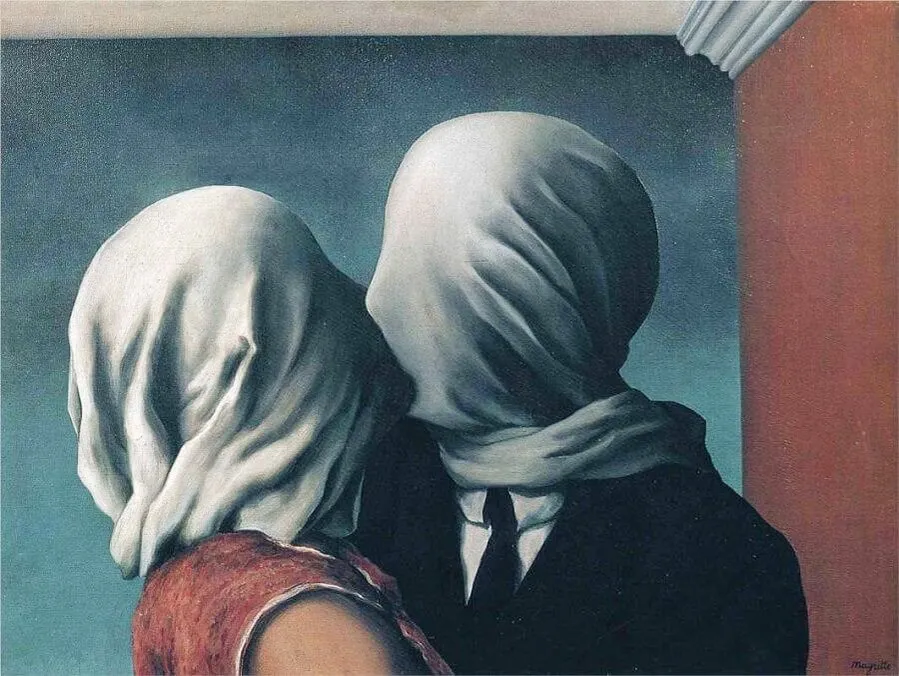
The Lovers II is an oil on canvas painting by the Belgian surrealist artist Rene Magritte. The painting depicts two figures, dressed in dark contrast, embracing each other with their heads obscured by a white cloth. This painting was created in 1928, during the height of Magritte’s Surrealist period.
This art piece features a room as the background and two figures locked in an intimate embrace. The white cloth covering their faces, however, adds a sense of ambiguity and disconnection to the scene, contrasting with the typical erotic and romantic portrayal of a kiss. The veil of cloth suggests the possibility of denied love and an inability to truly communicate or connect. The atmosphere of the piece is shrouded in mystery and the cloth appears almost death-like, keeping the two figures forever separated.
The inspiration behind The Lovers II is believed to have come from Magritte’s exploration of the human condition and the nature of reality. The obscured faces in the painting can be seen as a commentary on the way that people often hide their disguises, both in the physical sense and in the emotional and psychological sense. This art piece showcases the brilliance of Rene Magritte’s artistic vision and technical skill. The combination of surreal imagery with the realistic representation of the figures creates a sense of tension that is both unsettling and captivating. This art piece is a testament to Magritte’s ability to create art that is both thought-provoking and visually striking.
The Swing, Jean-Honoré Fragonard
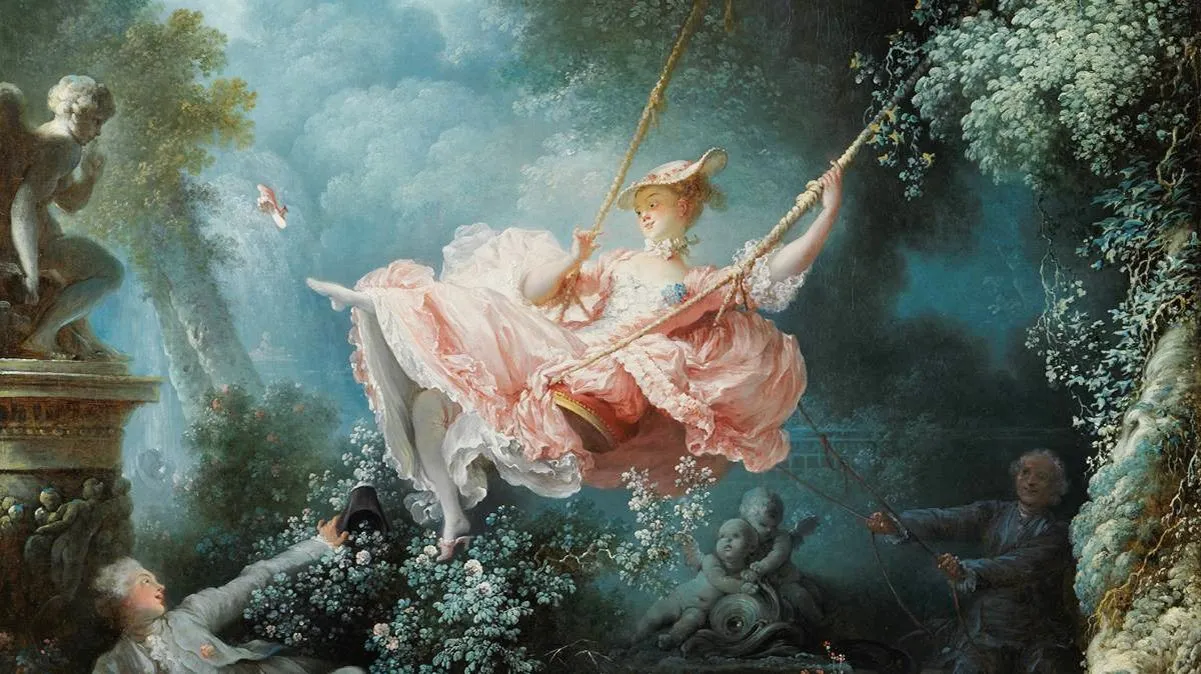
The Swing, painted by Jean Honoré Fragonard, is a masterpiece of rococo art. The canvas is alive with movement, as a young woman swings high in the air, her hair and dress billowing behind her. This scene is one of pure pleasure and carefree abandon.
Fragonard captures the essence of this time period through the use of vibrant colours, asymmetrical composition, and sensual subject matter. The hidden man pushing the swing adds an element of mystery and intrigue, hinting at the scandalous affairs that were common among the wealthy elite during the rococo period.
The colours used in the painting are soft and delicate, with pastel hues of pink, blue, and green. The brush strokes are light and airy, giving the impression of a summer breeze. This painting is a beautiful and iconic art piece and continues to be one of the most celebrated and admired works of art in the world.
Spotted a mistake, or your photo used without permission? Report a correction