Breakfast
Ramesh Nair left Kerala to study fashion despite his father's doubts and now leads creative work at Paris luxury house Moynat. He recounts the journey.
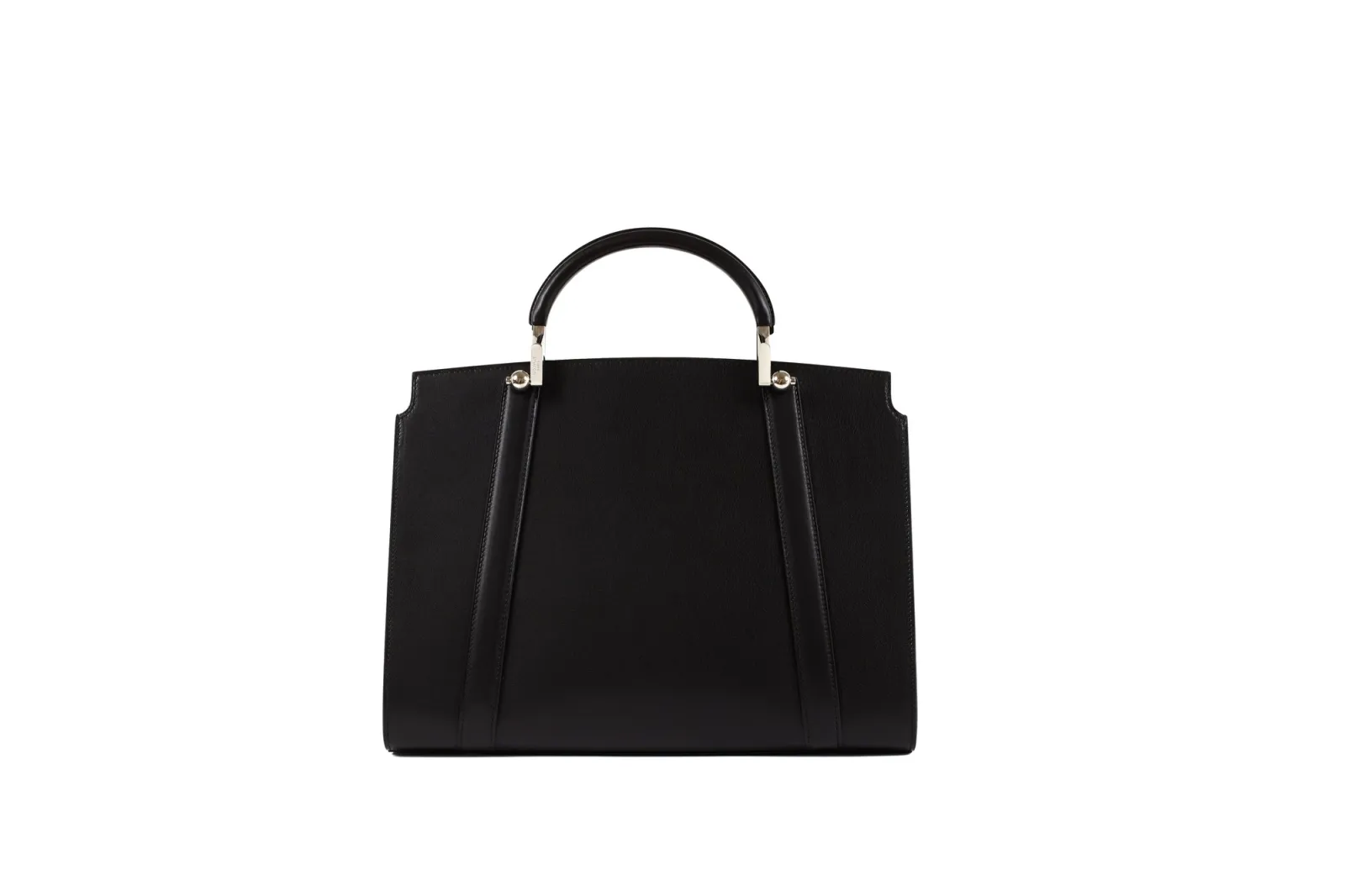




When Ramesh Nair left his little village in Kerala to study fashion, his father asked him why of all things in the world he wanted to be a tailor? Unable to explain his burning passion for creativity, Ramesh left God's Own Country to find his own. And he did. In the Country of Fashion: France. After a stint with the House Hermes, Ramesh was hand-picked to become the creative director of House of Moynat, known for its handcrafted travel goods.
Moynat's first atelier was opened in Paris in 1849 by trunk-makers Octavie and François Coulembier. They joined forces with Pauline Moynat, a specialist in travel goods, to open the first store of avenue de l’Opéra. Moynat was one of the very first leather goods houses of its day.
 L’Officiel India DigitalRead L’Officiel India in the digital libraryEvery issue and every cover story, on TCG Media.Read now
Known for its traditional know-how and skills base in handcrafting made-to-order luggage and travel goods, the house became famous for its designs for automobiles, as well as for its technical innovations such as making its trunks lighter and waterproof, ultimately becoming the most exclusive travel companion.
Creative director of Moynat, and the best secret of India, Ramesh Nair tells us the story of this incredible journey from Kerala to Paris...
After graduating from National Institute of Fashion Design (NIFT), your initial years were frustrating. Why didn't you fit into the Indian fashion scene?
When I came to Delhi to study at NIFT, our class was the first time ever that India saw formal training in fashion, so there was no precedent for a career in fashion. Plus I was from an army background and had no family backing or connections in design or business. On one hand, we had a great education from the FIT faculty so I was essentially trained in Western techniques and sensibilities, but no one in India was looking for that yet. Even the business houses catered to the mass end and not high end. So there was a gap between the way my mind was formed and what the market wanted.
Even after the initial years, when the market opened up and there were more opportunities and access, the emphasis was always on "decoration" through embroideries or traditional crafts like block printing and such.
Add to that the fact that I always wanted to go off the beaten track right from my school days. FIT teachers and my own explorations of fashion opened my eyes to the possibilities of experimentation and using fashion to express myself, not just as a business proposition. It was frustrating then and in some ways still is to see that things have not really evolved in India.
Before you left for Paris, I remember you telling me you always wanted to work with the likes of Jean Paul Gaultier and designers like him. How did you realise that dream?
Sheer perseverance and belief in my capabilities. When I interned in Italy, I realised that I was as good or better than many designers in Europe. That gave me the motivation to follow my dream. I had a wish list of designers whose work I admired, among them Martin Margiela and Jean Paul Gaultier. I had the pleasure and good fortune to work with both.
As much as perseverance and talent, there were people who played important roles in different stages of my life. Martand Singh (Mapu) always encouraged me so did Manju Bharat Ram. Besides, AKG Nair, who was my professor at NIFT, stood by me through thick and thin. They respect their sensibility, taste and opinion. I respect their belief in me made me stronger.
Maisons such as Hermes have young designers trying to get a foot in from all over the world and you were the chosen one. Was it difficult to fight the fashion war?
Jean Louis Dumas saw my work in Paris in the mid-'90s and encouraged me to take it further on an international level. This was before I knew who he was in relation to Hermes. When I was ready (after my stint at IFM Paris) he proposed to show my work to Martin Margiela who was then the Artistic Director at Hermes. Martin put me through the paces, not just through interviews and portfolios but also a challenge. He asked me to present ideas that illustrate my creative process, not necessarily linked to a collection or a brand. He gave me 15 days to come up with a presentation and I was ready in 5 days, and the result was that he asked when I would like to start working with him.
How was your experience working with Margiela? How was it to see and work with a man who is known for his elusiveness? And then working with Gaultier, who couldn't be more different from the reclusive Margiela.
Anyone who has worked with Martin will agree without hesitation that he is one of the most talented and one of the nicest people to work with. He is totally unassuming and easy to connect with. The experience strengthened my values and drove me to surpass myself constantly.
Working with Gaultier was an interesting transition because Martin had been his assistant at one time and I had assisted Martin. Jean Paul is like a whirlwind, with a thousand ideas per second, incredible memory and references. One of the last true couturiers left. And here I'm talking about real haute couture. And a wicked sense of humour.
Martin honed my conceptual and intellectual approach. Jean Paul strengthened my technique, repertoire and the ability to connect references.
When Gaultier left and Christophe Lemaire took over the reins, why did you decide to leave Hermes?
Isn't it obvious? My goal is always to work with people whose work I respect. So it was Moynat. I was called to reimagine and revive one of the oldest trunk makers that had disappeared from the public eye since the 1970s.
When Bernard Arnault, chairman of the LVMH group acquired Moynat, he invited you to take on the role of creative director of the brand. Was it a surprise (especially Arnault's personal interest in hiring you?)
Moynat is directly part of Arnault Holdings. Being offered this position was a pleasure but not really a surprise because I always knew that when I left Hermes it would be for a challenge like this.
What so challenging and exciting at Moynat?
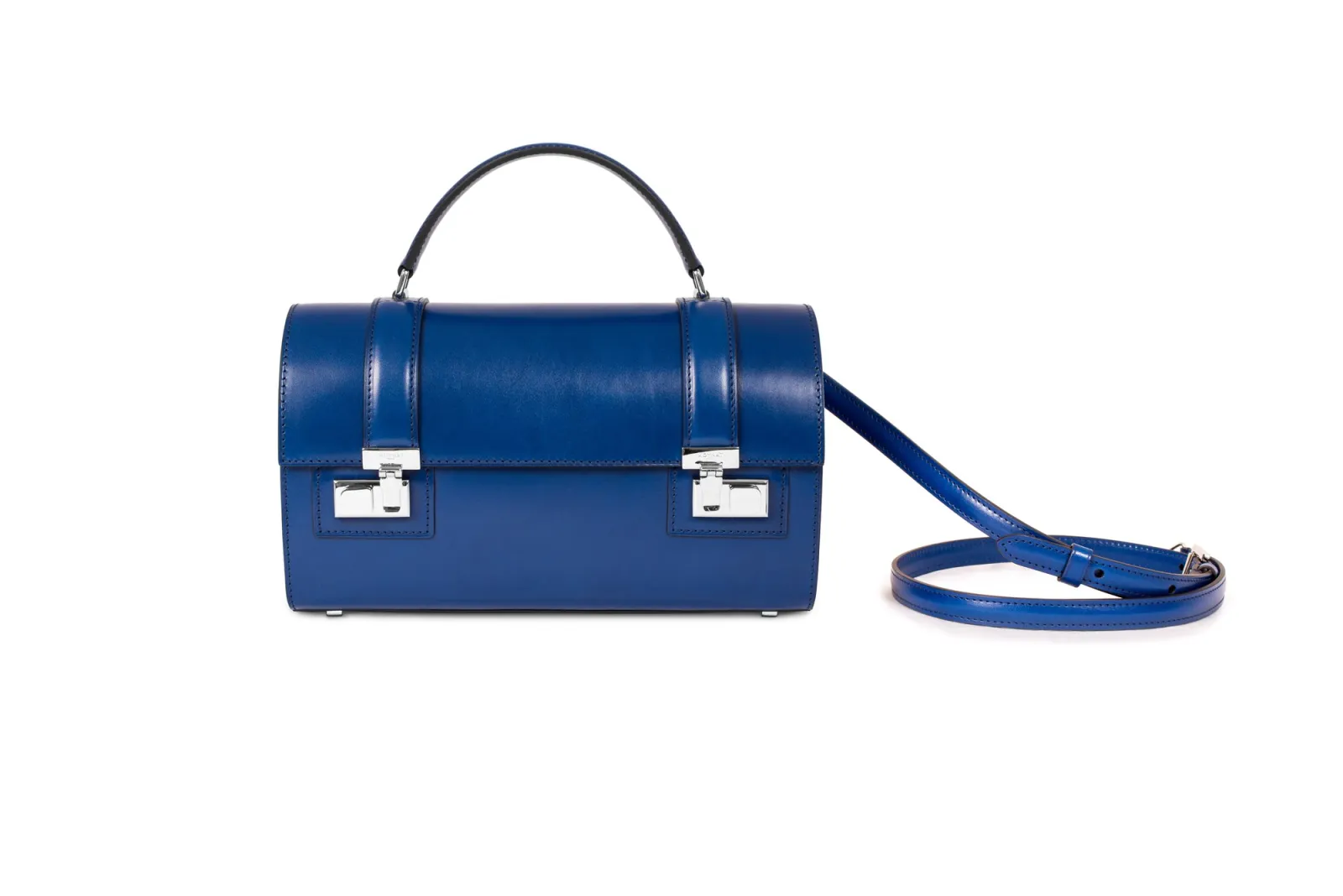
What you see of Moynat today is entirely what I have created from the ashes of the past. When I came on the scene, there were no archives, no living memory of the brand, nothing except an old catalogue. We had to comb flea markets, auction houses and other resources to piece together the history of the brand and reconstruct the heritage.
We could have gone in another direction entirely, the way people have done with historic brands like Madeleine Vionnet, for example, which had existing, well-documented archives but they chose to create a modern façade with no anchors to the past. At Moynat, it was a conscious decision to respect our heritage and use it as a foundation. It was not a given or a coincidence.
As creative director, I am the motor of the brand, from product to image to communications... From the very start, I designed each detail of each product, including nails, pins, closures, every component whether visible or invisible. When I select a material, I decide which raw materials, treatments and finishes go into it, which supplier or manufacturer to work with. I want our brand to be sensual in its purity, so while the lines are very clean and minimal I also place a lot of emphasis on feeding the senses through the hand, the touch, the colours, the smells...
It is also the reason I like to work directly with the artisans and to challenge them to constantly push their limits.
How much have you introduced in terms of design elements from your side?
What you see of Moynat is entirely my making. Only recently have I taken on assistants and even so nothing happens where I don't have a personal input. All decisions are ultimately mine.
I still collect heritage pieces for our archives and these serve as spring boards for inspiration. But the design philosophy is entirely mine.
Moynat is a brand that prefers to fly under the radar; no frills and fancy, no advertisements, subdued store launches (even your Paris store is tucked away in a discreet area). What is the reason for this elusive image and how is the idea working?
Part of our brand philosophy is elegance and a discretion that is typically Parisian. If we are to be authentic, we have to respect these values. Our clients are our ambassadors and we prefer word of mouth to advertising. As we grow, we will of course communicate to a larger audience, but it will be done in a way that is true to our spirit. It makes no sense to follow the herd and do what every other brand is doing if we want to maintain our uniqueness.
To answer your question about how it is working, it seems to connect to our friends and our community, who value our authenticity. We have moved from a single store in Paris in 2011 to over 10 stores in the major cities of the world today.
What are you currently working on? Any plans of expanding the portfolio of products?
Our organic growth means that I am always working on so many fronts. Yes, we will expand our product portfolio as and when it makes sense for our brand, not as a marketing ploy.
You are the first Indian to reach such a coveted position in the world of luxury. I am sure your alma mater NIFT is very proud of you?
The last time I checked (a few weeks ago, when I got your Q&A) I didn't exist on the NIFT site. Maybe I don't meet their high standards?
What is your next step?
I let destiny take me where it will. The only thing I know is that I will keep creating.
Spotted a mistake, or your photo used without permission? Report a correction