Breakfast with…
A designer discusses a Roche Bobois collection inspired by No theatre kimonos and Japanese culture, and how the brand gave full creative freedom.
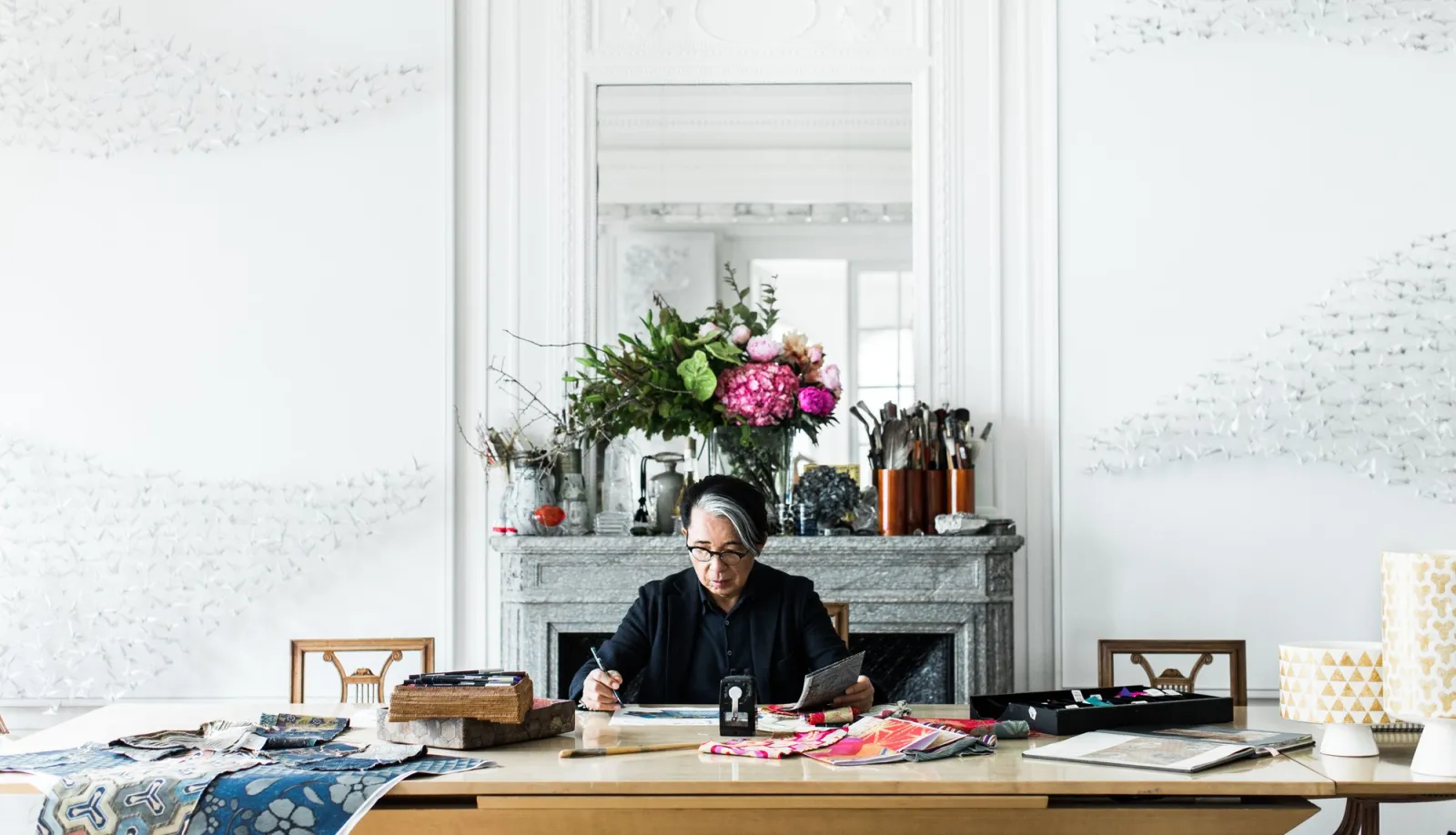




What is keeping you busy these days?
I continue to work and find some excitement with the jobs on hand. I began the day with the workout and some yoga to stay healthy. In the afternoon I join my team to check on numerous jobs that require my attention. I also travel back and forth between France and Japan, a few times a year, as I love to revisit my native country.
Tell us about your collaboration with Roche Bobois. When did the discussion begin? What went on the discussion table?
 L’Officiel India DigitalRead L’Officiel India in the digital libraryEvery issue and every cover story, on TCG Media.Read now
I met Nicolas Roche, Creative Director, Roche Bobois and his team, through mutual friends, over two years ago and quickly agreed that we should work together.
We needed to decide on a theme, keeping in mind the project, and how it has its own identity. We always needed to keep our minds focused on the final result. When we began, we chose 3 different topics but they were all around Japanese cultural influences, which is a great source of inspiration for me.
At the end of the creative process, we agreed to work around the kimonos from the No theatre as the main inspiration.
How much of your personal design sensibility is there in the collection? How did you balance it with Roche Bobois’ brand DNA?
Roche Bobois gave me a lot of freedom, even though sometimes it was very challenging to understand certain technical aspects. They gave me full freedom to work on my ideas and their skilled team complemented my team beautifully. We got along really well and that allowed us to be very productive. Together we managed to accomplish creating this beautiful Collection.
What was the inspiration behind this collection? How did you pick this colour palette?
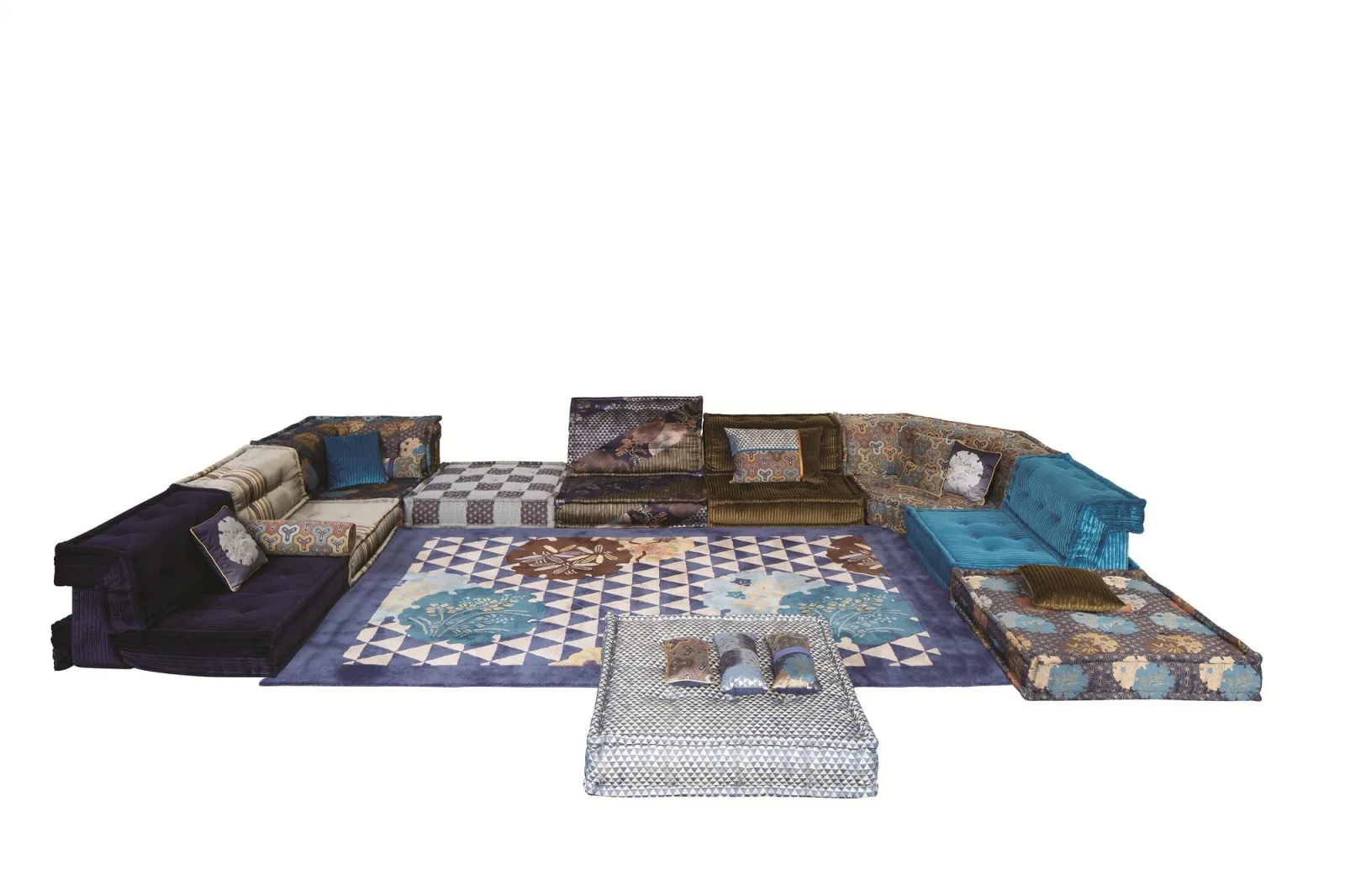
I wanted to bring a certain Japanese touch to the graphics in the collection. I admire the No theatre and got my inspiration from their Kimonos usually made out of Jacquard, silk, cotton, and other textiles. The graphics are very particular and not like other classic kimonos, as it is a play acted by men and in the old days by Samurai Warriors wearing masks.
Once we narrowed down and selected the right graphics, we decided to choose different times of the day to reflect the color themes. For example: crisp pastels for the morning, bright colors for midday, and cool hues for the night. I thought it would bring a certain romance to the collection to create a story.
How much time did it take for the design to take final shape?
The design process was long, we had to rework several times. We also reviewed the prototypes on my pieces of occasional furniture until we found the right colour balance and graphic placing. We decided to concentrate on the Mah Jong first and then later add more elements to the collection.
What has been your take away from your collaboration with Roche Bobois?
We had fantastic chemistry, it was a lot of fun working together and I am proud of what we achieved.
I am not used to working around the home décor segment, but it is something I really enjoy, and also curious to discover more, as I go along.
Will we see more such collaborations in the future?
Yes, probably since I love starting new adventures, and working with companies that have great know how.
Is there a particular piece from this collection that you would love to have in your house? And why?
I don't have a specific favorite piece from the collection they all are special for me. Different pieces would blend differently as it really depends on the décor of the home and then see how it would be in harmony with the other elements. I am proud of the overall end result and the coherence between the different pieces. They fit with each other and blend together.
I definitely will add some pieces from this Collection in my new home.
Do you collect artefacts on your travels? What has been your favourite destination in terms of design?
Recently, I have taken pleasure in sourcing ideas from Japanese culture. I have been traveling to Japan a lot more to rediscover its culture. I always find new influences there. Japan’s history is so rich and I love to incorporate old Japanese crafts into my work today, and yes I love bringing home many artifacts, from pottery to various ancient crafts.
Tell us something about your childhood. Were you always inclined towards fashion and design?
I knew at a very young age I wanted to create, it could have been art, or something else, but I wanted to become a creative person. During my teens, I quickly realized I wanted to work in fashion, since I was influenced by movies and magazines from Europe and USA.
Were you influenced by someone’s sense of style while growing up?
Not particularly, but when I was reading through my sister’s fashion magazines, it certainly had its impact.
Japan was going through a very sober period following World War II, and it was a treat to see the joy of colours in magazines and films.
Another influence that probably had its impact was when I was looking at my mother’s process of putting on her kimonos, which were very colourful and full of graphics. The process of putting on a traditional kimono is long and not easy, in fact it is very ceremonial.
Your designs have a beautiful balance between Japanese and French sensibilities. How do you achieve that?
French design is of course more Western, influenced by its imperial and architectural origins. It can be art deco, with certain sophistication, which is always eye-catching. In Japan design is much more minimal, with a lesser presence of surrounding environments.
When I started my brand in the early 70s, I had to look for an identity, and I quickly realized I had to go back to my roots. So, I decided to mix Japanese and occidental influences, later on I began mixing various cultures from around the world.
With the Mah Jong, there is a multicultural aspect to its design, as it could come from many different cultures. With its textile based on the No Theatre, we were able to reproduce all these elements from various cultures to make one single collection.
It is mostly unusual to see a designer retire from the brand he has built, and hand it over to someone else. How difficult was it for you to take that decision? Is it the Buddhist way of letting go of attachments and live with abundance?
Well, it is obviously something that can be questioned, and at the time, I had my reasons. There were several factors that pushed me to do it. It wasn’t a financial purpose but mostly personal. However, whatever is done is now the past and I like to look forward.
Did you always have a Plan B for yourself?
Not really, I had to do it for many reasons. I didn't plan anything at the time. Even at the end of 1999/early 2000 when I left LVMH, I thought I could retire, travel the world and do nothing, but several months later I came to the conclusion that I wanted to work again. It gives me a purpose, and I love to have things to do.
I guess I cannot live without work. But I now rely a lot more on my team.
How do you feel when you see a Kenzo show now from the front seat? Do you miss being at the backstage?
I think Carol and Humberto are doing a great job in rejuvenating the brand. It is not an easy task, and they managed to do it well. It is not exactly the same identity that I was working on, but they did a good job at revamping KENZO.
Their last memento collection inspired by Henri Rousseau is a great example of modernizing a brand through creativity.
How have the worlds of interiors and design fascinated you after your successful fashion stint?
Maybe as I grew older, it really came naturally. I started to take more interest in the field of interior decoration. I have always loved working around the home environment; you can do so many things and there is also a wide set of skills you can apply. It has a different pace in comparison to fashion, which suits me better now, considering my age, I really enjoy it!
What is your personal interior taste, something that we can see in your home or studio?
My home is very Parisian or Haussmanian if you prefer. But there is always an always with a touch of Japanese influence.
What inspires you to design? Do you still use a pencil to sketch?
Yes I still work the old fashion way, but my assistants make magic with computers. I prefer hand sketched graphics or design as you can create more depth. This is something I am teaching them every day, as computer graphics tend to be more plain, a little soulless. It is important to have some skills by hand before applying a graphic or a particular design to a computer.
What has 2018 in store for you?
Only time will tell!
Spotted a mistake, or your photo used without permission? Report a correction