Book-marked for life
Celebrities including David Abraham name the books that kept them reading late, such as Wodehouse's Blandings Castle and Rushdie's Midnight's Children.




The most intimidating and complicated question to any ‘book-worm’ (yah clichéd but so perfect) is what are your favourite books? We agree, but we still went ahead and asked celebrities with utmost curiosity. And the revealings, we stumbled upon, were a treasure trove of literary gems that would light up the dullest of times and hearts...
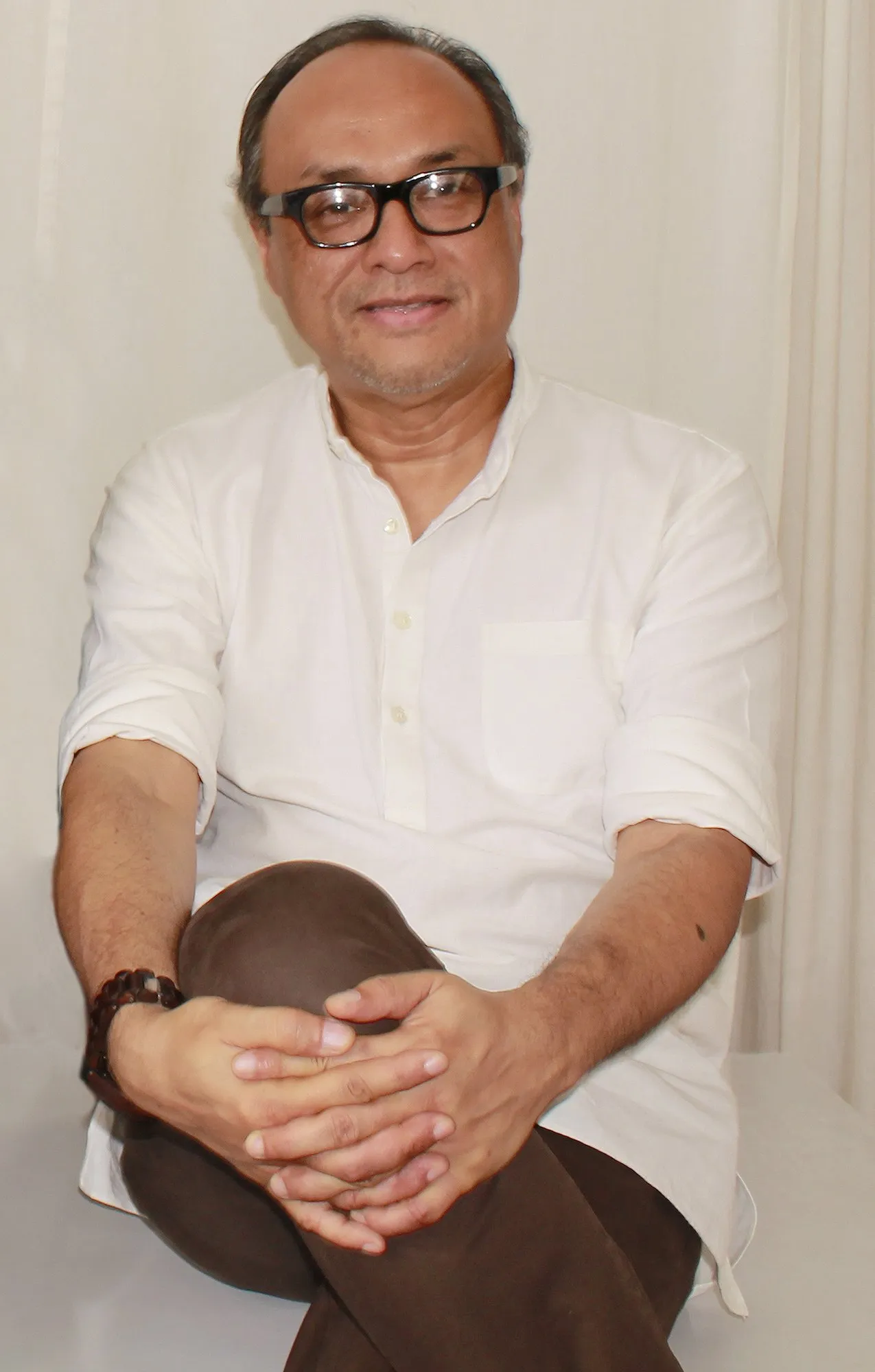
David Abraham, designer
 L’Officiel India DigitalRead L’Officiel India in the digital libraryEvery issue and every cover story, on TCG Media.Read now
Blandings Castle by P. G. Wodehouse: I found this book on my father's bookshelf, when I started reading during my schooldays. Once I started the book, I couldn't put it down. Over the next couple of years, Mr. Wodehouse's enchanted world kept me entranced and laughing; and very often up till well past midnight.
The Woman Destroyed by Simone De Beauvoir: As a student at the National Institute of Design, my reading list was influenced by one of my teachers, who introduced me to Simone De Beauvoir, Doris Lessing and other noted women writers.
Midnight's Children by Salman Rushdie: This was a staggering discovery for me. The language, the verbal gymnastics, the wonderful characters, the post-colonial voice, everything was enriching about the book.
A Fine Balance by Rohinton Mistry: This is one of the most moving books I have ever read. For me, it brought to life an India of wonder, of cruelty and life beyond the fringes.
The Girl with the Dragon Tattoo by Stieg Larsson: The first of the trilogy, this kept me up night after night, till I consumed all three books. A masterpiece of crime fiction, the author created a sinister new Scandinavian world of characters that I couldn't stop thinking about.
Jaya Jaitly, social activist
Angela’s Ashes by Frank McCourt: This brilliantly written memoir of an Irish family living in poverty, until they finally manage to travel to the USA has also won the Pulitzer Prize. The sharp humour does not flag while describing the misery of childhood during the war is a homage to the human spirit.
Politics is for People by Shirley Williams: I read it, as I began taking serious interest in politics and public life. It contains a humane and practical agenda for democratic socialists within a changing world, especially in the context of post industrialisation.
The Feminine Mystique by Betty Friedan: This book is special for me since the author, an alumna of my alma mater, Smith College, published it the year I graduated. Reading it again after 50 years, it is highly relevant in understanding why women are still struggling for equality in a man’s world. It sharpened my understanding of why women find themselves lacking in autonomy of choice and action.
The Second Sex by Simone de Beauvoir: The author always fascinated me as the epitome of an academically brilliant, highly caring but autonomous individual. She laid out one of the most definitive documents on women without taking the clichéd postures of feminists.
The Caste System by Dr Rammanohar Lohia: I have read it many times over. He believed that to stop talking of caste was to ignore the most important single reality of the Indian situation, and women must be considered an under caste irrespective of her caste identity. It is a must-read to understand many of today's discourses across the country.
Ritu Beri, designer
The Fountain Head by Ayn Rand: This book, I read very early in my life and it was life changing for me–it taught me to follow my own vision and not conform to the expectations of others. I understood how important one's own self-esteem is to conquer the world.
The Secret by Rhonda Byrne: I learnt the importance of positivity, and that positive emotions attract positivity. Emotions are strong and can change a life. I also understood that gratitude and love are the strongest emotions.
Alchemist by Paulo Coelho: I learnt that if we want something truly, the entire universe gets together to make it happen for us. Gratitude is the practice of finding good in each day.
The Bhagavad Gita by Sage Veda Vyasa: We should not repent about our past or worry about the future. We should be optimistic in life. If things are not favourable today, one day they will be, have faith in the supreme. We should work for the satisfaction of our inner soul.
French Women Don’t Get Facelifts by Mireille Guiliano: I read this, and it inspired me to have a French woman’s attitude to be individualistic. I understood how their persona is infused with inherent style and beauty. They even dress to buy the morning’s baguette.
Homi Adjania, filmmaker
L’Etranger (The Stranger) by Albert Camus: It was the first book I read. The unconventionality of the protagonist with his own set of values and morality, contradicting societal norms, was something that made a huge impression on me. It gave me a glimpse of the absurdity of this world we live in.
Zorba The Greek by Nikos Kazantzakis: Another all-time favourite, for the character Zorba. He is highly entertaining and even today, I often visit him to celebrate an indomitable spirit and zest for life, no matter what is thrown at you.
A Fine Balance by Rohinton Mistry: Evoked a nostalgia and sentiment in me that was inexplicable because it is about a time that I haven't experienced in my life, but I kept feeling such a strong sense of familiarity. I was sucked into the author’s world and the story kept me totally absorbed.
Roald Dahl’s short stories for their delightful twisted-ness, and the way he deftly spins every tale.
Gabriel Garcia Marquez’s, for his incomparable magical realism, the incredible worlds and tales he weaves, and his inimitable writing style, I would have to pick ALL the stories!
Himani Dalmia, writer
On Beauty by Zadie Smith: A deliciously conventional, and yet fiercely contemporary novel where race, culture, family and academia criss-cross in the lives of the multi-ethnic family at its centre.
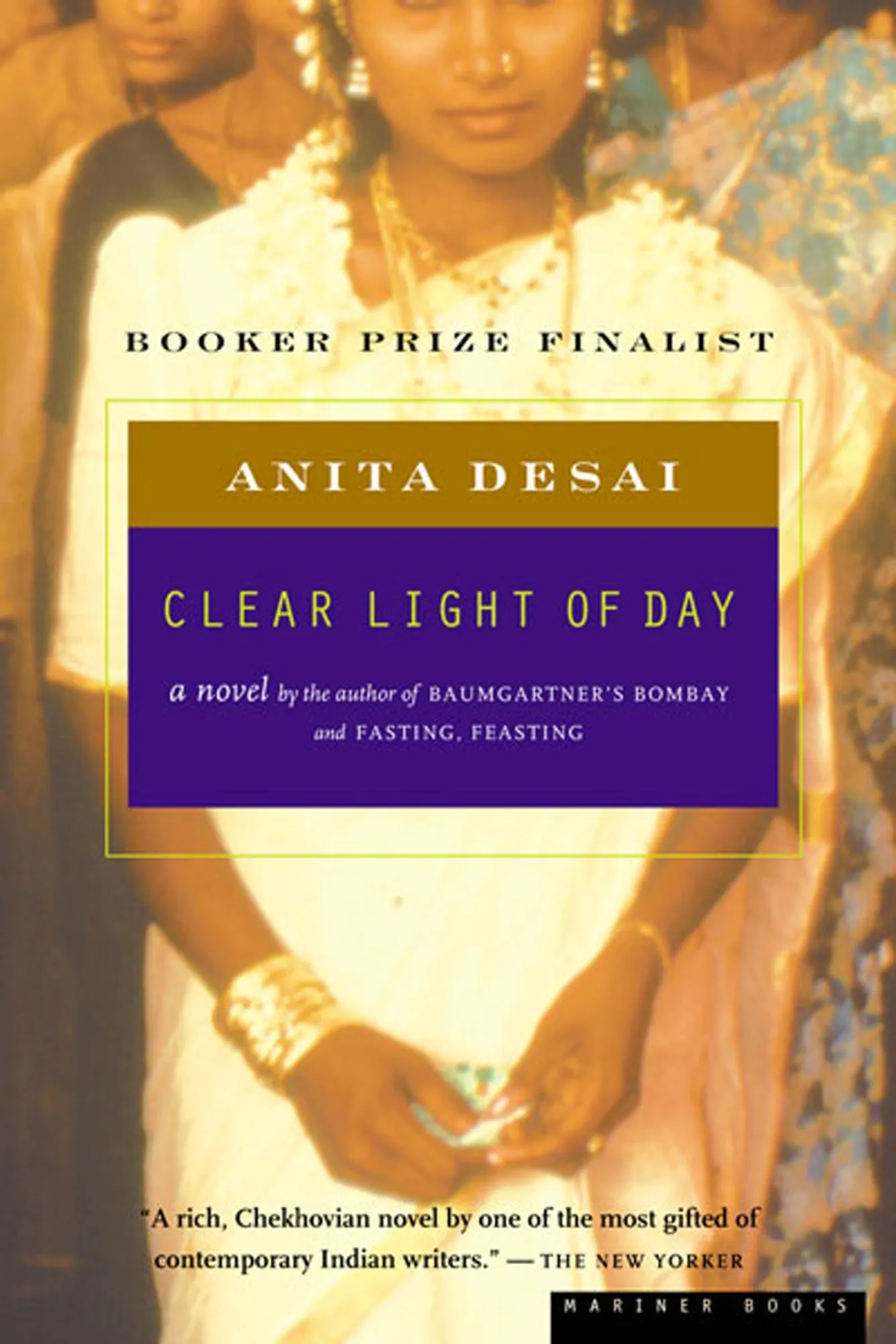
Clear Light of Day by Anita Desai: A fabulous Delhi novel, which my own novel also tries to be. One is drawn into the languid and privileged lives of the city’s bureaucratic elite through the author’s masterful and evocative prose.
Vanity Fair by William Thackeray: This classic novel is paralleled perhaps only by Jane Austen’s Pride & Prejudice in its portrayal of the lives of England’s 19th century elite with such wit and pathos.
Difficult Daughters by Manju Kapur: The story of a woman’s and a nation’s coming-of-age against the backdrop of partitions — political and personal — was truly inspiring to me as a novelist.
Dept. of Speculation by Jenny Offill: A gorgeous montage of musings, trivia and fragmentary memories that come together to tell a story about both domesticity and art.
Pooja Bedi, columnist and actress
Who Moved My Cheese by Dr Spencer Johnson: I read it at a time my life was hinged at its greatest transition point, and was so greatly influenced by its simple logical, motivating approach that I got divorced after realising my life lacked "cheese" and I wasn’t afraid to get it there and try finding "cheese" again.
"Screw It Lets Do It" by Richard Branson: It gave me a much needed "get up and go for it" kick start & to recognise opportunities, to create, to dream & to achieve... with practically no money, no alimony and with two kids. It fuelled me forward and I did phenomenally well professionally, bought luxury cars, amazing global holidays with my kids and holiday homes across India. So basically if ‘you’ want it, ‘you’ make it happen!
The Secret by Rhonda Byrne: It’s an incredibly powerful book about the law of attraction and manifesting the destiny you crave, and I can tell you from experience that it works!
Timepass: The memoirs of Protima Bedi by Protima Bedi: We learn from example and what better example of strength, courage, incredible honesty and generosity of spirit than the story of my own mother's life.
Chariots of the God's by Erich von Däniken: I read it, when I was in my teens, and it not only opened my mind to the world, and civilisations that exist beyond us in outer space but also made me passionately curious about aliens. I've explored many metaphysical modalities throughout my life in an attempt to reach out and connect with, what is still a mystery to astronomers and earthlings.
Ira Dubey, theatre personality
Catcher in the Rye by J.D Salinger: Cliché as it sounds, there is no other book that captures growing up, the experience of it, as well as this clever, extremely memorable, delightful coming of age story of Holden Caulfield, the quintessential, iconic, rebellious adolescent and his adventures–humorous, relatable and always a delight–this is a book I can go back to over and over again. I read it first at 12 and again in college and am now inspired to pick it up again!
Lord of the Flies by William Golding: I remember being completely blown away by this elegant, frightening, and hugely evocative book, when I first read it as part of my literature curriculum in college. More than other war narratives, dystopian, or allegorical tales–and there are so many great ones–this one has stayed with me and always will. A metaphorical structure that works on political, moral, religious, and above all, human levels, told through factions of young boys, I truly believe it is one of the most chilling, powerful and thought-provoking novels of the past century.
Heart of Darkness by Joseph Conrad: We are an ex-colonial nation. The questions of ruler and ruled, master and slave, in so many forms, always surround us as a race. Maybe that's what makes this one more meaningful for me despite where it's set. Transporting you to the heartlands of Africa, telling the very focussed, semi-autobiographical tale of one man, a journalist on a mission, one who believes he is the only civilised one in a world of savages, this novella, which inspired one of my favourite films, Apocalypse Now, and its two central characters Marlow & Kurtz, is an unforgettable read.
The World According to Garp by John Irving: I remember my father recommending two books to me- the first was 'Shogun', which I still haven't read (and I am sure he is shaking his head in disapproval up there right now!) and a funny little book called, 'The World According to Garp'. What an odd title, I thought to myself! And what a wonderful, ride of a book. This book by Irving was memorable because I read it at a very young age and I was just first mesmerised by the style and the wonderful character of Garp. The themes of a single mother, love, death, feminism now that I think about it, must have also lured me to love the book then, and now.
The Sense of an Ending by Julian Barnes: I only recently discovered this author and am so impressed with him. The story of four friends who look back on a particular incident in their lives, told with different perspectives and such brevity, yet such insight and depth, 'The Sense of an Ending' is a quick but extremely satisfying read. It is also one of the best, recent examples of the marvellous use of the English language that I can think of!
Spotted a mistake, or your photo used without permission? Report a correction