
Beautiful Mind
Architect Brinda Somaya recalls forty years of work, from rebuilding Kutch villages to restoring Mumbai properties, and her rise in a male-dominated field.
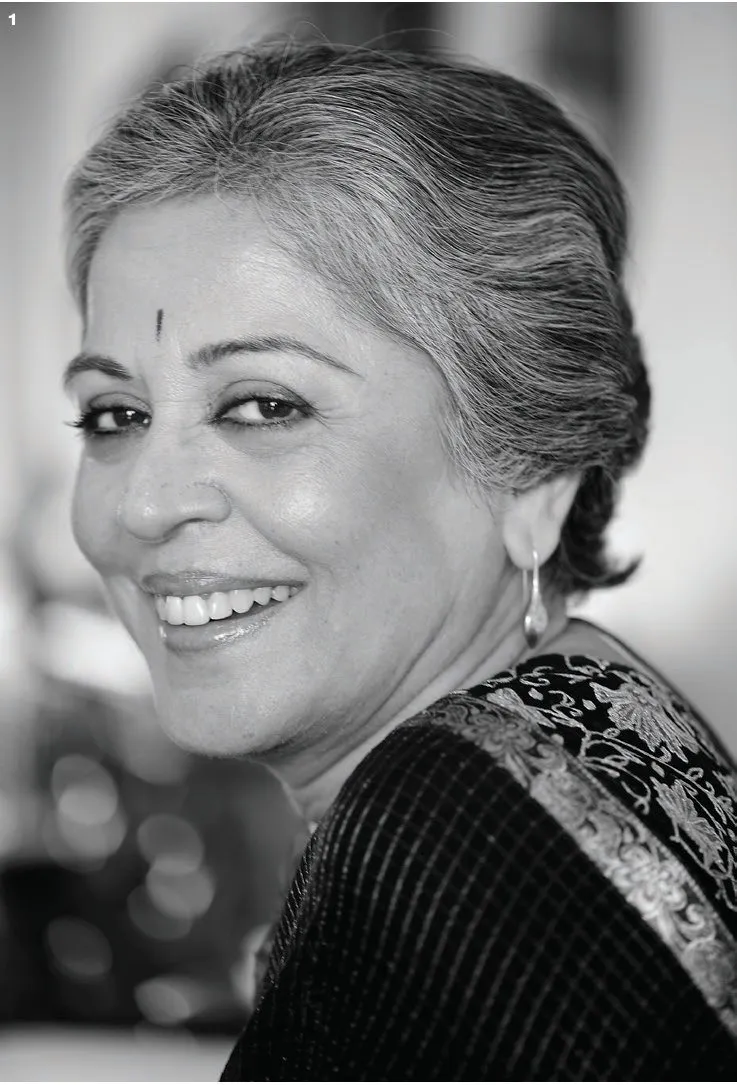




An indigenous design vocabulary with beliefs embedded in conservation and restoration of old structures, and innovating new ones; architect Brinda Somaya finds rhythm in diversity.
Drawing inspiration from rich vernacular constructions of India and being at the forefront of preserving the same, Founder & Principal Architect of Somaya and Kalappa Consultants (SNK), Brinda envisions building a sustainable design community in the country. She has made her own mark in the male-dominated profession by embracing her beliefs, instincts and relentless passion. We speak to the design maverick to know more about her journey. Edited excerpts…
 L’Officiel India DigitalRead L’Officiel India in the digital libraryEvery issue and every cover story, on TCG Media.Read now
Rebuilding earthquake-ravaged village in the Kutch region of Gujarat, restoring prominent properties in Mumbai to building innovative ones around the country, you are an institution in yourself. How has the journey been?
It has been a very satisfying journey. Every project that we have worked on has been special. Having designed a swimming pool and support facilities for the Bombay Presidency Golf Club as my first project, I set out into the world of architecture with my own beliefs. Ever since and in the last forty years, every project has become a journey and a learning experience. Our firm SNK has worked on a wide variety of projects, from re-construction of villages to hi-tech campuses, from orphanages and animal hospitals to state-of-the-art corporate headquarters. At SNK, we enjoy the diversity of work.
When I think about rebuilding the earthquake-ravaged village in the Kutch region of Gujarat, I am taken back to the year 2000. I was at home in Mumbai, with my 86-year-old father, when the Gujarat earthquake struck, and we felt the tremors in Mumbai. Several villages, in the Kutch region were devastated. We were commissioned to rebuild the Bhadli Village. There was debris all around and a veil of sadness had descended. We enabled the village to rebuild their own homes, and in the process empowered the community. I think these social projects enable me to be aware of and sympathetic to those we are building for and building with. Some core concerns raised here always remain in my practice, the engagement and conversations with the community enrich the design solutions.
I therefore firmly believe that architecture should encourage development and progress without straining the cultural and historic environments.
Considering limited architecture schools and exposure back in your time, how did you decide to take it up as your profession?
One of my sharpest childhood memories is standing in the brick ruins of Nalanda, the ancient university in Bihar at the age of six. The memory was etched in my mind for years during which I dreamed I wanted to be an archaeologist. These childhood memories of travel across India provided a broader exposure to the incredible diversity of cultures and vernacular architecture and crafts. I was influenced by what India offered culturally and historically at that time. This probably was the inspiration for me to take up architecture as a profession.
I studied architecture and completed my Master of Arts degree from Smith College, USA after graduating from the Sir J. J. College of Architecture, Mumbai. During my Masters in the United States, the ethos at Smith College provided me a deeper understanding of women’s empowerment. After completing my Master’s I started my practice in the late seventies. This was a time when modernity was becoming more apparent to us. I was conscious of the challenges of practicing in a male-dominated profession, yet I chose to relate to a larger horizon. Forty years later, our firm Somaya and Kalappa, SNK as it is called, is known in the industry for its professionalism and its core values.
What were the challenges and/or criticism you had to face initially?
When it comes to challenges of being a woman in a fairly male dominated profession in the present day, I feel that women are not isolated anymore in the way my contemporaries and I were. We were also few women who were running our own practices. There were advantages too of being isolated because then I was only focused on building. We had no computers and media was not omnipresent like it is today. However, today women are not isolated anymore. There is a whole fraternity of women in architecture and other professions who support each other through different platforms and social media. There is constant sharing of knowledge and ideas, which has made things much easier for women and men to practice.
The other challenge is finding a platform to share your struggles, stories, ideologies which in turn provide insight and inspiration to other professional communities. It is for this reason that after twenty years of Women In Architecture 2000 plus conference, The HECAR Foundation curated the Women In Design 2020+ International Conference. The conference witnessed women from diverse professions and practices share their journeys, challenges and ideas. It was a celebration of the rich contributions and impact of women in design, in today’s world.
What are your thoughts on inclusion, awareness and equal scopes for women in the design spectrum of India?
I believe that an inclusive practice with equal scope of work for both men and women, that spans our diverse population, be it economic or cultural, provides us with great satisfaction. Therefore, the motivation for inclusion and diversity should come not only from the desire to create a just society, but also because it leads to better and more powerful creative processes and solutions.
What started in a garden shed in 1978, Somaya and Kalappa Consultants went on to become one of the most diverse Indian practices internationally recognized for its innovation. Please take us through your design philosophy. How has it evolved over the last four decades?
When I first started my practice, it was the late seventies and modernity was becoming more apparent to us. But my childhood in many ways was very different. I was influenced by what India offered culturally and historically at that time. I was being taken by my parents to Nalanda; to the temples of Konark and Khajuraho, to the wonderful temples of the South, to the Taj and to Hampi. We were taken to different parts of our own country, and we didn’t separate architecture from art or music from history. It all seemed so well integrated. There were no computers, no internet and no Google as opposed to the current scenario where we work in a world of computer aided design with its digital design technology.
With over four decades of practice in a country like India my buildings speak for themselves about my beliefs and ideas of a sustainable practice - I am an Indian, and all that I am comes from my heritage. It is an intrinsic part of my being and will naturally reflect in my work in many ways. The diversity of my work is what I enjoy the most. I have built from the Himalayas to the south of India, from Bengal to Kutch and through the central plains and heart of our country, from Jharkhand to Indore and from Uttaranchal to Kodagu. Our studio’s work spans large corporate, industrial and institutional campuses and extends to public spaces, which we have rebuilt and sometimes reinvented as pavements, parks and plazas. Furthermore, master-planning and building design of multiple corporate and educational campuses has become one of our areas of expertise.
When and how did The HECAR Foundation come into being? What was the inspiration behind the same? Please tell us more about the initiatives taken up by the Foundation.
The HECAR Foundation was established in the year 1999 and founded by five like-minded individuals to celebrate Mumbai's multi-faceted historic tradition. The Foundation also seeks to educate the public about architecture (including heritage and urban issues) through talks, publications, exhibitions, scholarships and seminars. HECAR is an acronym for Heritage, Education, Conservation, Architecture and Restoration.
In 2000, The HECAR Foundation organized a Conference and Exhibition, titled ‘Women in Architecture – 2000 Plus’, on the work of women architects with a focus on South Asia. It showed that a common thread runs through the women architects of India, Pakistan and Sri Lanka and the conference intends to never let this thread fray again.
Twenty years later, which is this year in 2020, The Foundation curated and organised the Women In Design 2020+ International Conference to share stories of women around the world who have excelled in the field of architecture, construction and other related design fields. The conference pushed the boundaries of architecture and design, and delved into discussions on a wide spectrum of disciplines such as photography, art, film and literature that relates to the architectural profession.
The foundation has published numerous books which include An Emancipated Place-Women In Architecture 2000 Plus, Silent Sentinels - Traditional architecture of Coorg, Vanishing Homes Of India, to name a few.
With environment related concerns intensifying each day, how would you like to describe your contribution towards a better design community in India?
The studio’s architectural vocabulary should determine sustainability; from treading the land lightly to the architecture design and details. For instance, we built a school on a 12-acre site without any air conditioning. We used courtyards, double walls, planned trees strategically and utilized other sustainable methods of construction. I feel responding to the context in the most appropriate way possible is more important than getting a rating. I personally feel that the word ‘appropriate’ is more apt for a practice like ours.
What will be your word of advice to young aspiring architects?
Architects service less than one percent of our country. By 2050, we will have 350 million additional people in our cities and architects should be ready for that. Architectural education needs to change to be effective. India is a country of great diversity both economic and cultural. The future generation of architects and other professionals need to create a just and equitable society for all. I have always been optimistic and there are great young architects in our country today and I am sure they will take India on to the world map of architecture; I have no doubt about it. I just hope that everybody keeps their feet on the ground.
Spotted a mistake, or your photo used without permission? Report a correction