
Bageecha: Where Fabric Blooms
Young brand Bageecha has taken its first few steps to infuse a renewed romanticism to forgotten craftsmanship of Banaras.
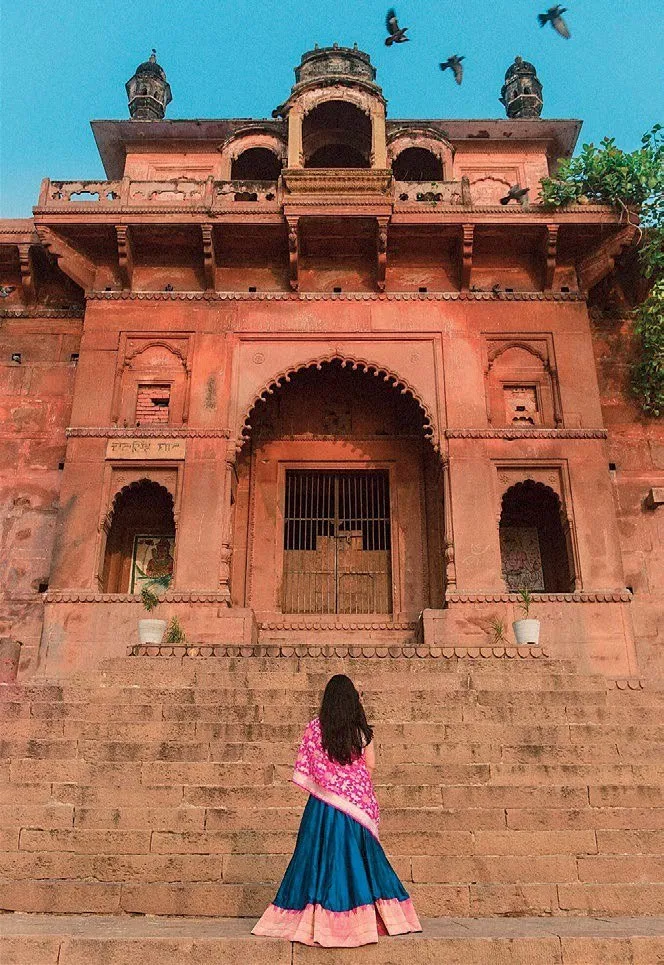




The joy of feeling rich tapestry on our fingers immediately multiplies ten-folds when we find out that the fabric was handcrafted, on a handloom giving it the time and effort it deserves.
This is what the founders of Bageecha, Akshay Gupta and Anika Dhawan Gupta are trying to achieve. The label may be only a few months old, but the history and expertise they are working with is well over a 100-years-old.
 L’Officiel India DigitalRead L’Officiel India in the digital libraryEvery issue and every cover story, on TCG Media.Read now
“I belong to the Banaras House family which has been in the Banarasi sari and fabric business for three generations,” Akshay says. Having grown up around his grandfather and father, who worked with their own set of weavers, he knew a lot more than a man his age would normally know about textiles, weaves and most importantly, the rich legacy of Banaras that his family, too, has been a part of. “My grandfather handed his vast knowledge of textiles to us, we use his books to this day as a primary point of reference for our designs,” he says. The family worked closely with skilled weavers and pattern makers to create beautiful lehengas and saris. But then came the dormancy of Banarasi craftsmanship.
It isn’t some earth moving story, but it needs to be retold for us to understand what happened to the Banarasi glory? “Too much imitation led to the dilution of the craft. Quality deteriorated because of mass production happening through power looms,” Akshay recollects. And over some time, designs lost their originality because even the weavers had to develop a commercial mindset to remain relevant and simply survive. The problem was many pronged. Even customers, who know better, started opting for the cheaper options. Exposure to fine silk became limited for the younger generation. This is where Bageecha comes in.
Akshay Gupta's childhood was spent at his family house in Banaras, incidentally called Bageecha (yes, that’s why the brand name) which was handy when he planned to revive the lost glory. “Banaras has played a huge role in shaping my personality. It made me understand our roots, cultures and traditions,” Akshay, an alumnus of Les Roches International School of Hotel Management, Switzerland, says. Once back in India, he decided to take the plunge.
“We still work with the original weavers of Banaras. And we work only with pure silk fabrics woven on handlooms, which are then dyed and enhanced with fine threads of gold and silver zari. No power looms for us,” Akshay says. It makes for a strong statement, but we wonder if it is sustainable? “We know it is a difficult proposition in today’s age of fast fashion, but we are trying to uphold the tradition. Meanwhile, we need a fresh perspective for collections. This is where my wife, Anika helped us.”
Having her own brand that brings together brides and the finest products and services, Anika knew what needed to be done here. She started working on a moodboard to give a modern twist to traditional weaves, designs and motifs. Design blueprints was then created to scale and given to weavers. That is followed by colour selection. The weavers then process the design to make punching cards for the handloom. Work then begins on handloom weaving and rare-to-find weaves, designs and motifs such as shikargah, aadha, jangla, jaal, and chhota boota while adding a contemporary twist to them, keeping in mind the brides of today. So, the silhouettes are easy and chic while the colour palette is diverse and vibrant blush, tomato red, candy pink and powder blue.
However, working on handlooms is an extremely intricate and fairly slow process. And then naturally there is no mass production, just a limited number of pieces of each design.
“Our priority is to revive the craft and boost our craftsmen’s morale. They are like family to us. Some of them have been with us from even before I was born,” says Akshay.
A massive responsibility, in itself, is keeping the weavers interested, making them feel involved and motivated enough to stay away from the power looms, which are spread all over Banaras. Handloom is tedious, where the weavers work on a wooden vertical-shaft looms with heddles fixed on the shaft. Since it is manual, it means a lot of back and forth with the finished garments. All of this — expensive raw materials, slow manufacturing, unused finished pieces — increase the cost of the handloom weaves as compared to those from power looms. A flip side to sustainability?
“The saving grace is that this generation does not believe in cutting corners. They are ready to wait and pay for quality products if they know where the brand is coming from.”
The husband-wife duo wants to reach out to the younger generation and expose them to this beautiful craft. “And in the process, we not only put our craftsmen on the forefront, but also become a viable business without impacting the environment negatively. In the beginning, the viability of a sustainable business is quite justifiably questionable, but perseverance is key to making it last in the long run,” Akshay says, as they get busy with the sale for the upcoming festive season at their flagship store in Shahpurjat, Delhi.
From the October 2017 issue of L’Officiel India.
Spotted a mistake, or your photo used without permission? Report a correction