Ashish N Soni: The Phoenix Returns





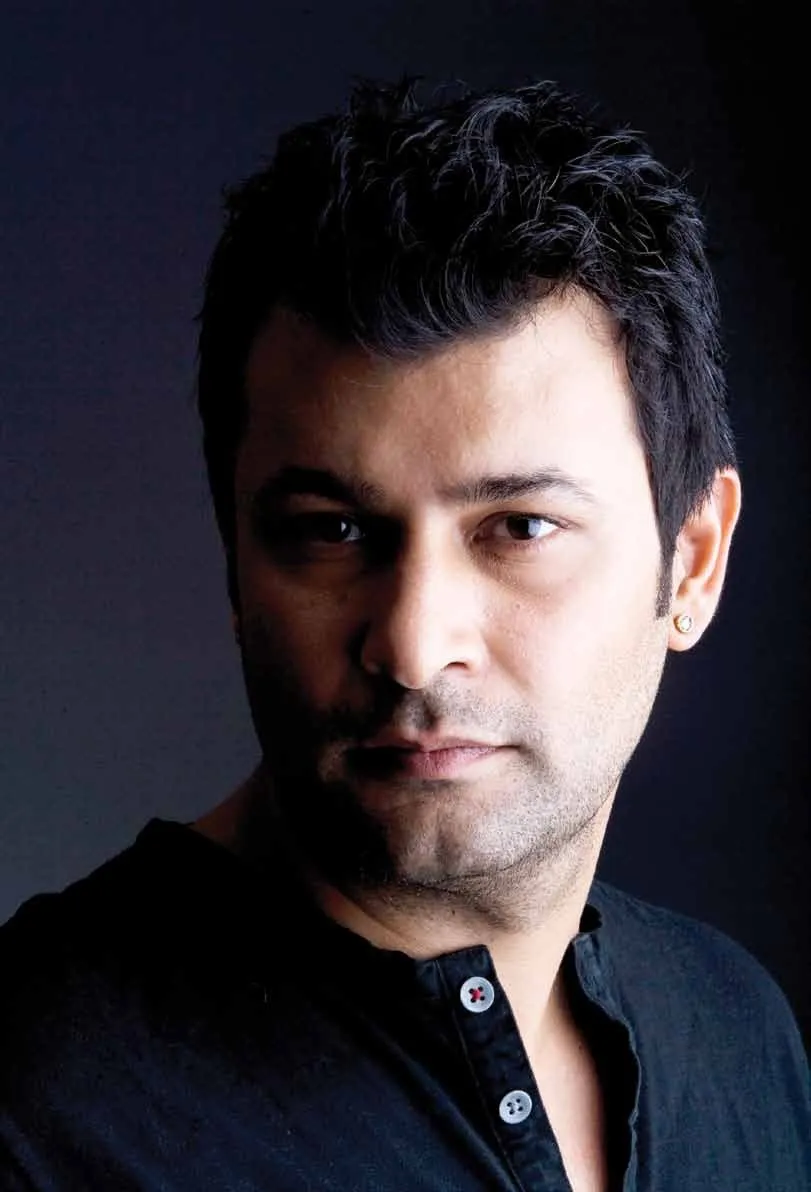
Designer Ashish N Soni is no stranger to challenges. He built up his business from scratch and went on to establish himself globally in the menswear category. Having survived the scathing crash of 2008, Soni knows how to take even gut-wrenching criticism in his stride, and continues to surge ahead with grace and courage in a career spanning over two successful decades.
He grew up all over the world, travelling from the age of five with his engineer father and professor mother, to Zambia, South Africa, the Middle East and beyond. But his unmitigated interest in fashion was fuelled at the impressionable age of 16 when he returned to his country. “I met designer Rohit Khosla at Ghungroo at the Maurya Sheraton, a very happening discotheque back then. He asked me to model and offered me a princely sum of 2,000 rupees, almost 25 years back. I couldn’t say no,” he laughs. As fate would have it, it was also the launch show of the maverick Rohit Bal. Designers didn’t have solo shows in those days. Fashion happened to Soni by sheer accident; just as he was preparing to study in the US, destiny played its card and he stayed back to become a part of NIFT, the iconic educational institution that was still in its early stages of inception. As Soni completes over two decades in the fashion industry, he looks back on his journey from a successful male model to assisting designer Rohit Bal, and finally flying solo by launching his predominantly menswear label in the early 90s.
 L’Officiel India DigitalRead L’Officiel India in the digital libraryEvery issue and every cover story, on TCG Media.Read now
Undistinguished Mentoring
“Judging my interest in fashion, my father gave me a newspaper cutting of an ad for the NIFT entrance test, and that was the turning point for me,” he says. “I met FIT professor Richard Streiter, who was then Dean of NIFT, which was located at Samrat Hotel; the Hauz Khas campus was not yet set up. I was mesmerised by his crisp double-breasted suit, sassy walking stick, and smoking pipe. I knew he was ‘the’ man. He advised me not to study abroad, even though I had got through FIT, as NIFT, he confirmed, had the best faculty sourced from all over the world.”
Of 11,000 applicants, 25 students were selected and Soni was one of them. He cleared the rigorous interview and written exam with a little help from former batchmates like Ritu Beri, in a time when there was no Internet or email. “I completed a two-year course in design and fashion technology, and they were the best years of my life,” he confesses.
Menswear and Beyond
With each season having newer demands, Soni decided to show once a year, and distribute his energy among the myriad businesses that interested him; these included styling and setting up a label for a South African company Vanessa G (a womenswear label by entrepreneur Vanessa Gounden), which recently launched in England.
“I consult with brands internationally,” he adds. “I also work closely with the Indo-French Chamber of Commerce, assisting French labels to source in India. Plus, I work globally with brands and execute their embroideries; it keeps me stimulated in the fashion process, even though menswear remains my primary focus.”
Interestingly, Soni will tell you in a flash that nothing in fashion is new; everything has been done before, and it is all just about an expression of how differently you can interpret an idea. “How effectively you can reinvent it and make a vivacious story out of it, giving it a unique spin, is what makes one stand out from the crowd,” he says. “What keeps me going is that fashion is ever changing.”
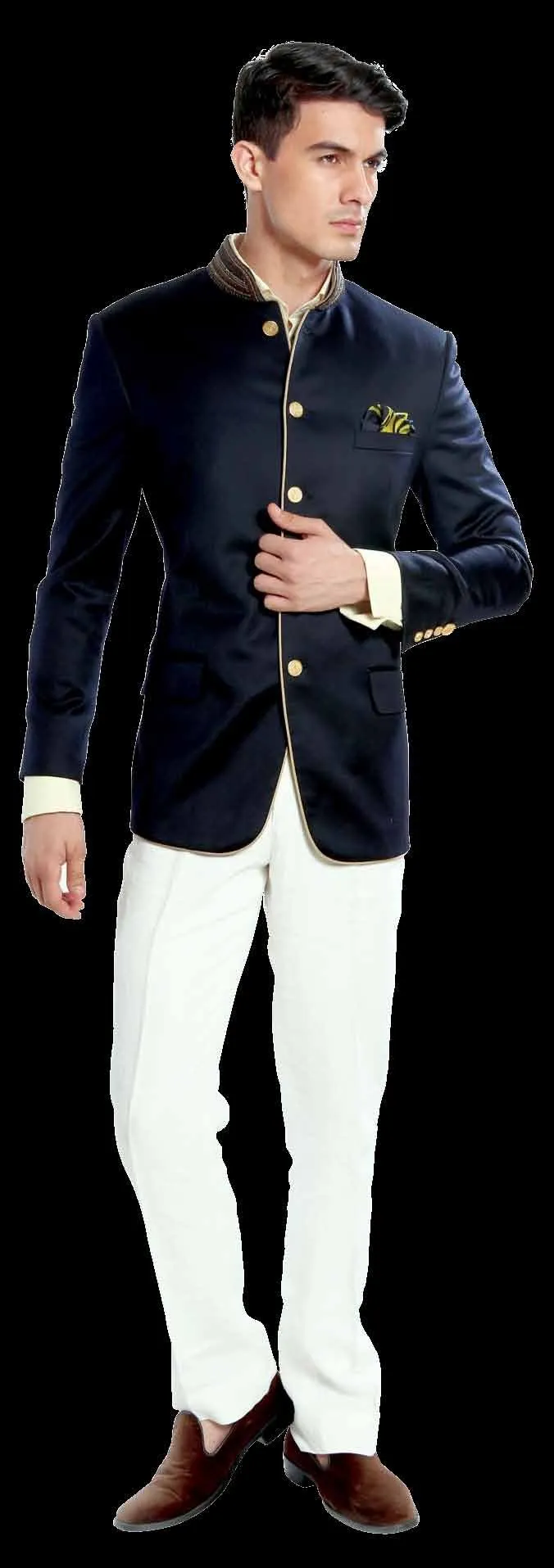
Though he started out in 1991 in a market that was dominated by the salwar kameez, assisting Rohit Bal exposed him to menswear and its scientific denominations. “The concept of selling a plain white shirt didn’t exist, and I have observed over the years that men are more loyal customers than women; they will stick to you, if they like what you offer. Women in our country have been spoilt by choice, making them exceedingly fickle,” he confides.
Flipping Destiny
Interestingly, the decision between continuing work as interns or launching their own labels was decided by the flip of a coin. Egged on by his colleague JJ Valaya, who was of course in favour of the latter, he did win; that providential day gave birth to two new labels that went on to redefine the style landscape.
“I started,” he recalls, “by retailing 15 outfits from Mutiny, a then hip store in Greater Kailash Part I (basement), hoping to offer men something which their ordinary tailor could not provide—sharp tailoring and natty cuts, even though we had no idea at that time what was happening in the international markets; even fashion magazines came to India two months late.”
In an industry where the adage “survival of the fittest” holds true, Soni says it was an environment that fostered no planning or strategy; they were all shooting in the dark. “It was especially tough for me as I never succumbed to making lehenga-cholis where the real moolah is; if you do prêt or diffusion, it is hard to exist in a country where the major spending is on wedding outfits,” he says.
In the late 90s, Soni did delve into women’s wear, but in his style tailored clothing, as he detested the term ‘Indo-Western’. “The market changed after the creation of the Fashion Design Council of India”, he tells us, “which was a body by designers working for them. I was invited to be part of the New York Fashion Week in 2005, and the first Indian to win this coveted honour.”

Homeward Bound
Soni managed to raise 60-70 lakh rupees for a grand show, and his boat set sail. Soni courted ‘only’ foreign shores, retailing in almost 69 stores worldwide, hopping from the US to the UK from 2006-2009, until the bubble burst when the markets crashed. As the Lehman Brothers slid into oblivion, everything he had painstakingly built got washed away in nano-seconds. And Soni was forced to move home and start all over again. A fatal mistake he made was not keeping one foot in India, he says.
“After coming back, monetarily it was tough,” he says, “everything shook a little bit and I was hoping to re-establish myself and that’s not easy as other designers already had a foothold. I called up stores personally and focused on growth within the country.” However, he knows his strengths and worked on them; the biggest is understanding the proportions of the human body, which comes naturally to him, and which he attributes to his science background.
Simple Is Not Easy
“I faced a lot of criticism last year about my finale collection,” he says. “People said all kinds of things including that I am colour-blind without realising that it is exceedingly tough to show with monochromes. They also accused me of copying an international designer, but I took it on the chin. Rohit Bal had kindly said to me, ‘Simple is not easy, simple is difficult.’ That kind of stuck in my head. I make clothes that are classics. Timeless is my mantra, has been, and will remain so till the end.”
And that’s why Soni is ready to enter the e-retail scenario which seems to be bursting at the seams, even though he reiterates that there are no ingenious marketing channels in India. So accessories are a game he won’t play. “Unlike the West where 70 per cent of the business is generated from shoes, jewellery, bags and perfumes, here that paradigm does not exist,” he says. “But interior spaces interest me and I am keen to do homes, even footwear which I am obsessed with,” he says.
With talented sister Smita Soni, now a partner in his company, Soni’s wife, former squash player and Arjuna award-winner Misha, the wing beneath his wings, has been his pillar of support. “My wife is also my biggest critic,” he shares. “But she doesn’t interfere with the business; she looks after our two children, our son Neel, 13, and daughter Keya, 6, who has a mind of her own. Keya is effusive in her style choices and will not be dictated by anyone. I will not dissuade her if she ever wants to be a fashion designer.”
From the December 2014 issue of L’Officiel India.
Spotted a mistake, or your photo used without permission? Report a correction