Aesthete de Fragrance




Since days forgotten, India and perfumes have had an intimate relationship. From the Ayurvedas to the Mughal princes, perfumes have shaped the Indian culture, be it Vedic, Buddhist, Hindu or Muslim. In the Mahabharata, Duryodhana mentions heaping tributes of perfumes, sandalwood and aloeswood, which is symbolic of the use of scents even in an age old mythology.
Ancient Indian literature is full of references to perfumes, whether it is Rambha whose face, is made of fragrant lotuses, or the lush groves of sandalwood, aloeswood and mango trees which was Gautama’s abode. The land filled with the fragrance of patchouli, flowers and incense, India is blessed in abundant with scents.
 L’Officiel India DigitalRead L’Officiel India in the digital libraryEvery issue and every cover story, on TCG Media.Read now
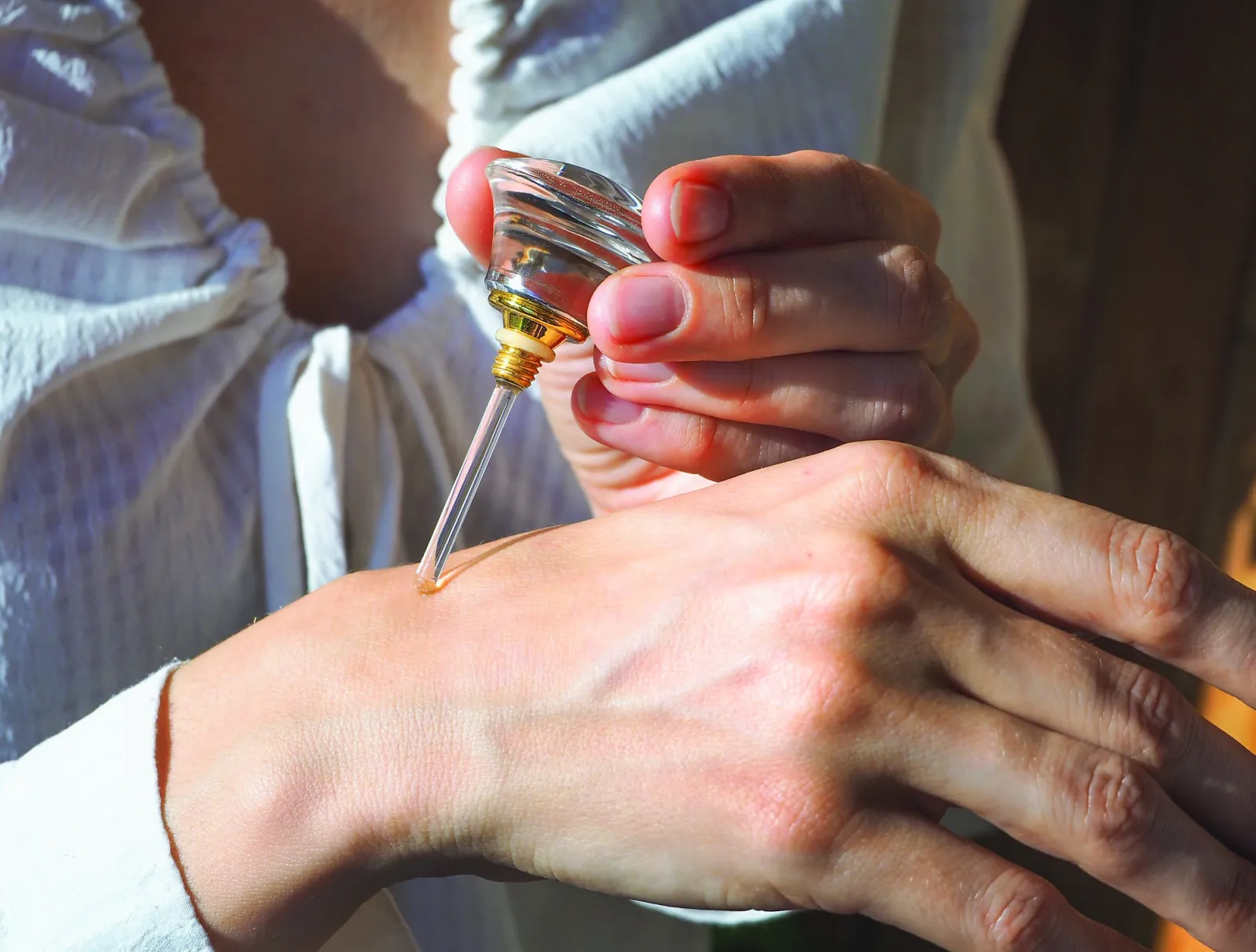
The land which gave birth to sandalwood, mitti, attars of gulab and night jasmine has a symbolic meaning behind each of the ingredients. For centuries, the town of Kannauj in the northern state of Uttar Pradesh has been known as the country’s perfume capital, producing the traditional attar, which congregates our connection to the world of fine fragrances.
And a number of ingredients from India, including jasmine oils, sandalwood, and rose water, are used by luxury perfumeries around the world. This month we pay tribute to our fine history, culture and heritage that gave birth to the art of fine perfume artistry since time immemorial. Being the provenance of quality ingredients for the world, we question whether or not India is getting its due from the fragrance industry.
Perfumers are a rare breed. These half-artist, half-scientist hybrids undergo rigorous training, memorize the smells of hundreds of ingredients, and spend decades honing their craft—which might explain why there are reportedly more astronauts than perfumers in the world. For many, the job isn't merely about peddling bottles of sweet-smelling goods to consumers; the goal is to convey an emotion, create a beautiful moment, or jog a childhood memory.
To find out what it takes to create top-notch fragrances, we spoke to perfumers and industry experts who broke into the industry through very different paths. Master perfumers are sometimes called a nez—the French word for nose and for good reason. They commit hundreds of scents to memory and can distinguish between ingredients that would smell identical to the untrained nose. Many perfumers can also tell an essential oil from a synthetic material, which is no small feat.
“I am quite obsessed with the memory of smell. Two things excite me most about a fragrance. The first is the beauty of the ingredients themselves, and the second is the harmony of the composition. In all my creations I try to weave in an element of memory and another element of innovation. An example is Aphtoori Absolue where I combine jasmine with sage. I must mention that the use of Indian ingredients is not entirely known all around the world. But of course, I live my life through my nose. And one of the ways I'm very always very excited about smells is, of course, the change of seasons and how things smell. I remember very clearly the smells of the soaps of my childhood, and the smell of certain parts of my home, my mother had this one suitcase in which she stalked all her fragrances. And I clearly remember smelling some spray fragrances. Whenever she would open the suitcase there would be this waft of, of sugary smells. I believe smells become markers of experiences and those experiences beckon memories, such as, the smell of leather during monsoons, the smell of petrol stations and the smell of new cars and so on…” shares, perfumer Jahnvi Dameron Nandan of The Perfume Library.
Talking about perfume is talking beyond the smoke, beyond the fragrant clouds that rise from a burning furnace; to touch, to seize, to describe the very little which we can say, about ourselves. For perfume narrates itself through those who smell it, wear it and live it. We notice that international brands and perfumers have been inclined towards the usage of Indian spices, herbs, essential oils and flowers while crafting a scent. But how important are they today?
“India is the fragrant garden of the perfume world, and I could list dozens of raw materials that are crucial to create scents. They are the gems of India and we all must take care of them and make sure the natural ingredients are well taken care of in a sustainable way as the resources on our planet are not endless. I have great respect for Indian perfumery. The techniques between India and French perfumery are very different but there is a common passion for floral notes. Kannauj is an amazing place that I am dying to see in reality. I have seen many TV documentaries about this iconic place of the perfume world. It is more ancient than Grasse in France,” said perfumer Francis Kurkdjian.
Likewise Persolaise, an international perfume critic further goes on to say, “Indian perfume naturals have been a mainstay in perfumery for generations now, still as relevant as they have been for years. India is home to a wide array of natural ingredients such as, pepper, cardamom, saffron, jasmine, tuberose and sandalwood which are some of the most prized perfumery naturals and exported widely even today. Perfumery indeed would be poorer without the usage of Indian materials, especially woods and spices. It is very sad indeed that the current situation with real Indian sandalwood means that not much of it can be used in perfumery today.”
It is often said that a scent can make one travel across time and memories, perhaps it the easiest form of time travel. You can be transported to those hidden impressions of when that fragrance was a daily part of your routine and memories reminiscent of it. India has been a perfumers’ leitmotif for many years. And an attempt to capture the vibrant spirit of the people, the smells, poetic passages and the colours of India in a fragrance is an exigent task. With the growth of niche fragrances, it seems every fragrance needs to have a story, how do we unravel that process is what we seek to know.
“Every fragrance unfolds a story of its own. It’s a personal experience each time as the same scent can evoke different memories for different people. I think it’s best not to interrupt this process in any way and force a story on the packaging for the sake of an easy sell. And my dream with my brand has been to narrate the story of India, although it’s impossible to capture all that in a single scent, which is why we launched an entire line of eight fragrances. Madurai Talkies is a nod to the romantic era of Indian cinema with jasmine as the main ingredient, while Chai Musk is a retelling of the memory of sipping masala chai at a small tea stall on the streets of Mumbai. Calicut takes you straight to the spice markets with pepper as a main note and Seven Islands is a nod to the free spirit of Mumbai,” explained Manan Gandhi of The Bombay Perfumery.
Like a chef who only uses ingredients grown within 100 miles of his kitchen, a large part of a perfumers pride and satisfaction is derived from the sacrifice that comes out of self-imposed constraints. Fragrances and perfumes exude a seductive spirit and oriental mysticism about them, and as homegrown Indian perfume labels seem to be the talk of the town, we endeavour to explore the journey of the industry ahead.
“Well modern face of perfumery is very bold, now the fragrances that are coming up in the market have distinctive features, leaving astray the contemporary rose, jasmine, sandal wood and musks. There is a good growth in niche fragrances, and fragrance houses catering to a very selective clientele. Nowadays, the customers are looking for a signature scent of their own, which hugely depends up on their nature, lifestyle, and ancestry. Hence the companies are experimenting with ginger, cinnamon and star anise being the top note of a fragrance and you will be surprised to know that it is selling. We are trying to bridge the gap between western and Indian culture by capturing the fragrances of their soft flowers and twisting them with our Indian spices as well as our flowers,” concluded Pulkit Malhotra of Mocemsa.
Spotted a mistake, or your photo used without permission? Report a correction