Weaving Together Heritage
Introduces Indian handlooms Kota, Jamdani and Paithani, offering understated luxury and intricate craftsmanship for a simple, elegant wardrobe.
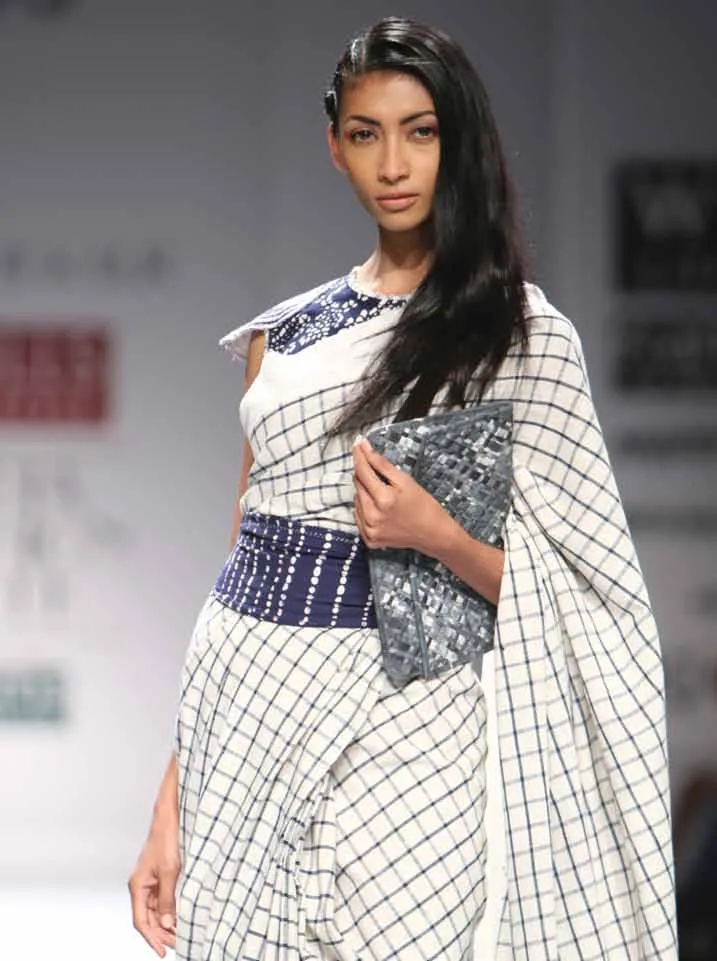



Somewhere between fleeting international fashion finds, cutout couture, subtle sheers, esoteric embellishments, and couturists’ creative licenses, there exists priceless beauty in simplicity and understated opulence. Traditional Indian handlooms that are a testament to the country’s age-old textile industry bring just that luxe appeal to your wardrobe. 1. Kota From: Rajasthan Weave into your wardrobe: Because of its unique weave. Pure cotton threads are used during weaving, and the end product is a translucent, light fabric complete with a cross pattern or checkered pattern known as khat. It enjoyed a special place during the Mughal reign. As a designer in a monogamous relationship with Indian textiles, I pick my fabrics from the full spectrum of textiles, and Kota has been a mainstay over numerous collections. 2. Jamdani From: Uttar Pradesh Weave into your wardrobe: For its detailed and intricate craftsmanship. Originally introduced by the Nawabs of Oudh, the practice of Jamdani weaving is still practised in two main centres in Uttar Pradesh. Traditionally, it is easily recognisable by its style of weaving white on white, but you’ll also find the use of silver and gold thread, while motifs mostly comprise florals, birds and animals. Mostly seen in saris, it also marks its appearance on borders and dupattas with the aim of infusing a traditional weave without overwhelming a product.
3. Paithani From: Maharashtra Weave into your wardrobe: For its subtle high-end luxe edge. Zari thread sewn into fine silk fabrics makes it a pleasurable treasure. Characterised by borders of an oblique square design, with a peacock-adorned pallu, the Paithani weave is reminiscent of tapestry. Due to its proximity to the Ajanta Caves in Maharashtra, the influence of Buddhist paintings can be seen in the woven Paithani motifs.
 L’Officiel India DigitalRead L’Officiel India in the digital libraryEvery issue and every cover story, on TCG Media.Read now
4. Chanderi From: Madhya Pradesh Weave into your wardrobe: For its distinct and enduring threadwork and stunning combination of cotton and silk. The craftsmanship of the Chanderi weaves is unparalleled, where the expertise lies in the thread, which retains its shape, appearance and structure. Raw Mango’s saris and designer Rahul Mishra’s usage of Chanderi are fine examples of how the timeless weave is used by the modern-day fashion frat. 5. Dhakai From: East Bengal Weave into your wardrobe: Because you should not give up on the divine opportunity to experience finely woven mulmul. Dhakai saris traditionally comprise different-coloured threads intricately woven on white, unbleached cotton. Here’s a fun fact: Dhaka muslin is one of the most famous and coveted fabrics in the history of Indian textiles, so much so that owing to the fine weave, the Egyptian Pharaohs would use it for wrapping mummies. Dhaka muslin has stood the test of time and continues to be considered the ultimate in luxury. Pero infuses signs of the Dhakai weave across collections, giving it a more contemporary feel. 6. Maheshwari From: Madhya Pradesh Weave into your wardrobe: For its ability to tell fine stories. The motifs of Maheshwari saris have been derived from temple and palace carvings. Besides the more detailed renditions, Maheshwari saris are cotton saris woven with distinctive designs involving stripes, checks and floral borders.
7. Ikat From: Andhra Pradesh Weave into your wardrobe: For its obvious ability to outlive any trend. Its reputation is evident in the slew of designers that use the weave. Paromita Banerjee swears by Ikat. One of the few weaves that has as strong and international a home as the domestic one—it is characteristic of Indonesia. The international appeal only adds to its status as a timeless weave. I cannot fathom a piece on indigenous weaves without a mention of Neeru Kumar. Besides her extensive work with Khadi and Kantha, she has been working with a group of Ikat weavers in Orissa to contemporise it. 8. Ilkal From: Karnataka Weave into your wardrobe: For its recurring usage of the colour red, and tribal-inspired aesthetic. Ilkal has a distinctive bold pattern, and is usually made from cotton, but is also available in silk (Ilkal silk) and cotton silk blends (Ilkal chamka). 9. Kanjeevaram From: Tamil Nadu Weave into your wardrobe: As nothing else can capture the essence of our opulent, myriad and resplendent traditions better, the status of Kanjeevaram as a trousseau staple has remained unbeatable for decades. If you were to own just one timeless textile, you can’t go wrong with a vibrant Kanjeevaram.
10. Patola From: Gujarat Weave into your wardrobe: For enjoying its royal ascendance and its heirloom status. To elucidate, patola-weaving is a closely guarded family tradition; there are fewer than five families in Patan that weave these ikat-reminiscent saris complete with bright colours and geometric patterns. It takes between six months and a year to make one sari. I like how designer Gaurang Shah has used Patola as one of his collections’ mainstays, infusing it with Khadi and accentuating it with Parsi gara embroideries and Kanjeevaram borders.
11. Pochampally From: Andhra Pradesh Weave into your wardrobe: To honour the centuries-old traditional looms and over 1,000 weaving families across 100 villages.
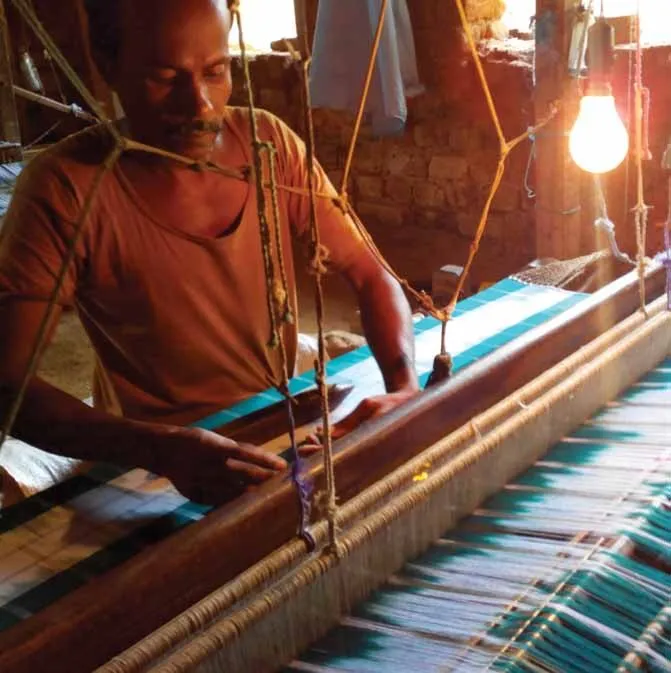
Drawing on the rich history of our country’s homegrown weaves, the Pochampally might be confused with Ikat, and could very well be Patola’s twin, but regional differences separate the two. Created by a cluster of 80 weaving villages, a Pochampally weave is characterised by bright colours and statement patterns.
12. Tussar From: West Bengal Weave into your wardrobe: For its obvious grandeur, naturally occurring colours and perfect drape. Tussar doubles as a fabric favourite for both fashion and upholstery choices. Lightweight and almost linen-like, Tussar silk falls perfectly in any silhouette, all the while preserving the sanctity of being a textile steeped in stateliness. Abraham and Thakore used wild silks, including Tussar, paired with Ikat and temple borders and brocades in their AW14 collection, proving that a design aesthetic rooted in Indian sensibility always wins.
13. Benarasi From: Varanasi Weave into your wardrobe: Because Benarasi is on every collector’s list for capturing beautifully the culture, spirit and iconic status of its founding city and for resonating with artisanal magnificence. The Benaras weave is synonymous with brocades made from rich, heavily-patterned fabrics, mostly silks, incorporated with zari work. Normally, the background material is woven in silver zari and the patterns are in gold. This is known as Ganga-Yamuna, where Ganga stands for the gold thread and Yamuna for the silver.
14. Kasavu From: Kerala Weave into your wardrobe: For its traditional and subtle appeal. The kasavu weave is in danger of dying and has emerged as a coveted luxury item, since it takes a weaver three to four days to complete a sari. Coupled with the fact that the gold borders are made from real gold, the Kasavu weave is a worthy investment. 15. Matka From: Bhagalpur Weave into your wardrobe: For the versatility and durability of this fabric that proves that beauty lies in imperfection. Matka silk means rough handloom silk fabric and since it comes from thick yarn spun from the silkworm, it results in some irregularities in the fabric. Resembling tweed in texture, its irregularities are actually considered unique and widen its scope. The fabric sews very easily and can be used for suits, jackets and furnishings just as easily as for embroidery and textile art. 16. Tanchoi From: Gujarat Weave into your wardrobe: For experiencing the pleasure of this intricate and small weaving pattern with a comforting satin finish. Tanchoi silk is a product of cultural exchange between China and India, which makes the weave historically significant. The weave has spread across state borders, with Varanasi weavers introducing zari to the already complex detailing.
17. Baluchari From: West Bengal Weave into your wardrobe: For its more than 200-year-old heritage and its famed intricate mythological depictions on saris, especially dramatic scenes from the Mahabharata and Ramayana. Historically developed in the Murshidabad district, the Baluchari weave is a plain-woven fabric brocaded with untwisted silk threads. It takes about two craftsmen and a week to develop one sari. 18. Bhagalpur From: Bihar Weave into your wardrobe: To own a piece that reverberates with the soul of the Silk City of the country. The silk industry in this town is 200 years old, and is home to over 30,000 weavers. A distinct and unique weave, Bhagalpur silk is popular both for domestic sales and export purposes. Designer Samant Chauhan and Indian wear specialists Meera and Muzaffar Ali effortlessly use Bhagalpur silk as part of their collections, paying homage to the traditional weave. 19. Ashavali From: Gujarat Weave into your wardrobe: To lend your support to this lesser-known brilliant Indian textile. The Ashavali weave is complex; the woven inlay technique comprises four to five coloured silk threads interspersed with zari. Although it resembles brocade, its beauty lies in its multicoloured look. Designer duo Shyamal and Bhumika’s new bridal line incorporates the dying art. 20. Khadi From: Pan-India Weave into your wardrobe: Because this Indian-at-its-soul weave has traversed time, trends and movements, solidifying its status as a quintessential Indian weave. Handspun and handmade, Khadi tends to have small weaving errors, which only add to its charm. Perhaps more resonant of a lifestyle rather than a fabric for fashion, it progressively feels better with each wash. Deepika Govind stood up for the fabric and all its creases with her 2013 line named Khadi Kool. As her collections’ mainstay, she gives Khadi a well-deserved place in our closets.
21. Malkha From: Andhra Pradesh Weave into your wardrobe: For this soft, breathable and absorbent organic cotton has transformed into a contemporary fabric with modern, sustainable small-scale technology. The fabric is gently spun and then woven by hand, thereby preserving the live fibres all the way. My entire SS14 collection, Semah, was constructed using the organic elements of the fabric—a deliberate move to incorporate Indian textiles.
Spotted a mistake, or your photo used without permission? Report a correction