
Vibhor Sogani: Other Side Of Light
Vibhor Sogani is on a creative overdrive for two and a half decades. This year, he has anchored himself at the Light + Building Fair in Frankfurt.
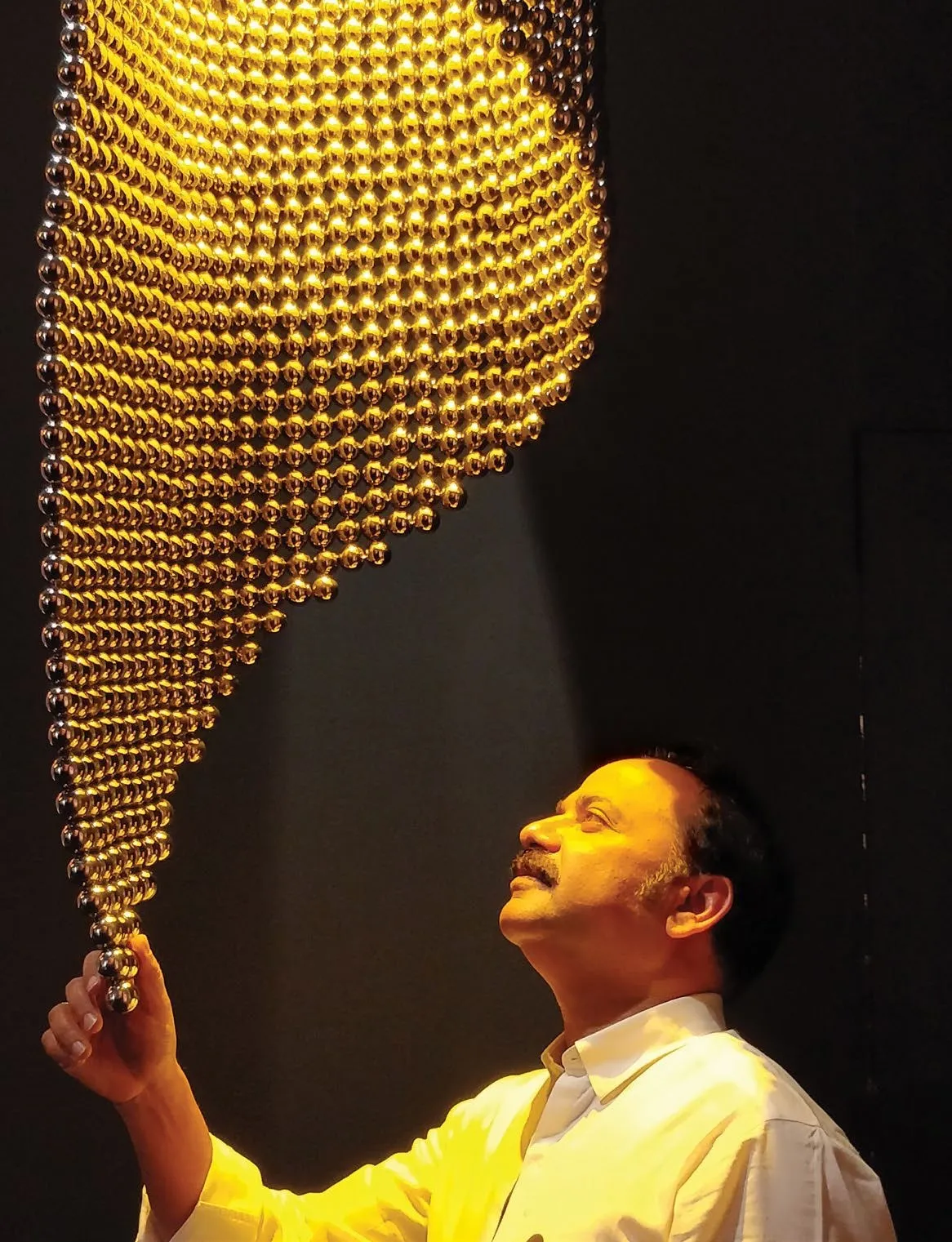




When Vibhor Sogani’s 40-feet high steel Sprouts came up national capital, he might have little inkling that it will become a landmark. But, Sprouts is not the only installation that made him one of the most talked about artists India has today. His projects such as redesigning Mumbai’s suburban trains and ‘Mahatma in Me’ exhibition garnered him his fair share of fame. This year, he became the first Indian to exhibit at the Light + Building Fair in Frankfurt, Germany. Excerpts from the interview:
What catches your eye when you travel? Do any of those things make their way into your designs?
 L’Officiel India DigitalRead L’Officiel India in the digital libraryEvery issue and every cover story, on TCG Media.Read now
I come across innumerable sources of inspiration while travelling. I am someone whose pleasure comes from the observation of natural phenomena, forms in nature and the physical environment. When I see something that has an emotional appeal, or a process, or is simplistic in its characters, I sketch the object in my mind and try to materialise its worth through the translation of its meaning within my designs.
Which has been your most challenging project so far?
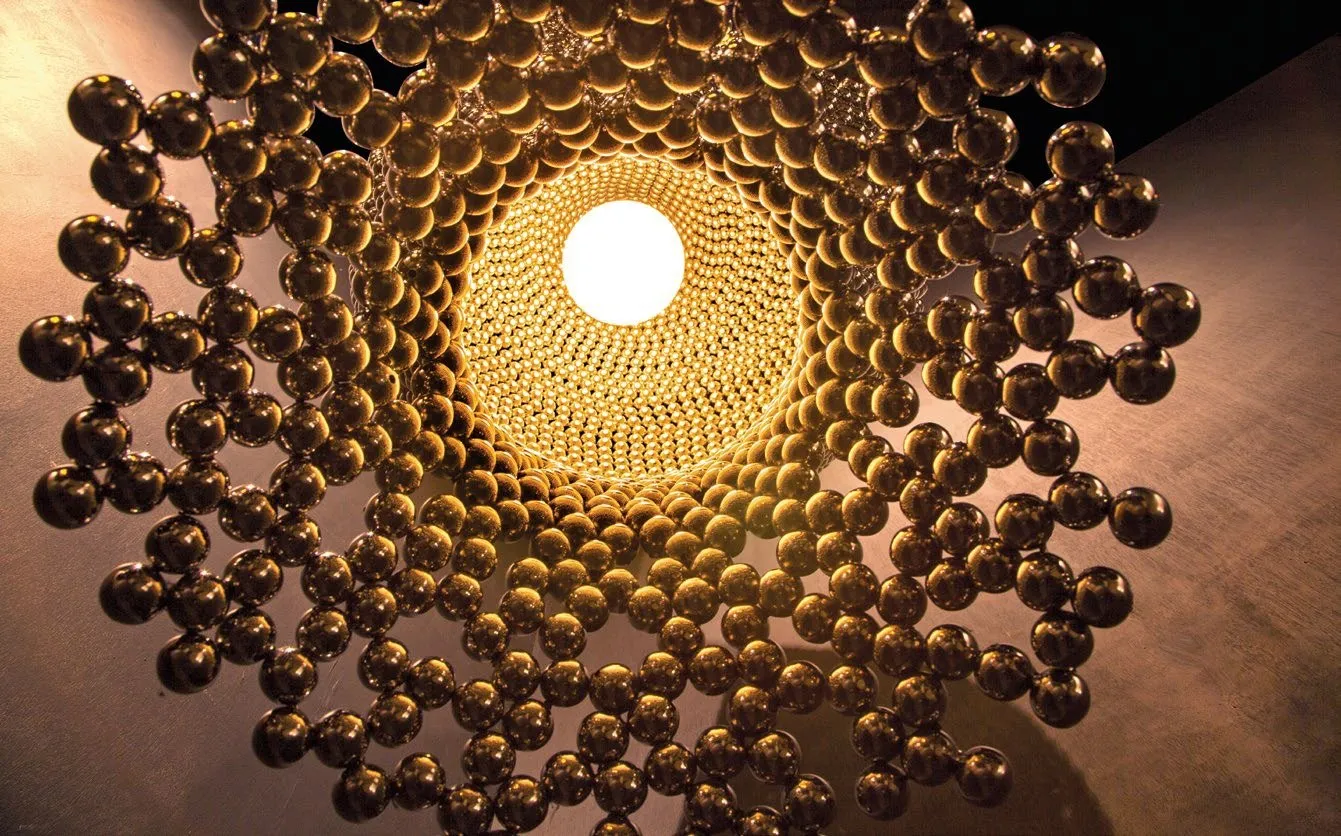
Perhaps the Shell collection. Shells are inert forms, almost perfect, and they are defined by the governing process of the molluscs that live within it. The folds of the shell are determined by the molluscs and how they construct it around themselves. To understand that and be able to translate the depth and mystery of each shell was the most difficult thing to achieve. The installation does not allow the source of light to be visible, the light simply appears as warmth that envelops and reflects off of the solidity of the stainless-steel balls. To achieve that quality of light, was a really arduous process, and took a lot of effort to perfect.
You have been a part of the design industry for over two decades. What do you think has changed over the years?
I think we have progressed a lot, in terms of quality of design concepts, manufacturing and material innovation. Enhancement in technology allows us to express new forms and produce different impressions of the same material. Also, we are much better at communicating and sharing knowledge, the sense of community and a feeling of cooperation have grown tremendously over the years.
Were you always inclined towards design?
My father was a geophysicist who travelled a lot for work and on those travels, I would accompany him. That exposed me to so many landscapes, living in tents for months at a time. One could say then that in my formative years I was exposed to different natural forms. And my work today, is an allegory for those memories.
You studied at NID, Ahmedabad.
NID was a stress-free environment that gave us plenty of time and space to absorb different forms of art and think over the examples we came across in an effort to develop our own unique style of work. We gained multi-disciplinary exposure to various aspects like film, textile, furniture and ceramic design, graphics, glass-making techniques, metal machining and insights on various arts and crafts. We learnt the tools and skills needed to bring ideas and forms to life in a very structured and methodical manner. It is that training which enables me, to this day, to approach any complex idea with a sense of comfort and vigour.
How would you describe your journey as a designer?
It has been adventurous and quite versatile. I have been exposed to the multiplicity of cultural expressions in India and contemporary global thought. The knowledge and experiences that I have collected along the way define my personality now. What I do, and my history of work, is an integral part of my identity today. Therefore, I can say that my journey has been quite fulfilling, so far.
Do you think we are liberal in terms of letting our designers and artists express themselves?
It certainly depends on the organisation and context of work. Right after college, I worked as an industrial designer for some firms. Although my time there informed me a lot about production values but I found the environment very restrictive. So, I moved on to start my own studio by taking up consultancy projects for a while, that were quite flexible, and exposed me to varied thoughts. And then ever since I started with my first design collection and exhibition, the experience has been explosive, and I haven’t had the need to look back. As a fraternity, we are quite liberal, and the commissions an artist gets while practicing on his or her own are also liberal in their demands.
Do you think the kind of training or schooling we have here is enough for young minds to grow?
I think young people need to be exposed to more forms of art than they are today. It is necessary to understand different sciences, but it is equally important to understand different cultures and expressions of form. It adds to one’s perception, ability to interpret and empathy. In order to understand each other and the society we live in, it is imperative to be educated in some form of art. I think that is missing in our education system, but then there is also an observable continual increase of awareness and honest efforts to address problems that exist.
Are you tired of being asked about the Sprouts?
Sprouts will be celebrating 10 years of its conception very soon. The fact that people across India recognise it as a public memory and take it as the contemporary public image of Delhi is an honour in itself. For me as an artist, I appreciate having a chance to work on installations that are of public relevance and draw their opinion. So being asked about Sprouts is never tiring.
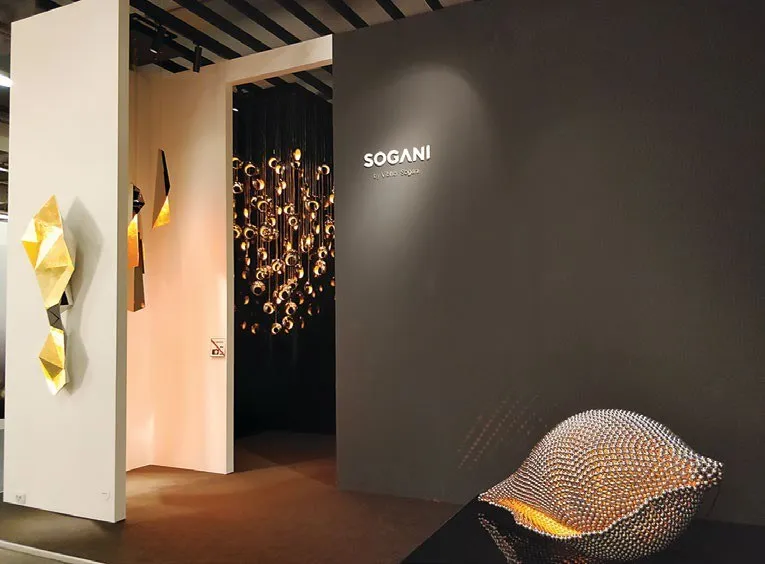
How has the experience been showcasing at the Light + Building Fair in Frankfurt?
In one word, it was gratifying. Representing India on that prestigious global platform and the sheer scale of the event itself were a humbling experience. To be part of one of the largest contingents of lighting design and showcasing our work in front of colleagues from different part of the world along with the large number of visitors was extremely exciting.
What does this participation mean to you? And how do you think it impacts other artists of India?
The experience has been quite something.
Exhibiting on a world-famous stage and receiving a noteworthy and positive response is something I will always cherish. Within a larger fraternity, such recognition is exciting and encouraging, pushing us to innovate further. I hope my participation in Light + Build will serve as an inspiration to other designers. There is a lot to learn and see, and such platforms make it possible.
Tell us about the collection that was in the exhibit? What was the inspiration behind it?
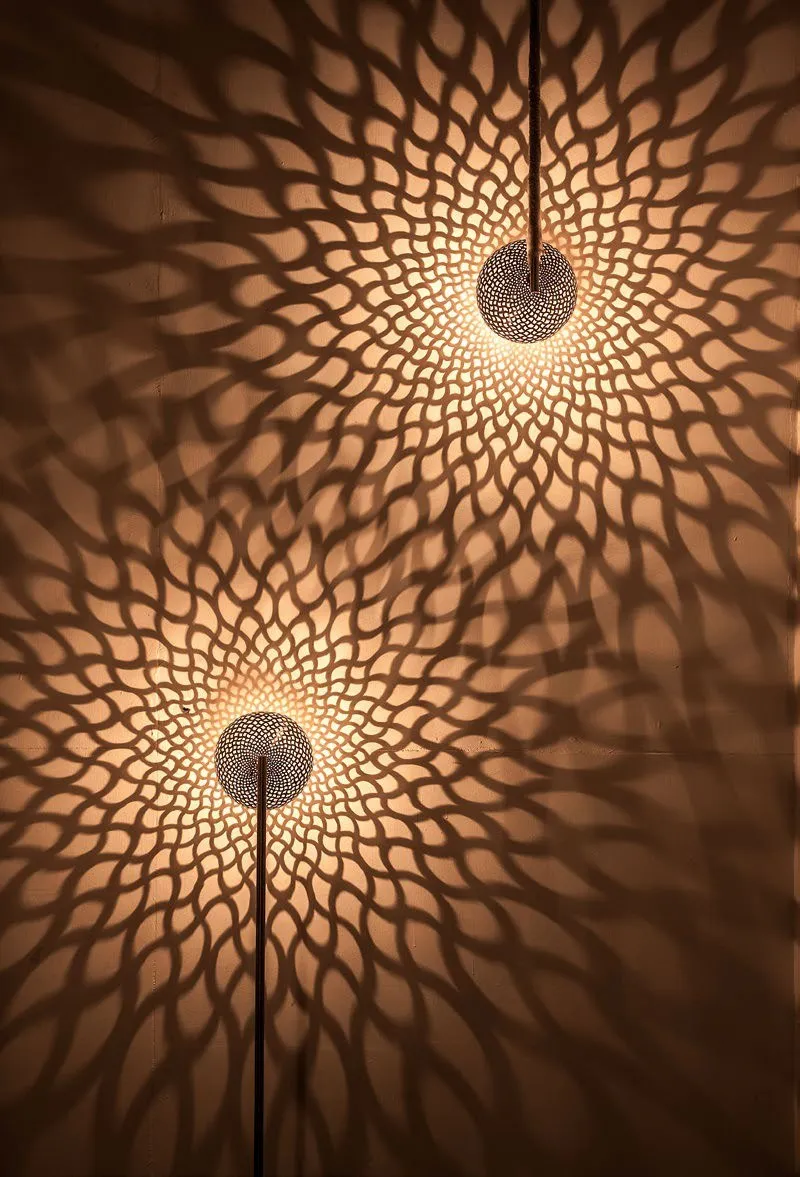
We unveiled three new collections at the event: Casa, Shell and Fold. All three collections were marked by stainless steel and warm colours. The light source is hidden, so the installations create a soft uniform lighting, which in a very fluid manner envelope the silhouette of the object. The inspiration was our own reflection on the solidity of simplistic shapes while presenting light as the guiding characteristic in the actual definition of shapes.
What was your takeaway from the fair?
We, as designers, are involved in a process that requires the response of people. An event like Light + Build not only provides a platform to get that feedback from consultants, manufacturers and other designers, but also from non-designers, those who actually consume what we create. The kind of interaction one has, and the response and feedback that one gets during the exhibit serve as great critique and inspiration, making the design process robust and well-informed.
From the May 2018 issue of L’Officiel India.
Spotted a mistake, or your photo used without permission? Report a correction












