The Meraki Project: Back To Basics
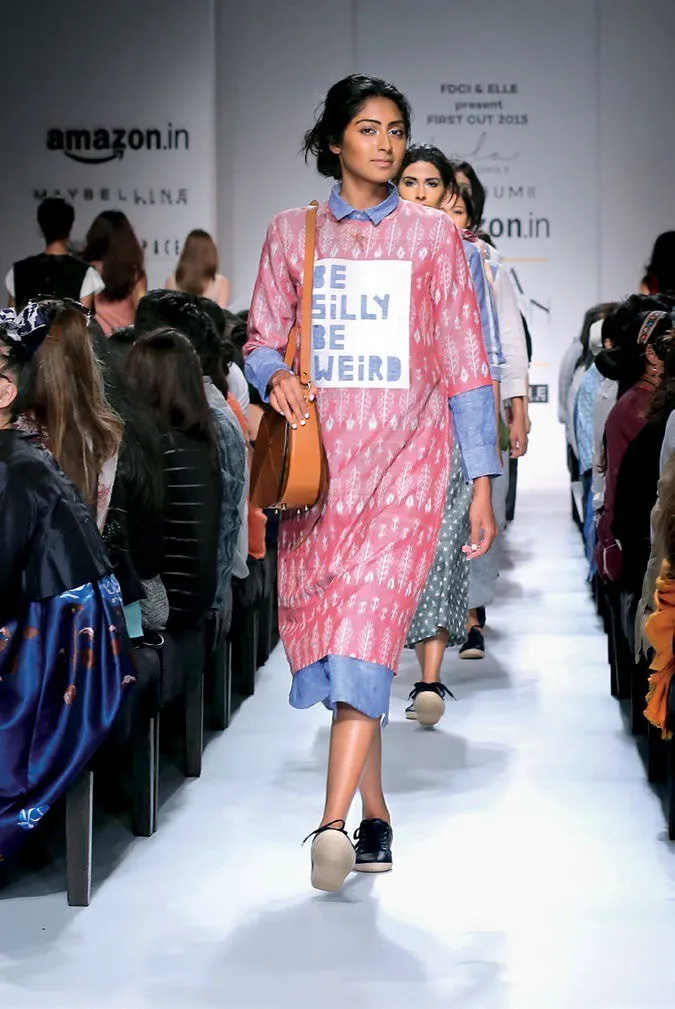




The Meraki Project is a tribute to everyone involved in a design process who work hard to create clothes. Its founder, Sonali Pamnani Jhabakh, tells us the distinct story of her label.
Meraki in Greek means the soul, creativity, or love put into something. Sonali Pamnani Jhabakh started Meraki Project in 2014 with an ideology to make clothes that have a story behind it, to make clothes that make you feel like you are a part of something bigger. In its ideating phase, it was very important to her that the brand stayed true to its beliefs and aesthetics of trying to add value to a garment, to the fabric that is used to make that garment, and to add value to the lives of people who are working hard behind the scenes to create pieces that are wearable, eclectic, comfortable, beautiful and sustainable. “Keeping those ideas in mind, The Meraki Project came about,” she says. Sonali, a NIFT alumnus, feels that it is the best time for her to do something. As a young entrepreneur, she has years by her side and has liberty to experiment.
 L’Officiel India DigitalRead L’Officiel India in the digital libraryEvery issue and every cover story, on TCG Media.Read now
The inspiration for her comes from the fabric. She believes that it is the fabric from where the design comes.” Each collection she makes is inspired by a craft or textile, around which she develops a story. “The process from ideation to the final output is the most satisfying feeling in the world.” For her, it is such a beautiful process — to imagine something creative, sourcing textiles that inspire, design a collection, develop surface textures, and make the final garment. “To see it materialise exactly like I have imagined, is a feeling that makes me excited and satisfied,” says Sonali.
Sonali strikes a balance between tradition and modernity in her collection. Her aim is to use handwoven textiles and modernise them into contemporary and eclectic clothing for modern Indian women. “To strike a balance between tradition and modernity comes naturally in the entire process as we live in a world that stays true to its roots, but we also welcome change. It is ingrained in us,” says Sonali. In her collection, traditional clothes are presented in a contemporary way. The colour palette is vibrant and comprises pastel to powerful shades.
She works from her studio in Jubilee Villa, Hyderabad, where she sits down to first sketch the designs before deciding on the fabric. So far, she has created 120 pieces in women’s wear and a collection of linen shirts for men. When asked, how has she contributed to the sustainable business of fashion and how thinking sustainably has inspired the brand, she says, “In an age where fast fashion is the norm, we have tried to promote sustainable clothing that is made by a number of skilled craftsmen and tailors who put in immense amount of love and work into each piece that comes out of our workshop. When I had started collaborating with these kaarigars, it was then I realised how beautiful and intricate the entire process of fabric to garment is, and how it was important that each piece portrayed the story and love put into it.”
In an industry that is highly competitive, it is easy to get lost along the way. But Sonali has held her ground. “The thing that has been our greatest strength has been patience and staying true to our design sensibility no matter what,” adds Sonali.
Sonali excitedly tells us about her initiative called Collective by The Meraki Project. She works closely with other brands and designers and through her pop-up shop, she is bringing together different labels with similar fashion sensibilities on one platform. The first edition saw her collaborating with labels like KaSha, Doodlage, Kanelle, Anuj Bhutani, Urmi and Example Clothing.
“We are also planning to host experimental pop-ups that mix fashion, food, and music in the near future,” she says.
From the August 2017 issue of L’Officiel India.
Spotted a mistake, or your photo used without permission? Report a correction