
Sanjay Garg: A Simple Life
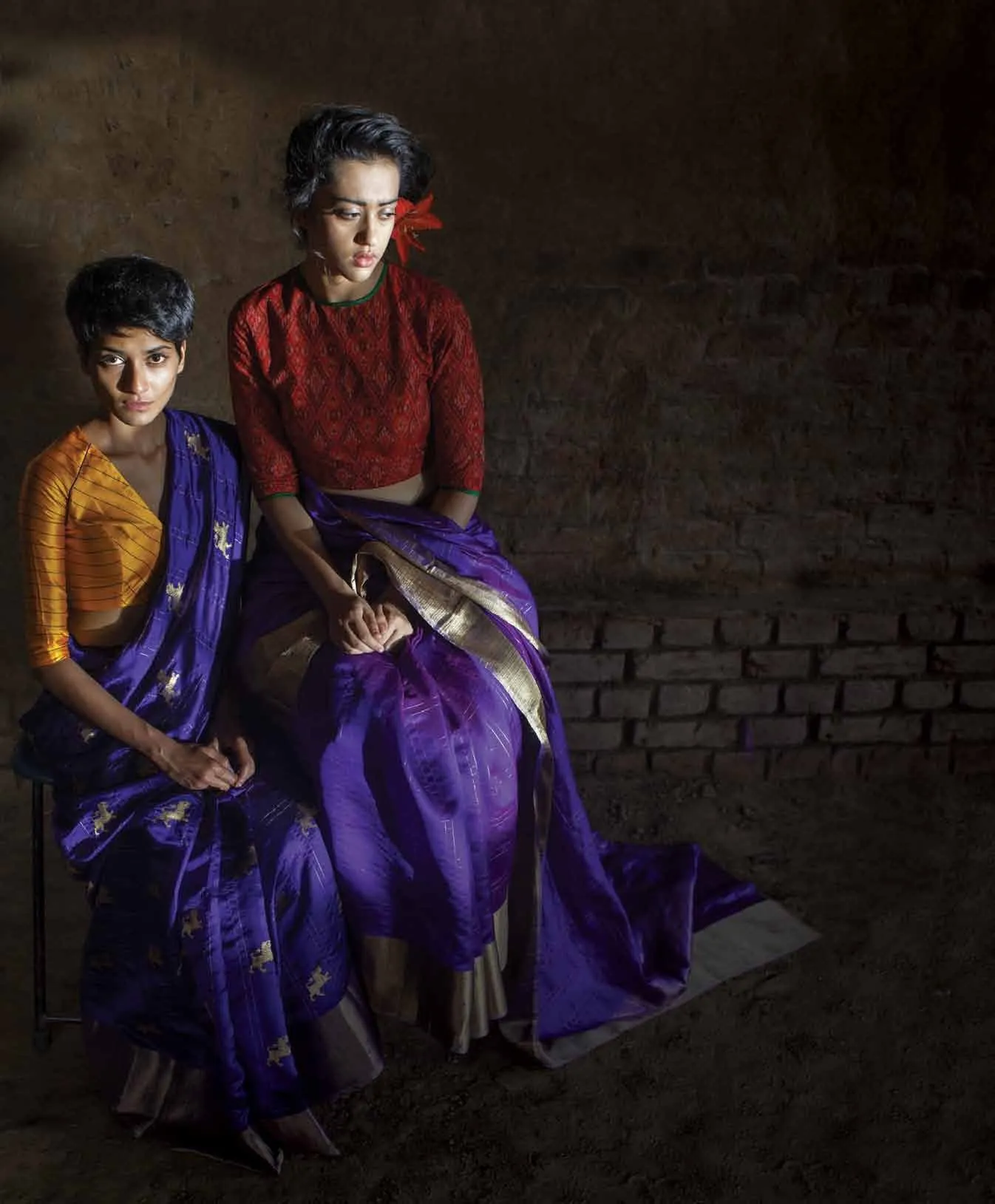




Raw Mango symbolises the austerity of design. Each handcrafted sari from this exquisite brand is a bespoke piece that tells the tale of Sanjay Garg—a man who dared to dream.
He is diminutive, mostly quiet, and will look at you straight in the eye and exclaim, “Perfection is ugly”, quoting the greatest Japanese style maverick ever, Yohji Yamamoto. That’s why textile designer Sanjay Garg believes in “perfect imperfection”, an aphorism of sorts, which finely explains his design mathematics. But the boy, who grew up in a middle-class family, never knew he would one day become a ‘designer’. Born in a nondescript village—Mubarikpur, he studied in a Hindi-medium school, was nudged by his parents to do his CA, but instead enrolled himself at the Indian Institute of Crafts and Design (IICD), Jaipur, because he wanted to study crafts. However, he felt isolated there, as he wasn’t conversant in English and nobody wanted to partner with him.
 L’Officiel India DigitalRead L’Officiel India in the digital libraryEvery issue and every cover story, on TCG Media.Read now
All that changed when he got selected for NIFT, Delhi. He graduated from NIFT in 2003 and that’s where his strong beliefs emerged. “Look at what designers have done to khadi. Gandhiji had envisioned it as a handspun, simplified fabric, as part of the Swadeshi movement—something you could make at home. Now khadi is so expensive, self-textured and so luxurious that only the rich can afford it. If Gandhiji was alive today, he would have been peeved at what khadi has become—a brand,” he says, adding that wanting to do handlooms is a fad now. It has nothing to do with helping weavers, for most designers take the plunge to ride the wave. “I give my weavers business all year round—nothing is done because it is in vogue,” he clarifies.
Nurtured with Love
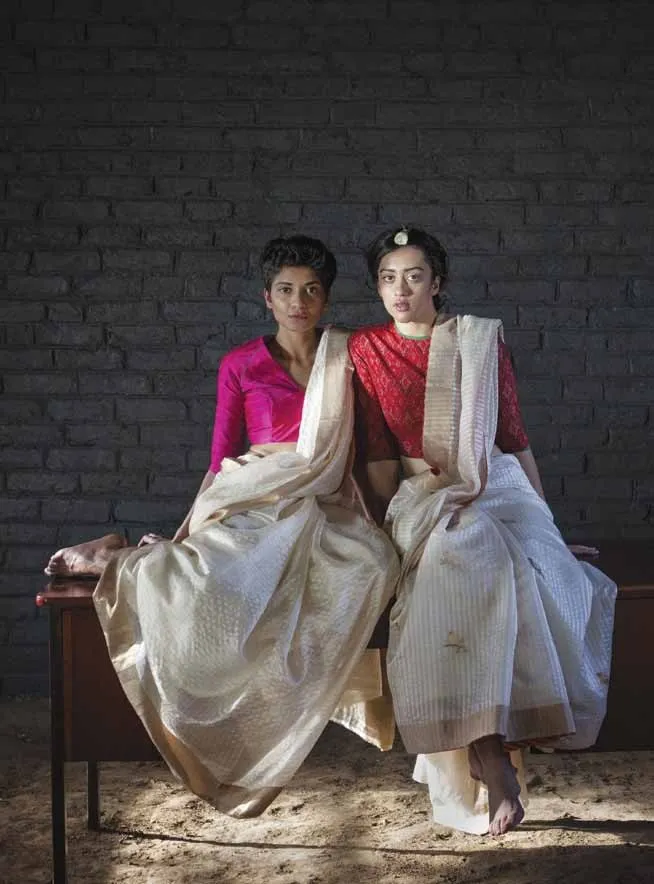
Garg launched Raw Mango, his label, which retails saris, stoles and fabrics, five years ago, with the intention to offer pure handlooms. Before that, he worked with Shades of India, where he learnt how to package traditional craftsmanship to lure European buyers. But soon after, Garg took a U-turn, as he realised that he wanted to live and die with his bootis and colours, never wanting to do exports. The logic was simple—his aesthetics, and his strongly India-rooted line was born to retain its essence and not sell its soul to a European buyer. “I don’t want to be a production house for a multinational company, which will order me to change the colour and style,” he confides. “It may make me rich, but it will certainly make me miserable. I want our Third World designs to be accepted the way they are, with all their vivacity, and not be ‘sobered’ down by some foreigner, who wants it to fit the blueprint of ‘exotic’ India that exists in his head.”
New Beginnings
Garg participated in a fashion week—LFW in Mumbai—for the first time ever, where he showcased his line under his name, not Raw Mango. It took him two-and-a-half years to get this line on the road, which included vibrant lehengas, skirts, tunics and kurtas—a tough one for Garg as he specialises in designing saris, which he did not showcase. “It was a new challenge and I gladly accepted it, after much convincing,” smiles Garg, who is known for his loom-stage innovations on Chanderi. His Chanderi is supple, drape-ier and wearable, devoid of all the ornamentation on the body and with softened zari on the border. Most of the patterns are done on the loom itself, including where to place bootis on the sleeve or pallu, so everything is that detailed and pre-calculated. Nothing is cut and manipulated later on, making each sari one-of-a-kind, with some patterns taking nearly two months to craft. “A lot of women come to me and say that they can’t wear a sari... I feel they say it because it sounds fashionable. Actually, I think it’s silly. Will you tell someone you don’t know how to use a fork and knife?” he questions. But he is glad that now he has taken his love affair with textiles beyond saris.
Interestingly, a man who wasn’t sure if he will ever succeed, Garg wanted to repay the loan of ₹90,000 that he took from his father to start his business, and that made him work harder. He operates out of a rented farmhouse in Chattarpur. He knows he can buy a property twice its size any day, but he chooses to live austerely. Quite like how he started by taking up stalls in Dastkari Haat, being prodded by Jaya Jaitley to do what he believed in and finally succeeding. “I didn’t know anything about how the fashion world functions, I don’t even today,” he laughs. “So I made stoles for the first time, three years ago, and they sold out completely. That’s when I realised I must have done something right.” But he agrees that he is still coming to terms with the whimsicalities of this world. He caught a ‘reputed’ designer blatantly copying his ingenious borders and motifs, so he decided to call him and set the record straight. “I saw a cover of a magazine with ‘his’ clothes, which was an exact copy of my sari,” he says. “But when I brought it up, there was vociferous denial. It was heart-breaking, but I learnt to let go and accept that nobody will admit their misdeeds.”

Magical Moments
The unpretentious sparrows, paisleys or parrots that you see on Raw Mango designs, all symbolise Garg’s love for the simple life. “I grew up in a village, and not in some pretentious town where I saw how the ostrich lived,” he explains. “So I drew from my roots, and a weaver also understands a sparrow better than the ostrich. If I have to explain the booti length, rather than inches, I use everyday items, like an elachi (cardamom), to tell him what size it exactly needs to be, and he immediately gets it.” His monograms are replete with images, sights and sounds of the time he spent in his village, and yet his simple ideology is vibrant with new ways of looking at old things. Which is why Garg does not work with master craftsmen, as he feels they are too old and set in their ways. He prefers young artisans under 40, who are willing to listen and to experiment.
Garg works with Chanderi, Bengal, and Benarasi to keep his passion for craft burning, and to break the stereotypes of handlooms being associated with only the intelligentsia. “Handloom should be freed of the ‘Oh poor weavers’ sympathy burden, and be given a chance in mainstream fashion without any appendages,” he says. Every sari by Garg has a riveting name, depending on the motifs—rimjhim (for pitter-patter rain), boond (drop), bochhaar (torrential rains) and ambar (sky) among others. He hopes a day will come when textile design will have its own identity, without having to be cast into an outfit to be celebrated. “That will be a true victory for me,” he concludes.
“Handloom should be freed of the ‘Oh poor weavers’ sympathy burden, and be given a chance in mainstream fashion without any appendages.”
From the September 2014 issue of L’Officiel India.
Spotted a mistake, or your photo used without permission? Report a correction