
Peerless Paisley
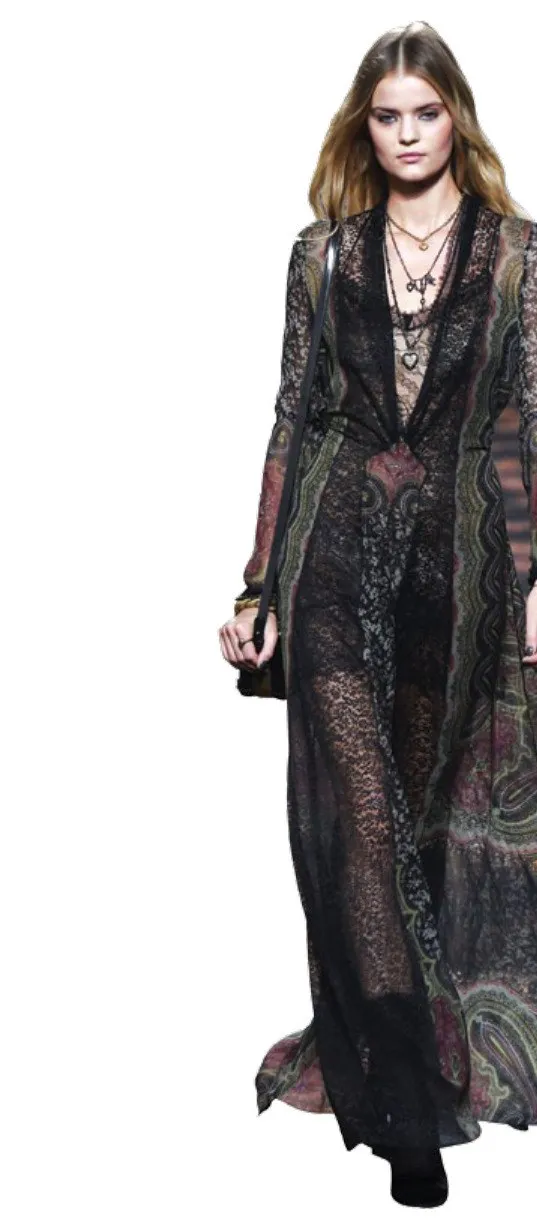




What is that one thing that is common on a modest cotton curtain from Anokhi, a jacquard upholstered wingchair in a Paris castle, a Jamewar shawl from Kashmir, a piece of textile from Scotland, a silver platter from Iran and that Kancheepuram that mom wears on a dress-up day. Call it what you please: Mankolam in Tamil, kalka in Bengali, Koyari in Marathi, Kerii in Urdu, Carrey in Hindi, Ambi in Punjabi, Ham Hock in Chinese, Buta or Boteh in Iranian, Peizuili in Japanese -- all of it translates to that one never-die motif. The Paisley. The Mango Print.
This motif has become so common in our life that we have stopped noticing it. In fact, we are not even sure who really created it. There are several stories, versions and countries that claim its origin. The English takes credit for it as the pattern became popular when the textile industry located in a place called Paisley in Scotland began making it. The Welsh textile makers claimed it and christened it the Welsh Pears as far back as 1880
 L’Officiel India DigitalRead L’Officiel India in the digital libraryEvery issue and every cover story, on TCG Media.Read now
The Persians (now Iran) call it the buta, – in their creative mind what we see as a mango looked like an inverted teardrop.
The French, never to miss chance on anything that is even remotely fashion, called it their pattern as the textile makers in Jacquard began using it on shawls, upholstery especially giving it a touch of luxury by weaving it in silk for the French royalty. Napolean and his wife Josephine encouraged this.
Napoleon who was constantly at war wanted his economy to grow and given that the French were lagging in manufacturing compared to other countries, he revamped the jacquard looms making it faster and more efficient, thus dramatically increased the production of paisley printed shawls. His wife played an important role in making sure it became a French iconic motif by showing off hundreds of her paisley printed shawls. In fact, call it the selfie moment of the time, Josephine displayed several portraits of her wearing shawls in similar style and colour craftily making it the ‘must-have’ fashion and luxury accessory.
When and where did our favourite motif enter our world and who really owns the rights to it? The oldest version goes all the way upto ancient Babylon giving Iraq the credit for discovering the motif, though Sam Wills in a series on BBC traced our Ambi to a place called Yazd in Iran. According to Will’s theory the origin lies in Yazd because of its weaving technique on a traditional cloth called temeh, a cloth made of silk and cotton, which often included the boteh print. Another version from within the Persian region dates the origin of paisley somewhere between 200-650 AD. A rather long time to create a motif that is basically a mango, we say?
But no story is complete without two aspects: religion and the United States of America. While most scholars more or less agree to the Iranian origin of the paisley, there are scholars who believe it is the convergence of a stylised spray and a cypress tree: a Zoroastrian symbol of life and eternity and that the paisley is actually a bent cedar tree that Zarathustra planted in paradise. And of course the tree in paradise bent over during the Muslim conquest of Persia. The Azerbaijanis have also staked claim on the paisley as it is widely used in their architecture.
Clearly, the origin of the paisley lies in the hands of the Muslims and it travelled with them as they moved along continents conquering various countries be it India, Pakistan or Persia. Once it reached these countries it entered the West through the English and other imperialistic countries of the time.
In India, for instance, the East India Company exported Indian cotton, indigo and patterns which became very popular in the West during the 18th and 19th century, especially after the end of the Mughal period.
Turn for the American story. The quilt makers of America call it ‘the Persian Pickle’. Why? One of the quilt makers looked at the motif and found a close resemblance to figs, which reminded him of Persian figs and thus Persian Pickle.
However, singer Prince (who died of an overdose in April this year) gave the paisley its due with a song “Paisley Park” along with The Revolution. The song was the first single released in select markets in their album, ‘Around the World’. As a tribute he also named his studio The Paisley Park, which was later opened for public.
Fig, teardrop or mango, call it what you will, but the last laugh in the entire Paisley story goes to the Italians. We can write realms and realms on the beauty and origin of paisley as an everlasting motif, but the one man who actually realised the commercial value of it has nothing to do with it.
Gimmo Etro, the founder the luxury brand Etro, a pedantic traveller, who believed the motif originated in Mesopotamia, took the pattern and used it extensively on his textiles and claimed ownership of it though technically he could not patent or copyright it. However, today paisley is synonymous with Etro, which uses the motif on most of its products including perfume bottles, scarves, shawls, stoles, shirts and accessories. Gimmo clearly went to the grave laughing. Even as the world fought over the motif and spent money trying to own it, he simply used it all over his brand and owned it without spending a dime. His successors continue the tradition every season by bringing variants of the pattern.
Back to where does our good old Ambi belong? Well, I say it is ours simply because we are a mango-loving country. The rest is just history.
Spotted a mistake, or your photo used without permission? Report a correction