
Kurt Klaus: The Time Controller
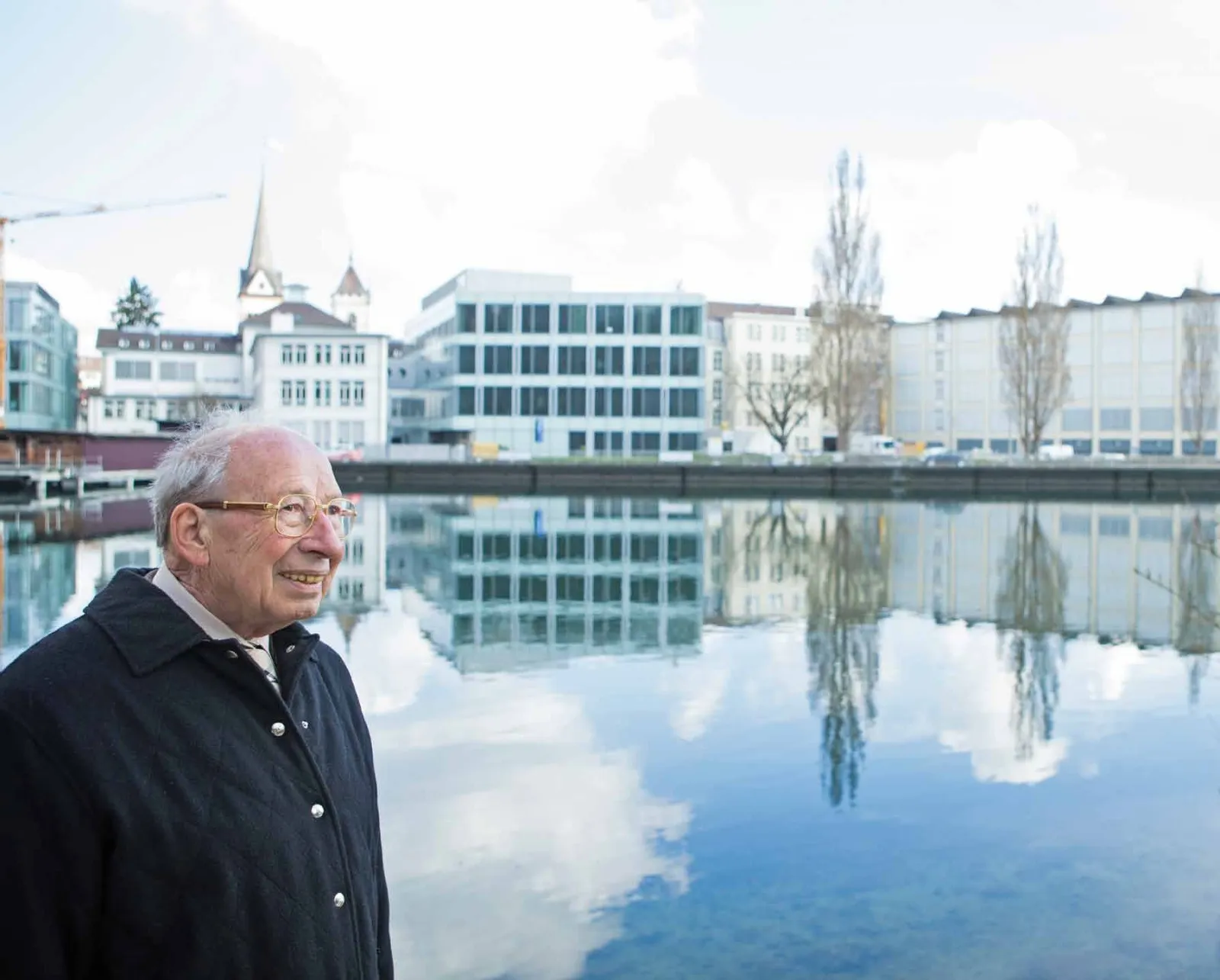




Kurt Klaus, the master-watchmaker who has spent over 57 years as a designer and innovator at the International Watch Company, seems to be enjoying the idea of getting old and logging in more years at the comapny. Lovingly called the “Einstein from Schaffhausen”, he can be credited for having invented the best machines and modules for IWC. As he turns 80, we take a look at his epic life, time and the iconic time tickers that have already made him immortal.
He invented the Da Vinci’s revolutionary perpetual calendar module in 1985 and headed the design team for IWC’s in-house automatic movement, the Calibre 5000, introduced in 2000. Both products changed the fate of IWC and became the harbingers of fame for Klaus, who became a watchmaker to reckon with. No wonder, Klaus wants to continue living and creating more miracles in the infinite world of time. During the celebrations of his last birthday, Klaus made two wishes publicly. He said, “First, I’d like to live to be a hundred, and, second, even at a hundred, I want to have a completely clear mind.” The wishes he made a year ago have partly come true. On the occasion of his 80th birthday, he said, “I’m a happy man and I’m content with my life.” And the fact that he is now regarded as something of an old hand at a company founded in 1868 is something he is pleased to acknowledge. But, the story of his time in Schaffhausen is not over yet.
 L’Officiel India DigitalRead L’Officiel India in the digital libraryEvery issue and every cover story, on TCG Media.Read now
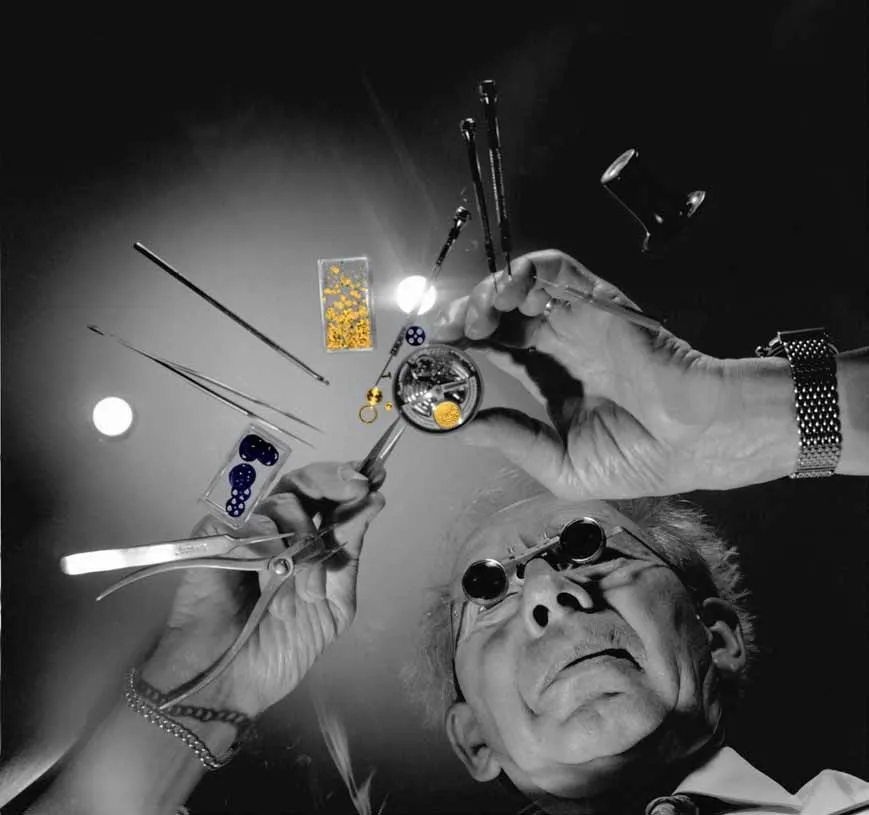
He has been recognised globally for his creative contribution, namely “Operation Eternity”. Even though this was achieved 29 years ago, it has lost none of its brilliance. He wrote watchmaking history as the inventor and design engineer of Da Vinci’s perpetual calendar that made significant improvements to a complication that has now made its way from large clocks to the microcosm of pocket watches and wristwatches. He liberated the owner from the need to make the corrections that were usually required and made the complication suitable for everyday use. For the first time ever, the synchronization of the calendar indicators, including an extremely accurate moon phase display, was complemented by a four-digit year display. To the astonishment of the watchmaking world, the calendar was constructed so that it would go on functioning correctly for more than 500 years.
An uncomplicated dream
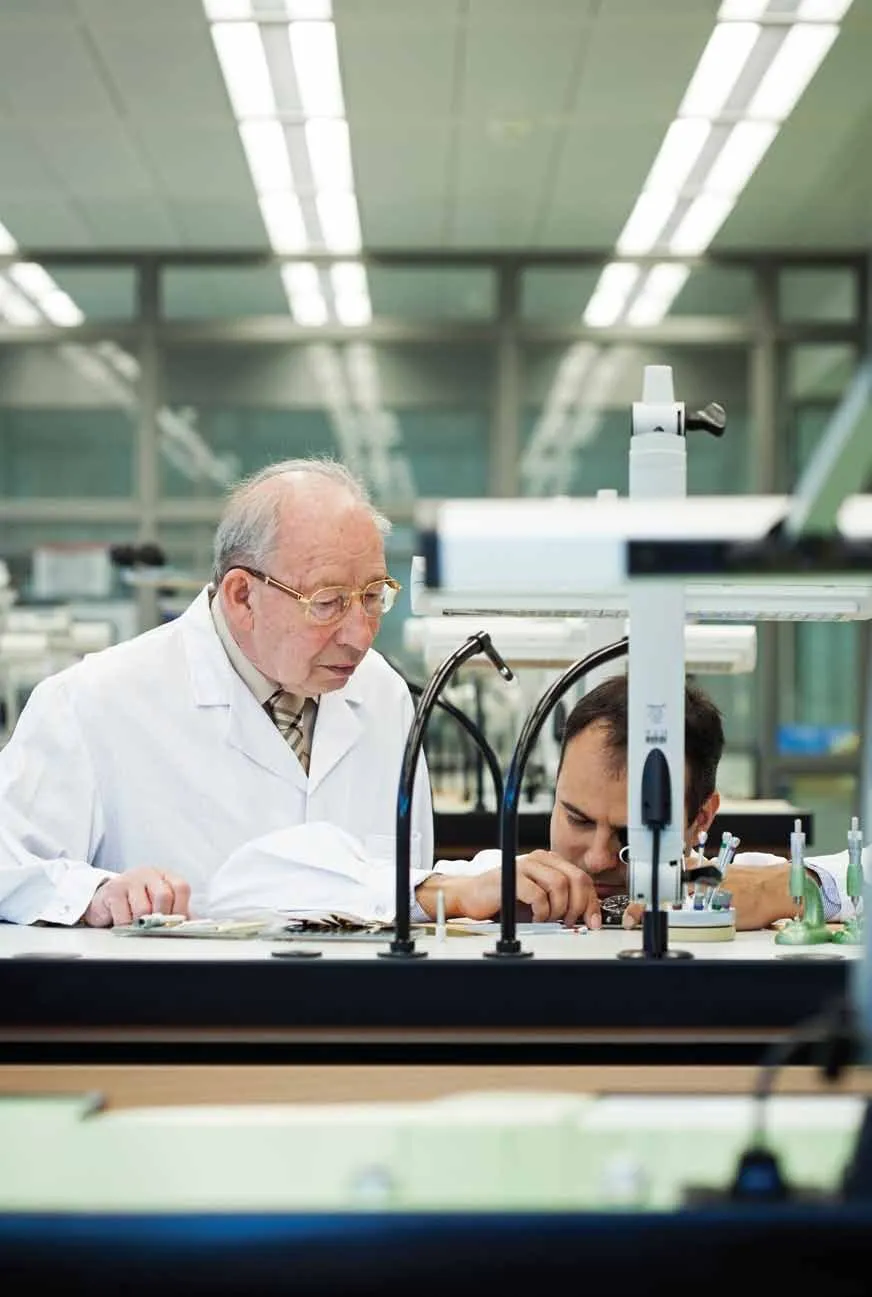
Klaus, who grew up in St. Gallen, had a simple dream. He wanted to be a good watchmaker and have a happy family. Watchmaking is a vocation that has always enjoyed considerable respect in Switzerland and attracts individuals with composure, infinite patience and a willingness to learn. Klaus possessed them all and from 1951, he spent four years at the watchmaking school in Solothurn. After successfully concluding his training, he completed his military service in several stages and worked at Eterna in Grenchen before setting his sights on finding a permanent job in 1956.
“But not in Grenchen!” insisted his then girlfriend and future wife. And so Klaus approached IWC in Schaffhausen. “I asked them if they could use a young watchmaker and immediately received a letter inviting me to an interview,” says Klaus. It was signed by none other than IWC’s Technical Director Albert Pellaton, whose name was already well known in watchmaking circles. “I laid my impressive school reports on Pellaton’s desk hopefully, only to be told something that has influenced my attitude towards being a watchmaker at the IWC forever,” says Klaus. He adds, “Pellaton told me that I should know that being a watchmaker at IWC means going a step further than this. This one sentence has, ever since, pushed me to perform.”
A timeless inspiration
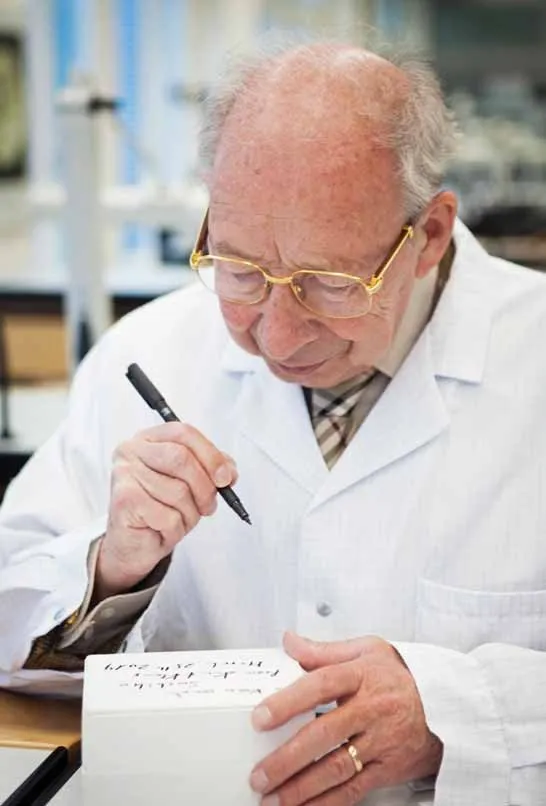
Klaus is just the mentor the young and ambitious watchmakers at the IWC needed. He led many small groups that were formed to work on other new and important developments. These included the split-seconds mechanism (1992), the world time module (1998), the mechanical depth gauge for the GST Deep One (1999), the in-house 5000 calibre with Pellaton winding (2000), or adapting his own calibre to the much larger Portugieser Perpetual Calendar (2003).
Even after his official retirement at sixty-five, he continued to give a significantly larger design department the benefit of his experience for another 10 years. His desk is still at the company’s head office. But the company’s management had recognized that his role as a brand ambassador with a genuine enthusiasm for the IWC and teacher of watchmaking was a trump card that had to be played, particularly in distant markets. As a result, Klaus was freed of operational duties and administrative ties and, instead, looks forward to his regular trips around the world now, where he meets informed collectors and brand connoisseurs to exchange thoughts and ideas. When Kurt Klaus travels, he not only uses his fascinating knowledge of classic watchmaking to promote this intriguing profession, he has also been a part of the world of watchmaking for longer than most and has played a significant role in some of its most important developments. Therefore, for guests, his every appearance is an opportunity for a lively encounter with the values of haute horlogerie. This is something he can sense, and it motivates him.
Still, his greatest happiness in life is the gift of his family; his wife, whom he met back in St. Gallen, their three children and three grandchildren. “I’m even a great-grandfather,” he adds, chuckling. All of them celebrated his 80th birthday with him on 26 October and the IWC—the Museum at the headquarters in Schaffhausen—staged a special exhibition to honour his life and work. At 80, he is jet-setting around the world and loving it, and sharing memorable moments with his big family. Here’s to a man who knows how to control every second and live it up, too!
From the December 2014 issue of L’Officiel India.
Spotted a mistake, or your photo used without permission? Report a correction












