Fabric Of Freedom
Designers have given a fresh spin to Mahatma Gandhi’s favourite Khadi and how.
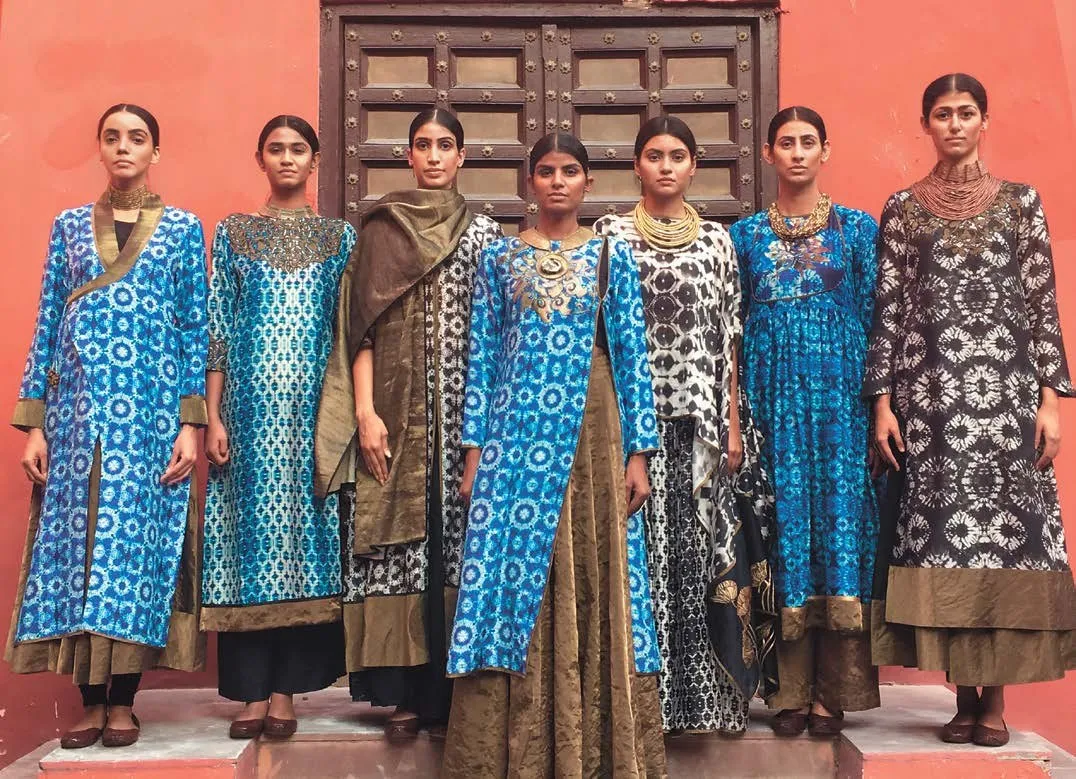




Khadi has always been special to the Indian ethos. Handspun, handwoven and with a zero carbon imprint, Khadi is a green fabric. Lately, its unique appeal has been given a different spin by designers.
Khadi has become the current haute couture fabric of choice even as leading Indian designers (read Rohit Bal, Anju Modi, Payal Jain, Poonam Bhagat and Ritu Beri) are turning to the humble Khadi to make exquisite designer ensembles that combine style and substance.
 L’Officiel India DigitalRead L’Officiel India in the digital libraryEvery issue and every cover story, on TCG Media.Read now
Designer Poonam Bhagat whose Khadi collection embellished with gold embroidery and appliqué work swirled and twirled its way to the echelons of fashion, says, “It’s great that conscious consumers (as opposed to conspicuous ones) are finally waking up to the fact that indigenous homespun fabrics contribute to responsible and sustainable fashion.”
Natural fabrics that breathe are eco-friendly and also provide the much-needed impetus to a dying craft and livelihood to its craftsmen. The fibres are completely bio-degradable, earning Khadi numerous carbon credits.
“I have always been inclined towards natural fabrics ever since I started Taika in 1991. Khadi has always been viewed as the common man’s fabric. By putting it on the ramp and combining it with bronze Chanderi tissue that we had woven especially for the collection, we aim to give the fabric the ‘oomph and glam’ it needs for fashionistas to covet it. The more demand the more carbon and social credits earned. Kaarigars are gainfully employed and we have sustainable fashion.”
Poonam was talking to L’Officiel on the sidelines of a recently held fashion show, Khadi–Transcending Boundaries, organised by the Fashion Design Council of India (FDCI) and the Khadi Village Industries Commission (KVIC). A stage was set for handspun collections, even as designer gave modern twists, creating stories in white, black, indigo and mustard.
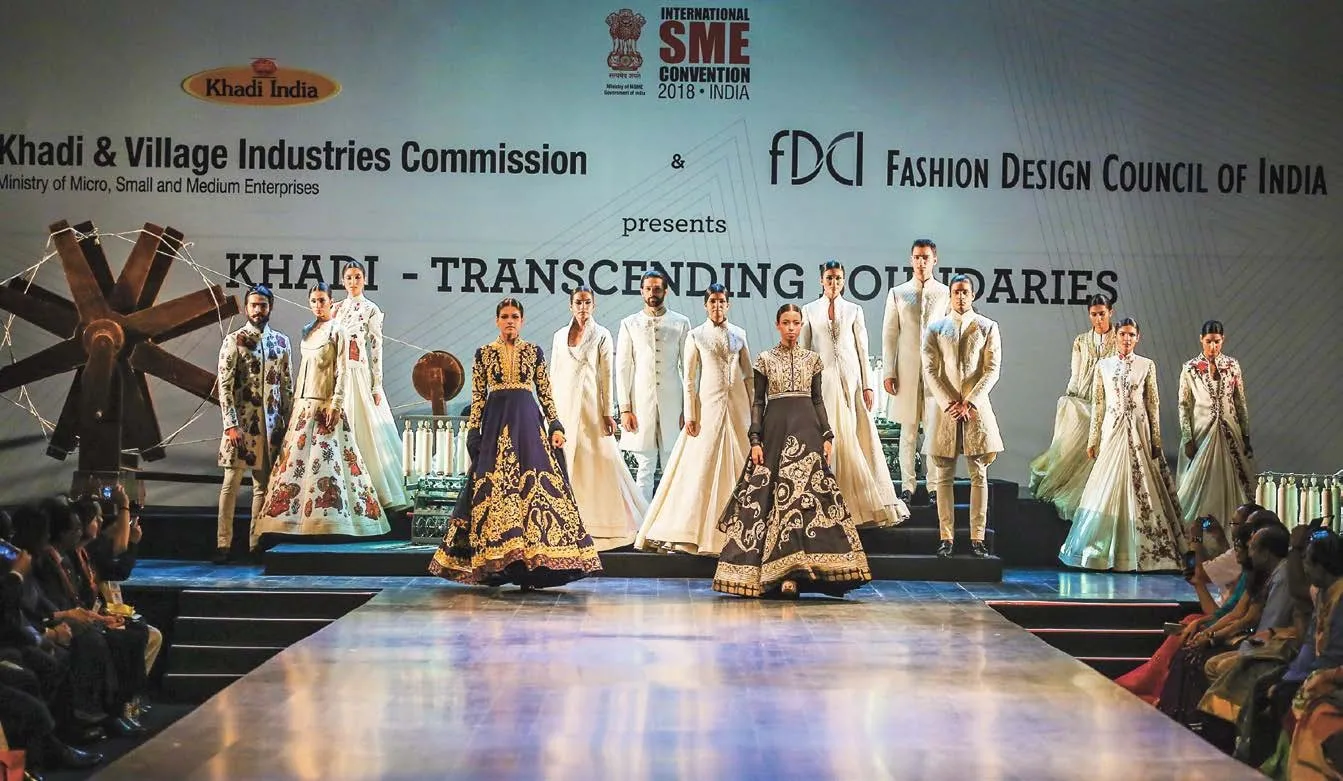
Designer Anju Modi’s collection featured peplum kurtas teamed with dhotis in muted shades. The collection, high on fashion, is perfect work wear: comfortable, chic and innovative. “We are happy with the thought that we have taken baby steps towards a very large commitment towards Khadi.”
Designer Payal Jain whose Khadi collection is priced at upwards of ₹4,000 affirms, “I believe Khadi is the most versatile textile available to us. It not only carries our heritage, but also gives us the freedom to experiment with yarns, weaves, colours and combinations. I have a personal passion for natural fabrics and Khadi has given me a massive spectrum of natural yarn combinations to have fun with.”
Breaking the perception about Khadi that it can only look good as a white sari, a traditional dhoti or maybe a kurta pyjama, Payal says, “It’s a myth. Khadi can be used in a creative and experimental context, even as home furnishing. It also appeals to the young audience. Let it become the fashion statement for the youth. Let us take Khadi beyond borders, to the rest of the world.”
“Our roots and history are in danger of being lost to the fact that young buyers are unable to connect with it,” Payal says. She believes that Khadi is a strong representation of our vivid, rich and illustrious textile heritage.
“I believe the world is constantly looking at India for inspiration in textiles, crafts, embroideries, weaves and print techniques. Khadi, along with our immense treasure of textiles must be at the forefront of this,” she adds.
Payal’s collection is young and edgy. She says, “I hoped that young people will prefer wearing Khadi because it is fashionable and trendy. The response, so far, has been absolutely incredible, both in domestic and international markets. It will continue to fuel my passion for this fabric.”
Having always worked with natural fabrics, the designer says that they have always remained the closest to her heart. She adds,” Khadi is not new to me but I still get excited at the prospect of creating each new collection as I did when I first started out two decades ago.”
Designers Abraham & Thakore, Gaurav Jai Gupta, JJ Valaya, Payal Jain, Rahul Mishra, Rajesh Pratap Singh, Rina Dhaka and Samant Chauhan have in the past showcased eclectic designs executed in Khadi.
Designer David Abraham of label Abraham & Thakore says, “Khadi represents a vital link with our history of handmade products. In this age of technology and mechanisation, handspun and handwoven fabrics help us understand the elemental relationship between the human mind and the hand. We feel that from the perspective of employment generation to crucial issues concerning one’s environmental footprint, Khadi weaving should be promoted and the economic viability improved for the makers.”
“At present, government subsidies and consumer perceptions have kept the prices too low. It, in turn, means no real incentive for the weavers and spinners. Our Khadi collection is priced between ₹10,000 and ₹15,000. Handmade goods and textiles will only survive at premium prices in order for makers to realise good returns for their labour,” David adds. If we are to preserve Khadi, we need to ensure that prices are high enough for the spinners and weavers to continue making the fabric and have substantial economic gain too. “We see Khadi as a fabric to be used as a premium fabric in our collections and we believe that innovation and creativity will help change perceptions,” David adds.
In 1990, Ritu Beri chose Khadi as the fabric to launch her brand with. It was a fabric she was comfortable with, having seen it worn by most members of her family, but another pivotal reason for its use was that she simply could not afford expensive fabrics starting out, in her own words.
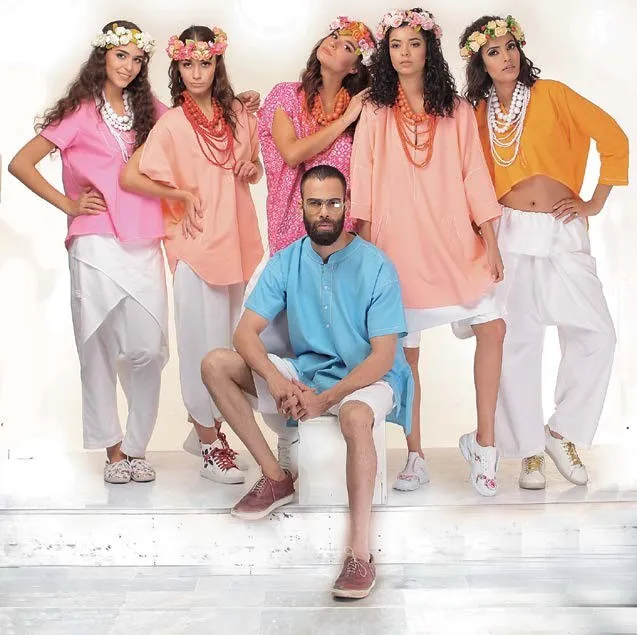
Mahatma Gandhi said that Khadi was not a vastra (dress) but a vichar (way of thinking) and so, Ritu Beri who is advisor to the Khadi and Village Industries Commission coined the name Vichar Vastra for her Khadi collection. She has experimented with different wearable forms of it ranging from beachwear to pants. Pointing out that Khadi could be a global player in the fashion industry, she says, “I try to give Khadi a makeover to find it a footing in the global fashion scenario. My endeavour is to make it a fabric for all, across oceans and seas. Things are changing now as my peers are acknowledging as the most breathable and comfortable fabric ever.”
From the looks of it, both designers and consumers are beginning to recognise the value and strength of this indigenous fabric and Khadi is slowly, but surely gaining acceptance as one of the luxurious fabrics produced in India. There is a huge demand of Indian textiles in international markets because of their versatility, which is why Khadi is also expected to grow rapidly contributing to the economic development of our country. As Ritu Beri puts it, “Khadi is the powerful pre-independence fabric of India and now we need to make it the fabric of the moment.”
From the June–July 2018 issue of L’Officiel India.
Spotted a mistake, or your photo used without permission? Report a correction