
Holistic Heaven
The most talked-about superfood may not work for your body type. At Ananda in the Himalayas, you learn to pick ‘the right healthy’ for you, with recipes for every dosha.
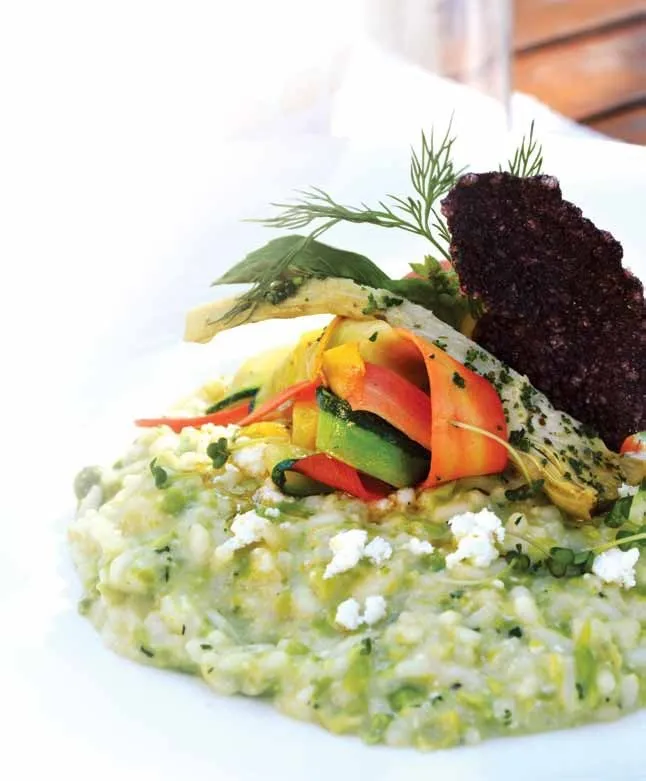




Avocados. Walnuts. Sprouts. Cheese. Every new research throws up a new superfood for us to chew on. And we happily help ourselves to generous servings of everything ‘healthful’. But just like the hot silhouette this season may not work for your body, the most talked-about superfood may not work for your body type. At Ananda in the Himalayas, you learn to pick ‘the right healthy’ for you.
I’ve always thought of myself as being in tune with my body. Aware of what works for me and what doesn’t. For one, I haven’t eaten bread in almost a decade, and I feel so much the better for it. But it was only when I met with Dr Shijoe Mathew Anchery, Ayurvedic Physician at destination spa and wellness resort Ananda in the Himalayas, in Narendra Nagar, Tehri Garhwal, that I discovered exactly why this was so. Turns out, according to the Ayurvedic philosophy of doshas, I’m a Vata-Pitta body type, which makes it difficult for my body to digest certain foods. So I picked Dr Mathew’s brains on how this works.
 L’Officiel India DigitalRead L’Officiel India in the digital libraryEvery issue and every cover story, on TCG Media.Read now
“Your body is an amalgamation of the five elements: fire, water, earth, air and space,” he explained. “Depending on the dominant elements within you, your dosha or body type could be a Vata, Pitta or Kapha.” It is this dosha that determines your most significant physical, physiological as well as mental characteristics. Also, what foods work for you and what foods don’t.
So I turned to Chef Narendra, the executive chef at the restaurant on the property. “Eating for your dosha is a combination of both the ingredients used and the preparation,” he told me. But what if you’re a combination, like me? “You go by the predominant type, Vata, in your case,” he explained. And when you’re cooking for two people of different body types? “Well, then, you create a balance by mixing and matching ingredients, preparing the dish in a way that it brings out the best qualities of the foods used and suppresses the undesirable,” he added. And then, he shared his star recipes for each body type, and an appetiser and a dessert that works for all doshas.
Vata
The Vata body is cold and dry, leading to poor digestion. Make sure you eat foods rich in oils and fats. The good news: You can nibble on all the cheese you want. The bad news: Salads are not such a delightful idea. Try and eat while your food’s still fresh and hot. Be generous with those spices: ajwain, asafoetida or hing, black salt and ginger. And never skip a meal.
Crushed Green Pea and Ricotta Risotto
- 50 grams risotto rice
- 30 grams green peas, blanched
- 30 grams Ricotta cheese
- 10 grams Parmesan cheese
- 10 grams butter
- 5 grams parsley
- 50 ml white wine
- 25 grams chopped onion
Method: Heat some olive oil in a pan. Add chopped onions and sauté. Add the white wine. Toss in the rice and vegetable stock, and cook for 15 minutes. When the rice is done, add the crushed green peas and Ricotta. Finish with butter and Parmesan and garnish with parsley.
Appetiser
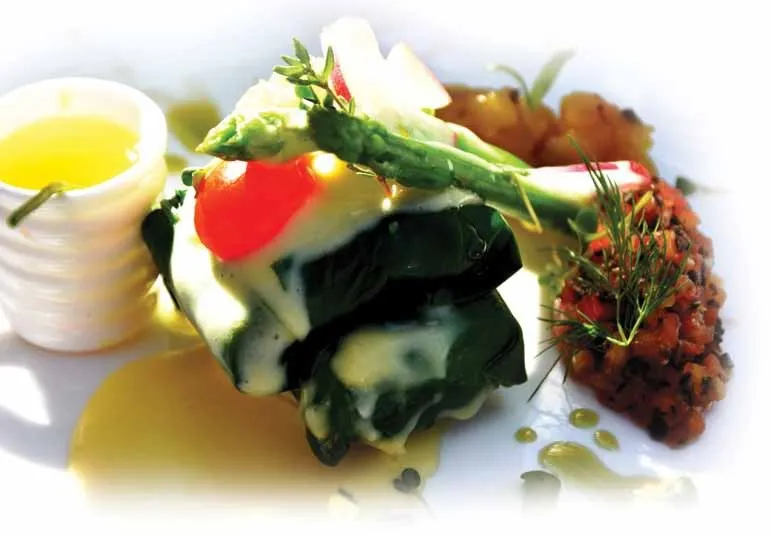
Spinach Wrapped Poached Bassa
- 2 Bassa steaks, 40 gms each
- 2 spinach leaves, blanched
- 5 gm mango purée
- 5 gm carrot relish
- 5 gm cherry tomato emulsion
- 2 gm poaching liquor
- 2 gm salt and pepper
For the Carrot Relish
- 100 gm carrot, julienned
- 50 ml orange juice
- 200 ml stock
- 10 ml vinegar
- 2 star anise
- 2 cinnamon sticks
- 80 gm sugar
- 2 gm salt and pepper
Take the carrot juliennes in a sauce pan, add the orange juice and stock. Add star anise, cinnamon, vinegar and sugar. Add seasoning and let cook on a slow flame till all the liquid is absorbed by the carrots. Keep aside to cool.
For the Poaching Liquor
- 500 ml fish stock
- 10 gm orange rind
- 50 ml orange juice
- 1 bay leaf
- 2 peppercorns
- 2 cloves
- 2 gm salt and pepper
Take the fish stock in a pan. Put it on a flame and add all the ingredients. Bring to a boil, remove from flame and keep aside.
For the Cherry Tomato Emulsion
- 5 gm onion
- 5 gm garlic
- 50 ml vegetable stock
- 10 gm butter
- 5 gm cherry tomato
- 2 gm basil
- 5 ml cream
- 2 gm salt and pepper
Sauté the onion and garlic in a pan till light golden, add stock and butter. When it starts to form an emulsion, add the cherry tomato and torn basil leaves. Make this towards the end, so it’s still hot when you serve.
Method: Poach the Bassa in the poaching liquor. Wrap it in the blanched spinach leaf. Serve warm with carrot relish, cherry tomato emulsion.
Pitta
A combination of fire and water, pitta dosha allows you to digest most foods easily enough. But try and stay away from too spicy or too sour. Look for foods that reduce heat and will calm your body. As your digestion is good, you must eat regularly. Have plenty of mint, fruits and salads. Stay away from fermented or stale food. Eat your meals warm not hot, and try going the wholegrain way.
Home-made Corn-Filled Multigrain Ravioli, Beetroot Carpaccio, Mango and Mint Salsa
For Ravioli
- 250 gm multigrain flour
- 2 eggs
For Filling
- 100 gm sweet corn
- 10 gm garlic
- 10 gm parsley, finely chopped
- 10 gm salt
- 20 ml oil
Heat oil in a pan and sauté the garlic. Add the sweet corn and seasoning.
For Salsa
- 100 gm mango, diced small
- 10 gm mint, finely chopped
- 5 gm salt
- 20 ml extra-virgin olive oil
- 10 ml vinegar
Mix all the ingredients and season.
For Carpaccio
- 100 gm beetroot
Boil the beetroot. Peel and thinly slice it.
Method: Knead the flour and eggs together into a hard dough. Make small balls and roll into thin sheets (1-2 mm). Cut 8 squares of 2.5x2.5. Now place the filling in the centre of a square sheet and cover with the second sheet. Press all sides of the pasta to seal, and score with a fork. Repeat with the remaining squares to make four pieces of ravioli. Blanche the ravioli and keep aside. Place the beets on a plate, overlapping each other. Plate the blanched ravioli over beetroot. Top with the mango salsa and garnish with a basil sprig.

Kapha
The wet and cold nature of your body, determined by water and air, makes for sluggish metabolism. Too much oil or heavy carbs are highly avoidable. Go for spicy and hot foods, light and freshly prepared. Toss in lots of greens, too. And don’t you give in to that sweet tooth or that urge to peck. Prepare your meals in a base of ginger and garlic, and a little chilli. Pick wholegrains over polished. Stay away from fried foods and cold meats.
Whole Wheat Spaghetti With Soy Bolognese
- 60 gm wholewheat spaghetti
- 2 gm parsley
- 30 gm tomato concasse
- 15 gm Parmesan cheese
- 2 gm salt
For the Soy Nugget Bolognese
- 120 gm soy nuggets, soaked and chopped
- 10 gm onions, chopped
- 5 gm garlic, chopped
- 5 gm leeks, chopped
- 5 gm celery, chopped
- 10 gm carrot, chopped
- 20 ml red wine
- 2 gm bay leaf
- 1 cinnamon stick
- 10 gm tomato purée
- 5 ml olive oil
Heat oil in a thick-bottomed pan. Toss in the onions and garlic and sauté. Throw in the bay leaf and cinnamon stick. Add the soy nuggets and cook. Just as it starts to dry, toss in the leeks, celery and carrot and cook a little, before you add the tomato purée and vegetable stock. Let it cook on a slow flame till it seems done. Let cool.
Method: Blanch the spaghetti and keep it aside. Heat olive oil, add the onion and garlic, and sauté. Pour in the red wine and deglaze. Add the soy Bolognese, tomato concasse and a little stock. Season. Mix the pasta in and garnish with basil leaves.
Dessert
Pineapple and Coconut Panna Cotta
- 100 gm cooking cream
- 100 gm coconut cream
- 50 ml pineapple reduction
- 80 gm sugar
- 15 gm gelatin
- For lining: cake sponge
Method: Line the mould with cake sponge and keep it aside. Soak the gelatin in three times water. Heat the cooking cream and coconut cream with the sugar and soaked gelatin. Cool the mixture, then put it in the freezer to set. Serve cold.
From the January 2014 issue of L’Officiel India.
Spotted a mistake, or your photo used without permission? Report a correction












