
Poetic Journey
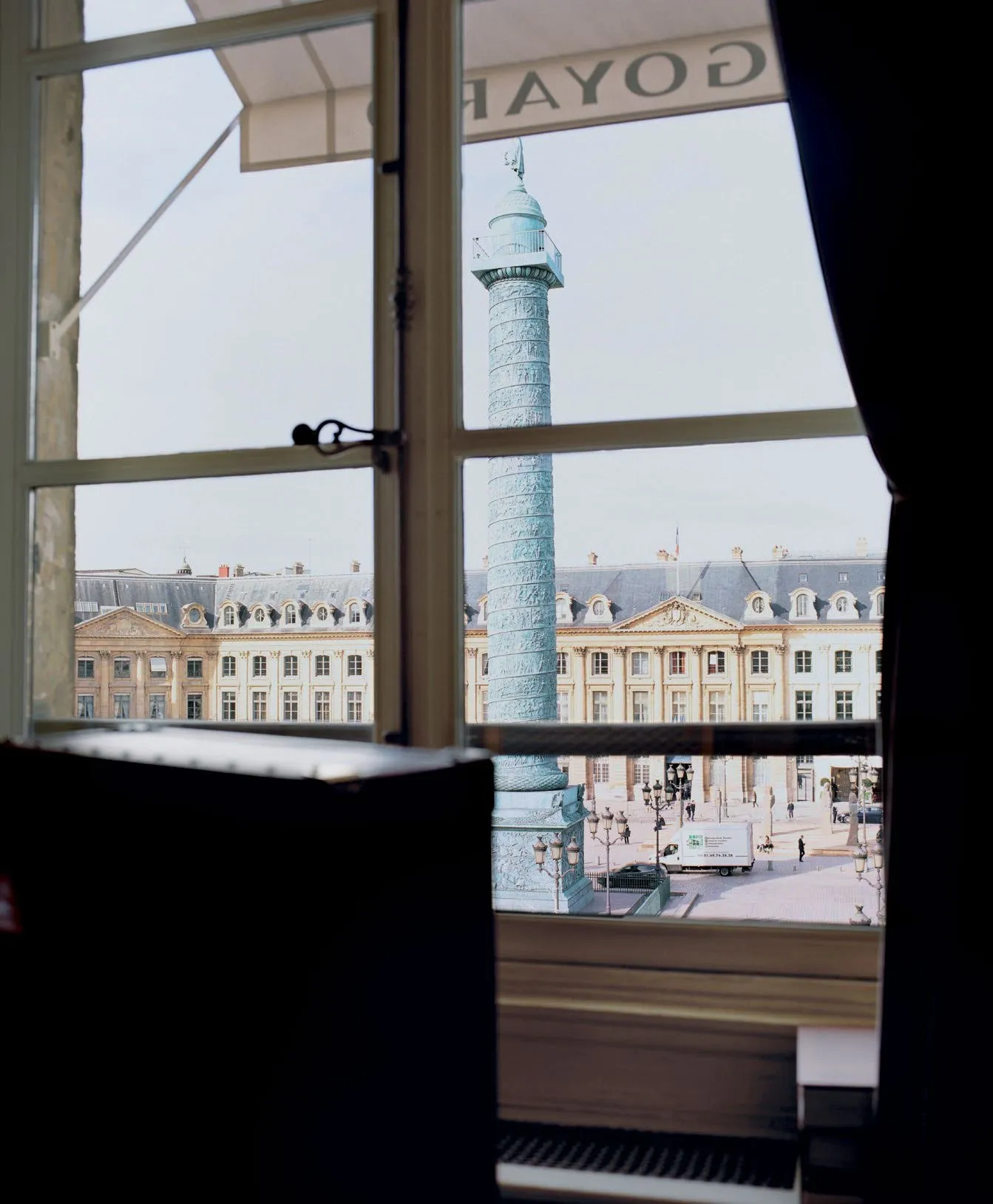




Combining luxury, technical precision, savoir-faire and refinement, the Goyard trunk is a quintessential symbol of French art de vivre.
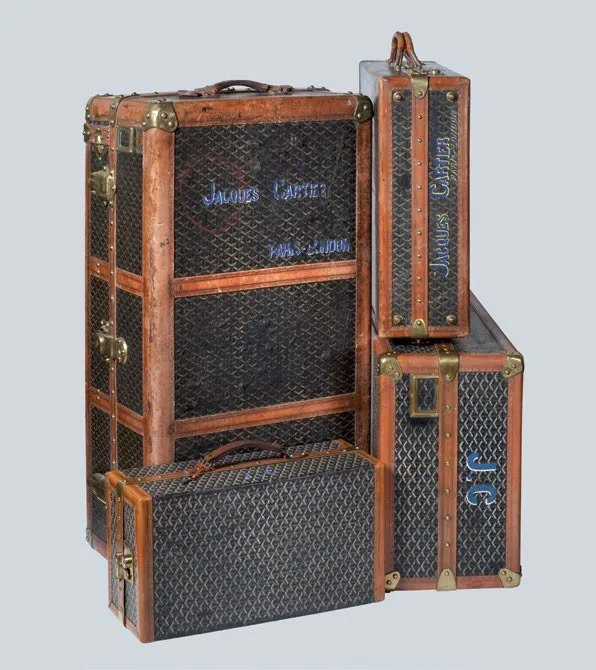
Goyard’s success story is the result of a string of miracles. The first miracle dates back to its founding in 1792, when republican ideals were just about becoming popular in France, right after the French Revolution. The horse-driven carts that were plying on Rue Saint-Honoré were more likely to transport the guilty than goods. At the very heart of this political and social change, close to Place Vendôme, on Rue Neuve des Capucines, a certain Pierre-François Martin decided to set up shop. He specialised in “box making, trunk making and packing”, three diverse and highly specialised professions. Thus began a story, which would remain relevant and mythical even today. The house began by producing trunks, to protect furniture and precious objects. In spite of the political drama of the 19th century, the shop prospered. When François Goyard was hired as an apprentice in 1845, little did he know that the prestigious house would carry his name seven years later and continue to do so decades after. That was the second miracle. The 17-year-old apprentice from Burgundy came from a family of labourers, specialising in changing the course of rivers to provide water to Paris. In case you’re wondering about the Goyard name, here’s the story. Under the guidance of Louis-Henri Morel, Martin’s successor Goyard underwent intense training. He was only 24 when he took over the reins of the House. Soon after, he began enjoying the patronage of the French royal family, including being named the official purveyor to some royals. In 1834, the House set up shop at 347, Rue Saint-Honoré, which then became 233 when the street was reorganised in 1856. The address is as important as the house name itself, especially since the house is located in a stunning building dating back to the 18th century. Even today, the very same design references of the original store can be seen at Goyard stores across the globe. Another historic turning point came in December 1936, when the Comité Vendôme act was signed. In a collaboration between Charles Ritz and Louis Boucheron, this association was supported by Edmond Goyard, son of François Goyard. The committee worked towards the preservation of Place Vendôme, Rue de la Paix and the neighbourhood.
 L’Officiel India DigitalRead L’Officiel India in the digital libraryEvery issue and every cover story, on TCG Media.Read now
AN IMMORTAL MYTH
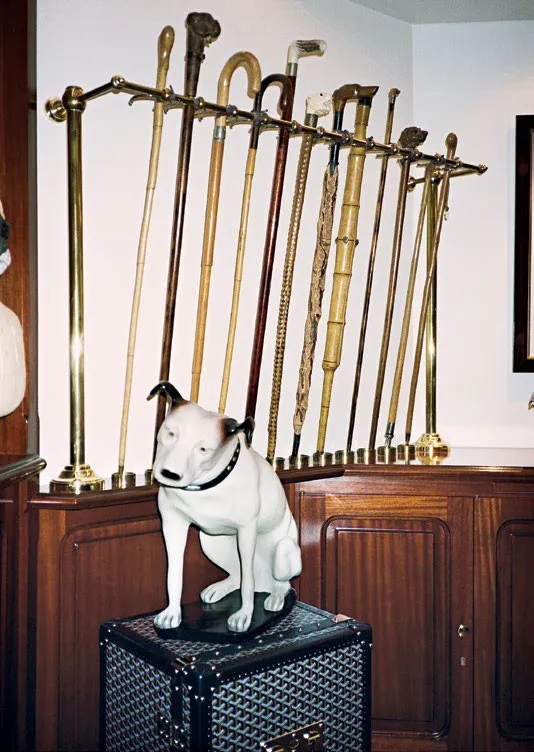
The elite class instantly identified with the values represented by Goyard. It also became a symbol of French art de vivre.

The proximity of the establishment with the Tuileries neighbourhood made Goyard popular among the wealthy travelling public. Each and every descendant of François A DOG SHOWPIECE ON A TRUNK.
Goyard contributed to the immortalisation of the iconic brand. Edmond came up with the first advertisements for the brand, participated in world fairs, designed objects for animals and created the famous Goyardine, an unmistakable material whose recipe remains very well-preserved: cotton for softness, linen for its thermal regulation quality and a resin that makes it waterproof. There are unmistakable design cues as well, like the numerous Y shapes that hold the pieces together. There are explicit references to the profession that Goyard’s family once practised—transporting logs down the Seine for centuries. Robert, Edmond’s son also added his own contribution to the house’s heritage: a brilliant knitted canvas perfect for air travel. This luggage soon became the preferred travel accessory of kings, princes, dukes, heads of state, industrialists, fashion icons and artists. It became a symbol of elegance in the 20th century. This is when the third miracle took place.
THE PASSION OF ONE MAN
Jean-Michel Signoles, an entrepreneur, made a name for himself when he created Chipie, a fashion label for teenagers. In 1974, at an antique shop, he chanced upon a vintage trunk, which would soon become his passion. A few years later, he discovered 233, Rue Saint-Honoré. With time, his collection of Goyard objects included 700 pieces, some of them are displayed at Goyard stores, while others are placed at the label’s headquarters on Place Vendôme. In 1998, he convinced the last inheritor of the house to sell the house to him. His love and his profound knowledge of the brand helped him present his case. The rest, as they say is history: the ateliers were revived, the savoir-faire gets showcased once again and the prestige of the house is carefully restored. The brand goes back to its past glory.
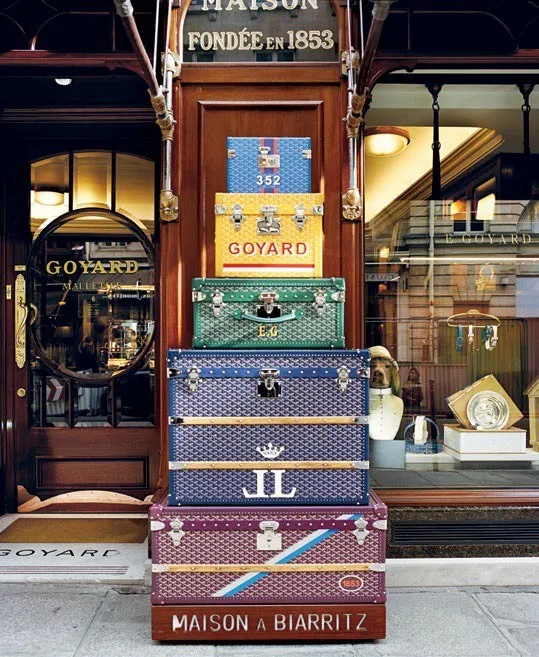
Today, Goyard produces the most exceptional luggage, designed in the most artistic fashion. Mr. Signole’s three children, Pierre, Alex and Remi are in charge of the production, closely supervising the artisans who have been using the very same techniques from the past centuries. They also uphold the highest of standards by ensuring a fastidious eye to detail. Each buyer enjoys a personal rapport with the brand. The concept of personalising luggage is something that Goyard holds in the highest regard. It is almost like science: names, coloured bands, numbers, anything at all. It is all done by hand and gives each customer the possibility to create a unique piece. Far from the culture of mass production, Goyard’s made-to-order popularity affirms its commitment the French way of living. Behind each piece of luggage there is a story reflecting a passion for travel, the poetry of an artist and the emotion of an artisan.
From the December 2016–January 2017 issue of L’Officiel India.
Spotted a mistake, or your photo used without permission? Report a correction