
Futuristic visions of “flying cars”
From mini jet engines to souped-up helicopters, here’s a look at what seven noteworthy players have worked on. Dive in to know all the deets.




For years, flying taxis have represented an exciting but distant dream, fuelled in part by industry hype. This fantasy has increasingly materialised over the past 5 years with a swell of popular interest in on-demand urban air transportation.
Following this trend, a new category of aircraft has emerged: eVTOLs (electrical vertical take-off and landing aircrafts) with a strongly differentiating offer and answering a growing demand for new mobility solutions due to increasing urbanisation. Many players have entered this nascent market, raised funding and secured pre-orders (already 7k+ pre-orders) to be fulfilled.
 L’Officiel India DigitalRead L’Officiel India in the digital libraryEvery issue and every cover story, on TCG Media.Read now
Some may wonder what is left of the initial promise and what it takes to operate an eVTOL in a near future. Thus, flying “cars” is moving further to become a reality. Find below the air taxis broadening the reach of aviation to benefit more people but also increase the frequency of those benefits. Dig in to find your next take off!
2024 seems to be a year of companies once again trying their darnedest to make flying cars happen.
Overair Butterfly
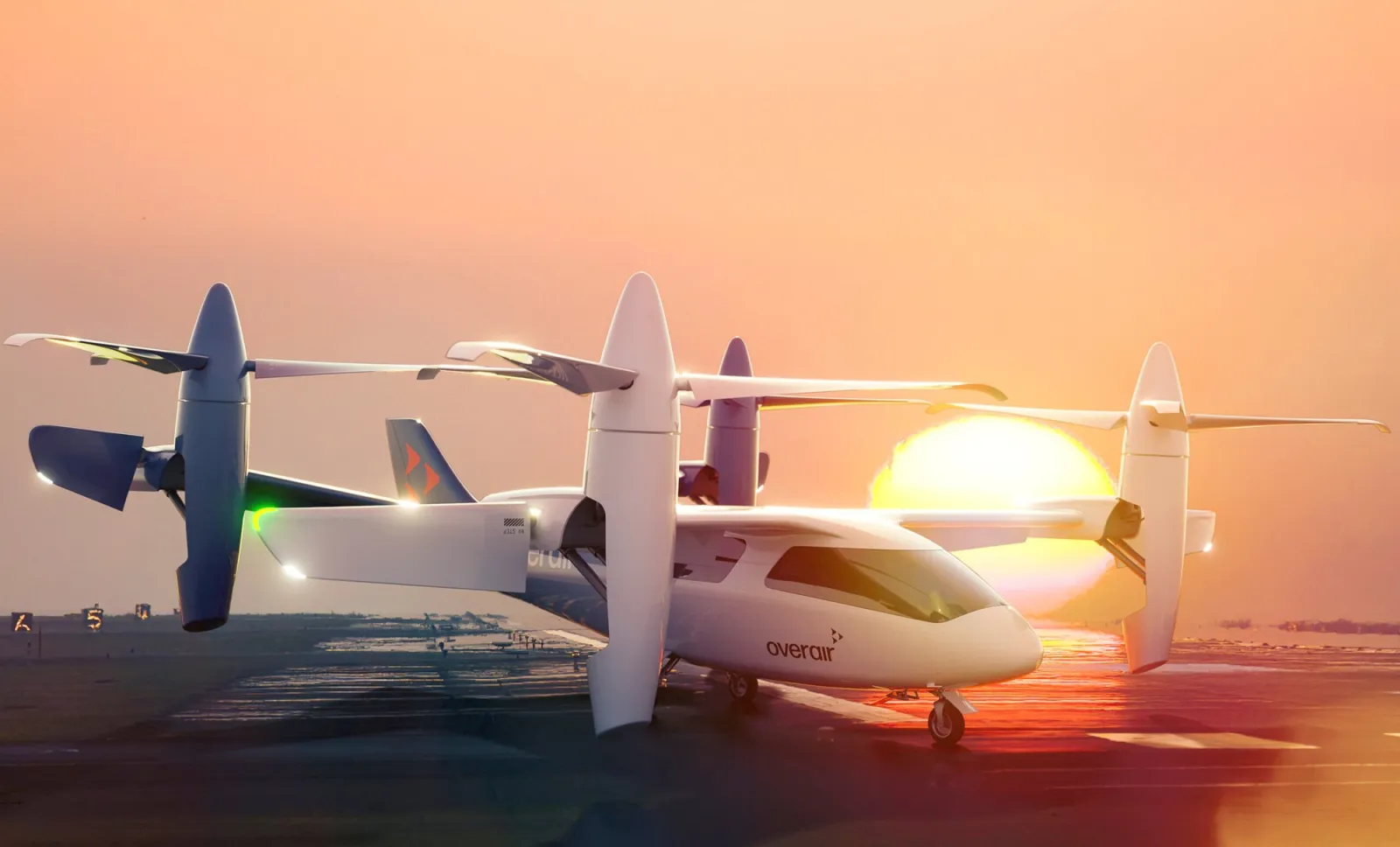
After completing ground testing of the propulsion system last year, Southern California’s Overair has been focusing on building and flying the production prototype of its “Butterfly” air taxi. Overair designed its one-pilot, five-passenger butterfly with distinctive points that included no single point of failure, zero carbon emissions, low noise at 44 dBA, a max speed of 200 mph, and a total range of 100 miles. Spanning over 20 feet, the Butterfly’s propellers are much longer than other electric taxis, which allow it to hover with only two of the four propellers in emergencies.
Overair has also claimed how the Optimum Speed Tilt Rotor (OSTR) and Individual Blade Control (IBC) technologies also differentiate its electric aircraft from competitors. As it varies, propeller revolutions per minute to increase efficiency across vertical, transitional, and forward flight phases.
The Butterfly does have space for a pilot, five passengers and bags. While the zero-emissions craft will theoretically be the quietest eVTOL in the market. As the company, it is designed to have no single point of failure and also can hover on two of its four propellers. Thus, together, these technologies deliver an efficient, quiet, and reliable propulsion system in almost any weather, temperature, or altitude.
Joby Aviation S4 2.0
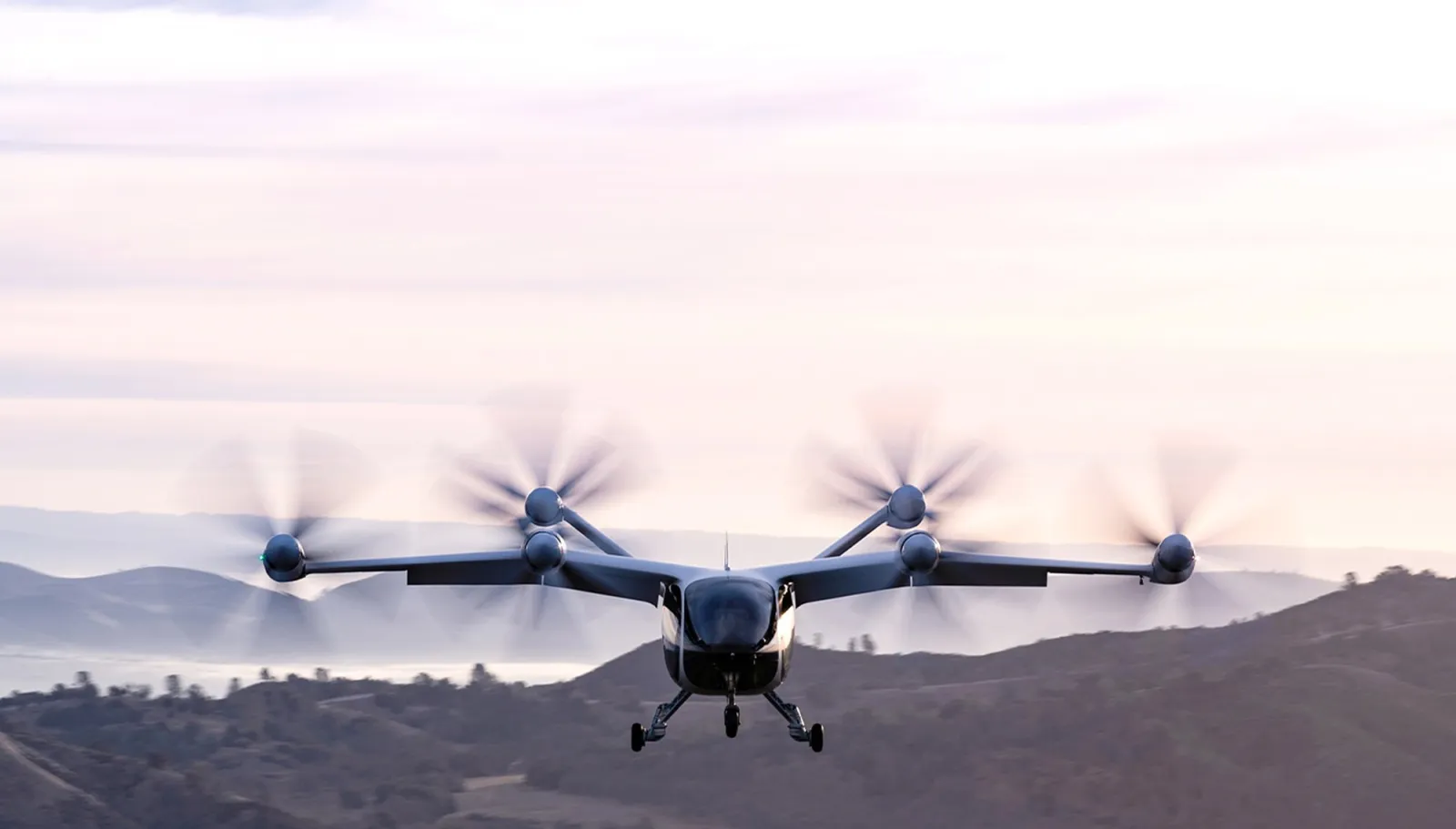
Joby Aviation’s flagship flying taxi (Generation 2 pre-production prototype) has taken the industry to impressive new heights. A full-size prototype of the Joby S4 has completed what is believed to be the fastest flight of any eVTOL aircraft to date. The pre-production air taxi believed to hit a true airspeed of 205 mph (330 km/h), comfortably eclipsing the previously touted top speed of 200 mph (322 km/h).
Being a five-seater (one pilot and four passengers), eVTOL air taxi aircraft it uses six tilting propellers which are on both the fixed high-wing and its V-tail. Four propellers tilt vertically, including its entire motor nacelle, and two of the propellers tilt vertically with a linkage mechanism. Well, the aircraft has a very modern and futuristic design with large windows for spectacular views and has a tricycle-type retractable wheeled landing gear.
Joby has also promised that the S4 will be 100 times quieter than a conventional aircraft during take-off and landing, and “near-silent in flyover.”
Archer Midnight
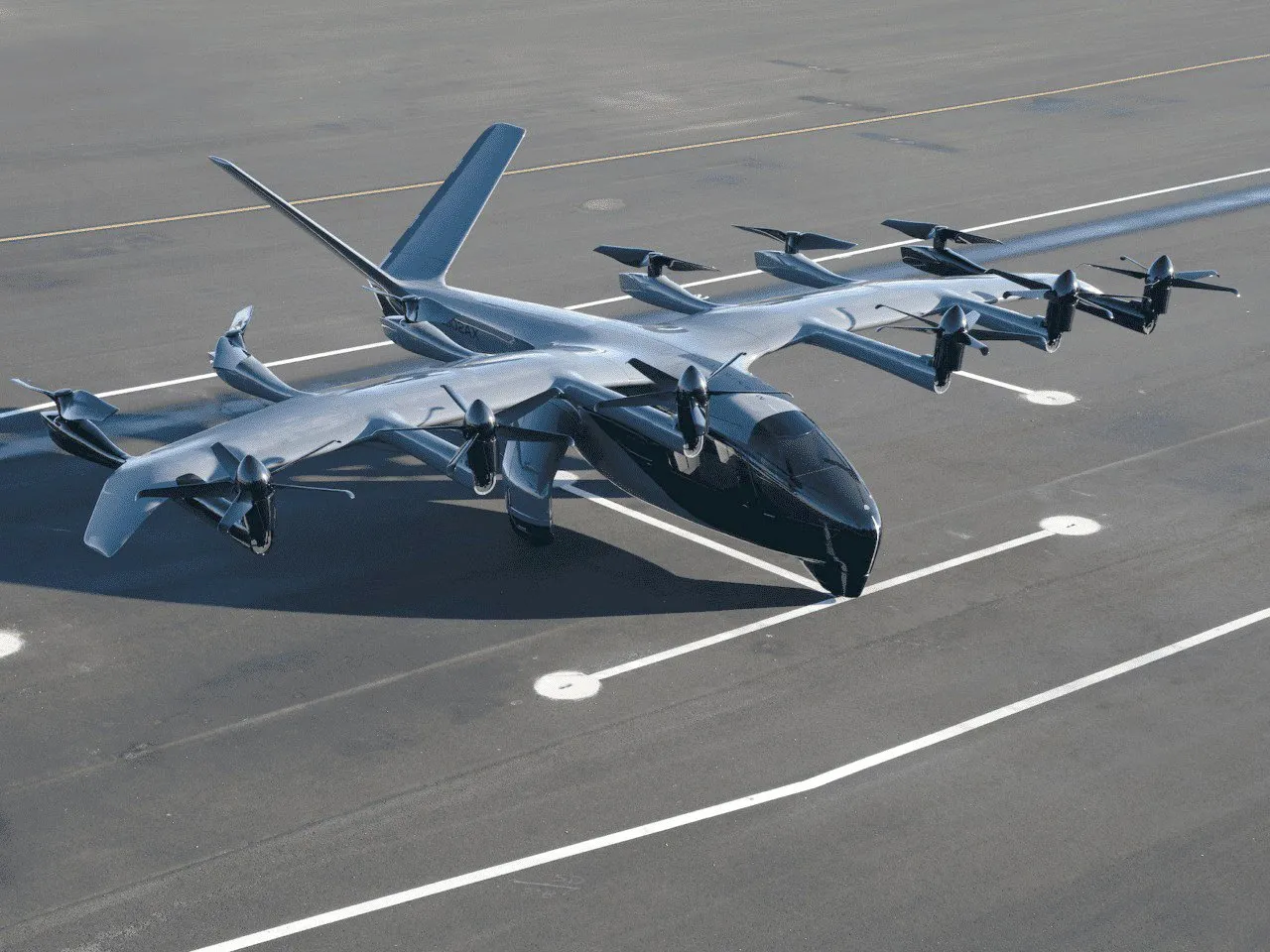
The buzz around eVTOLs, or electric vertical take-off and landing aircraft, has been escalating at a fevered pitch. Archer Aviation unveiled Midnight model stokes progress with an ambitious vision of future airborne mobility. Being the first company to certify an eVTOL aircraft in the US with the FAA, this new aircraft, is aiming to ease urban congestion by taking to the skies. Using zero emissions aircraft that resemble flying drones, it leverages tech that enables compact craft to negotiate tight city spaces and provide door-to-door transportation high above earthbound traffic jams.
Based on an Archer prototype engineered for feasibility testing, the production-spec Midnight is built around one pilot and four passengers and is fully powered by batteries. With a payload capacity over 1,000 pounds, Midnight is intended to fly 20-mile back-to-back trips interspersed with 10-minute charging sessions. Unlike conventional small aircraft, these airborne EVs possess no single critical point of failure, claiming enough redundancy to make them exceptionally safe and trouble-free.
When moving along at its cruising altitude of 2,000 feet, Midnight’s noise levels are measured at only 45 dBA on the ground, which is 1,000 times quieter than a conventional helicopter. While, Archer appears to be well positioned for this brave new world of eco-conscious transport — bringing a whole new twist to the ideal of flying the friendly skies.
CityAirbus NextGen
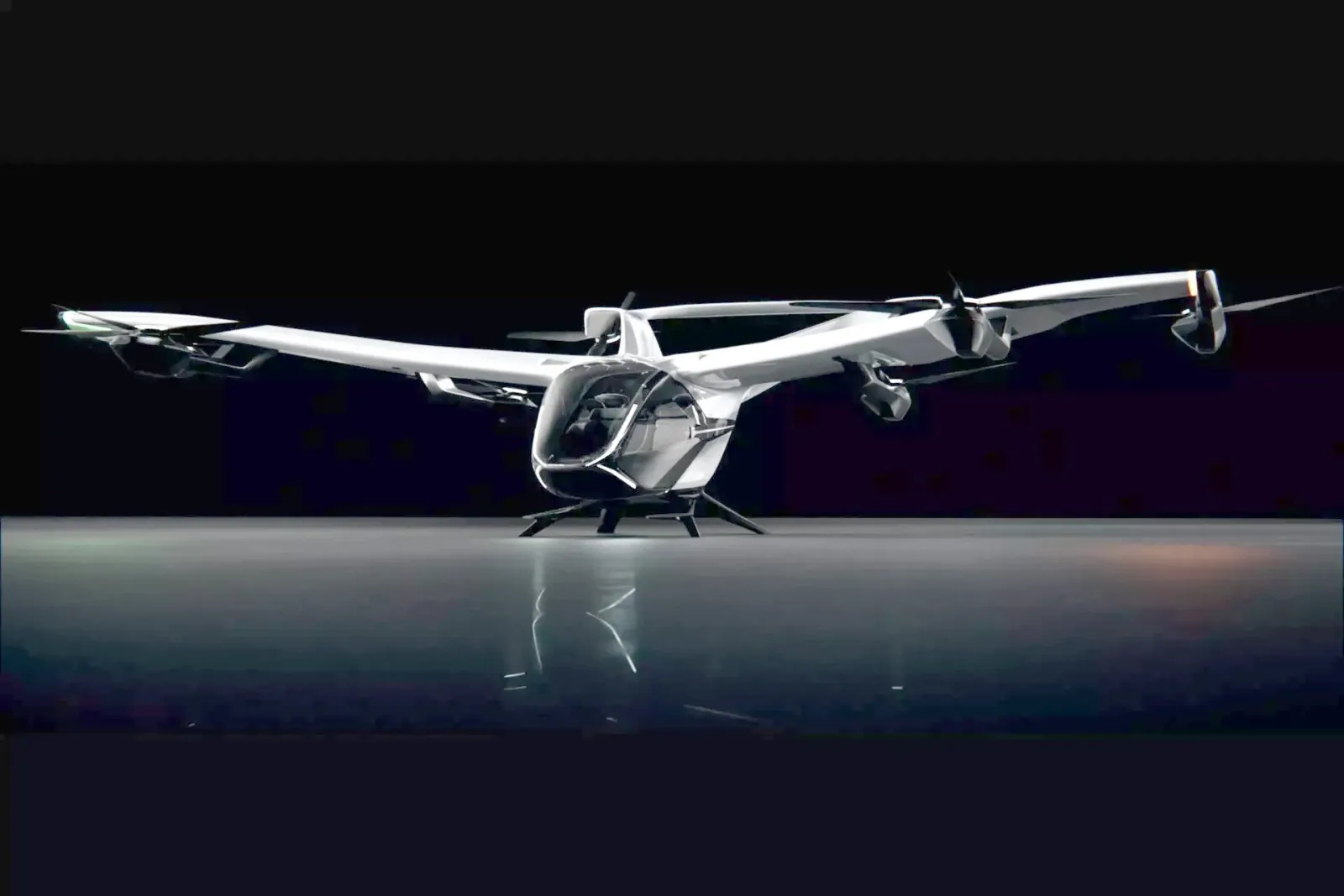
At the forefront of Airbus’s UAM efforts, it’s the CityAirbus NextGen platform, a four-passenger air taxi in a multi-copter configuration. The aircraft is reportedly propelled by eight-pitch rotors powered by eight Siemens SP200D direct-drive 100-kW units that relied on four 140-kW batteries developed by Airbus Defence and Space. These rotors power four carbon-fibre ducted co-axial propellers mounted on the all-electric aircraft. Each duct provides 881 pounds of thrust for a payload of up to 551 pounds.
Sustainability and safety are also cornerstones of the NextGen’s propulsion configuration and general design. That’s why it is the result of two earlier eVTOL demonstrators, the CityAirbus and the Vahana, developed over the last half-decade. The aircraft features an 80-kilometer range and has a cruise speed of 120 kph. Over the past year, the status of the CityAirbus NextGen platform has moved swiftly from developmental concept to material realization.
The industrial and financial largess of the Airbus brand and its economies of scale, combined with its accumulated expertise in platform design. They are nearly certain to make the CityAirbus NextGen amongst the prominent first-generation product solutions in the UAM domain.
Volocopter 2X
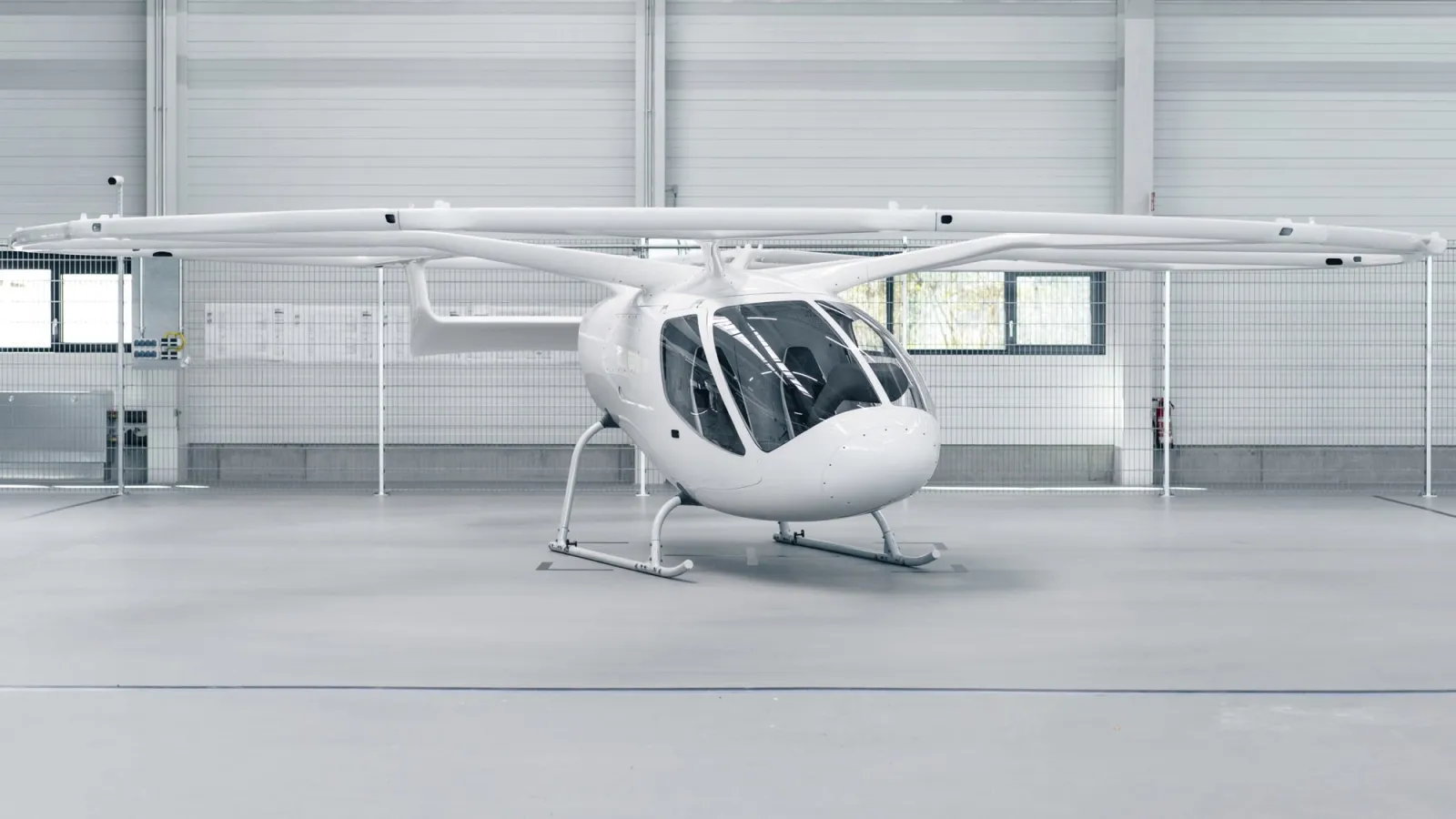
As a novel technology, the Volocopter 2X has been designed as a two passenger electric vertical takeoff and landing (eVTOL) multicopter full scale prototype aircraft that is a refined version of the VC200 eVTOL multicopter aircraft. This 2X can be flown by a pilot or autonomous piloting. With the cruise speed of the aircraft is 102 km/h (63 mph), it has a range of 27 km (17 m) and has a flight time of 27 minutes. The empty weight of the aircraft is 290 kg (640 lb), the maximum payload for the aircraft is 160 kg (350 lb) and the maximum takeoff weight for the multicopter is 450 kg (990 lb). Moreover, the 2X has 18 propellers, 18 electric motors and is powered by nine batteries.
Also, the propeller assembly frame has six Y shaped struts emanating from its central axle. Additionally, the intersection of each Y has a vertical non-tilting propeller and 12 more are at the ends of the struts which is reinforced with a perimeter ring. And, the size of the aircraft is 10.5 feet (3.2 m) long, 7 feet (2.15 m) high and has a tip-to-tip distance of 30 feet (9.15 m).
Autonomous flight is possible for the Volocopter 2X. So, the aircraft has a single joystick and was designed to be intuitive to fly. If the joystick has released an automatic systems keeping the aircraft in a stable position. Systems include a redundant avionic systems, a redundant propulsion system, a fibre optic fly-by-wire and an emergency ballistic parachute.
EHang EH216-S
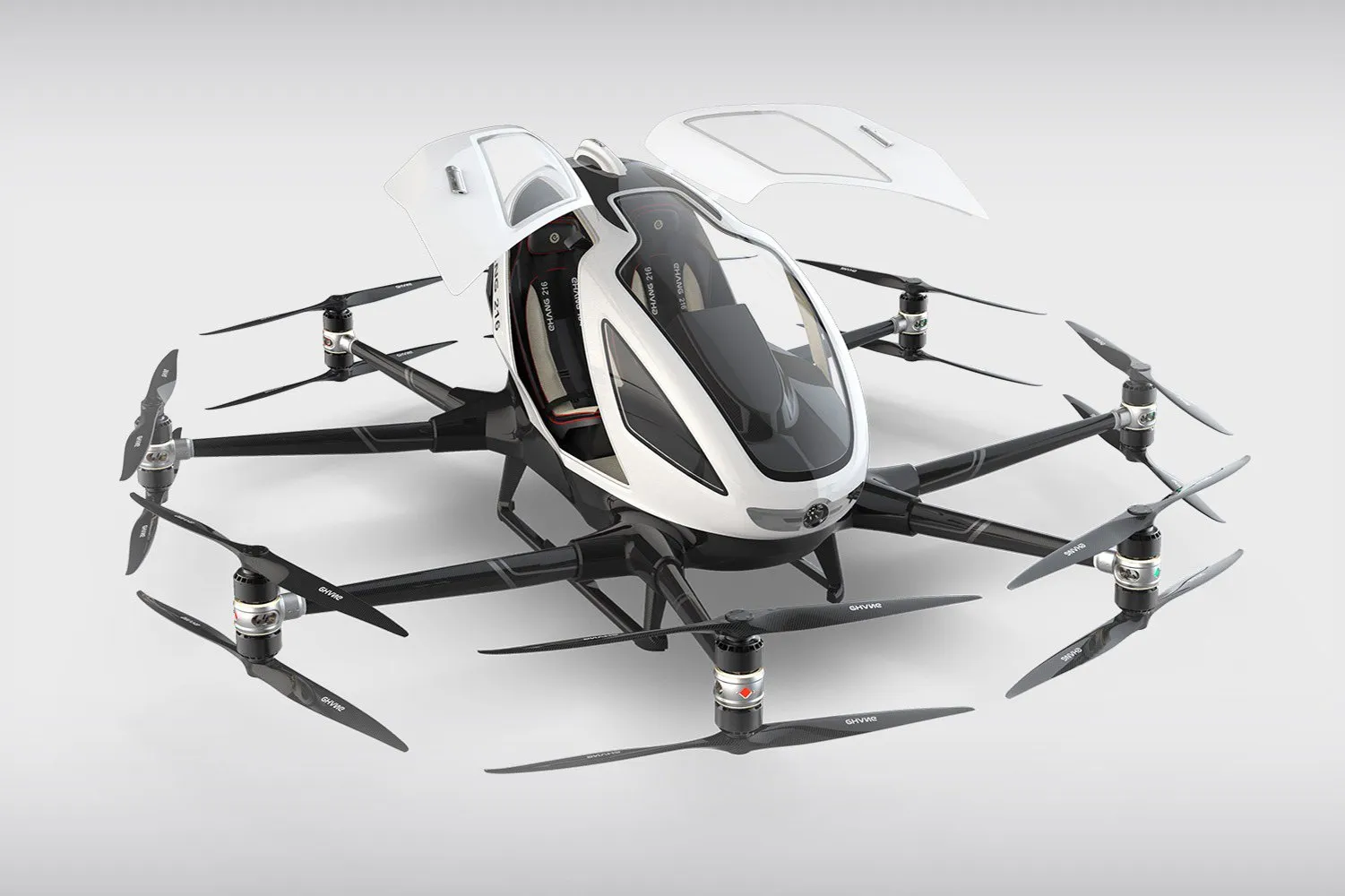
The Chinese firm’s electric vertical take-off and landing aircraft (eVTOL) has been cleared for commercial operations by the Civil Aviation Administration of China. Turns out the 216 is an outlier in terms of design, too. This aircraft is fully autonomous, whereas most other air taxis on the market will be piloted. The two passengers aboard needn’t worry about safety, though. Thus, EH216 would be monitored by a control centre on the ground, which can take over in order to land it in an emergency.
Regarding grunt, the bubble-shaped craft is equipped with a 17-kW battery and 16 propellers that are turned by 16 electric motors. It can cruise at roughly 60 mph or hit 81 mph at full tilt, and can also cover around 20 miles between charges, but the range depends on the payload.
With a battery-powered 216 model — which can carry up to 220 kilograms (485 pounds) and fly at speeds of up to 130 kilometres per hour (80 miles per hour) — has already completed similar public demonstration flights in several other Chinese cities. This not only sets a benchmark for the airworthiness, certification of innovative eVTOLs in China and overseas, but also serves as an epoch-making milestone for commercial UAM operations.
Vertical Aerospace VX4
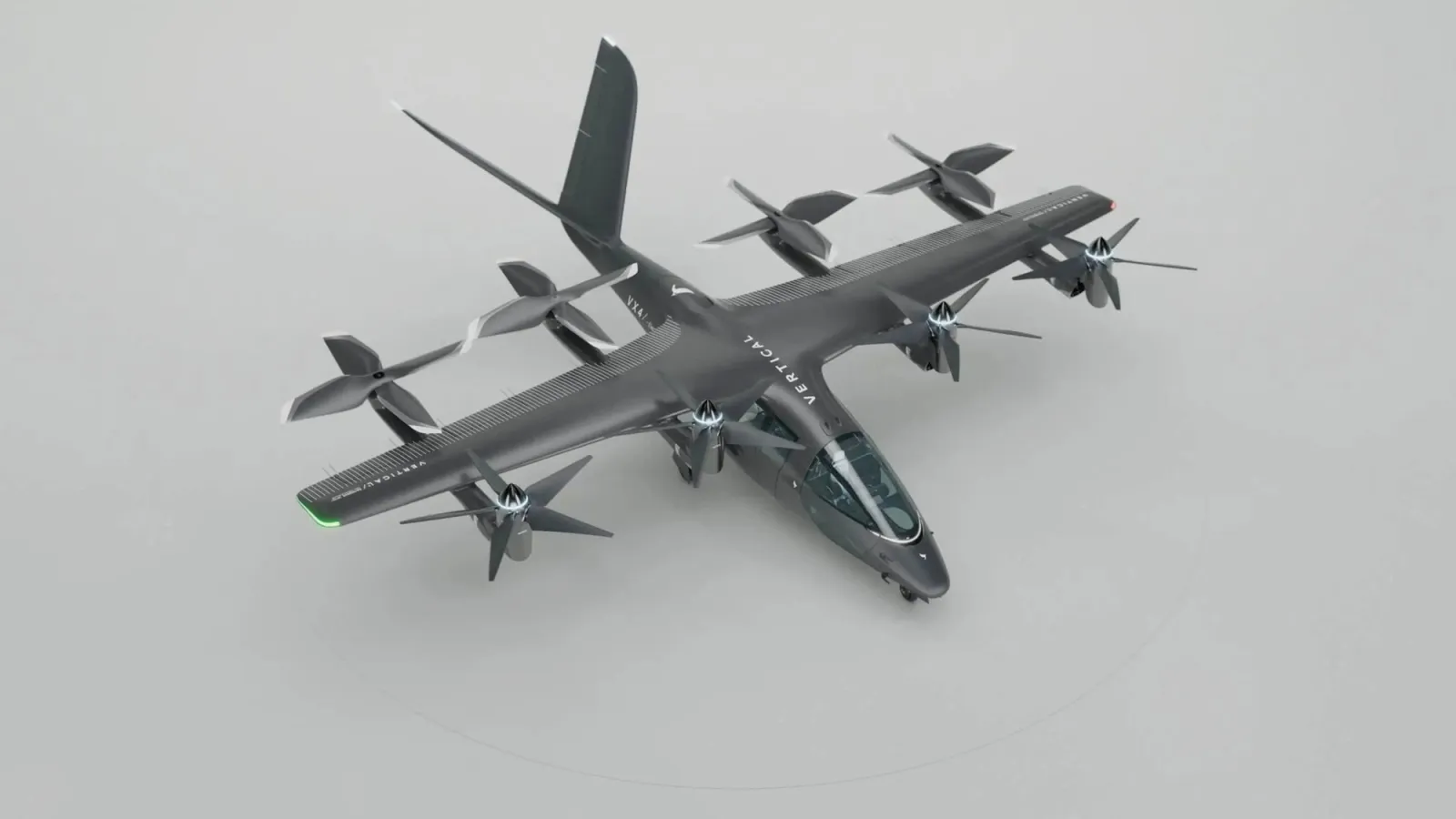
UK-based aerospace manufacturer Vertical Aerospace has signed a manufacturing agreement with Hanwha Aerospace, which was set to advance features of its VX4 aircraft. This new aircraft for Urban Air Mobility, the VA-X4 (and it was reported on Dec. 10, 2021 the aircraft model's name is now the VX4).
The aircraft has a very sleek and modern design holding five people (one pilot and four passengers), has a cruise speed of 241 km/h (150 mph), a range of 161 km (100 miles), space for baggage next to each seat, has twelve propellers, a high wing, a V-tail, has retractable tricycle wheeled landing gear and is 100% electric.
The interior of the VX4 was designed to create an outstanding passenger experience with side doors allowing entering and exiting the aircraft with ease. The aircraft sports a skylight and large side windows providing spectacular views for the passengers. USB ports will be available to charge your phones, pads and laptops while screens above will provide flight status information.
Spotted a mistake, or your photo used without permission? Report a correction












